गीत विंग · गीत-पट्टिका · Song Plate
जिस जोगी का जोग लिया
Jis Jogi Ka Jog Liya
एक बार जोगी का जोग ले लिया, तो लौटना नहीं — सहगल और ख़ुर्शीद यह प्रण साथ गाते हैं।
भावभक्ति · दार्शनिक · Yearning
भाषाhindi गतिमध्यम स्वरूपयुगल
श्रेय
The Creditsसूत्र-वाक्य · The Hook
सूत्र-वाक्य
एक बार जोगी का जोग ले लिया, तो लौटना नहीं — सहगल और ख़ुर्शीद यह प्रण साथ गाते हैं।
In EnglishOnce you take a yogi's path of renunciation, there is no turning back — Saigal and Khursheed sing the vow together.
पट्टिका-लेख
The Monographपरिचय Overview
के. एल. सहगल और ख़ुर्शीद का एक युगल, जो भटकते वैरागी — संसार त्याग चुके जोगी — के लोक-भक्ति-मुहावरे में ढला है। अपरिवर्तनीय आध्यात्मिक प्रतिबद्धता का विषय फ़िल्म के सूरदास-वैराग्य के चित्रण से मेल खाता है, और यह गीत संगीत-पट्टी के अधिक याद रखे गए गीतों में से एक है।
अंग्रेज़ी में पढ़ें · Read in English
A duet by K. L. Saigal and Khursheed cast in the folk-devotional register of the wandering ascetic — the jogi who has renounced the world. The theme of irreversible spiritual commitment fits the film's portrait of Surdas's renunciation, and the song is among the better-remembered numbers of the soundtrack.
संगीत The Music
ज्ञान दत्त युगल को एक लोक-रंगी भक्ति-धुन में बाँधते हैं — वही जो फकीरी गीतों से जुड़ी होती है। दोनों आवाज़ें एक मध्यम लय में आदान-प्रदान करती और मिलती हैं, सहगल की गंभीरता और ख़ुर्शीद की स्वच्छता मिलकर लिए और निभाए गए प्रण के विषय को सँभालती हैं; संगत लय और हारमोनियम पर टिकी है।
अंग्रेज़ी में पढ़ें · Read in English
Gyan Dutt grounds the duet in a folk-inflected devotional melody, the kind associated with mendicant song. The two voices trade and join across a medium tempo, Saigal's gravity and Khursheed's clarity together carrying the song's theme of a vow taken and kept; the accompaniment leans on rhythm and harmonium.
काव्य The Poetry
उत्तर भारतीय भक्ति काव्य में जोगी (भटकते साधक-भक्त) की आकृति सबसे पुरानी है — कबीर, सूरदास और लोक-भजन परंपरा में समान रूप से विद्यमान। किसी गुरु से 'जोग लेना' एक अपरिवर्तनीय क्रिया है — साधारण तीर्थयात्रा नहीं, बल्कि स्थायी समर्पण, एक आंतरिक दीक्षा जिसके बाद साधक लौट नहीं सकता। माधोक, सूरदास के ढाँचे के भीतर काम करते हुए, इस भाव को युगल की भावात्मक धुरी के रूप में प्रयुक्त करते हैं: दो गायक वैराग्य को बाहर से नहीं देख रहे, बल्कि मिलकर उसके संकल्प में जी रहे हैं। 'जिस जोगी का' — किस जोगी का, किसकी राह — यह बताता है कि आध्यात्मिक निष्ठा विशिष्ट है, किसी नामित गुरु या नामित देवता से बँधी। वैष्णव परंपरा में 'जोगी' प्रायः कृष्ण स्वयं हैं — वह महावैरागी जो विरोधाभास में सभी आत्माओं को अपनी ओर खींचता है। इस तरह पाठ सांसारिक संकल्पधारी साधक और उस परम वैरागी के बीच झूलता है जिसे सारी भक्ति अंततः ढूँढती है — एक दोहरा अर्थ जो युगल को असाधारण गूँज देता है।
अंग्रेज़ी में पढ़ें · Read in English
The figure of the jogi (wandering ascetic-devotee) is among the oldest in North Indian devotional poetry, appearing in Kabir, Surdas, and the folk-bhajan tradition alike. To 'take the jog' from a teacher is an irrevocable act — not mere pilgrimage but permanent commitment, an interior initiation from which the seeker cannot turn back. D.N. Madhok, writing within the Surdas framework for this film, deploys this motif as the emotional spine of the duet: the two singers are not describing renunciation from the outside but inhabiting its vow together. The phrase 'jis jogi ka' — of which yogi, whose path — implies that spiritual allegiance is specific, bound to a named teacher or named deity. In the Vaishnava tradition the 'jogi' is often Krishna himself, the great renunciate who paradoxically draws all souls toward him. The text thus hovers between the earthly ascetic who has made a vow and the cosmic renunciate that all devotion finally seeks — a double meaning that gives the duet its unusually resonant quality.
कहानी The Story
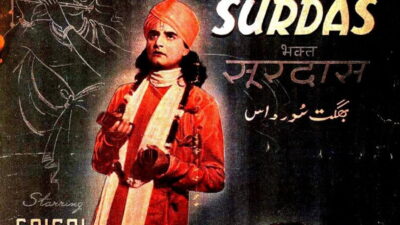
भक्त सूरदास (1942, रणजीत स्टूडियोज़, बंबई) चतुर्भुज दोशी के निर्देशन में बनी और के. एल. सहगल के कैरियर में एक निर्णायक मोड़ थी — कलकत्ते के न्यू थिएटर्स, जहाँ वे लगभग एक दशक तक स्टूडियो के मूल सितारे रहे, को छोड़ने के बाद की उनकी पहली फ़िल्म। फ़िल्म 15वीं-16वीं सदी के अंधे संत-कवि सूरदास के जीवन को नाटकीय रूप देती है, जिनका समग्र काव्य कृष्ण-भक्ति को समर्पित था। अपनी भक्ति और पौराणिक विषयों की सशक्त परंपरा के साथ रणजीत स्टूडियोज़ इस सामग्री के लिए एक स्वाभाविक आश्रय था। निर्माण व्यावसायिक रूप से ठोस साबित हुआ: भक्त सूरदास 1942 की तीसरी सर्वाधिक कमाई करने वाली भारतीय फ़िल्म बनी, यह पुष्टि करते हुए कि बंबई के बदलाव से सहगल का आकर्षण कम नहीं हुआ। ख़ुर्शीद, जो कुछ समय से बड़ी सफलता की तलाश में थीं, उन्हें वह यहाँ मिली। यह युगल दोनों मुख्य-किरदारों को फ़िल्म के चरमोत्कर्ष वाले भक्ति-स्वर में रखता है — वैरागी का संकल्प मिलकर गाया।
अंग्रेज़ी में पढ़ें · Read in English
Bhakta Surdas (1942, Ranjit Studios, Bombay) was directed by Chaturbhuj Doshi and marked a watershed in K.L. Saigal's career — his first film after leaving New Theatres, Calcutta, where he had spent nearly a decade as the studio's defining star. The film dramatises the life of the 15th–16th-century blind saint-poet Surdas, whose entire corpus was devoted to Krishna-bhakti. Ranjit Studios, with its strong tradition of devotional and mythological subjects, was a natural home for the material. The production proved commercially robust: Bhakta Surdas became the third highest-grossing Indian film of 1942, confirming that Saigal's drawing power survived the shift to Bombay. Khursheed, who had sought a major breakthrough for some time, found it here. This duet places both leads in the film's climactic devotional register — the vow of the renunciant sung jointly, giving the audience a moment of shared spiritual commitment between characters.
विरासत The Legacy
भक्त सूरदास को सहगल की अंतिम प्रमुख संत-भूमिका और उस निर्माण के रूप में याद किया जाता है जिसने ख़ुर्शीद को एक अग्रणी फ़िल्म-गायिका के रूप में स्थापित किया। संगीत-पट्टी HMV द्वारा 78 RPM पर जारी हुई और 1940 के दशक के हिंदी फ़िल्म संगीत के बाद के संकलनों में उपलब्ध रही। यह युगल संगीत-पट्टी के सबसे अधिक उद्धृत गीतों में नहीं है — वह सम्मान 'नैनहीन को राह दिखा प्रभु' और 'क़दम चले आगे, मन पीछे भागे' को जाता है — लेकिन फ़िल्म समग्र रूप से सहगल युग के अध्ययनों और 1940 के दशक के रणजीत स्टूडियोज़ उत्पादन के विहंगावलोकनों में संदर्भित होती रहती है।
अंग्रेज़ी में पढ़ें · Read in English
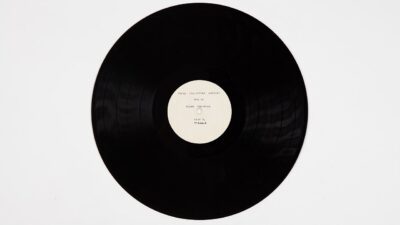
Bhakta Surdas is remembered as Saigal's last major saint-role and the production that established Khursheed as a leading film singer. The soundtrack was issued on 78 RPM by HMV and has circulated in subsequent compilations of 1940s Hindi film music. This duet is not among the most frequently cited individual tracks from the score — those honours go to 'Nainheen Ko Raah Dikha Prabhu' and 'Kadam Chale Aage, Man Pachhe Bhaage' — but the film as a whole continues to be referenced in studies of the Saigal era and in retrospectives of 1940s Ranjit Studios output.
वर्गीकरण
Classification- Tempo
- Medium
Genre
अन्य विवरण
More Details- https://en.wikipedia.org/wiki/Bhakta_Surdas
- https://en.wikipedia.org/wiki/K._L._Saigal
- https://en.wikipedia.org/wiki/D._N._Madhok
- https://www.cinemaazi.com/film/bhakta-surdas
- bombaymann2.blogspot.com/2013/11/film-bhakt-surdas1942.html
References
रोचक तथ्य
Margin Notesभक्त सूरदास (1942) का निर्माण रणजीत स्टूडियो, बॉम्बे में हुआ — यह न्यू थिएटर्स, कलकत्ता में लगभग एक दशक बिताने के बाद, जहाँ वे स्टूडियो के केंद्रीय सितारे थे, सहगल की इस शहर में पहली फ़िल्म थी।
अंग्रेज़ी में पढ़ें · Read in English
Bhakta Surdas (1942) was produced at Ranjit Studios, Bombay — Saigal's first film in the city after nearly a decade at New Theatres, Calcutta, where he had been the studio's central star.
फ़िल्म का निर्देशन चतुर्भुज दोशी ने किया, जिन्होंने 1930 के दशक भर में रणजीत स्टूडियो में भक्ति और पौराणिक विषयों के लिए अपनी प्रतिष्ठा बनाई थी।
अंग्रेज़ी में पढ़ें · Read in English
The film was directed by Chaturbhuj Doshi, who had built a reputation at Ranjit Studios for devotional and mythological subjects across the 1930s.
भक्त सूरदास 1942 की तीसरी सबसे अधिक कमाई करने वाली भारतीय फ़िल्म थी, जिसमें सहगल-ख़ुर्शीद की जोड़ी एक बड़ा व्यावसायिक आकर्षण साबित हुई।
अंग्रेज़ी में पढ़ें · Read in English
Bhakta Surdas was the third highest-grossing Indian film of 1942, with the Saigal–Khursheed pairing proving a major commercial draw.
डी.एन. मधोक (1902–1982), फ़िल्म के गीतकार, 'महाकवि मधोक' के नाम से जाने जाते थे और उन्होंने 800 से अधिक फ़िल्मी गीत लिखे; 1930 के दशक के अंत में नौशाद को फ़िल्म-कार्य से परिचित कराने में भी उनकी अहम भूमिका थी।
अंग्रेज़ी में पढ़ें · Read in English
D.N. Madhok (1902–1982), lyricist for the film, was known as 'Mahakavi Madhok' and wrote over 800 film songs; he was also instrumental in introducing Naushad to film work in the late 1930s.
नमूना-पट्टी
The Specimen Table| शीर्षक | जिस जोगी का जोग लिया · Jis Jogi Ka Jog Liya |
|---|---|
| फ़िल्म | भक्त सूरदास · 1942 |
| वर्ष · युग | 1942 |
| गायक | Khursheed, K.L. Saigal |
| गीतकार | D. N. Madhok |
| संगीतकार | Gyan Dutt |
| स्वरूप | युगल |
| गति | मध्यम |
| भाषा | hindi |
| भाव | भक्ति · दार्शनिक · Yearning |
| लोकप्रियता | Popular |
| बोल-स्थिति | केवल झलक |
जुड़े हुए पन्ने
Connected Plates · The Graph Made Visibleअटलस में कोई पन्ना अकेला नहीं — इस गीत से जुड़े गीत, कलाकार, फ़िल्म, राग-ताल-विधा, सब यहाँ से खुलते हैं।
मिलते-जुलते गीत · Related Songs
कलाकार · The Artists
फ़िल्म · The Film
साझा कीजिए · Share this Plate