गीत विंग · गीत-पट्टिका · Song Plate
झोली भर तारे ला दे रे
Jholi Bhar Taare La De Re
झोली भर के तारे ला दे — ख़ुर्शीद एक बच्चे की असंभव, कोमल मन्नत को गाती हैं।
भावशांत · चुलबुला · Tender
भाषाhindi गतिधीमी स्वरूपएकल महिला
श्रेय
The Creditsसूत्र-वाक्य · The Hook
सूत्र-वाक्य
झोली भर के तारे ला दे — ख़ुर्शीद एक बच्चे की असंभव, कोमल मन्नत को गाती हैं।
In EnglishBring me a lapful of stars — Khursheed sings a child's impossible, tender wish.
पट्टिका-लेख
The Monographपरिचय Overview
भक्त सूरदास का एक कोमल गीत जिसमें गायिका झोली भर तारे माँगती है — एक बच्चे की कल्पनाशील, असंभव मन्नत, जो लोरी-सी मिठास के साथ प्रस्तुत की गई है। ख़ुर्शीद द्वारा गाया गया, जिनकी आवाज़ ने फ़िल्म के कई सबसे स्नेहमय गीतों को सँभाला, यह संगीत-पट्टी के लोकप्रिय गीतों में गिना जाता है।
अंग्रेज़ी में पढ़ें · Read in English
A tender song from Bhakta Surdas in which the singer asks for a lapful of stars — a child's fanciful, impossible wish rendered with lullaby-like sweetness. Sung by Khursheed, whose voice carried several of the film's most affectionate numbers, it counts among the popular songs of the soundtrack.
संगीत The Music
ज्ञान दत्त गीत को एक कोमल, धीमी, पालने-सी झूलती धुन में रचते हैं जिसकी हल्की झूलन मन्नत-भरे, बाल-सरीखे पाठ को सँभालती है। ख़ुर्शीद की स्वच्छ आवाज़ स्वर को सहलाता और आत्मीय बनाए रखती है, और हारमोनियम व शांत लय की हल्की संगत पंक्ति की कोमलता पर कभी हावी नहीं होती।
अंग्रेज़ी में पढ़ें · Read in English
Gyan Dutt sets the song to a soft, slow, cradle-like melody whose gentle sway carries the wishful, childlike text. Khursheed's clear voice keeps the tone caressing and intimate, the light arrangement of harmonium and quiet rhythm never overpowering the tenderness of the line.
काव्य The Poetry
'झोली भर तारे' की छवि — झोली भर के तारे ला दे — लोककविता और भक्ति साहित्य में असंभव उपहार, उस इच्छा की आकृति के रूप में फैली है जो पूरे हृदय से उठती है इसीलिए अत्यधिक है। 'झोली' (थैला, आँचल भर) भारतीय भक्ति काव्य में एक बार-बार आने वाला पात्र है: संत-कवि प्रभु के नाम से झोली भरने की, या अपनी झोली में दिव्य कृपा पाने के लिए आगे करने की बात करते हैं। यहाँ माधोक सामान्य दिशा को उलट देते हैं — अर्पण करने की जगह, गायिका पाने की प्रार्थना करती है, और जो वह माँगती है वह सारा रात का आकाश है, असंभव को कपड़े की थैली की लघु सीमा में आत्मीय बनाते हुए। भक्ति काव्य में तारे अक्सर दिव्य स्फुलिंगों या धर्मी आत्माओं के प्रतीक हैं; उनकी झोली भर माँगना अनंत माँगने का बचपना बन जाता है। यह भोलापन ही कविता का ज्ञान है: केवल बच्चा सब कुछ माँगने की हिम्मत करता है।
अंग्रेज़ी में पढ़ें · Read in English
The image of the 'jholi bhar taare' — bring a lapful of stars — reaches across folk poetry and bhakti literature as a figure for the impossible gift, the wish that is excessive precisely because it is whole-hearted. The 'jholi' (cloth bag, lapful) is a recurring vessel in Indian devotional poetry: the sant-poets speak of filling one's jholi with the Lord's name, or of offering one's jholi to receive divine grace. Here D.N. Madhok inverts the usual direction — rather than offering, the singer asks to receive, and what she asks for is the entire night sky, the impossible made intimate by the diminutive scale of the cloth bag. The stars in devotional verse are frequently figures for divine sparks or the souls of the righteous; asking for a lapful of them becomes a child's way of asking for the infinite. The naïvety is the poem's wisdom: only a child dares to ask for everything.
कहानी The Story
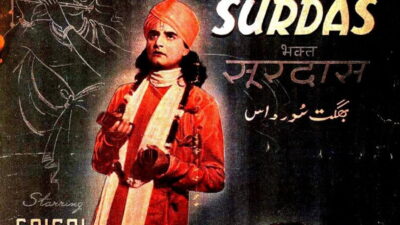
भक्त सूरदास (1942, रणजीत स्टूडियोज़, बंबई, निर्देशक चतुर्भुज दोशी) ने ख़ुर्शीद को विभिन्न भक्ति-भावों में कई गीत दिए, और यह लोरी-रंगी मन्नत-गीत फ़िल्म के सबसे स्नेहमय क्षणों में से एक है। फ़िल्म के संगीत-विन्यास में ऐसे गीत शामिल थे जो भक्ति-गंभीरता (सहगल के विरह-एकल) से कोमल चंचलता (ख़ुर्शीद के हल्के गीत) तक की श्रृंखला को कवर करते थे, और यह गीत उत्तरार्ध की श्रेणी में आता है। बच्चे के दृष्टिकोण वाले या लोरी-गुण वाले गीत भक्त-फ़िल्म शैली की एक सामान्य विशेषता थी, जहाँ भक्त और देवता के बीच संबंध को अक्सर एक बच्चे और प्रेमिल माता-पिता के बीच के संबंध पर आधारित किया जाता था। ज्ञान दत्त का संगीत-रूपांतर गीत को एक कोमल, झूलती गुणवत्ता देता है जो इसकी बाल-इच्छा सामग्री के अनुरूप है।
अंग्रेज़ी में पढ़ें · Read in English
Bhakta Surdas (1942, Ranjit Studios, Bombay, dir. Chaturbhuj Doshi) gave Khursheed several songs in a range of devotional moods, and this lullaby-inflected wish-song represents one of its most affectionate moments. The film's musical design called for numbers that covered the range from devotional gravity (Saigal's viraha solos) to tender playfulness (Khursheed's lighter numbers), with this song falling into the latter category. Songs with a child's perspective or lullaby quality were a common feature of the bhakta-film genre, where the relationship between devotee and deity was often modelled on that between a child and a loving parent. Gyan Dutt's setting gives the song a gentle, rocking quality suited to its child-wish content. While the song's specific narrative function within the film is not individually documented, its placement in the Bhakta Surdas soundtrack suggests a scene of affectionate, intimate prayer rather than formal worship.
वर्गीकरण
Classification- Tempo
- Slow
Genre
अन्य विवरण
More Details- https://en.wikipedia.org/wiki/Bhakta_Surdas
- https://www.hindigeetmala.net
- https://en.wikipedia.org/wiki/D._N._Madhok
References
रोचक तथ्य
Margin Notes'झोली' (भेंट प्राप्त करने के लिए प्रयुक्त कपड़े का थैला या गोद) उत्तर भारतीय संत-काव्य में एक बार-बार आने वाली छवि है: संतों को प्रभु का नाम पाने के लिए अपनी झोली फैलाते हुए, या दैवीय कृपा के लिए अपनी झोली खोले हुए वर्णित किया जाता है — मधोक यहाँ इस दिशा को उलट देते हैं, कृपा के बजाय सितारे पाने की माँग करते हुए।
अंग्रेज़ी में पढ़ें · Read in English
The 'jholi' (cloth bag or lap used to receive offerings) is a recurring image in North Indian sant-kavya: saints are described as offering their jholi to receive the Lord's name, or as holding their jholi open for divine grace — Madhok inverts this direction here, asking to receive stars rather than grace.
भक्ति-गीतों में ख़ुर्शीद की स्वर-शैली को उसकी स्पष्टता और सरलता के लिए जाना जाता था, ऐसे गुण जो इस गीत की कामना-प्रधान भावभूमि की बालसुलभ सरलता के लिए उपयुक्त थे।
अंग्रेज़ी में पढ़ें · Read in English
Khursheed's vocal style in devotional numbers was noted for its clarity and directness, qualities that suited the childlike simplicity required by this song's wishful premise.
भक्त सूरदास (1942) को उस वर्ष की तीसरी सबसे अधिक कमाई करने वाली भारतीय फ़िल्म के रूप में सूचीबद्ध किया गया था; इसके साउंडट्रैक में एकल, युगल और समूह-गान रूपों में कम से कम तेरह अलग-अलग गीत शामिल थे।
अंग्रेज़ी में पढ़ें · Read in English
Bhakta Surdas (1942) was listed as the third highest-grossing Indian film of the year; its soundtrack encompassed at least thirteen distinct songs across solo, duet, and chorus forms.
संगीत निर्देशक ज्ञान दत्त को इस गीत के लिए hindigeetmala.net की सूची में दर्ज किया गया है; नौशाद या ग़ुलाम हैदर जैसे समकालीनों की तुलना में कम प्रसिद्ध होने के बावजूद, 1940 के दशक की रणजीत स्टूडियो की ध्वनि में उनका योगदान महत्वपूर्ण था।
अंग्रेज़ी में पढ़ें · Read in English
Gyan Dutt, the music director, is listed on the hindigeetmala.net catalogue for this song; though less famous than contemporaries such as Naushad or Ghulam Haider, his contribution to the 1940s Ranjit Studios sound was significant.
नमूना-पट्टी
The Specimen Table| शीर्षक | झोली भर तारे ला दे रे · Jholi Bhar Taare La De Re |
|---|---|
| फ़िल्म | भक्त सूरदास · 1942 |
| वर्ष · युग | 1942 |
| गायक | Khursheed |
| गीतकार | D. N. Madhok |
| संगीतकार | Gyan Dutt |
| स्वरूप | एकल महिला |
| गति | धीमी |
| भाषा | hindi |
| भाव | शांत · चुलबुला · Tender |
| लोकप्रियता | Popular |
| बोल-स्थिति | केवल झलक |
जुड़े हुए पन्ने
Connected Plates · The Graph Made Visibleअटलस में कोई पन्ना अकेला नहीं — इस गीत से जुड़े गीत, कलाकार, फ़िल्म, राग-ताल-विधा, सब यहाँ से खुलते हैं।
मिलते-जुलते गीत · Related Songs
कलाकार · The Artists
फ़िल्म · The Film
साझा कीजिए · Share this Plate