गीत विंग · गीत-पट्टिका · Song Plate
दुनिया के रखवाले सुन
Duniya Ke Rakhwale Sun
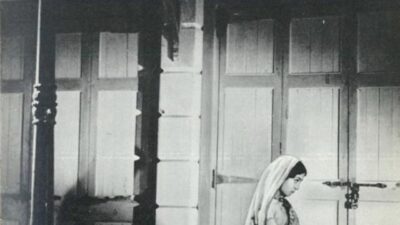
शांता आप्टे की आवाज़ वी. शांताराम के सामाजिक सिनेमा की अंतरात्मा के रूप में — ग़रीब ईश्वर को और राष्ट्र को पुकार रहे हैं।
भावप्रेरणादायक · तीव्र · दार्शनिक
भाषाhindi गतिमध्यम स्वरूपएकल महिला
श्रेय
The Creditsबोल · The Lyrics
पूरे बोल · Full Lyrics
हम ग़रीबों की अरज़ सुन, हे मालिक सुन।
ham gharibon ki araz sun, he maalik sun.
सूत्र-वाक्य · The Hook
सूत्र-वाक्य
शांता आप्टे की आवाज़ वी. शांताराम के सामाजिक सिनेमा की अंतरात्मा के रूप में — ग़रीब ईश्वर को और राष्ट्र को पुकार रहे हैं।
In EnglishShanta Apte's voice as the conscience of V. Shantaram's social cinema — the poor calling to God and to the nation.
पट्टिका-लेख
The Monographपरिचय Overview
वी. शांताराम की प्रभात फ़िल्म कंपनी ने भक्ति-सामाजिक फ़िल्म निर्माण को अपनी कलात्मक पहचान बनाई थी, और 'आदमी' (1939) मेहनतकश ग़रीबों की स्थिति पर उसका वक्तव्य है। शांता आप्टे का गाना 'दुनिया के रखवाले' को सम्बोधित है — एक साथ ईश्वरीय और राजनीतिक आकृति — विनती में: हमें सुनो, पीड़ितों को। केशवराव भोले की रचना महाराष्ट्रीय नाट्य संगीत की प्रार्थना-गीत शैली में है, औपचारिक और गरिमायुक्त, सुर विनती के तीव्र होने के साथ ऊपर चढ़ता है। यह हिंदी सिनेमा में 'हाशिये के लोगों की विनती' गीत के एक स्वतंत्र संगीत-वक्तव्य के रूप में — कथानक-साधन के बजाय — सबसे प्रारंभिक उदाहरणों में से एक है।
अंग्रेज़ी में पढ़ें · Read in English
V. Shantaram's Prabhat Film Company had made devotional-social filmmaking its artistic identity, and Aadmi (1939) is its statement about the condition of the labouring poor. Shanta Apte's song addresses the 'keeper of the world' — a figure both divine and political — in supplication: hear us, the afflicted. The composition by Keshavrao Bhole is in the prayer-song mode of Maharashtrian natya sangeet, formal and stately, the melody ascending as the supplication intensifies. This is one of the earliest examples in Hindi cinema of the 'supplication of the marginalised' song as a standalone musical statement rather than a plot device.
संगीत The Music
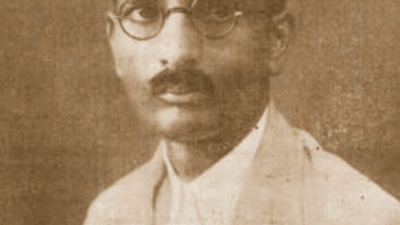
भोले की रचना एक ऊपर चढ़ने वाली सुर-रेखा का उपयोग करती है — भारतीय शास्त्रीय राग संरचना में विनती की विशेषता — दोहराई जाने वाली कंदों के माध्यम से उस चरमोत्कर्ष तक जो अकेली आवाज़ (वाद्यवृंद नहीं) तक पहुँचती है। हारमोनियम स्वर-आधार प्रदान करता है जबकि तार भावनात्मक पाठ का उत्तर देते हैं।
अंग्रेज़ी में पढ़ें · Read in English
Bhole's composition uses an ascending melodic line — characteristic of supplication in Indian classical raga structure — building through repeated phrases to a climax that the voice alone (not the orchestra) reaches. The harmonium provides the drone while the strings respond to the emotional text.
काव्य The Poetry
बोल भक्ति के संबोधन-मुहावरे में काम करता है — ईश्वर से सीधा संवाद — लेकिन यहाँ ईश्वर एक साथ भगवान और ग़रीबों का सांसारिक रक्षक है। शब्द 'आदमी' (मनुष्य) फ़िल्म के शीर्षक की प्रतिध्वनि है, यह सुझाते हुए कि दुनिया का सच्चा रखवाला उन लोगों से अलग तरह का आदमी होना चाहिए जो वर्तमान में सत्ता धारण करते हैं।
अंग्रेज़ी में पढ़ें · Read in English
The lyric operates in the bhakti mode of address — direct speech to the divine — but the divine here is both God and the earthly guardian of the poor. The word 'aadmi' (man) echoes the film's title, suggesting that the true keeper of the world must be a different kind of man than those who currently hold power.
विरासत The Legacy
प्रभात के सामाजिक-भक्ति गीतों ने एक संगीत-मुहावरा स्थापित किया जो बॉलीवुड के 'प्रतिरोध भजन' — 'दो बीघा ज़मीन' (1953) से 'मदर इंडिया' (1957) तक — को विरासत में मिलेगा। यह गाना उस परंपरा का एक प्रारंभिक पूर्वज है।
अंग्रेज़ी में पढ़ें · Read in English
Prabhat's social-devotional songs established a musical idiom that Bollywood's 'protest bhajan' — from Do Bigha Zameen (1953) to Mother India (1957) — would inherit. This song is an early ancestor of that tradition.
वर्गीकरण
Classification- Tempo
- Medium
Genre
नमूना-पट्टी
The Specimen Table| शीर्षक | दुनिया के रखवाले सुन · Duniya Ke Rakhwale Sun |
|---|---|
| फ़िल्म | आदमी · 1939 |
| वर्ष · युग | 1939 |
| गायक | Shanta Apte |
| गीतकार | सुदर्शन |
| संगीतकार | Keshavrao Bhole |
| स्वरूप | एकल महिला |
| गति | मध्यम |
| भाषा | hindi |
| भाव | प्रेरणादायक · तीव्र · दार्शनिक |
| लोकप्रियता | Obscure |
| बोल-स्थिति | सार्वजनिक |
जुड़े हुए पन्ने
Connected Plates · The Graph Made Visibleअटलस में कोई पन्ना अकेला नहीं — इस गीत से जुड़े गीत, कलाकार, फ़िल्म, राग-ताल-विधा, सब यहाँ से खुलते हैं।
मिलते-जुलते गीत · Related Songs
कलाकार · The Artists
फ़िल्म · The Film
साझा कीजिए · Share this Plate