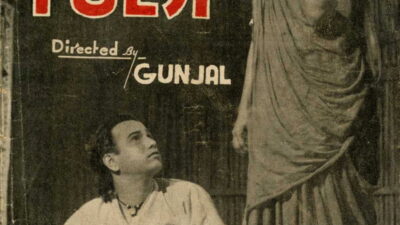
गीत विंग · गीत-पट्टिका · Song Plate
दूल्हा जी को दुल्हन आई भैया
Dulha Ji Ko Dulhan Aayi Bhaiyya
1941 की भक्ति-फ़िल्म तुलसी का विवाह-विषयक एक गीत।
भावउत्सव · चुलबुला
भाषाhindi स्वरूपUnknown
श्रेय
The Creditsसूत्र-वाक्य · The Hook
सूत्र-वाक्य
1941 की भक्ति-फ़िल्म तुलसी का विवाह-विषयक एक गीत।
In EnglishA wedding-themed song from the 1941 devotional film Tulsi.
पट्टिका-लेख
The Monographपरिचय Overview
'दूल्हा जी को दुल्हन आई भैया' तुलसी (1941) का एक गीत है, जिसे हरिश्चंद्र बाली ने पंडित फणि के बोलों पर रचा। इसका शीर्षक — दूल्हे के लिए दुल्हन के आगमन की घोषणा — इसे उस काल की फ़िल्मों में सामान्य लोक-मुहावरे का एक विवाह या उत्सव-गीत बनाता है। उपलब्ध स्रोतों में गायक का नाम दर्ज नहीं है।
अंग्रेज़ी में पढ़ें · Read in English
'Dulha Ji Ko Dulhan Aayi Bhaiyya' is a song from Tulsi (1941), composed by Harishchandra Bali with lyrics by Pandit Phani. Its title — announcing that the bride has arrived for the groom — marks it as a wedding or celebratory number in the folk idiom common to films of the period. Singer attribution is not documented in surviving sources.
काव्य The Poetry
'दूल्हा जी को दुल्हन आई भैया' की घोषणा उत्तर भारत की स्त्रियों के संस्कार-गीत — मंगलगीत और सोहर — की परंपरा से जुड़ती है: वे रचनाएँ जो विवाह, जन्म और शुभ अवसरों पर घर की स्त्रियों की वाणी में, पुरुष संबंधियों को संबोधित करके गाई जाती हैं। 'भैया' का संबोधन गायिका को दूल्हे के परिवार की स्त्रियों में स्थापित करता है, जो दुल्हन की शोभा-यात्रा की ओर ध्यान आकर्षित कर रही हैं। पंडित फणि की रचना, शीर्षक से स्पष्ट है, उच्च उर्दू-साहित्यिक शैली के बजाय सीधी बोलचाल की हिंदी में है — 'आई' (आई है), 'दूल्हा जी' (आदरसहित दूल्हा) — ये सजावटी नहीं, वार्तालापी हैं। यह सरलता ही गीत की मुख्य काव्य-शक्ति है: घोषणा की निर्मलता, आनंद की स्वाभाविकता। तुलसी-कृष्ण विवाह की अलंकारिक कथा पर बनी फ़िल्म में हर विवाह-दृश्य अतिरिक्त धार्मिक भार वहन करता है — मानवीय विवाह दैवीय विवाह का प्रतिबिंब बनता है।
अंग्रेज़ी में पढ़ें · Read in English
The announcement 'Dulha Ji Ko Dulhan Aayi Bhaiyya' belongs to the Mangalgeet and Sohar tradition of North Indian women's ceremonial song: compositions sung at weddings, births and auspicious occasions, typically in the voice of women from the household, addressing male kin. The address 'Bhaiyya' (elder brother, or male relative) places the singer among the women of the groom's family, calling attention to the bride's procession. Pandit Phani's lyric, as suggested by the title, works in direct spoken Hindi rather than the more elevated Urdu-literary register — 'aayi' (has come), 'dulha ji' (the groom, with respectful 'ji') are conversational rather than ornamented. This directness is the song's main lyric quality: the simplicity of announcement, the plainness of joy. In a film built on the Tulsi-Krishna marriage allegory, every marriage scene carries additional theological weight — the human wedding mirroring the divine one.
कहानी The Story
तुलसी (1941) दादा गुंजल द्वारा निर्देशित थी और वैष्णव पुराण-कथा पर केंद्रित थी — इसका कथा-ढाँचा तुलसी-विवाह की धर्म-संकल्पना पर बना था, जो तुलसी का भगवान श्रीकृष्ण से अनुष्ठानिक विवाह है। इस भक्ति-ढाँचे में 'दूल्हा जी को दुल्हन आई भैया' — दूल्हे के परिवार को दुल्हन के आगमन की घोषणा — फ़िल्म की कथा-रेखा के भीतर एक शाब्दिक विवाह-दृश्य के रूप में और तुलसी-कृष्ण विवाह-मिथक के अलंकारिक अभिनय के रूप में — दोनों रूपों में काम कर सकता था। हरिश्चंद्र बाली के संगीत में भक्ति-भजन और लोक-शैली के घरेलू उत्सव-गीत दोनों सम्मिलित थे — यह विभिन्नता प्रारंभिक 1940 के एकल-परदे के सिनेमा में विविध दर्शक-वर्ग को बाँधे रखने की मानक कला थी। पंडित फणि, जिन्होंने फ़िल्म के गीत, संवाद और पटकथा लिखी, ने इस उत्सवी गीत को भक्ति-कथा की चाप में सुविचारित ढंग से रखा होगा — अधिक अंतर्मुखी भजनों के सापेक्ष एक सामुदायिक आनंद का क्षण प्रदान करते हुए।
अंग्रेज़ी में पढ़ें · Read in English
Tulsi (1941) was directed by Dada Gunjal and centred on the Vaishnava mythology of the sacred Tulsi plant — its narrative built around the theology of Tulsi Vivah, the ritual marriage of the basil plant to Lord Krishna. Within this devotional framework, a song like 'Dulha Ji Ko Dulhan Aayi Bhaiyya' — announcing a bride's arrival to the groom's family — could operate both as a literal wedding scene within the film's storyline and as an allegorical enactment of the Tulsi-Krishna marriage myth. Harishchandra Bali's score for the film mixed devotional bhajans with folk-flavoured songs of domestic celebration, the variation in register being a standard strategy for holding diverse audience attention in the early-1940s single-screen cinema. Pandit Phani, who wrote the film's songs, dialogue and screenplay, would have placed this celebratory number carefully within the arc of the bhakti narrative — providing a moment of communal joy in contrast to the more inward devotional songs.
वर्गीकरण
ClassificationGenre
अन्य विवरण
More Details- https://www.imdb.com/title/tt0216305/
- https://www.hindilyrics4u.com/movie/tulsi_1941.htm
- https://www.indianfilmhistory.com/movie-details/tulsi
- https://atulsongaday.me/tag/harishchandra-bali/
References
रोचक तथ्य
Margin Notesतुलसी (1941) में भक्ति भजन और लोक-शैली के उल्लासपूर्ण गीत, दोनों शामिल थे — यह जान-बूझकर रखा गया स्वर-विस्तार 1940 के दशक की शुरुआती भक्ति-प्रधान हिंदी फ़िल्मों की विशेषता थी, जिन्हें दो घंटे की अवधि में एकल-स्क्रीन के विविध दर्शकों को बांधे रखना होता था।
अंग्रेज़ी में पढ़ें · Read in English
Tulsi (1941) featured both devotional bhajans and folk-styled celebratory songs — a deliberate tonal range that was characteristic of devotional Hindi films of the early 1940s, which needed to sustain diverse single-screen audiences across a two-hour running time.
'दूल्हा जी को दुल्हन आई भैया' की गीत-विधा — जिसमें महिलाएं पुरुष परिजनों को दुल्हन के आगमन की सूचना देती हैं — उत्तर भारतीय विवाह-संगीत की मंगलगीत और सोहर परंपरा से संबंधित है, जिसे हिंदी सिनेमा ने 1930 और 1940 के दशकों में नियमित रूप से अपनाया।
अंग्रेज़ी में पढ़ें · Read in English
The lyric genre of 'Dulha Ji Ko Dulhan Aayi Bhaiyya' — women announcing a bride's arrival to male kin — belongs to the Mangalgeet and Sohar tradition of North Indian wedding music, which Hindi cinema regularly adapted in the 1930s and 1940s.
तुलसी (1941) में पंडित फणि की लेखक, संवाद-लेखक और गीतकार, तीनों भूमिकाओं में उपस्थिति उस दौर के छोटे बॉम्बे स्टूडियो की विशेषता थी, जहां एक ही साहित्यिक व्यक्तित्व अक्सर पूरी फ़िल्म की भाषा-शैली गढ़ता था।
अंग्रेज़ी में पढ़ें · Read in English
Pandit Phani's triple role as writer, dialogue-writer and lyricist of Tulsi (1941) was characteristic of smaller Bombay studios of the period, where a single literary personality often shaped the entire verbal register of a production.
संगीतकार हरिश्चंद्र बाली का दर्ज करियर टॉकी युग की शुरुआत तक फैला हुआ था, और वे बॉम्बे-कलकत्ता स्टूडियो सर्किट से जुड़े थे, जो स्वर्ण-युग-पूर्व के अधिकांश हिंदी फ़िल्म संगीत का आधार था।
अंग्रेज़ी में पढ़ें · Read in English
Harishchandra Bali, the composer, had a documented career stretching from the early-talkie era and was associated with the Bombay–Calcutta studio circuit that underpinned much of pre-Golden-Era Hindi film music.
नमूना-पट्टी
The Specimen Table| शीर्षक | दूल्हा जी को दुल्हन आई भैया · Dulha Ji Ko Dulhan Aayi Bhaiyya |
|---|---|
| फ़िल्म | तुलसी · 1941 |
| वर्ष · युग | 1941 |
| गीतकार | Pandit Phani |
| संगीतकार | Harishchandra Bali |
| स्वरूप | Unknown |
| भाषा | hindi |
| भाव | उत्सव · चुलबुला |
| बोल-स्थिति | केवल झलक |
जुड़े हुए पन्ने
Connected Plates · The Graph Made Visibleअटलस में कोई पन्ना अकेला नहीं — इस गीत से जुड़े गीत, कलाकार, फ़िल्म, राग-ताल-विधा, सब यहाँ से खुलते हैं।
कलाकार · The Artists
फ़िल्म · The Film
साझा कीजिए · Share this Plate