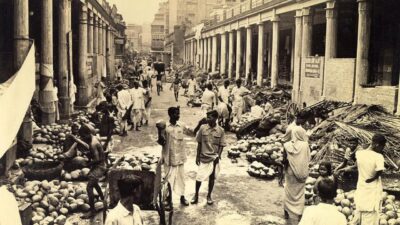
गीत विंग · गीत-पट्टिका · Song Plate
चने मसालेदार बाबू ले लो
Chane Masaledar Babu Le Lo
फेरीवाले की हाँक से बना युगल गीत — गोबिंद राम के 1945 के संगीत में ज़ोहराबाई अम्बालेवाली और हमीदा बानू, मसालेदार चने बेचती हुई और साथ में जीते चले जाने का एक दर्शन भी।
भावप्रेरणादायक · चुलबुला
भाषाhindi गतितेज़ स्वरूपमहिला युगल
श्रेय
The Creditsसूत्र-वाक्य · The Hook
सूत्र-वाक्य
फेरीवाले की हाँक से बना युगल गीत — गोबिंद राम के 1945 के संगीत में ज़ोहराबाई अम्बालेवाली और हमीदा बानू, मसालेदार चने बेचती हुई और साथ में जीते चले जाने का एक दर्शन भी।
In EnglishThe street-hawker's cry turned into a duet — Zohrabai Ambalewali and Hamida Banu selling spiced gram, and a philosophy of getting on with it, in Gobind Ram's 1945 score.
पट्टिका-लेख
The Monographपरिचय Overview
'नसीब' (1945) का सबसे याद रखा गया गीत, और इसके आठ गीतों में अकेला जो ज़ोहराबाई अम्बालेवाली और हमीदा बानू को साथ लाता है। यह फेरीवाली का गीत है — गुज़रते 'बाबू' को मसालेदार चने ख़रीदने की हाँक — वह रूप जिसे 1940 के दशक का हिंदी सिनेमा लगातार बरतता रहा, क्योंकि इससे कोई ग़रीब पात्र सीधे दर्शक से गा सकता था और इसके लिए कथानक को रुकना नहीं पड़ता था। हिंदी फ़िल्म गीतकोश पर आधारित गोबिंद राम के करियर-सर्वेक्षण में इसे फ़िल्म का 'प्रेरक फेरी-गीत' कहकर अलग से चिह्नित किया गया है — यानी वह उपभेद जिसमें बिक्री की हाँक के नीचे एक दूसरा, नैतिक अर्थ भी चलता रहता है।
अंग्रेज़ी में पढ़ें · Read in English
The best-remembered number of Nasib (1945) and the only one of its eight songs to pair Zohrabai Ambalewali with Hamida Banu. It is a street-vendor song — the hawker's call to the passing 'babu' to buy her spiced gram — a form that 1940s Hindi cinema used constantly, because it let a poor character sing directly to the audience without the plot having to stop for her. The Hindi Film Geet Kosh-based survey of Gobind Ram's career singles it out as the 'inspirational street song' of the film, which places it in the sub-type where the hawker's patter carries a second, moralising meaning underneath the sales pitch.
संगीत The Music
फेरी के गीत को गली जैसा सुनाई देना होता है, इसलिए संगत धुन-प्रधान नहीं, ताल-प्रधान है: ढोलक और तबला एक तेज़, चलती हुई चाल में, और धुन किसी राग-वाक्य से नहीं बल्कि असली फेरीवाले की हाँक के चढ़ने-उतरने के आकार से बनी हुई। उनके काम के सर्वेक्षण के अनुसार गोबिंद राम की ख़ास ताक़त लय, ताल और वाद्य-सज्जा में थी, और फेरी-गीत का रूप वही जगह है जहाँ यह ताक़त सबसे साफ़ दिखती है। दो गायिकाओं को इस पर साथ रखना दिलचस्प चुनाव है: ज़ोहराबाई की आवाज़ भारी, छाती से निकलती और ख़याल-ठुमरी की तालीम वाली थी, जबकि हमीदा बानू — तब किशोरावस्था में — हल्की और तेज़; इसलिए दोनों के बीच का सवाल-जवाब इस हाँक को एक दोहराई गई पंक्ति के बजाय दो अलग चरित्र दे देता है।
अंग्रेज़ी में पढ़ें · Read in English
A hawking song has to sound like the street, so the setting is rhythm-led rather than melody-led: dholak and tabla in a brisk, walking cycle, with the tune built out of the rising-and-falling shape of an actual vendor's call rather than out of a raag phrase. Gobind Ram was, by the account of the survey of his work, a composer whose particular strength lay in rhythm, beat and orchestration, and the street-song form is where that strength shows most plainly. Pairing two singers on it is the interesting choice: Zohrabai's voice was heavy, chest-toned and trained in the khayal-thumri manner, while Hamida Banu, still in her teens, was lighter and quicker, so the call-and-answer between them gives the sales pitch two different characters instead of one doubled line.
काव्य The Poetry
रममूर्ति चतुर्वेदी इस गीत को बाज़ार की भाषा में लिखते हैं — 'बाबू' को सीधा संबोधन, माल का नाम लेना, उस व्यक्ति की ज़िद जिसे आज खाने के लिए आज ही बेचना है। जो चीज़ इसे महज़ एक मनोरंजक टुकड़े से ऊपर उठाती है — और जिसके कारण गोबिंद राम की फ़िल्मों के संदर्भ-विवरण में इसे 'प्रेरक' कहा गया — वह यह है कि फेरीवाली की दलील दरअसल श्रम और आत्म-सम्मान की दलील भी है: माल की हाँक लगाती स्त्री दया नहीं, ग्राहकी माँग रही है। 1945 में यह भेद राजनीतिक रूप से भारी था, जब युद्ध-अर्थव्यवस्था ने बहुत बड़ी संख्या में स्त्रियों को गली के व्यापार और घरेलू श्रम में धकेल दिया था और हिंदी सामाजिक फ़िल्म यह तय कर रही थी कि उन्हें कैसे दिखाया जाए। शब्दावली सादी, बोलचाल की हिंदी है, बिना किसी फ़ारसीनुमा सजावट के — उसी संगीत में राजकुमारी की उर्दू ग़ज़लों से जान-बूझकर उलट।
अंग्रेज़ी में पढ़ें · Read in English
Rammurti Chaturvedi writes the song in the register of the marketplace — the direct address to 'babu', the naming of the goods, the insistence of a person who has to sell today to eat today. What lifts it above a novelty item, and what earns it the description 'inspirational' in the reference account of Gobind Ram's films, is that the vendor's argument is also an argument about work and self-respect: the woman crying her wares is not asking for pity but for custom. That distinction was politically loaded in 1945, when the war economy had pushed enormous numbers of women into street trade and domestic labour, and the Hindi social film was working out how to show them. The vocabulary is plain, spoken Hindi with no Persianate ornament, in deliberate contrast to the Urdu ghazals Rajkumari sings elsewhere in the same score.
कहानी The Story
'नसीब' का निर्माण सिल्वर फ़िल्म्स ने किया — अभिनेत्री प्रमिला और उनके पति कुमार का बैनर — और निर्देशन बी. डी. वेदी ने, जो उनकी बनाई कुल चार बोलती फ़िल्मों में दूसरी थी। गोबिंद राम की छह हिंदी फ़िल्में 1945 में रिलीज़ हुईं, और 'नसीब' वही है जिसने उन्हें आवाज़ों की यह जोड़ी दी। ज़ोहराबाई अम्बालेवाली 1945 में अपने करियर के शिखर पर थीं और उसी वर्ष उन्होंने गोबिंद राम की 'चालीस करोड़' और 'हमारा संसार' के दो चर्चित गीत भी गाए थे; हमीदा बानू अपने करियर की शुरुआत के पास थीं। 'नसीब' का कोई प्रिंट बचा हुआ ज्ञात नहीं, और यह गीत फ़िल्म के उन तीन रिकॉर्डों में नहीं है जो सारेगामा के कैटलॉग में बचे हैं — इसलिए आज यह मुख्यतः एक कैटलॉग-प्रविष्टि और गोबिंद राम के काम के विवरण की एक पंक्ति के रूप में मौजूद है।
अंग्रेज़ी में पढ़ें · Read in English
Nasib was produced by Silver Films, the banner run by the actress Pramila and her husband Kumar, and directed by B. D. Vedi, in the second of only four talkies he made. Gobind Ram scored six Hindi films that released in 1945, and Nasib is the one that gave him this pairing of voices. Zohrabai Ambalewali was at the peak of her career in 1945 and had also sung two of the standout numbers of his Chalis Karod and Hamara Sansar that same year; Hamida Banu was near the start of hers. No print of Nasib is known to survive, and this song is not among the three sides of the film that remain in the Saregama catalogue, so it exists today mainly as a catalogue entry and a line in the account of Gobind Ram's work.
विरासत The Legacy
फेरी-गीत उस फ़िल्म से बच निकला जो उसे लेकर आई थी: रममूर्ति चतुर्वेदी और गोबिंद राम यहाँ जिस रूप में काम कर रहे हैं, वह स्वतंत्रता के बाद के हिंदी सिनेमा में सीधा चलता रहा — 1950 के दशक की फूलवालियों और खिलौने बेचने वालों से आगे तक — और हमेशा उसी दोहरे काम के साथ: हास्य-राहत और सामाजिक दलील। ख़ुद 'नसीब' के भीतर यही वह गीत है जिसे संदर्भ-साहित्य फ़िल्म के गीतों का नाम लेते समय सबसे पहले उठाता है, जो इसे संकलन का व्यावहारिक शीर्षक-गीत बना देता है — भले ही उसे उस रूप में जारी नहीं किया गया था। ज़ोहराबाई अम्बालेवाली और हमीदा बानू के लिए यह एक दुर्लभ सीधी जोड़ी है; दोनों शायद ही कभी एक रिकॉर्ड पर साथ आईं।
अंग्रेज़ी में पढ़ें · Read in English
The vendor song survived the film that carried it: the form Rammurti Chaturvedi and Gobind Ram are working in here runs straight on through post-independence Hindi cinema, from the flower-sellers and toy-sellers of the 1950s onward, always with the same double function of comic relief and social argument. Within Nasib itself this is the number the reference literature reaches for first when it names the film's songs, which makes it the album's de facto title track even though it was not issued as one. For Zohrabai Ambalewali and Hamida Banu it is a rare direct pairing; the two rarely shared a record.
वर्गीकरण
Classification- Tempo
- Fast
Genre
अन्य विवरण
More Details- https://www.hindigeetmala.net/movie/naseeb_1945.htm
- https://myswar.co/album/naseeb-1945
- https://apnaarchive.wordpress.com/2012/07/02/pandit-gobindram/
- https://en.wikipedia.org/wiki/List_of_Hindi_films_of_1945
- https://en.wikipedia.org/wiki/Zohrabai_Ambalewali
- https://en.wikipedia.org/wiki/Hamida_Banu_(singer)
References
रोचक तथ्य
Margin Notesहिंदी फ़िल्म गीतकोश पर आधारित गोबिंद राम के करियर-सर्वेक्षण में इसे ख़ास तौर पर 'नसीब' का 'प्रेरक फेरी-गीत' कहा गया है — फ़िल्म का अकेला गीत जिसे यह संज्ञा मिली।
अंग्रेज़ी में पढ़ें · Read in English
The survey of Gobind Ram's career built on the Hindi Film Geet Kosh describes this specifically as the 'inspirational streetsong' of Nasib — the only song of the film given that label.
गीत-कोशों में शीर्षक 'चने मसालेदार बाबू ले लो' और 'चना मसालेदार बाबू ले लो' — दोनों रूपों में छपा है; बहुवचन 'चने' वह रूप है जो गीतकोश-आधारित विवरण और माईस्वर दोनों बरतते हैं।
अंग्रेज़ी में पढ़ें · Read in English
Song databases print the title both as 'Chane Masaledar Babu Le Lo' and 'Chana Masaledar Babu Le Lo'; the plural 'Chane' is the form used by the Geet Kosh-based account and by MySwar.
गोबिंद राम ने शमशाद बेगम के साथ किसी भी अन्य संगीतकार से अधिक हिंदी फ़िल्म-गीत रिकॉर्ड किए — 19 फ़िल्मों में 86 गीत — पर 'नसीब' में उन्होंने न उन्हें लिया, न ज़ीनत बेगम को, यानी वे दोनों गायिकाएँ जिनसे उनका नाम सबसे अधिक जुड़ा है; इसके बजाय पूरा संकलन राजकुमारी, ज़ोहराबाई अम्बालेवाली, हमीदा बानू और ख़ान मस्ताना के इर्द-गिर्द बनाया।
अंग्रेज़ी में पढ़ें · Read in English
Gobind Ram recorded more Hindi film songs with Shamshad Begum than any other composer did — 86 songs across 19 films — but for Nasib he used neither her nor Zeenat Begum, the two singers he is most associated with, building the album instead around Rajkumari, Zohrabai Ambalewali, Hamida Banu and Khan Mastana.
नमूना-पट्टी
The Specimen Table| शीर्षक | चने मसालेदार बाबू ले लो · Chane Masaledar Babu Le Lo |
|---|---|
| फ़िल्म | नसीब · 1945 |
| वर्ष · युग | 1945 |
| गायक | Zohrabai Ambalewali, Hamida Banu |
| गीतकार | Rammurti Chaturvedi |
| संगीतकार | Gobind Ram |
| स्वरूप | महिला युगल |
| गति | तेज़ |
| भाषा | hindi |
| भाव | प्रेरणादायक · चुलबुला |
| लोकप्रियता | Known |
| बोल-स्थिति | केवल झलक |
जुड़े हुए पन्ने
Connected Plates · The Graph Made Visibleअटलस में कोई पन्ना अकेला नहीं — इस गीत से जुड़े गीत, कलाकार, फ़िल्म, राग-ताल-विधा, सब यहाँ से खुलते हैं।
मिलते-जुलते गीत · Related Songs
कलाकार · The Artists
फ़िल्म · The Film
साझा कीजिए · Share this Plate