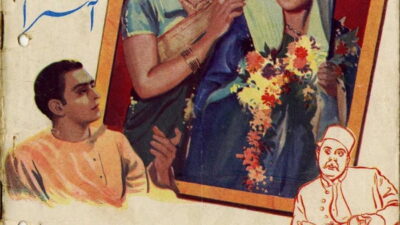
गीत विंग · गीत-पट्टिका · Song Plate
चला जा मुसाफ़िर चला जा
Chala Ja Musafir Chala Ja
चला जा मुसाफ़िर — आसरा का एक राही का गीत, जिसे स्टूडियो ने दो रूपों में रिकॉर्ड किया।
भावउदास · दार्शनिक
भाषाhindi गतिमध्यम स्वरूपUnknown
श्रेय
The Creditsसूत्र-वाक्य · The Hook
सूत्र-वाक्य
चला जा मुसाफ़िर — आसरा का एक राही का गीत, जिसे स्टूडियो ने दो रूपों में रिकॉर्ड किया।
In EnglishMove on, traveller — a wanderer's song from Aasra, recorded by the studio in two takes.
पट्टिका-लेख
The Monographपरिचय Overview
आसरा (1941) का एक 'मुसाफ़िर' गीत, बोल सफ़दर आह के और संगीत अनिल बिस्वास का। फ़िल्म की डिस्कोग्राफ़ी इस शीर्षक को दो बार सूचीबद्ध करती है — एक प्रमुख रिकॉर्डिंग और एक दूसरा रूप — जो उस युग की एक सामान्य प्रथा थी; दोनों का शीर्षक और श्रेय समान है। उपलब्ध स्रोतों में गायक का उल्लेख नहीं है।
अंग्रेज़ी में पढ़ें · Read in English
A 'musafir' (traveller) song from Aasra (1941), lyrics by Safdar Aah and music by Anil Biswas. The film's discography lists this title twice — a primary recording and a second version — a common practice of the era; both share the same title and credits. The singer is not specified in available sources.
काव्य The Poetry
'चला जा मुसाफ़िर चला जा' एक दार्शनिक आदेश की संरचना बनाता है — यह आदेश किसी सचमुच के मुसाफ़िर को नहीं, बल्कि अपने आप को दिया जाता है। 'चला जा... चला जा' की दोहरी पुनरावृत्ति उस लय की तात्कालिकता रचती है जो कोई ख़ुद को मनाते हुए गाता है — रुकने, चिपके रहने, शोक करने की मन की प्रवृत्ति के विरुद्ध आगे बढ़ने का आग्रह। उर्दू-प्रभावित हिंदी फ़िल्म-काव्य में इस दौर का 'मुसाफ़िर' प्रेमी का एक तैयार रूपक था: सदा आते रहना, सदा जाते रहना, कहीं जड़ें न जमाना। सफ़दर आह का यह गीत 1930-40 के दशक के दर्जनों मुसाफ़िर-गीतों की परंपरा में खड़ा है, जिनमें से हर एक यात्री की विदाई का उपयोग मानव-जीवन की जड़-हीनता और 'आगे बढ़ना ही जीवन है' की स्थैतिक स्वीकृति के दर्पण के रूप में करता है।
अंग्रेज़ी में पढ़ें · Read in English
'Chala ja musafir chala ja' (move on, traveller, move on) constructs the classic Hindi film lyric's philosophical imperative: the command to leave is issued not to a literal stranger but to the self. The doubly repeated 'chala ja... chala ja' creates the rhythmic urgency of someone trying to convince themselves — urging forward movement against the mind's instinct to stay, to cling, to mourn. In Urdu-inflected Hindi film poetry of this period, the 'musafir' was a ready metaphor for the lover: always arriving, always departing, never fully rooted. Safdar Aah's lyric stands in a tradition that includes dozens of such musafir songs in 1930s-40s Hindi cinema, each one using the traveller's departure as a mirror for the human condition's rootlessness and the stoic acceptance that moving on is life's nature.
कहानी The Story
आसरा (1941) उन फ़िल्मों में से एक थी जिनके लिए अनिल बिस्वास ने बंबई में अपने बेहद उत्पादक शुरुआती दौर में संगीत रचा, जब वह मेहबूब ख़ान की औरत (1940), बहन (1941) और रोटी (1942) पर भी काम कर रहे थे। बोल सफ़दर आह के थे। 'मुसाफ़िर' का रूपक 1940 के हिंदी फ़िल्म-काव्य में सबसे उर्वर विषयों में से एक था — जाने वाला अजनबी, अस्थायित्व, स्वीकृति, और आगे बढ़ने की दार्शनिक ज़रूरत का प्रतीक। फ़िल्म की डिस्कोग्राफ़ी इस शीर्षक को दो बार दर्ज करती है — एक मुख्य रिकॉर्डिंग और उसी शीर्षक का एक दूसरा संस्करण — जो उस युग की स्टूडियो प्रथा थी जब किसी गीत को भिन्न रिटेक या व्यवस्थाओं में रिकॉर्ड किया जाता था। उल्लेखनीय रूप से, बिस्वास अपनी फ़िल्मों में कभी-कभी स्वयं गाते थे — आसरा (1941) का 'सांझ बही बंजारे' इसका एक प्रलेखित उदाहरण है। इस विशेष गीत में उन्होंने गाया या नहीं, यह दर्ज नहीं है।
अंग्रेज़ी में पढ़ें · Read in English
Aasra (1941) was one of the films Anil Biswas scored during his highly productive early period in Bombay, when he also worked on Mehboob Khan's Aurat (1940), Bahen (1941), and Roti (1942). Lyrics were by Safdar Aah. The 'musafir' (traveller) trope was one of the most generative in 1940s Hindi film verse — the departing stranger as a figure for impermanence, acceptance, and the philosophical necessity of moving on. The film's discography documents this title twice: a primary recording and a second version under the same title, a common studio practice of the era when a song was recorded in variant takes or arrangements. Notably, Biswas occasionally sang in his own films; 'Sanjh Bahi Banjare' from Aasra (1941) is one documented instance of him lending his voice to a number he composed. Whether he sang this particular track is not recorded. The general playback singer for this number is undocumented.
वर्गीकरण
Classification- Tempo
- Medium
Genre
अन्य विवरण
More Details- https://en.wikipedia.org/wiki/Anil_Biswas_(composer)
- https://chandrakantha.com/biodata/Anil_Biswas.html
- https://mehfilmeinmeri.wordpress.com/2020/05/31/part-i-anil-biswas-the-maestro/
References
रोचक तथ्य
Margin Notesअनिल बिस्वास (7 जुलाई 1914 – 31 मई 2003) का जन्म बरिसाल, पूर्वी बंगाल (अब बांग्लादेश) में हुआ था और उन्हें भारतीय फिल्म पार्श्वगायन के अग्रदूत तथा पहला 12-सदस्यीय भारतीय फिल्म ऑर्केस्ट्रा प्रस्तुत करने वाले संगीतकार के रूप में जाना जाता है।
अंग्रेज़ी में पढ़ें · Read in English
Anil Biswas (7 July 1914 – 31 May 2003) was born in Barisal, East Bengal (now Bangladesh) and is credited as a pioneer of Indian film playback singing and the composer who introduced the first twelve-piece Indian film orchestra.
बिस्वास कभी-कभी अपनी ही फिल्मों में गायन भी करते थे — फिल्म 'आसरा' (1941) का गीत 'सांझ बही बंजारे' इसका एक दस्तावेज़ीकृत उदाहरण है, जिसमें उन्होंने अपने ही संगीतबद्ध किए गीत को स्वयं गाया था।
अंग्रेज़ी में पढ़ें · Read in English
Biswas occasionally sang in his own films — 'Sanjh Bahi Banjare' from Aasra (1941) is a documented example of him as vocalist on a song he composed.
आसरा (1941) की डिस्कोग्राफी में 'चला जा मुसाफ़िर चला जा' दो बार सूचीबद्ध है — एक मुख्य रिकॉर्डिंग और उसी शीर्षक से एक दूसरा संस्करण, जो उस दौर की भिन्न टेक रिकॉर्ड करने की प्रथा को दर्शाता है।
अंग्रेज़ी में पढ़ें · Read in English
The Aasra (1941) discography lists 'Chala Ja Musafir Chala Ja' twice — a primary recording and a second version under the same title, reflecting the era's practice of recording variant takes.
अनिल बिस्वास की संगीत-रचना शैली बंगाली लोक-मुहावरों (बाउल और भटियाली) को पाश्चात्य वाद्यवृंद संयोजन के साथ जोड़ती थी — 1940 के दशक के बॉम्बे सिनेमा में एक असाधारण संश्लेषण — वहीं उनकी राजनीतिक पृष्ठभूमि (युवावस्था में क्रांतिकारी गतिविधियों के लिए जेल जाना) ने प्रगतिशील सिनेमा में उनके बाद के कार्य को प्रभावित किया।
अंग्रेज़ी में पढ़ें · Read in English
Anil Biswas's compositional style combined Bengali folk idioms (Baul and Bhatiyali) with Western orchestration — an unusual synthesis in 1940s Bombay cinema — while his political background (jailed for revolutionary activities in his youth) influenced his later work in progressive cinema.
नमूना-पट्टी
The Specimen Table| शीर्षक | चला जा मुसाफ़िर चला जा · Chala Ja Musafir Chala Ja |
|---|---|
| फ़िल्म | आसरा · 1941 |
| वर्ष · युग | 1941 |
| गीतकार | Safdar Aah |
| संगीतकार | Anil Biswas |
| स्वरूप | Unknown |
| गति | मध्यम |
| भाषा | hindi |
| भाव | उदास · दार्शनिक |
| लोकप्रियता | Obscure |
| बोल-स्थिति | केवल झलक |
जुड़े हुए पन्ने
Connected Plates · The Graph Made Visibleअटलस में कोई पन्ना अकेला नहीं — इस गीत से जुड़े गीत, कलाकार, फ़िल्म, राग-ताल-विधा, सब यहाँ से खुलते हैं।
कलाकार · The Artists
फ़िल्म · The Film
साझा कीजिए · Share this Plate