गीत विंग · गीत-पट्टिका · Song Plate
बीस के मध्य के भजन-तवे
Bhajan Sides of the Mid-Twenties
शेलैक पर संत: वह भक्ति-सूची जो हर कैटलॉग की धुरी थी।
भावभक्ति
भाषाhindi
श्रेय
The Creditsसूत्र-वाक्य · The Hook
सूत्र-वाक्य
शेलैक पर संत: वह भक्ति-सूची जो हर कैटलॉग की धुरी थी।
In EnglishSaints on shellac: the devotional list that steadied every catalogue.
पट्टिका-लेख
The Monographपरिचय Overview
महफ़िल की ठुमरी और रंगमंच के पद के बीच स्थायी बिक्री हमेशा भजन की थी — मीरा, कबीर, सूरदास के पाठ, कैटलॉग की दर्जनों आवाज़ों में। बीस के मध्य की सूचियाँ भक्ति को ग्रामोफ़ोन की रोटी दिखाती हैं: वह रंगपटल जिसे हर घर भीतर आने दे सकता था।
अंग्रेज़ी में पढ़ें · Read in English
Between the salon's thumri and the theatre's pada, the steady seller was always the bhajan — Meera, Kabir and Surdas texts cut by dozens of catalogue voices. The mid-1920s lists show devotion as the gramophone's bread: the repertoire every home could admit.
संगीत The Music
सीधी कहरवा-दादरा बंदिशें, आगे शब्द — गेयता ही नीति।
अंग्रेज़ी में पढ़ें · Read in English
Plain keherwa-dadra settings, words forward — singability as policy.
काव्य The Poetry
निर्गुण-सगुण काव्य-परंपरा अपनी सबसे प्रिय पंक्तियों में।
अंग्रेज़ी में पढ़ें · Read in English
The nirgun-sagun canon in its most-loved verses.
कहानी The Story
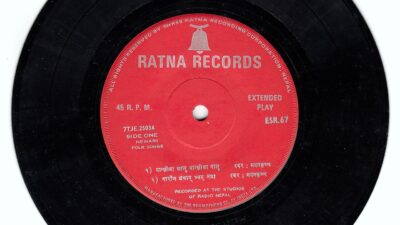
1920 के दशक की किसी भी ग्रामोफ़ोन कैटलॉग में भजन-सूची प्रेरणावश नहीं, बल्कि दो दशकों के तवा-व्यापार से निखरे एक व्यावसायिक सूत्र के तहत बनती थी। एचएमवी की कलकत्ता कैटलॉगिंग प्रणाली भक्ति-रिकॉर्डिंग को 'भजन और कीर्तन' के तहत वर्गीकृत करती थी, और भारत के हर क्षेत्र के ख़रीदार उन्हें साल-दर-साल लगातार माँगते थे। 1920 के दशक के मध्य की सूचियाँ कलाकारों के एक समूह से खिंचती थीं जो या तो शास्त्रीय ख़याल परंपरा में प्रशिक्षित थे (जो भजन को अर्ध-हल्की सामग्री के रूप में गाते थे) या विष्णु दिगंबर पलुसकर की राष्ट्रवादी भक्ति परंपरा में — जिनके शिष्यों ने उत्तर भारत के विद्यालयों और सार्वजनिक कार्यक्रमों में मीरा-कबीर के पाठ फैलाए। 1925 के कई भजन-तवे नई रचनाएँ नहीं थीं — 'मेरा तो गिरधर गोपाल', 'चदरिया झीनी रे झीनी', 'निर्गुण ब्रह्म ज्ञानी' — ऐसे मानक पाठ थे जिन्हें ख़रीदार त्योहारों और पूजा से पहचानते थे। भजन-तवा कम रिहर्सल, न्यूनतम संगत और एक सुबह के सत्र में कटने योग्य होने के कारण व्यावसायिक रूप से कुशल था। परिणाम एक ऐसा भजन-बाज़ार था जो 1920 के दशक के मध्य तक भारत में ग्रामोफ़ोन की सबसे स्थिर आय-श्रेणी बन चुका था।
अंग्रेज़ी में पढ़ें · Read in English
The bhajan list in any 1920s gramophone catalogue was not assembled through inspiration — it was a commercial formula refined over two decades of disc selling. HMV's Calcutta cataloguing system grouped devotional recordings under 'bhajans and kirtans', and buyers in every region of India requested them consistently year after year. The mid-1920s lists drew from a pool of artists trained either in the classical khayal tradition (who sang bhajans as semi-light material) or in the nationalist devotional tradition pioneered by Vishnu Digambar Paluskar, whose students spread Meera and Kabir texts through schools and public programmes across North India. Many of the 1925 bhajan sides were not new compositions but standard texts — 'Mera To Girdhar Gopal', 'Chadariya Jhini Re Jhini', 'Nirgun Brahma Gyani' — that buyers recognized from festivals and domestic puja. A bhajan side required few rehearsals, used minimal accompaniment (harmonium, tabla), and could be cut in a single morning session, making it commercially efficient as well as steady-selling. The result was a bhajan market that, by the mid-1920s, had become the gramophone's most stable revenue category in India, one that would flow directly into the devotional song sequences of the 1933–35 talkies.
विरासत The Legacy
यही सूची सीधी टॉकियों में बहती है: 'पूरन भगत' के भजन इसी की 1933 की फ़सल हैं।
अंग्रेज़ी में पढ़ें · Read in English
This list flows straight into the talkies: Puran Bhagat's bhajans are its 1933 harvest.
वर्गीकरण
ClassificationGenre
अन्य विवरण
More Details- Wikipedia: Vishnu Digambar Paluskar
- Wikipedia: Bhajan
- Subramanian, Lakshmi. From the Tanjore Court to the Madras Music Academy (2006) — on devotional music canonisation
- Kinnear, Michael. The Gramophone Company's First Indian Recordings 1899–1908 (1994)
References
रोचक तथ्य
Margin Notesविष्णु दिगंबर पलुस्कर (1872-1931) ने 1901 में लाहौर में भारत का पहला संगीत विद्यालय (गंधर्व महाविद्यालय) स्थापित किया और भजनों के बोलों को व्यवस्थित रूप से स्वरलिपिबद्ध कर प्रकाशित किया, जिससे उन प्रामाणिक रूपों का निर्माण हुआ जिन्हें आने वाले दशकों तक ग्रामोफोन कलाकार रिकॉर्ड करते रहे।
अंग्रेज़ी में पढ़ें · Read in English
Vishnu Digambar Paluskar (1872–1931) opened India's first music school (Gandharva Mahavidyalaya) in Lahore in 1901 and systematically notated and published bhajan texts, creating the canonical versions that gramophone artists recorded for decades after.
1920 के दशक के मध्य के एच.एम.वी. हिंदुस्तानी कैटलॉगों में भजनों को अपनी अलग क्रमांक प्रणाली सहित एक स्वतंत्र खंड में सूचीबद्ध किया जाता था, जो शास्त्रीय या ग़ज़ल डिस्कों से अलग एक उत्पाद श्रेणी के रूप में इसके व्यावसायिक महत्व को दर्शाता है।
अंग्रेज़ी में पढ़ें · Read in English
The mid-1920s HMV Hindustani catalogues listed bhajans under a separate section with its own numbering system, reflecting the category's commercial importance as a distinct product line from classical or ghazal discs.
मीराबाई के भजन ध्वनिक युग में सर्वाधिक रिकॉर्ड किए जाने वाले पाठों में से थे; चूँकि यह कवयित्री 16वीं सदी में ही दिवंगत हो चुकी थीं, इसलिए कोई रॉयल्टी विवाद नहीं था और कोई भी गायक बिना अनुमति के किसी भी रूप को रिकॉर्ड कर सकता था।
अंग्रेज़ी में पढ़ें · Read in English
Mirabai's bhajans were among the most recorded texts in the acoustic era; because the poet died in the 16th century, there were no royalty disputes and any singer could record any version without clearance.
इस दौर के अनेक भजन रिकॉर्डिंग्स में केवल हारमोनियम और तबले का ही साथ होता था — यह सबसे सरल संभव स्टूडियो व्यवस्था थी — क्योंकि भक्ति संगीत के श्रोता विस्तृत वाद्यवृंद की तुलना में परिचित सरलता को अधिक पसंद करते थे।
अंग्रेज़ी में पढ़ें · Read in English
Many bhajan sides of this period were accompanied only by harmonium and tabla — the simplest possible studio setup — because the devotional audience preferred recognizable simplicity over elaborate orchestration.
कबीर के दोहे भजन-गीत रूप में और पाठ की गई दोहा-श्रृंखलाओं, दोनों रूपों में रिकॉर्ड किए गए थे; 78 आरपीएम डिस्कों पर दर्ज कबीर परंपरा, पं. कुमार गंधर्व द्वारा 1960 के दशक में हुए उनके बड़े पुनरुत्थान से चार दशक पहले की है।
अंग्रेज़ी में पढ़ें · Read in English
Kabir's dohas (couplets) were recorded in both the bhajan-song format and as recited couplet chains; the recorded Kabir tradition on 78 rpm discs predates his major revival in the 1960s through Pt. Kumar Gandharva by four decades.
नमूना-पट्टी
The Specimen Table| शीर्षक | बीस के मध्य के भजन-तवे · Bhajan Sides of the Mid-Twenties |
|---|---|
| वर्ष · युग | 1925 |
| गायक | कैटलॉग के विविध कलाकार |
| गीतकार | मीरा / कबीर / सूरदास (पारंपरिक) |
| भाषा | hindi |
| भाव | भक्ति |
| लोकप्रियता | Popular |
| बोल-स्थिति | सार्वजनिक |
जुड़े हुए पन्ने
Connected Plates · The Graph Made Visibleअटलस में कोई पन्ना अकेला नहीं — इस गीत से जुड़े गीत, कलाकार, फ़िल्म, राग-ताल-विधा, सब यहाँ से खुलते हैं।
साझा कीजिए · Share this Plate