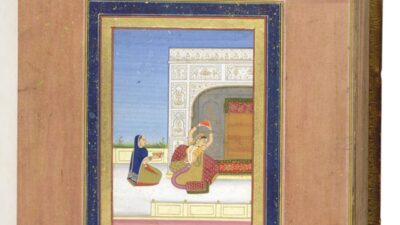
शास्त्र विंग · राग-पट्टिका · Raag Plate
पूरिया धनाश्री
Pūriyā Dhanāśrī
राजसी सूर्यास्त का राग · The Majestic Sunset Raag
भावराजसी · वीरपूर्ण · अभिजात · भक्तिपूर्ण · दीप्तिमान
गतिmadhya ऊर्जातीव्र
अन्य नामPuriya-Dhanashree · पूरिया-धनाश्री · Dhanashree-Puriya
स्वर-चित्र · The Swara Panel
आरोह — अवरोह · The Ascent and the Descent
कोमल स्वर — Re♭, Dha♭ — तीव्रित हरे रंग में · तीव्र स्वर — Ma♯ — बिंदुदार नारंगी में।
आरोह · Aroha चढ़ती हुई सीढ़ी
अवरोह · Avaroha उतरती हुई सीढ़ी
कोमल स्वर — नीचे की ओर झुका चिह्न (◌॒)तीव्र स्वर — ऊपर की ओर चिह्न (◌॑)सˊ = तार सप्तक का षड्ज
पूरिया धनाश्री एक दुर्लभ संयुक्त राग है जो कोमल (रे♭, ध♭) और तीव्र (म♯) दोनों स्वरों का उपयोग करता है। यह असाधारण सामंजस्य और मधुरता बनाता है।
अंग्रेज़ी में पढ़ें · Read in English
Puriya Dhanashree is a rare compound raag that uses BOTH komal (Re♭, Dha♭) and tivra (Ma♯) notes in the same raag. This creates extraordinary harmonic and melodic complexity. The raag represents the synthesis of two different thaat families — the brightness of tivra Ma♯ (Kalyan family) combined with the depth of komal notes (Poorvi family). This combination produces a raag of exceptional sophistication.
पकड़ · पहचान वाक्यांश
रे♭ ग म♯ प ध♭ नि
Re♭ Ga Ma♯ Pa Dha♭ Ni
पूरिया धनाश्री को परिभाषित करने वाला विशिष्ट आरोही वाक्यांश — राजसी और जटिल।
अंग्रेज़ी में पढ़ें · Read in English
The distinctive ascending phrase that identifies Puriya Dhanashree — majestic and complex, combining both komal (flat) and tivra (sharp) notes in a single sweeping gesture. This is the raag's signature.
वादी–संवादी टिप्पणी · Vadi–Samvadi note
Vadi — The most important note in Puriya Dhanashree, where the raag's character is most felt and expressed — bridging the komal Re♭ and tivra Ma♯.
Samvadi — The second most important note, supporting the vadi and creating the raag's majestic, devotional character.
चलन · स्वर-यात्रा
सा रे♭ ग म♯ प ध♭ नि सˊ, सा नि ध♭ प म♯ ग रे♭ स
Sa Re♭ Ga Ma♯ Pa Dha♭ Ni Sa', Sa Ni Dha♭ Pa Ma♯ Ga Re♭ Sa
पूरिया धनाश्री की पूर्ण मधुर प्रगति — आरोहण और अवरोहण दोनों 7 स्वर हैं।
अंग्रेज़ी में पढ़ें · Read in English
The complete melodic progression of Puriya Dhanashree — both arohana and avarohana are full (7 notes), creating a comprehensive exploration of the raag's majestic character.
न्यास स्वर — Sa, Ga, Ma♯, Pa अनुवादी — Sa, Re♭, Ma♯, Pa
विशेष स्वर-वाक्य
Characteristic Phrasesसमय और भाव
Time Theory & Moodसमय-सिद्धांत · Time Theory
संध्या प्रहर (सूर्यास्त)
सूर्यास्त का राग — सूरज क्षितिज को छूता है, तब गाया जाता है।
Sunset raag — traditionally performed as the sun touches the horizon, during the golden hour of dusk. The raag's majestic mood captures the grandeur of sunset.
All seasons — no seasonal restriction
भाव और गति · Mood & Tempo
वीर · Heroism / Majesty / Nobility
पूरिया धनाश्री का प्राथमिक रस — राजसी वीरता, कुलीन महिमा, शक्तिशाली भक्ति।
madhya
ऊर्जा · Energyतीव्र
स्तर · Leveladvanced — पूरिया धनाश्री बहुत उन्नत है — कोमल और तीव्र दोनों स्वर परिवारों की समझ आवश्यक है।
लक्षण गीत · The Mnemonic Verse
लक्षण गीत
पूरिया धनाश्री संयुक्त राग है
रे को कोमल, म को तीव्र राग है
सा रे को ग म को प ध को नि सा आरोहण
सा नि ध को प म को ग रे को स अवरोहण
अंग्रेज़ी में पढ़ें · Read in English
Puriya Dhanashree samyukt raag hai
Re ko komal, ma ko tivra raag hai
Sa r-komal g m-tivra p d-komal n S arohana
Sa n d-komal p m-tivra g r-komal S avarohana
Puriya Dhanashree is a compound raag with komal Re and Dha, tivra Ma. Ascent: Sa Re♭ Ga Ma♯ Pa Dha♭ Ni Sa'. Descent: Sa Ni Dha♭ Pa Ma♯ Ga Re♭ Sa.
पट्टिका-लेख
The Monographपरिचय Introduction
पूरिया धनाश्री एक दुर्लभ, परिष्कृत संयुक्त राग है जो हिंदुस्तानी शास्त्रीय संगीत की सामंजस्य और मधुरता की पराकाष्ठा को दर्शाता है। यह राग पूर्वी और कल्यण थाट के विभिन्न परिवारों को संश्लेषित करता है।
अंग्रेज़ी में पढ़ें · Read in English
Puriya Dhanashree is a rare, sophisticated compound raag that represents the apex of Hindustani classical music's harmonic and melodic complexity. Unlike simple raags that belong to a single thaat family, Puriya Dhanashree deliberately synthesizes two different families — the Poorvi thaat (with its komal notes Re♭ and Dha♭) and the Kalyan thaat (with its tivra Ma♯). The result is a raag of extraordinary richness: bright yet deep, majestic yet introspective, heroic yet devotional. Puriya Dhanashree is quintessentially a sunset raag, performed as the sun approaches the horizon and the sky fills with gold and purple. The raag's majestic, devotional character makes it a favorite for Devi (goddess) worship and cosmic devotion. It requires considerable skill from performers — both to maintain the raag's structural integrity and to bring out its sophisticated emotional palette. Puriya Dhanashree stands as testimony to the evolved, refined nature of Hindustani classical music.
सांस्कृतिक महत्व Cultural Significance
पूरिया धनाश्री हिंदुस्तानी संगीत में ज्ञानवान श्रोताओं और गंभीर शिक्षार्थियों के लिए एक अद्वितीय स्थान रखता है। यह संयुक्त राग संगीत स्कूलों में उन्नत अध्ययन का विषय है।
अंग्रेज़ी में पढ़ें · Read in English
Puriya Dhanashree holds a unique place in Hindustani music as a raag for enlightened listeners and serious students. Its compound nature makes it a topic of advanced study in music schools. The raag appears frequently in philosophical and spiritual contexts — particularly in Devi worship, meditation, and discussions of raag theory. Its association with sunset gives it a romantic, spiritual dimension beyond mere performance. Puriya Dhanashree is favored in concert halls, universities, and devotional gatherings where musical sophistication is valued.
ऐतिहासिक महत्व Historical Significance
पूरिया धनाश्री शास्त्रीय ग्रंथों में एक संयुक्त राग के रूप में प्रलेखित है। राग का विकास सदियों के राग विकास को दर्शाता है।
अंग्रेज़ी में पढ़ें · Read in English
Puriya Dhanashree is documented in classical texts as a compound raag (samyukt raag), representing the evolved understanding of raag theory. The raag is thought to have developed as musicians experimented with harmonic possibilities by combining elements from different thaat families. This sophisticated approach reflects centuries of raag development. Puriya Dhanashree maintains particular prominence in North Indian classical traditions, especially in concert and devotional contexts.
शिक्षा
Teaching & Learning| बंदिश | ताल · लय | बोल |
|---|---|---|
| Mahakal Jagjagan Kar Traditional |
Teentaal | |
| Devi Teri Jai Bolun Traditional |
Teentaal |
पकड़ को सावधानीपूर्वक सीखें। यह पूरे राग की जटिलता को दर्शाता है।
अंग्रेज़ी में पढ़ें · Read in English
Master the pakad (Re♭ Ga Ma♯ Pa Dha♭ Ni) as the foundation. This phrase contains all the complexity — komal Re♭ followed by natural Ga, then tivra Ma♯, then komal Dha♭. Practice each interval carefully.
संयुक्त राग सिद्धांत समझें — पूर्वी और कल्यण थाट का मिश्रण।
अंग्रेज़ी में पढ़ें · Read in English
Understand the compound raag theory: Puriya Dhanashree blends BOTH Poorvi thaat (with komal notes) and Kalyan thaat (with tivra Ma♯). These are not contradictions but a deliberate synthesis.
राग उज्ज्वल और गहरा दोनों है। संतुलन रखें — राजसी मनोदशा।
अंग्रेज़ी में पढ़ें · Read in English
The raag is BOTH bright (from tivra Ma♯) and deep (from komal Re♭ and Dha♭). Don't emphasize one quality over the other — balance is key. The raag is majestic, not cheerful or melancholic.
सूर्यास्त के रंगों को अपनी प्रस्तुति में अन्वेषण करें।
अंग्रेज़ी में पढ़ें · Read in English
Puriya Dhanashree is sunset raag — explore the colors of late afternoon light in your performance. The raag's golden quality comes from this balance of brightness and depth.
कोमल और तीव्र स्वरों को भ्रमित करना
अंग्रेज़ी में पढ़ें · Read in English
Confusing the komal and tivra notes — using natural notes instead of komal Re♭ or Dha♭, or using komal Ma instead of tivra Ma♯
सुधार: Puriya Dhanashree REQUIRES both komal (Re♭, Dha♭) and tivra (Ma♯). Keep a mental checklist and practice slowly to ensure accuracy.
राग की जटिलता के कारण अस्पष्ट ध्वनि देना
अंग्रेज़ी में पढ़ें · Read in English
Sounding muddled or confused due to the complexity of the raag
सुधार: The compound nature should create sophisticated elegance, not confusion. Practice the pakad repeatedly until it becomes natural and fluid.
गलत समय पर राग को प्रस्तुत करना
अंग्रेज़ी में पढ़ें · Read in English
Performing Puriya Dhanashree at the wrong time of day — treating it as an evening raag when it's specifically a SUNSET raag
सुधार: Puriya Dhanashree is best performed during the golden hour — around sunset. Its majestic character is tied to this specific time of day.
तुलना
A Specimen Comparisonपूरिया माता राग है; पूरिया धनाश्री इसमें तीव्र मध्यम जोड़ता है।
| तुलनाSpecimen | पूरिया धनाश्री | पूरिया |
|---|---|---|
| स्वर-अंतर | Puriya: Sa Re♭ Ga Ma Pa Dha♭ Ni | Puriya Dhanashree: Sa Re♭ Ga Ma♯ Pa Dha♭ Ni | |
| भाव-अंतर | Puriya = Evening contemplation; Puriya Dhanashree = Sunset majesty with compound richness | |
| समय-अंतर | Puriya = Evening; Puriya Dhanashree = Sunset (specific time) | |
दोनों तीव्र मध्यम के साथ संध्या राग हैं, लेकिन यमन सरल है, पूरिया धनाश्री जटिल है।
| तुलनाSpecimen | पूरिया धनाश्री | यमन |
|---|---|---|
| स्वर-अंतर | Yaman uses only shuddha notes + Ma♯; Puriya Dhanashree uses komal + shuddha + tivra | |
| भाव-अंतर | Yaman = Bright romantic; Puriya Dhanashree = Majestic devotional | |
| समय-अंतर | Both sunset-evening, but Puriya Dhanashree is more specifically sunset | |
रोचक तथ्य
Margin Notesपूरिया धनाश्री कुछ संयुक्त रागों में से एक है जो कोमल और तीव्र दोनों स्वरों का प्रयोग करता है।
अंग्रेज़ी में पढ़ें · Read in English
Puriya Dhanashree is one of the few compound raags that use both komal (flat) and tivra (sharp) notes — a rare and sophisticated feature that requires advanced theoretical understanding.
राग का नाम, 'पूरिया धनाश्री,' दो राग नामों को जोड़ता है: पूरिया और धनाश्री। यह इसकी संयुक्त प्रकृति को दर्शाता है।
अंग्रेज़ी में पढ़ें · Read in English
The raag's name, 'Puriya Dhanashree,' literally combines two raag names: Puriya (evening raag of Poorvi thaat) and Dhanashree (a Kalyan-family raag). This naming reflects its compound nature.
पूरिया धनाश्री विशेष रूप से एक सूर्यास्त राग है — सबसे अधिक समय-बद्ध रागों में से एक।
अंग्रेज़ी में पढ़ें · Read in English
Puriya Dhanashree is specifically a SUNSET raag — more precisely bound to a single time of day than most other raags. This makes it a favorite of flautists, whose sunset performances are legendary.
पूरिया धनाश्री जैसे संयुक्त राग राग समझ के 'स्नातक स्तर' माने जाते हैं।
अंग्रेज़ी में पढ़ें · Read in English
Compound raags like Puriya Dhanashree are considered the 'graduate level' of raag understanding. Mastering this raag indicates advanced musicianship and theoretical sophistication.
प्रस्तुति
Performance- Description
- सूर्यास्त का राग — सूरज क्षितिज को छूता है, तब गाया जाता है। Sunset raag — traditionally performed as the sun touches the horizon, during the golden hour of dusk. The raag's majestic mood captures the grandeur of sunset.
- Prahar Number
- 6
- Prahar Name
- संध्या प्रहर (सूर्यास्त) Sandhya Prahar (Sunset)
- Time Start
- 17:30
- Time End
- 20:00
- Time Flexibility
- moderate
- Time Notes
- Specifically a sunset raag — the golden hour of late afternoon to early evening is ideal
Time
और जानें
More to Know- raag-puriya — Puriya — पूरिया — Puriya is parent raag; Puriya Dhanashree adds tivra Ma♯ to Puriya's framework. Puriya is evening; Puriya Dhanashree is sunset with greater complexity. — पूरिया माता राग है; पूरिया धनाश्री इसमें तीव्र मध्यम जोड़ता है। — Puriya: Sa Re♭ Ga Ma Pa Dha♭ Ni | Puriya Dhanashree: Sa Re♭ Ga Ma♯ Pa Dha♭ Ni — Puriya = Evening contemplation; Puriya Dhanashree = Sunset majesty with compound richness — Puriya = Evening; Puriya Dhanashree = Sunset (specific time)
- raag-yaman — Yaman — यमन — Both are evening raags with tivra Ma♯, but Yaman is simpler (7 shuddha notes + 1 tivra), while Puriya Dhanashree is compound with both komal and tivra. — दोनों तीव्र मध्यम के साथ संध्या राग हैं, लेकिन यमन सरल है, पूरिया धनाश्री जटिल है। — Yaman uses only shuddha notes + Ma♯; Puriya Dhanashree uses komal + shuddha + tivra — Yaman = Bright romantic; Puriya Dhanashree = Majestic devotional — Both sunset-evening, but Puriya Dhanashree is more specifically sunset
Comparisons
सीखने के लिए
For Learners- Difficulty Level
- advanced
नमूना-पट्टी
The Specimen Table| नाम | पूरिया धनाश्री · Puriya Dhanashree |
|---|---|
| थाट | पूर्वी |
| आरोह | सा रे♭ ग म♯ प ध♭ नि सˊ |
| अवरोह | सˊ नि ध♭ प म♯ ग रे♭ स |
| पकड़ | रे♭ ग म♯ प ध♭ नि |
| जाति | संपूर्ण-संपूर्ण · Sampurna-Sampurna |
| कोमल स्वर | Re♭, Dha♭ |
| तीव्र स्वर | Ma♯ |
| समय | संध्या प्रहर (सूर्यास्त) |
| ऋतु | All seasons — no seasonal restriction |
| गति | madhya |
| ऊर्जा | तीव्र |
| प्रकृति | Komal |
| परिवार | पूर्वी संयुक्त परिवार |
| स्तर | advanced |
| लोकप्रियता | Very popular |
| कर्नाटक समतुल्य | Dhirashan karabharanam · Melakarta 29 |
| पाश्चात्य समतुल्य | Lydian/Dorian Hybrid |
| अन्य नाम | Puriya-Dhanashree · पूरिया-धनाश्री · Dhanashree-Puriya |
जुड़े हुए पन्ने
Connected Plates · The Graph Made Visibleअटलस में कोई पन्ना अकेला नहीं — इस राग से गीत, प्रस्तुतियाँ, कलाकार, ताल, घराने और मिलते-जुलते राग, सब यहाँ से खुलते हैं।
प्रसिद्ध प्रस्तुतियाँ · Legendary Renditions
इस राग के कलाकार · Notable Artists
ताल-साथी · Taal Pairings
घराने · Gharanas
मिलते-जुलते राग · Similar Raags
शास्त्र-सूत्र · Shastra Threads
श्रवण-कक्ष · The Listening Room
सुनिए — पूरिया धनाश्री · Hear the Raag
Begum Parveen Sultana | Raag Puriya Dhanashree
प्रश्नोत्तर
Questions & Answersराग पूरिया धनाश्री का आरोहन-अवरोहन क्या है?
आरोहन: सा रे♭ ग म♯ प ध♭ नि सˊ | अवरोहन: सˊ नि ध♭ प म♯ ग रे♭ स
अंग्रेज़ी में पढ़ें · Read in English
What is the arohana and avarohana of Raag Puriya Dhanashree? — Arohana: Sa Re♭ Ga Ma♯ Pa Dha♭ Ni Sa' | Avarohana: Sa' Ni Dha♭ Pa Ma♯ Ga Re♭ Sa
पूरिया धनाश्री को संयुक्त राग क्यों कहा जाता है?
क्योंकि यह दो अलग-अलग थाट परिवारों को मिलाता है: पूर्वी (कोमल स्वरों के साथ) और कल्यण (तीव्र मध्यम के साथ)।
अंग्रेज़ी में पढ़ें · Read in English
Why is Puriya Dhanashree called a compound raag? — Because it synthesizes two different thaat families: Poorvi (with komal notes) and Kalyan (with tivra Ma♯).
पूरिया धनाश्री किस समय गाया जाता है?
विशेष रूप से सूर्यास्त के समय, जब सूरज क्षितिज को छूता है (लगभग 5:30 PM से 8 PM तक)।
अंग्रेज़ी में पढ़ें · Read in English
When is Raag Puriya Dhanashree performed? — Specifically at sunset, when the sun touches the horizon (approximately 5:30 PM to 8 PM).
साझा कीजिए · Share this Plate