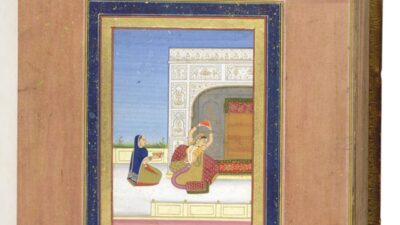
शास्त्र विंग · राग-पट्टिका · Raag Plate
पूरिया कल्यण
Pūriyā Kalyān
संध्या का संयुक्त राग · The Evening Compound Raag
भावरोमांटिक · अभिजात · शाही · सुंदर · भावुक
गतिmadhya ऊर्जामध्यम से तीव्र
अन्य नामPuriya-Kalyan · पूरिया-कल्यण · Kalyan-Puriya
स्वर-चित्र · The Swara Panel
आरोह — अवरोह · The Ascent and the Descent
कोमल स्वर — Re♭ — तीव्रित हरे रंग में · तीव्र स्वर — Ma♯ — बिंदुदार नारंगी में।
आरोह · Aroha चढ़ती हुई सीढ़ी
अवरोह · Avaroha उतरती हुई सीढ़ी
कोमल स्वर — नीचे की ओर झुका चिह्न (◌॒)तीव्र स्वर — ऊपर की ओर चिह्न (◌॑)सˊ = तार सप्तक का षड्ज
पूरिया कल्यण कोमल रे♭ और तीव्र म♯ दोनों का उपयोग करता है, जो पूरिया और कल्यण को जोड़ता है। पूरिया धनाश्री के विपरीत जो अधिक जटिल है, पूरिया कल्यण अधिक संतुलित है।
अंग्रेज़ी में पढ़ें · Read in English
Puriya Kalyan uses both komal Re♭ and tivra Ma♯, creating a raag that bridges Puriya (Poorvi family, komal notes) and Kalyan (bright, uplifting tivra Ma♯). Unlike Puriya Dhanashree which also uses komal Dha♭ for complexity, Puriya Kalyan is more straightforward — romantic yet bright. The single komal (Re♭) combined with single tivra (Ma♯) creates balance rather than complexity.
पकड़ · पहचान वाक्यांश
रे♭ ग म♯ प ध
Re♭ Ga Ma♯ Pa Dha
पूरिया कल्यण को परिभाषित करने वाला रोमांटिक आरोही वाक्यांश — पूरिया का कोमल रे♭ और कल्यण का तीव्र म♯।
अंग्रेज़ी में पढ़ें · Read in English
The romantic ascending phrase that identifies Puriya Kalyan — combining Puriya's komal Re♭ with Kalyan's bright tivra Ma♯. This is the raag's distinctive signature.
वादी–संवादी टिप्पणी · Vadi–Samvadi note
Vadi — The most important note in Puriya Kalyan, where the raag's romantic character is most felt — balanced between Puriya's komal Re♭ and Kalyan's tivra Ma♯.
Samvadi — The second most important note, supporting the vadi and creating harmonic balance.
चलन · स्वर-यात्रा
सा रे♭ ग म♯ प ध नि सˊ, सा नि ध प म♯ ग रे♭ स
Sa Re♭ Ga Ma♯ Pa Dha Ni Sa', Sa Ni Dha Pa Ma♯ Ga Re♭ Sa
पूरिया कल्यण की पूर्ण मधुर प्रगति — आरोहण और अवरोहण दोनों 7 स्वर हैं।
अंग्रेज़ी में पढ़ें · Read in English
The complete melodic progression of Puriya Kalyan — both arohana and avarohana are full (7 notes), creating a balanced exploration of the raag's romantic, compound character.
न्यास स्वर — Sa, Ga, Ma♯, Pa अनुवादी — Sa, Re♭, Ma♯, Pa
विशेष स्वर-वाक्य
Characteristic Phrasesसमय और भाव
Time Theory & Moodसमय-सिद्धांत · Time Theory
संध्या प्रहर
संध्या राग — दोपहर के अंत से शाम तक गाया जाता है।
Evening raag — traditionally performed from late afternoon into the evening. The romantic mood suits the intimate, introspective hours of dusk.
All seasons — no seasonal restriction
भाव और गति · Mood & Tempo
श्रृंगार · Love / Romance / Longing
पूरिया कल्यण का प्राथमिक रस — रोमांटिक अभिलाषा, भावुक भक्ति के साथ उदात्त अनुग्रह।
madhya
ऊर्जा · Energyमध्यम से तीव्र
स्तर · Levelintermediate — पूरिया कल्यण में कोमल और तीव्र स्वरों की समझ आवश्यक है। पूरिया धनाश्री जितना जटिल नहीं है।
लक्षण गीत · The Mnemonic Verse
लक्षण गीत
पूरिया कल्यण मारवा में रे को कोमल धरे
म को तीव्र करे, सरल संयुक्त राग है
सा रे को ग म को प ध नि सा आरोहण
सा नि ध प म को ग रे को स अवरोहण
अंग्रेज़ी में पढ़ें · Read in English
Puriya Kalyan Marwa mein re ko komal dhare
Ma ko tivra kare, saral samyukt raag hai
Sa r-komal g m-tivra p d n S arohana
Sa n d p m-tivra g r-komal S avarohana
Puriya Kalyan in Marwa thaat uses komal Re and tivra Ma. It is a straightforward compound raag. Ascent: Sa Re♭ Ga Ma♯ Pa Dha Ni Sa'. Descent: Sa Ni Dha Pa Ma♯ Ga Re♭ Sa.
पट्टिका-लेख
The Monographपरिचय Introduction
पूरिया कल्यण एक परिष्कृत संध्या राग है जो दो शास्त्रीय राग परिवारों का सुंदर संश्लेषण है। पूरिया का कोमल रे♭ और कल्यण का तीव्र म♯ मिलाकर, राग रोमांटिक आत्मविश्लेषण और उदात्त उत्थान के बीच एक अद्वितीय संतुलन प्राप्त करता है।
अंग्रेज़ी में पढ़ें · Read in English
Puriya Kalyan is a sophisticated evening raag that represents the beautiful synthesis of two classical raag families. By combining Puriya's komal Re♭ with Kalyan's bright tivra Ma♯, the raag achieves a unique balance between romantic introspection and majestic uplift. Unlike Puriya Dhanashree which adds complexity through komal Dha♭, Puriya Kalyan maintains elegant simplicity — one komal, one tivra, all other shuddha (natural) notes. This restraint creates a raag of refined sophistication, neither overwhelmingly complex nor overly simple. Puriya Kalyan is beloved in both classical concert traditions and romantic semi-classical forms like thumri. The raag appears frequently in devotional contexts where romantic love is directed toward the divine. Its evening performance time makes it ideal for the intimate, introspective hours of dusk when romantic longing is most deeply felt.
सांस्कृतिक महत्व Cultural Significance
पूरिया कल्यण गंभीर शास्त्रीय परंपराओं और लोकप्रिय रोमांटिक परंपराओं दोनों में महत्व रखता है।
अंग्रेज़ी में पढ़ें · Read in English
Puriya Kalyan holds significance in both serious classical circles and popular romantic traditions. In classical contexts, it represents the evolved understanding of compound raag theory. In semi-classical and devotional contexts, it is a favorite for expressing romantic love — both worldly and divine. The raag appears frequently in concert halls, temples, and intimate musical gatherings. Its romantic character makes it particularly beloved among audiences seeking emotional expression through music.
ऐतिहासिक महत्व Historical Significance
पूरिया कल्यण शास्त्रीय संगीत ग्रंथों में एक परिष्कृत संयुक्त राग के रूप में प्रलेखित है।
अंग्रेज़ी में पढ़ें · Read in English
Puriya Kalyan is documented in classical music texts as a sophisticated compound raag representing evolved raag theory. The raag is thought to have developed as musicians experimented with harmonic possibilities by combining the romantic softness of Puriya with the bright uplift of Kalyan. This deliberate synthesis reflects centuries of raag development and refinement. Puriya Kalyan maintains particular prominence in North Indian classical traditions, especially among musicians and audiences who appreciate harmonic sophistication.
शिक्षा
Teaching & Learning| बंदिश | ताल · लय | बोल |
|---|---|---|
| Janam Janam Ka Pyar Traditional |
Teentaal | |
| Tum Bina Sawar Nahi Traditional |
Dadra |
पकड़ को सावधानीपूर्वक सीखें। कोमल रे♭ से तीव्र म♯ का संक्रमण सुचारु होना चाहिए।
अंग्रेज़ी में पढ़ें · Read in English
Master the pakad (Re♭ Ga Ma♯ Pa Dha) carefully. This phrase shows both komal Re♭ and tivra Ma♯ — practice the transition between them until it feels natural.
पूरिया कल्यण पूरिया धनाश्री से अधिक संतुलित है। एक कोमल और एक तीव्र स्वर संतुलन बनाते हैं।
अंग्रेज़ी में पढ़ें · Read in English
Understand the balance: Puriya Kalyan is more balanced than Puriya Dhanashree (no komal Dha♭). The single komal and single tivra create equilibrium — romantic yet bright.
पूरिया की कोमलता और कल्यण की चमक को संतुलित करें। परिष्कृत रोमांटिक महिमा बनाएँ।
अंग्रेज़ी में पढ़ें · Read in English
Puriya Kalyan blends the softness of Puriya with the brightness of Kalyan. Balance both qualities — neither dull nor harsh, but refined romantic majesty.
वादी (ग) के चारों ओर सूक्ष्म सजावट का अन्वेषण करें। राग का चरित्र मार्जित है, भव्य नहीं।
अंग्रेज़ी में पढ़ें · Read in English
Explore the raag's romantic depth through careful intonation and subtle ornamentation around the vadi (Ga). The character is elegant, not flashy.
पूरिया कल्यण को यमन या कल्यण से भ्रमित करना
अंग्रेज़ी में पढ़ें · Read in English
Confusing Puriya Kalyan with Yaman or Kalyan — using shuddha (natural) notes instead of komal Re♭
सुधार: Puriya Kalyan has komal Re♭ (from Puriya) combined with tivra Ma♯ (from Kalyan). The komal Re♭ is essential — always include it.
कोमल और तीव्र का संक्रमण अजीब ध्वनि देना
अंग्रेज़ी में पढ़ें · Read in English
Sounding disjointed due to the komal-tivra combination — making the transition sound awkward
सुधार: Practice the pakad (Re♭ Ga Ma♯) slowly until the transition is smooth and natural. The two qualities should blend gracefully.
राग को साधारण संमिश्रण मानना, परिष्कृत संयुक्त राग नहीं
अंग्रेज़ी में पढ़ें · Read in English
Treating Puriya Kalyan as a simple fusion rather than a sophisticated compound raag
सुधार: Puriya Kalyan is a sophisticated classical compound raag with its own identity — not just a mix of two raags.
तुलना
A Specimen Comparisonदोनों तीव्र मध्यम के साथ संध्या राग हैं, लेकिन यमन सरल है, पूरिया कल्यण संयुक्त है।
| तुलनाSpecimen | पूरिया कल्यण | यमन |
|---|---|---|
| स्वर-अंतर | Yaman: Sa Re Ga Ma♯ Pa Dha Ni | Puriya Kalyan: Sa Re♭ Ga Ma♯ Pa Dha Ni | |
| भाव-अंतर | Yaman = Bright, uplifting romance; Puriya Kalyan = Romantic with refined softness | |
| समय-अंतर | Both evening, but Puriya Kalyan emphasizes romantic introspection | |
दोनों संयुक्त राग हैं, लेकिन पूरिया धनाश्री में अतिरिक्त कोमल ध♭ है।
| तुलनाSpecimen | पूरिया कल्यण | पूरिया धनाश्री |
|---|---|---|
| स्वर-अंतर | Puriya Kalyan: Sa Re♭ Ga Ma♯ Pa Dha Ni | Puriya Dhanashree: Sa Re♭ Ga Ma♯ Pa Dha♭ Ni | |
| भाव-अंतर | Puriya Kalyan = Romantic elegance; Puriya Dhanashree = Majestic complexity | |
| समय-अंतर | Puriya Kalyan = Evening; Puriya Dhanashree = Sunset | |
रोचक तथ्य
Margin Notesपूरिया कल्यण में बिल्कुल एक कोमल स्वर (रे♭) और एक तीव्र स्वर (म♯) है, जो दोनों थाट परिवारों के बीच पूर्ण संतुलन प्राप्त करता है।
अंग्रेज़ी में पढ़ें · Read in English
Puriya Kalyan uses exactly one komal swar (Re♭) and one tivra swar (Ma♯), achieving perfect balance between two thaat families. This restraint creates elegant sophistication.
पूरिया धनाश्री के विपरीत जो विशेष रूप से सूर्यास्त राग है, पूरिया कल्यण एक व्यापक संध्या राग है।
अंग्रेज़ी में पढ़ें · Read in English
Unlike Puriya Dhanashree which is specifically a sunset raag, Puriya Kalyan is a broader evening raag. This gives it more flexibility in concert and devotional performance.
पूरिया कल्यण को ठुमरी और ग़ज़ल परंपराओं में अक्सर इस्तेमाल किया जाता है।
अंग्रेज़ी में पढ़ें · Read in English
Puriya Kalyan is frequently used in thumri and ghazal traditions, making it one of the few compound raags to have strong presence in semi-classical forms.
नाम 'पूरिया कल्यण' दो राग नामों को जोड़ता है — पूरिया और कल्यण। यह संश्लेषण दोनों चरित्रों को दर्शाता है।
अंग्रेज़ी में पढ़ें · Read in English
The name 'Puriya Kalyan' literally combines two raag names — Puriya (romantic evening) and Kalyan (uplifting majesty). This naming reflects the synthesis of both characters.
प्रस्तुति
Performance- Description
- संध्या राग — दोपहर के अंत से शाम तक गाया जाता है। Evening raag — traditionally performed from late afternoon into the evening. The romantic mood suits the intimate, introspective hours of dusk.
- Prahar Number
- 5
- Prahar Name
- संध्या प्रहर Sandhya Prahar
- Time Start
- 17:00
- Time End
- 20:00
- Time Flexibility
- flexible
- Time Notes
- Primarily evening, with romantic, compound character
Time
और जानें
More to Know- raag-yaman — Yaman — यमन — Both are evening raags with tivra Ma♯, but Yaman uses only shuddha notes + tivra Ma♯ (no komal), while Puriya Kalyan includes komal Re♭ for romantic softness. — दोनों तीव्र मध्यम के साथ संध्या राग हैं, लेकिन यमन सरल है, पूरिया कल्यण संयुक्त है। — Yaman: Sa Re Ga Ma♯ Pa Dha Ni | Puriya Kalyan: Sa Re♭ Ga Ma♯ Pa Dha Ni — Yaman = Bright, uplifting romance; Puriya Kalyan = Romantic with refined softness — Both evening, but Puriya Kalyan emphasizes romantic introspection
- raag-puriya-dhanashree — Puriya Dhanashree — पूरिया धनाश्री — Both are compound raags combining Puriya and Kalyan families, but Puriya Dhanashree also includes komal Dha♭ for greater complexity. Puriya Dhanashree is specifically sunset; Puriya Kalyan is broader evening. — दोनों संयुक्त राग हैं, लेकिन पूरिया धनाश्री में अतिरिक्त कोमल ध♭ है। — Puriya Kalyan: Sa Re♭ Ga Ma♯ Pa Dha Ni | Puriya Dhanashree: Sa Re♭ Ga Ma♯ Pa Dha♭ Ni — Puriya Kalyan = Romantic elegance; Puriya Dhanashree = Majestic complexity — Puriya Kalyan = Evening; Puriya Dhanashree = Sunset
Comparisons
सीखने के लिए
For Learners- Difficulty Level
- intermediate
नमूना-पट्टी
The Specimen Table| नाम | पूरिया कल्यण · Puriya Kalyan |
|---|---|
| थाट | मारवा |
| आरोह | सा रे♭ ग म♯ प ध नि सˊ |
| अवरोह | सˊ नि ध प म♯ ग रे♭ स |
| पकड़ | रे♭ ग म♯ प ध |
| जाति | संपूर्ण-संपूर्ण · Sampurna-Sampurna |
| कोमल स्वर | Re♭ |
| तीव्र स्वर | Ma♯ |
| समय | संध्या प्रहर |
| ऋतु | All seasons — no seasonal restriction |
| गति | madhya |
| ऊर्जा | मध्यम से तीव्र |
| प्रकृति | Komal |
| परिवार | मारवा संयुक्त परिवार |
| स्तर | intermediate |
| लोकप्रियता | Very popular |
| कर्नाटक समतुल्य | Harikambhoji · Melakarta 28 |
| पाश्चात्य समतुल्य | Lydian Major with raised 4 |
| अन्य नाम | Puriya-Kalyan · पूरिया-कल्यण · Kalyan-Puriya |
जुड़े हुए पन्ने
Connected Plates · The Graph Made Visibleअटलस में कोई पन्ना अकेला नहीं — इस राग से गीत, प्रस्तुतियाँ, कलाकार, ताल, घराने और मिलते-जुलते राग, सब यहाँ से खुलते हैं।
प्रसिद्ध प्रस्तुतियाँ · Legendary Renditions
फ़िल्मी गीत इस राग में · Famous Film Songs
इस राग के कलाकार · Notable Artists
ताल-साथी · Taal Pairings
घराने · Gharanas
मिलते-जुलते राग · Similar Raags
शास्त्र-सूत्र · Shastra Threads
श्रवण-कक्ष · The Listening Room
सुनिए — पूरिया कल्यण · Hear the Raag
Raag Puriya Kalyan — Romantic Evening Compound Raag
प्रश्नोत्तर
Questions & Answersराग पूरिया कल्यण का आरोहन-अवरोहन क्या है?
आरोहन: सा रे♭ ग म♯ प ध नि सˊ | अवरोहन: सˊ नि ध प म♯ ग रे♭ स
अंग्रेज़ी में पढ़ें · Read in English
What is the arohana and avarohana of Raag Puriya Kalyan? — Arohana: Sa Re♭ Ga Ma♯ Pa Dha Ni Sa' | Avarohana: Sa' Ni Dha Pa Ma♯ Ga Re♭ Sa
पूरिया कल्यण को संयुक्त राग क्यों कहा जाता है?
क्योंकि यह दो राग परिवारों को मिलाता है: पूरिया (कोमल रे♭ के साथ) और कल्यण (तीव्र मध्यम के साथ)।
अंग्रेज़ी में पढ़ें · Read in English
Why is Puriya Kalyan called a compound raag? — Because it synthesizes Puriya (with komal Re♭) and Kalyan (with tivra Ma♯).
पूरिया कल्यण किस समय गाया जाता है?
संध्या में, दोपहर के अंत से शाम तक गाया जाता है।
अंग्रेज़ी में पढ़ें · Read in English
When is Raag Puriya Kalyan performed? — In the evening, from late afternoon through evening.
साझा कीजिए · Share this Plate