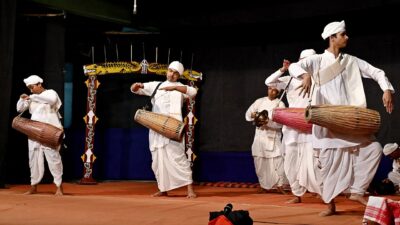
शास्त्र विंग · वाद्य-पट्टिका · Instrument Plate
खोल
Khol
अन्य नामश्रीखोल · मृदंग (मिट्टी का / गौड़ीय) · খোল (Bengali) · Srikhol / Shrikhol
परिचय
Overviewखोल — बंगाल का 'श्रीखोल', परंपरा का 'मृदंग' — पकी मिट्टी से गढ़ा वह दो-मुखी ढोल है जिसकी एक ओर तीखी धातु-सी ऊँची ध्वनि और दूसरी ओर गहरी गूँजती बास बसती है। शंकरदेव के असम और चैतन्य के बंगाल से चलकर, आज इस्कॉन के माध्यम से विश्वभर तक, इसकी थाप नाम-संकीर्तन की धड़कन बनी हुई है। यह एकल-मंच का वाद्य नहीं — यह मंडली को एक कर देने वाला भक्ति का वाद्य है।
अंग्रेज़ी में पढ़ें · Read in English
The khol — Bengal's 'srikhol', tradition's 'mridanga' — is a two-headed drum carved from baked clay, holding a sharp metallic high pitch on one face and a deep, resonant bass on the other. Travelling from Sankardev's Assam and Chaitanya's Bengal to the whole world today through ISKCON, its strokes remain the heartbeat of nam-sankirtan. It is not an instrument of the solo stage — it is the drum of devotion that makes a congregation one.
वर्गीकरण
ClassificationNatya Shastra Category
अवनद्ध (Avanaddha - membranophones / covered percussion)
नाट्यशास्त्र के चार वाद्य-वर्गों में खोल 'अवनद्ध' वर्ग में आता है — वे वाद्य जिनका मुख चमड़े से मढ़ा जाता है और जिन्हें आघात (थाप) से बजाया जाता है। खोल एक दो-मुखी अवनद्ध वाद्य है जिसका एक मुख छोटा (तार सप्तक/ऊँची ध्वनि) और दूसरा बड़ा (मंद्र/गहरी ध्वनि) होता है।
Among the four vadya categories of the Natya Shastra, the khol belongs to the 'Avanaddha' (covered/membrane) class — instruments whose mouths are covered with skin and which are sounded by striking. The khol is a two-faced avanaddha drum with one small head (high treble) and one large head (deep bass).
Western Category
Membranophone — asymmetric two-headed barrel drum
Western Family
Hand-played barrel-drum family (related to the pakhawaj, mridangam and Manipuri pung), distinguished by its baked-clay/terracotta shell
Sub Classification
बनावट
PhysicalDescription Hindi
खोल एक लम्बा, दोनों सिरों पर उभरा हुआ मिट्टी (टेराकोटा) का ढोल है जिसका खोखला शरीर पकी हुई मिट्टी से बनता है। इसके दो मुख आकार में बहुत असमान होते हैं — दायाँ छोटा मुख तीखी, धातु-सी ऊँची ध्वनि देता है, जबकि बायाँ बड़ा मुख गहरी, मंद्र बास ध्वनि उत्पन्न करता है। दोनों मुख चमड़े (गाय या बकरी) से मढ़े जाते हैं और चमड़े की डोरियों/पट्टियों के जाल से कसे रहते हैं। इसे दोनों हाथों की हथेलियों और उँगलियों से बजाया जाता है।
Description English
The khol is an elongated, double-bulged clay (terracotta) drum whose hollow shell is made of baked earth. Its two heads are strikingly unequal in size — the small right head gives a sharp, metallic high pitch, while the large left head produces a deep, bass sound. Both heads are covered with skin (cow or goat) and held taut by a lattice of leather straps. It is played with the palms and fingers of both hands.
Body
Elongated asymmetric barrel — narrow at the treble end, broad at the bass end
लम्बा, असमान ढोलक-नुमा — तार-मुख की ओर पतला, बास-मुख की ओर चौड़ा
Baked clay / terracotta (traditional); fibreglass with synthetic shell (modern, more durable)
पकी हुई मिट्टी / टेराकोटा (परंपरागत); फ़ाइबरग्लास (आधुनिक, अधिक टिकाऊ)
~55-65 (approximate; varies by region and maker)
Single hollow earthen chamber tapering between the two heads, giving the khol its characteristic split treble/bass voice
Heads
Syahi
स्याही
Syahi (tuning paste)
मुख पर लगाया गया काला वृत्ताकार लेप जो चावल के आटे, गोंद और लोहे के चूर्ण से बनता है। यह मुख को भार देकर उसकी ध्वनि को स्पष्ट स्वर और अनुनाद देता है।
The black circular application on the head, made of rice paste, glue and iron. It weights the membrane and gives the strokes clear pitch and resonance.
Lacing
चमड़े की डोरियाँ / तस्मे
Leather lacing / straps
दोनों मुखों को चमड़े की डोरियों/पट्टियों के जाल से जोड़ा और कसा जाता है जो पूरे शरीर पर फैली रहती हैं। इन्हें सरकाकर तनाव को समायोजित किया जा सकता है।
Both heads are joined and tensioned by a net of leather straps running the length of the body; sliding them adjusts the tension.
Played With
खोल पर कोई तार, फ्रेट या पर्दा नहीं होता — इसे केवल दोनों हाथों की हथेलियों और उँगलियों से बजाया जाता है। दायाँ हाथ प्रायः छोटे (तार) मुख पर तीखे आघात देता है और बायाँ हाथ बड़े (बास) मुख पर गहरी थाप देता है।
The khol has no strings, frets or stops — it is struck only with the palms and fingers of both hands. Typically the right hand plays crisp strokes on the small (treble) head and the left hand plays deep strokes on the large (bass) head.
ध्वनि-चरित्र
SoundTonal Character Hindi
खोल की ध्वनि दोहरी और विशिष्ट है — एक ओर छोटे मुख की तीखी, धातु-सी 'टन-टन' और दूसरी ओर बड़े मुख की गहरी, गूँजती बास। यही दो-स्वरीय संवाद कीर्तन को उसकी लहर और आवेग देता है, जो नाम-संकीर्तन की भावधारा के साथ धीरे-धीरे तीव्र होती जाती है।
Tonal Character English
The khol's voice is dual and distinctive — the sharp, metallic ring of the small head answered by the deep, booming bass of the large head. This two-toned dialogue gives kirtan its surge and momentum, accelerating with the devotional fervour of nam-sankirtan.
Timbre
Bright metallic treble over a round, resonant clay-body bass; earthy and vocal
Range
Fixed-pitch percussion — two contrasting registers (high treble head, low bass head) rather than a melodic range
Dynamic Range
Wide — from a soft devotional pulse to thunderous, ecstatic congregational sankirtan without amplification
Techniques
सुनने का मार्गदर्शन
The Listening Guideखोल का रस लेना हो तो किसी नाम-संकीर्तन की पूरी यात्रा सुनिए — शांत आरंभ से आवेगपूर्ण चरमोत्कर्ष तक। पकड़िए कैसे छोटे मुख की तीखी 'टन' और बड़े मुख की गहरी बास एक ही धड़कन में मिलती हैं, और कैसे लय धीरे-धीरे तेज़ होकर मंडली की भाव-तरंग को शिखर तक ले जाती है। मंजीरा और कण्ठ-स्वर के साथ खोल के संवाद पर ध्यान दीजिए — यही सामूहिक भक्ति की धड़कन है।
अंग्रेज़ी में पढ़ें · Read in English
To appreciate the khol, listen to a whole nam-sankirtan or kirtan arc — from its calm opening to its ecstatic climax. Notice how the small head's sharp ring and the large head's deep bass sound within a single beat, and how the tempo gradually accelerates to carry the emotion to its peak. Follow the khol's dialogue with the kartal/manjira and the voices.
परिचय
Identity- Year Of Origin
- 1500
अन्य विवरण
More DetailsTimbre
Bright metallic treble over a round, resonant clay-body bass; earthy and vocal
रोचक तथ्य
Margin Notesमृदंग बनाम मृदंगम — खोल को 'मृदंग' भी कहते हैं, किंतु इसे दक्षिण भारत के 'मृदंगम' से भ्रमित नहीं करना चाहिए। खोल का शरीर मिट्टी का होता है और यह गौड़ीय/असमिया भक्ति-संगीत का वाद्य है, जबकि मृदंगम लकड़ी का होता है और कर्नाटक शास्त्रीय संगीत का प्रमुख ताल-वाद्य है।
The khol is also called 'mridanga', but it should not be confused with the South Indian 'mridangam'. The khol has a clay body and belongs to Gaudiya/Assamese devotional music, whereas the mridangam is wooden and is the principal percussion of Carnatic classical music.
स्याही — मुख का स्वर-रहस्य — खोल के मुखों पर चावल के आटे, गोंद और लोहे के चूर्ण से बना काला वृत्ताकार लेप (स्याही) लगाया जाता है। यह मुख को भार देकर उसके आघातों को स्पष्ट स्वर और अनुनाद देता है — यही तकनीक तबले और पखावज में भी मिलती है।
A black circular paste (syahi) of rice flour, glue and iron is applied to the khol's heads. It weights the membrane and gives the strokes clear pitch and resonance — the same technique found on the tabla and pakhawaj.
एक वाद्य, अनेक क्षेत्रीय रूप — ओडिशा, बंगाल, असम और मणिपुर — प्रत्येक क्षेत्र में खोल के अपने रूप और नाम मिलते हैं। बंगाल में इसे 'श्रीखोल' कहा जाता है और यह पदावली-कीर्तन का प्राण है; असम में शंकरदेव-परंपरा के 'खोल' का अपना विशिष्ट रूप है।
Odisha, Bengal, Assam and Manipur — each region has its own form and name for the khol. In Bengal it is called 'srikhol', the lifeblood of padavali-kirtan; in Assam, the Sankardev-tradition 'khol' has its own distinct form.
मिट्टी से फ़ाइबरग्लास तक — परंपरागत खोल पकी मिट्टी का बनता है, जो नाज़ुक होता है और टूट सकता है। आधुनिक समय में फ़ाइबरग्लास और सिंथेटिक मुखों वाले खोल बनने लगे हैं, जो अधिक टिकाऊ और यात्रा के लिए सुविधाजनक हैं — इसी कारण यह विश्वभर की कीर्तन-मंडलियों तक पहुँच सका।
The traditional khol is made of baked clay, which is fragile and can crack. In modern times khols with fibreglass bodies and synthetic heads have appeared, more durable and travel-friendly — which is part of why the instrument could reach kirtan groups worldwide.
सवाल-जवाब
Questions & Answersखोल क्या है?
खोल पूर्वी भारत (बंगाल, असम, ओडिशा, मणिपुर) का एक दो-मुखी ढोल है जिसका शरीर पकी हुई मिट्टी (टेराकोटा) का होता है। इसका एक छोटा मुख तीखी ऊँची ध्वनि और बड़ा मुख गहरी बास देता है। यह गौड़ीय वैष्णव नाम-संकीर्तन और असम की भक्ति-परंपरा का प्रमुख वाद्य है।
खोल और मृदंगम में क्या अंतर है?
खोल को 'मृदंग' भी कहते हैं किंतु यह दक्षिण भारत के 'मृदंगम' से भिन्न है। खोल का शरीर मिट्टी का होता है और यह भक्ति-संगीत (कीर्तन) का वाद्य है, जबकि मृदंगम लकड़ी का होता है और कर्नाटक शास्त्रीय संगीत का प्रमुख ताल-वाद्य है।
खोल कैसे बजाया जाता है?
खोल को दोनों हाथों की हथेलियों और उँगलियों से बजाया जाता है। प्रायः दायाँ हाथ छोटे (तार) मुख पर तीखे आघात देता है और बायाँ हाथ बड़े (बास) मुख पर गहरी थाप। बड़े मुख की बास-ध्वनि को नमी के अनुसार पानी लगाकर समायोजित किया जाता है।
खोल का उपयोग किस संगीत में होता है?
खोल मुख्यतः भक्ति-संगीत का वाद्य है — गौड़ीय वैष्णव नाम-संकीर्तन और पदावली-कीर्तन, असम के बरगीत, भावना व गायन-बायन, तथा इस्कॉन (हरे कृष्ण आंदोलन) के भजन-कीर्तन में यह प्रमुख ढोल है।
खोल को टेराकोटा (मिट्टी) रूप किसने दिया?
असमिया महापुरुष श्रीमंत शंकरदेव को लकड़ी के मृदंग को टेराकोटा (मिट्टी) खोल में ढालने का श्रेय दिया जाता है, जिससे यह असम की एक-शरण-नाम-धर्म संगीत-परंपरा का अभिन्न अंग बन गया।
नमूना-पट्टी
The Specimen Table| नाम | खोल · Khol |
|---|---|
| अन्य नाम | श्रीखोल · मृदंग (मिट्टी का / गौड़ीय) · খোল (Bengali) · Srikhol / Shrikhol · Mridanga (clay-bodied, Gaudiya Vaishnava) |
| उद्गम | 1500 |
| प्रकार | वाद्य · Instruments |
इस वाद्य के गीत
Songs of this Instruments
साझा कीजिए · Share this Plate