शास्त्र विंग · वाद्य-पट्टिका · Instrument Plate
किन्नरी वीणा
Kinnari Veena
अन्य नामकिन्नरी वीणा · किन्नरी वीणा (Kinnari Vina) · किन्दरी / किन्नरी (लोक रूप) · Kinnari Vina (also: Kinnarī Vīṇā)
परिचय
Overviewकिन्नरी वीणा भारत के तंतुवाद्यों की सबसे पुरानी जड़ों में से एक है — खोखली दंडी, नीचे लटके सूखे तूँबे और दंडी पर लगे परदे। शार्ङ्गदेव के 'संगीत रत्नाकर' में वर्णित, मंदिर-मूर्तियों में अंकित और दिव्य किन्नरों के नाम पर पड़ी यह वीणा वही वाद्य है जिससे रुद्र वीणा (बीन) एवं सितार उतरे। शास्त्रीय मंच से लुप्त होकर भी यह कर्नाटक की किन्नर जोगी लोक-गाथा परम्परा में आज तक जीवित है।
अंग्रेज़ी में पढ़ें · Read in English
The kinnari veena is one of the oldest roots of India's string instruments — a hollow stick, dried gourds slung beneath, and frets along the neck. Described in Sarngadeva's 'Sangita Ratnakara', carved into temple sculpture, and named for the celestial kinnaras, it is the very instrument from which the rudra veena (been) and the sitar descend. Vanished from the classical stage, it survives to this day in the Kinnara Jogi folk-ballad tradition of Karnataka.
वर्गीकरण
ClassificationNatya Shastra Category
तत (Tata - stringed instruments)
तत वर्ग में किन्नरी वीणा एक तंतुवाद्य है — एक खोखली दंडी (नली) पर लगी वीणा जिसमें तूँबों के अनुनादक और परदे (frets) होते हैं। इसे उँगली या मिज़राब से झंकृत किया जाता है, धनुष से नहीं।
In the Tata (stringed) category of the Natya Shastra tradition, the kinnari veena is a chordophone — a fretted tube/stick zither with gourd resonators. It is a plucked instrument, sounded by finger or plectrum rather than a bow.
Western Category
Plucked fretted tube zither (stick zither)
Western Family
Zither family — an ancestral form from which the modern rudra veena (been) and the plucked veena/sitar lineage descend
Sub Classification
बनावट
PhysicalDescription Hindi
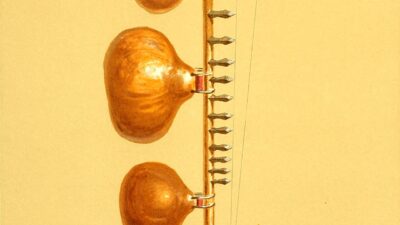
किन्नरी वीणा एक प्राचीन तंतुवाद्य है जिसका मुख्य ढाँचा एक लम्बी खोखली लकड़ी की दंडी (नली) है, जिसके नीचे दो-तीन सूखे तूँबे (लौकी के कद्दू) अनुनादक के रूप में जुड़े रहते हैं। दंडी पर परदे (frets) लगे होते हैं — यही इसकी सबसे बड़ी पहचान है, क्योंकि इसी ने बारह-स्वर एवं बाईस-श्रुति की सूक्ष्म स्वर-व्यवस्था को वाद्य पर सम्भव बनाया। इसका सिरा प्रायः पक्षी, मकर या याली की आकृति से अलंकृत होता था।
Description English
The kinnari veena is an ancient chordophone whose main body is a long hollowed wooden stick (tube/dandi), beneath which two to three dried gourds are attached as resonators. Frets are mounted along the stick — its defining feature — for it was the fretting of the tube-zither veena that made the twelve-tone / twenty-two-shruti microtonal system playable on an instrument. Its head was often carved into the form of a bird, makara, or yali.
Body
Long hollowed stick / tube (not round in section) with gourd resonators slung below
लम्बी खोखली दंडी (नली) जिसके नीचे तूँबे लटके रहते हैं
Wood or bamboo tube for the stick; dried bottle-gourd (lauki/tumba) for the resonators
दंडी के लिए लकड़ी या बाँस की नली; अनुनादक के लिए सूखे तूँबे (लौकी)
90-130 (varied by type — Bruhati largest to Laghvi smallest)
Two to three gourds; in some forms the central gourd, with its base removed, was pressed against the player's chest to close the resonance chamber
Strings
Primary plucked melody strings running the length of the stick over the frets
The historical kinnari veena did not carry sympathetic (tarab) strings; that refinement appears later in descendants such as the sitar and sarangi
A supporting drone string could be tuned to the tonic to sustain the raga's ground note
Bow
मिज़राब / अँगुली
Plectrum / fingers (no bow)
Plucked with a plectrum or the fingers — the kinnari veena is not a bowed instrument
N/A
Strings are plucked and stopped against the frets with the fingers of the other hand
Tuning Pegs
खूँटी
Khunti (tuning pegs)
Wooden pegs at the head adjust string tension and pitch; a notched movable element on the stick allowed quick pitch adjustments between songs
Bridge
घुड़च / जवारी
Bridge (ghurach)
A raised bridge, sometimes a spiked upright, directed string vibration into the gourd resonators
Wood or bone
Frets
किन्नरी वीणा फ्रेट-युक्त (परदेदार) है — और यही इसका ऐतिहासिक महत्व है। लगभग 700-800 ईस्वी में जब भारतीय संगीत बारह-स्वर व्यवस्था की ओर बढ़ा, तब परदेदार नली-वीणाओं ने बिना-परदे वाली वीणाओं के साथ-साथ विकास किया। परदे स्वरों को स्थिर और दोहराने योग्य बनाते थे।
The kinnari veena is fretted — and therein lies its historical importance. Around 700-800 C.E., as Indian music moved toward a twelve-tone system, fretted tube-zither veenas developed alongside the older fretless vinas. The frets fixed the notes and made pitch stable and repeatable.
ध्वनि-चरित्र
SoundTonal Character Hindi
किन्नरी वीणा की ध्वनि तूँबों की गूँज से भरी, गहरी और मिट्टी-सी होती है — झंकार के बाद स्वर तूँबों में देर तक गूँजता रहता है। यह वाद्य आधुनिक बीन (रुद्र वीणा) की गम्भीर, ध्यानमग्न ध्वनि का पूर्वज है।
Tonal Character English
The kinnari veena's tone is earthy and resonant, filled by the ringing of its gourds — each pluck lingers and hums within the gourd chambers. Its sound is the ancestor of the grave, meditative voice of the modern been (rudra veena).
Timbre
Dry, woody, deeply resonant with a long sustain from the gourd chambers
Range
Roughly two octaves, fixed and made repeatable by the frets
Dynamic Range
Intimate to moderate — an acoustic, un-amplified voice suited to solo raga meditation and to accompanying sung ballads
Techniques
सुनने का मार्गदर्शन
The Listening Guideकिन्नरी वीणा को समझने का सबसे अच्छा रास्ता इसकी दो जीवित छायाओं से होकर जाता है। एक ओर रुद्र वीणा (बीन) का धीमा, गम्भीर आलाप सुनिए — यह किन्नरी की तूँबेदार गूँज का परिष्कृत रूप है। दूसरी ओर कर्नाटक के किन्नर जोगियों की गाथा-गायकी सुनिए, जहाँ लोक-किन्नरी की सादी झंकार पर सदियों पुरानी कहानियाँ गाई जाती हैं। इन दोनों के बीच दरबार से गाँव तक फैली इस वाद्य की पूरी यात्रा खुल जाती है।
अंग्रेज़ी में पढ़ें · Read in English
To understand the kinnari veena, first hear its two living shadows. First — the grave, meditative alap of the rudra veena (been), a refined form of the kinnari's gourd resonance. Second — the ballad-singing of Karnataka's Kinnara Jogis, where old stories ride the plain twang of a folk kinnari. Between these two, you hear the whole journey of the kinnari veena — from court to village.
परिचय
Identity- Year Of Origin
- 500
अन्य विवरण
More DetailsTimbre
Dry, woody, deeply resonant with a long sustain from the gourd chambers
रोचक तथ्य
Margin Notesतीन आकार, तीन किन्नरी — शार्ङ्गदेव के 'संगीत रत्नाकर' (13वीं शताब्दी) में किन्नरी वीणा के तीन रूप वर्णित हैं — बृहती किन्नरी (सबसे बड़ी), मध्यमा किन्नरी (मध्यम) एवं लघ्वी किन्नरी (सबसे छोटी) — आकार एवं तूँबों की संख्या के अनुसार।
Sarngadeva's 'Sangita Ratnakara' (13th century) describes three forms of the kinnari veena — Bruhati kinnari (largest), Madhyama kinnari (medium), and Laghvi kinnari (smallest) — differing by size and number of gourds.
परदे की क्रांति — लगभग 700-800 ईस्वी में जब भारतीय संगीत बारह-स्वर व्यवस्था की ओर बढ़ा, तब परदेदार नली-वीणाएँ बिना-परदे वाली वीणाओं के साथ-साथ विकसित हुईं। किन्नरी वीणा के परदों ने स्वरों को स्थिर एवं दोहराने योग्य बनाकर वाद्य-संगीत की दिशा बदल दी।
Around 700-800 C.E., as Indian music moved toward a twelve-tone system, fretted tube-zither vinas developed alongside the fretless ones. The frets of the kinnari veena, by fixing pitches and making them repeatable, changed the course of instrumental music.
पक्षी, मकर और याली — किन्नरी वीणा का सिरा प्रायः पक्षी की आकृति से अलंकृत होता था — यह इसके नाम 'किन्नर' (पक्षी-मानव संगीतज्ञ) की प्रतिध्वनि है। कहीं-कहीं इस पर मकर या याली (पौराणिक प्राणी) भी उकेरे जाते थे।
The head of the kinnari veena was often carved into the form of a bird — an echo of its name 'kinnara' (the bird-human musician). In places it was also adorned with a makara or yali (mythological creatures).
गिब का चित्र — किन्नरी का सबसे प्रसिद्ध चेहरा — किन्नरी वीणा का सबसे प्रसिद्ध चित्र विलियम गिब का बनाया हुआ है, जो सी. आर. डे की पुस्तक 'द म्यूज़िक एंड म्यूज़िकल इंस्ट्रुमेंट्स ऑफ़ सदर्न इंडिया एंड द डक्कन' (1891) में छपा। आज इंटरनेट पर इस वाद्य की पहचान प्रायः इसी चित्र से होती है।
The most famous image of the kinnari veena was engraved by William Gibb and printed in C.R. Day's book 'The Music and Musical Instruments of Southern India and the Deccan' (1891). Online, the instrument is most often recognised by this very engraving.
सवाल-जवाब
Questions & Answersकिन्नरी वीणा क्या है?
किन्नरी वीणा एक प्राचीन भारतीय तंतुवाद्य है — एक परदेदार नली-वीणा (stick zither) जिसके नीचे दो-तीन सूखे तूँबे अनुनादक के रूप में जुड़े रहते हैं। इसे उँगली या मिज़राब से झंकृत किया जाता है। यह रुद्र वीणा (बीन) एवं सितार का पूर्वज है।
किन्नरी वीणा कितनी पुरानी है?
परदेदार नली-वीणाएँ लगभग 800 ईस्वी तक साहित्य में उल्लिखित हैं और यह वाद्य सम्भवतः 500 ईस्वी तक जाता है। 13वीं शताब्दी में शार्ङ्गदेव ने 'संगीत रत्नाकर' में इसका विस्तृत वर्णन किया।
किन्नरी वीणा का आधुनिक वाद्यों से क्या सम्बन्ध है?
आधुनिक रुद्र वीणा (बीन) किन्नरी वीणा से सीधे उतरी है, और परदेदार दंडी एवं मीड की जो कला सितार की पहचान है, उसकी जड़ें इसी परम्परा में हैं। इस प्रकार किन्नरी वीणा उत्तर भारतीय शास्त्रीय तंतुवाद्यों की जड़ है।
क्या किन्नरी वीणा आज भी बजाई जाती है?
शास्त्रीय मंच से यह लुप्त हो चुकी है, किन्तु कर्नाटक के दक्षिण कन्नड़ एवं मैसूर क्षेत्र में यह लोक-वाद्य के रूप में बची है। किन्नर जोगी (किन्दरी जोगी) घुमन्तू गाथा-गायक आज भी एक लोक-किन्नरी बजाते हैं।
किन्नरी वीणा का नाम कैसे पड़ा?
इसका नाम 'किन्नर' से आया है — हिन्दू एवं बौद्ध पुराणकथाओं के अर्ध-मानव, अर्ध-पक्षी दिव्य संगीतज्ञ, जिन्हें शिल्प में नली-वीणा बजाते दर्शाया गया है। इसी कारण वाद्य का सिरा प्रायः पक्षी की आकृति से अलंकृत होता था।
नमूना-पट्टी
The Specimen Table| नाम | किन्नरी वीणा · Kinnari Veena |
|---|---|
| अन्य नाम | किन्नरी वीणा · किन्नरी वीणा (Kinnari Vina) · किन्दरी / किन्नरी (लोक रूप) · Kinnari Vina (also: Kinnarī Vīṇā) |
| उद्गम | 500 |
| प्रकार | वाद्य · Instruments |
साझा कीजिए · Share this Plate