शास्त्र विंग · वाद्य-पट्टिका · Instrument Plate
किन्नेरा
Kinnera
अन्य नामकिन्नरम् (Kinnaram) · किन्नेरा / किन्नरा (Kinnara) · कड्डी वाइद्यम (Kaddi Vaidyam — 'छड़ी-वाद्य') · मेट्ल किन्नेरा (Metla Kinnera — 'सीढ़ीदार किन्नेरा')
परिचय
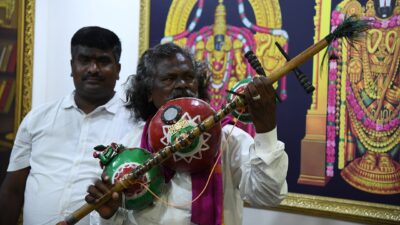
Overviewकिन्नेरा तेलंगाना के जंगल-गाँवों की छड़ी-वीणा है — बाँस की डंडी, नीचे बँधे दो-तीन लौकी के तूँबे, और डंडी पर सीढ़ी-दर-सीढ़ी चढ़ते पर्दे। दक्कली और माडिगा वंशावली-गायक सदियों से इसी की संगत में जातियों के जन्म-वृत्तांत और वीर-गाथाएँ सुनाते आए हैं। पद्मश्री दर्शनम मोगिलैया की बारह-सीढ़ी किन्नेरा तक आते-आते यह पूरी परंपरा लगभग एक ही व्यक्ति में सिमट गई थी।
अंग्रेज़ी में पढ़ें · Read in English
The kinnera is a stick-zither of Telangana's forests and villages — a bamboo staff, two or three gourds lashed beneath, and frets rising stair by stair. For centuries the Dakkali and Madiga genealogist-singers have narrated caste-origin stories and hero-ballads to its accompaniment. By the time of Padma Shri Darshanam Mogilaiah's twelve-stair kinnera, this whole tradition had narrowed almost to a single man.
वर्गीकरण
ClassificationNatya Shastra Category
तत (Tata - stringed / tantri vadya)
किन्नेरा नाट्यशास्त्र के 'तत' (तंत्री) वर्ग में आती है — यह एक छड़ी-वीणा (स्टिक-ज़िदर) है जिसमें बाँस की डंडी पर सीढ़ीनुमा पर्दे (फ्रेट) जड़े होते हैं और नीचे लौकी के तूँबे अनुनादक का काम करते हैं। ध्वनि तारों को उँगली या मिज़राब से आघात करके उत्पन्न होती है।
The kinnera belongs to the Tata (tantri / string) category of the Natya Shastra. It is a fretted stick-zither: stepped frets are fixed along a bamboo staff, with dried gourds slung beneath as resonators. Sound is produced by plucking/striking the strings, not bowing.
Western Category
Fretted stick-zither (tube/stick zither chordophone)
Western Family
Zither family — a plucked stick-zither with attached gourd resonators, kin to the ancient tube-vina and to African/Asian gourd stick-zithers
Sub Classification
बनावट
PhysicalDescription Hindi
किन्नेरा एक स्वदेशी सामग्री से बनी लोक-वीणा है जिसकी डंडी बाँस की होती है और जिसके नीचे सूखी, खोखली की गई लौकी (सोरकाया/बॉटल-गॉर्ड) के तूँबे बाँधे जाते हैं — छोटी किन्नेरा में दो और बड़ी में तीन तूँबे। डंडी पर मोम से जुड़े 'सीढ़ी' जैसे पर्दे (मेट्लु) एक-के-ऊपर-एक चढ़ते हैं; इन्हीं सीढ़ियों की संख्या से किन्नेरा का आकार-प्रकार तय होता है। परंपरागत रूप से पर्दे पैंगोलिन (साल-खपरैली/चींटीखोर) की शल्कों से और बंधाई शहद-मोम (मधुमक्खी के छत्ते) से की जाती थी; ऊपर बैल के सींग, मनके, दर्पण और मोरपंख से सजावट होती है।
Description English
The kinnera is a folk stick-zither built from indigenous materials: a bamboo staff with dried, hollowed bottle-gourds lashed underneath as resonators — two gourds on a small kinnera, three on a large one. Stepped frets ('metlu', literally 'stairs') rise in tiers along the staff, fixed with wax; the number of stairs defines the instrument's grade. Traditionally the frets were shaped from pangolin scales and bound with honey-wax (comb wax), and the body is decorated with bull horn, beads, mirrors and peacock feathers.
Body
Long straight staff (dandi) with two to three bulbous gourd resonators slung beneath, and a tiered fretboard of 'stairs' rising along its length
लंबी सीधी डंडी जिसके नीचे दो-तीन गोल तूँबे और डंडी पर सीढ़ीनुमा पर्दे
Bamboo staff; sun-dried hollowed bottle-gourds (sorakaya / calabash) as resonators; frets traditionally of pangolin scales, bound with honeycomb wax
बाँस की डंडी; धूप में सुखाई व खोखली की गई लौकी के तूँबे; परंपरागत पर्दे पैंगोलिन-शल्क, शहद-मोम की बंधाई
90-120 (varies with number of stairs/gourds)
Two or three open-backed gourd shells acting as separate resonators along the staff (multi-gourd resonance)
Strings
Playing/melody strings run the length of the staff over the stepped frets
The kinnera has no sympathetic (tarab) strings — its resonance comes from the multiple gourd chambers and the stepped frets, not from resonating wires
One of the two strings often functions as a steady drone against which the melody string is fretted on the stairs
Bow
कोई गज़ नहीं (मिज़राब/उँगली से बजायी जाती है)
None — the kinnera is plucked, not bowed
Fingers or a small plectrum strike the strings; no bow is used
N/A
Plucked/struck while the player fingers the strings along the stepped frets, singing genealogies and hero-ballads in accompaniment
Tuning Pegs
खूँटी (बिरडा)
Wooden pegs
Simple wooden pegs at the head of the staff tension and tune the two strings
Bridge
घोड़ी
Bridge
A low bridge over the gourd carries the string vibration into the gourd resonators
Wood or horn
Frets
यही किन्नेरा की पहचान है — डंडी पर 'सीढ़ियों' (मेट्लु) की तरह उभरे पर्दे। पूर्वज सात, आठ या नौ सीढ़ियों की किन्नेरा बनाते थे; दर्शनम मोगिलैया पहले कलाकार बने जिन्होंने बारह सीढ़ियों वाली किन्नेरा गढ़ी और बजायी। सीढ़ियाँ जितनी अधिक, स्वर-विस्तार उतना बड़ा और वादन उतना कठिन।
The stepped frets are the kinnera's signature — raised tiers ('metlu', stairs) along the staff. Ancestral makers built seven-, eight- or nine-stair kinneras; Darshanam Mogilaiah became the first to craft and play a twelve-stair kinnera. More stairs mean a wider pitch range and far greater difficulty to play.
ध्वनि-चरित्र
SoundTonal Character Hindi
किन्नेरा की आवाज़ खुरदरी, मिट्टी-सी और गूँजदार है — तूँबों की भरी हुई अनुगूँज पर चढ़ी हुई एक तीखी, बजती हुई तार-ध्वनि। यह मंच की मिठास वाली वीणा नहीं, बल्कि जंगल-गाँव की कथावाचन-ध्वनि है, जो गायक की पुकार और ताल के साथ घुल जाती है।
Tonal Character English
The kinnera's voice is earthy, grainy and resonant — a bright, twanging string tone riding on the full hum of the gourd chambers. It is not the polished sweetness of a concert vina but the storytelling sound of forest and village, blending into the narrator's call and rhythm.
Timbre
Bright, buzzing, drone-backed twang with a woody gourd resonance
Range
Roughly one to two octaves, set by the number of stairs (7 to 12 stepped frets)
Dynamic Range
Modest, intimate carrying power — built to accompany a solo balladeer's voice in open-air narration
Techniques
सुनने का मार्गदर्शन
The Listening Guideकिन्नेरा सुनते समय ध्यान वादन-कौशल पर नहीं, कथन-और-धुन के जोड़ पर दीजिए। एक पंक्ति गाकर गायक रुकता है और किन्नेरा उस भाव को छोटी धुन में दोहराती है — आवाज़ और तार की यही बारी-बारी की जुगलबंदी इस वाद्य की आत्मा है। बारह-सीढ़ी वादन में हर सीढ़ी से बदलते स्वर को पकड़ने की कोशिश कीजिए।
अंग्रेज़ी में पढ़ें · Read in English
When you listen to the kinnera, focus not on virtuosity but on the join between telling and playing. Hear how the singer pauses after a line and the kinnera echoes the mood in a short phrase — it is a call-and-answer between voice and instrument. In twelve-stair playing, try to catch the pitch shifting from one 'stair' to the next. Listen to Mogilaiah's ballads patiently — their magic is in the storytelling as much as the melody.
परिचय
Identity- Year Of Origin
- 400
अन्य विवरण
More DetailsTimbre
Bright, buzzing, drone-backed twang with a woody gourd resonance
रोचक तथ्य
Margin Notesएक व्यक्ति में सिमटी परंपरा — बारह-सीढ़ी किन्नेरा बनाना और बजाना — दोनों में महारत केवल दर्शनम मोगिलैया के पास थी। उनके निधन (2022) के साथ यह विशिष्ट कौशल संकट में पड़ गया; इसीलिए इसका प्रलेखन और शिष्य-परंपरा बचाना अत्यंत ज़रूरी माना जाता है।
Mastery of both making and playing the twelve-stair kinnera rested with Darshanam Mogilaiah alone. With his passing (2022) this singular skill was imperilled; hence documenting it and preserving a teaching lineage is considered urgent.
जीवित इतिहास-अभिलेख — दक्कली वादक केवल संगीतकार नहीं, वंशावली-रक्षक थे — वे माडिगा परिवारों की पीढ़ियों का ब्योरा कंठस्थ रखते और किन्नेरा की संगत में सुनाते थे। लिखित अभिलेखों से पहले यही मौखिक स्मृति समुदाय का इतिहास थी।
Dakkali players were not just musicians but keepers of genealogy — they memorised the lineages of Madiga families across generations and recited them to the kinnera. Before written records, this oral memory was the community's history.
सिनेमा तक पहुँच — मोगिलैया ने तेलुगु फ़िल्म 'भीमला नायक' (2022) के शीर्षक-गीत के लिए किन्नेरा बजायी और गाया, जिससे यह लोक-वाद्य राष्ट्रीय दर्शकों के सामने आया — एक लुप्तप्राय परंपरा का मुख्यधारा से दुर्लभ संपर्क।
Mogilaiah performed on the kinnera and sang for the title song of the Telugu film 'Bheemla Nayak' (2022), bringing this folk instrument before a national audience — a rare contact between an endangered tradition and the mainstream.
सवाल-जवाब
Questions & Answersकिन्नेरा क्या है?
किन्नेरा तेलंगाना का एक पारंपरिक लोक तार-वाद्य है — एक सीढ़ीदार छड़ी-वीणा जिसकी बाँस की डंडी पर पर्दे और नीचे दो-तीन लौकी के तूँबे लगे होते हैं। दक्कली और माडिगा वंशावली-गायक इसकी संगत में वीर-गाथाएँ और कुल-वृत्तांत सुनाते हैं। इसे 'कड्डी वाइद्यम' (छड़ी-वाद्य) भी कहते हैं।
किन्नेरा किस सामग्री से बनती है?
किन्नेरा बाँस की डंडी, धूप में सुखाई गई खोखली लौकी के तूँबों, और डंडी पर मोम से जड़े सीढ़ीदार पर्दों से बनती है। परंपरागत रूप से पर्दे पैंगोलिन की शल्कों से और तार स्त्रियों के बाल, घोड़े की पूँछ या पशु-नसों से बनते थे (अब धातु के तार); सजावट में बैल का सींग, मनके, दर्पण और मोरपंख होते हैं।
दर्शनम मोगिलैया कौन थे?
दर्शनम मोगिलैया (1951-2022) तेलंगाना के प्रसिद्ध किन्नेरा वादक थे — बारह-सीढ़ी किन्नेरा बनाने और बजाने वाले पहले व एकमात्र कलाकार। 2022 में भारत सरकार ने उन्हें पद्मश्री से सम्मानित किया।
क्या किन्नेरा हिंदी फ़िल्म संगीत में इस्तेमाल होती है?
मुख्यधारा हिंदी सिनेमा में किन्नेरा का प्रयोग नहीं के बराबर है। इसका सबसे चर्चित सिनेमाई क्षण तेलुगु फ़िल्म 'भीमला नायक' (2022) के शीर्षक-गीत से है, जहाँ दर्शनम मोगिलैया ने किन्नेरा बजायी। यह एक लोक/आदिवासी वाद्य है, न कि फ़िल्मी ऑर्केस्ट्रा का।
किन्नेरा और किन्नरी वीणा में क्या संबंध है?
किन्नेरा प्राचीन किन्नरी वीणा की जीवित लोक-शाखा है — वही तूँबे-लगी, पर्देदार छड़ी-वीणा, जो शास्त्रीय मंच से लुप्त होकर तेलंगाना के दक्कली-माडिगा समुदायों में बची रही। दोनों एक ही तंत्री-परंपरा के रूप हैं, पर किन्नेरा उसका लोक व वंशावली-गायन वाला रूप है।
नमूना-पट्टी
The Specimen Table| नाम | किन्नेरा · Kinnera |
|---|---|
| अन्य नाम | किन्नरम् (Kinnaram) · किन्नेरा / किन्नरा (Kinnara) · कड्डी वाइद्यम (Kaddi Vaidyam — 'छड़ी-वाद्य') · मेट्ल किन्नेरा (Metla Kinnera — 'सीढ़ीदार किन्नेरा') · Kinnera (also: Kinnaram, Kaddi Vaidyam) |
| उद्गम | 400 |
| प्रकार | वाद्य · Instruments |
साझा कीजिए · Share this Plate