शास्त्र विंग · वाद्य-पट्टिका · Instrument Plate
बास गिटार
Bass Guitar
अन्य नामबास गिटार · इलेक्ट्रिक बास · Electric bass · Bass guitar (also: Electric Bass Guitar)
परिचय
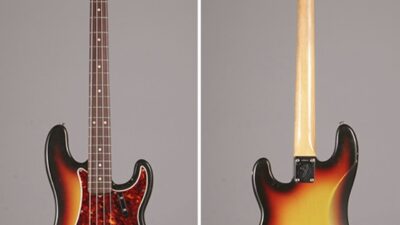
Overviewबास गिटार पश्चिम में जन्मा वह विद्युत वाद्य है जो 1960 के दशक से हिंदी फ़िल्म-संगीत की लयात्मक रीढ़ बन गया। इलेक्ट्रिक गिटार जैसा दिखने वाला, पर बड़ा और गहरे स्वर वाला — इसकी चार तारें गीत की सबसे नीची पंक्ति संभालती हैं और ताल तथा सुर के बीच पुल बनती हैं। आर. डी. बर्मन के युग में टोनी वाज़ जैसे स्टूडियो-बासवादकों के हाथों इसकी चलती-कूदती बास लाइनें गीतों की पहचान बन गईं।
अंग्रेज़ी में पढ़ें · Read in English
The bass guitar is a West-born electric instrument that became the rhythmic backbone of Hindi film music from the 1960s onward. Looking like an electric guitar but larger and deeper-voiced, its four strings hold a song's lowest line and bridge rhythm and harmony. In the R. D. Burman era, in the hands of session bassists like Tony Vaz, its bouncing bass lines became the signature of the songs themselves.
वर्गीकरण
ClassificationNatya Shastra Category
तत (Tata - stringed instruments)
भारतीय वर्गीकरण के अनुसार बास गिटार 'तत' वर्ग का वाद्य है, क्योंकि इसकी ध्वनि तनी हुई तारों के कंपन से उत्पन्न होती है। किंतु यह विशुद्ध रूप से 'तत' नहीं — इसका स्वर विद्युत-चुम्बकीय पिकअप और एम्पलीफायर से बढ़ाया जाता है, अतः इसे विद्युत-तत (electro-chordophone) कहना अधिक उचित है।
By the Natya Shastra scheme the bass guitar falls under the Tata (stringed) class, since its sound originates from the vibration of tensioned strings. Strictly, though, it is a hybrid: the string vibration is captured by electromagnetic pickups and amplified, making it an electro-chordophone rather than a purely acoustic Tata instrument.
Western Category
Electric bass instrument (plucked/fretted chordophone with electromagnetic amplification)
Western Family
Guitar family — the bass counterpart of the electric guitar, descended in role from the acoustic double bass (contrabass)
Sub Classification
बनावट
PhysicalDescription Hindi
बास गिटार एक ठोस लकड़ी की देह वाला विद्युत वाद्य है जो देखने में इलेक्ट्रिक गिटार जैसा है, पर आकार में बड़ा, गर्दन लंबी और तारें मोटी होती हैं। इसमें सामान्यतः चार तारें होती हैं (E-A-D-G), जो साधारण गिटार की सबसे नीची चार तारों से ठीक एक सप्तक (octave) नीचे मिलाई जाती हैं। तारों का कंपन देह में लगे विद्युत-चुम्बकीय पिकअप पकड़ते हैं और एम्पलीफायर उसे प्रबल कर देता है — इसीलिए इसकी असली आवाज़ बिना एम्प के मंद रहती है।
Description English
The bass guitar is a solid-wood electric instrument that looks like an electric guitar but is larger, with a longer neck and thicker strings. It usually carries four strings (E-A-D-G) tuned exactly one octave below the lowest four strings of a standard guitar. The string vibration is captured by electromagnetic pickups mounted in the body and boosted by an amplifier — which is why, unplugged, its sound is faint.
Body
Solid double-cutaway body (also single-cutaway and offset variants)
ठोस दोहरे-कटाव वाली देह (कुछ में एकल-कटाव या ऑफ़सेट आकार)
Solid wood — commonly alder, ash, basswood, or mahogany, with a bolt-on or set maple neck
ठोस लकड़ी — प्रायः एल्डर, ऐश, बासवुड या महोगनी; गर्दन मेपल की, बोल्ट या जोड़ से जुड़ी
115-120 (total length)
None in a solid-body — tone is generated electrically by pickups, not by an acoustic sound chamber (semi-hollow and acoustic bass variants do exist)
Strings
Playing strings, standard tuning E1-A1-D2-G2 (lowest to highest), a fourth apart
The bass guitar has no sympathetic (resonating) strings; all strings are directly played, unlike the sitar or sarangi
No dedicated drone strings; the open low E (or B on 5-string) is often used as a pedal/drone note in playing
Bow
उँगलियाँ / मिज़राब (पिक)
Fingers / Plectrum (pick)
Played with bare fingers (fingerstyle) or a plastic pick — no bow
N/A
The bass is plucked, not bowed. Right-hand index and middle fingers alternate to sound the strings; a felt or nylon pick may be used for a harder attack.
Tuning Pegs
ट्यूनिंग की / खूँटियाँ (मशीन-हेड)
Machine heads / Tuning keys
Geared metal tuning machines on the headstock that precisely raise or lower each string's pitch
Bridge
ब्रिज (पुल)
Bridge
Metal bridge anchoring the strings to the body; individual saddles set string length (intonation) and height (action)
Chrome-plated steel or brass
Frets
अधिकांश बास गिटार फ्रेट-युक्त होते हैं — गर्दन पर धातु की पट्टियाँ हर स्वर की सटीक स्थिति तय करती हैं, जिससे सुर पक्का और तेज़ बजाना आसान होता है। किंतु 'फ्रेटलेस बास' भी बनता है (जैसे जैको पास्तोरियस द्वारा प्रसिद्ध किया गया), जिस पर सारंगी-जैसी 'मीड' और भारतीय सुर-लगाव संभव हो जाते हैं।
Most bass guitars are fretted — metal frets on the neck fix each note's exact position, giving stable intonation and fast playing. A 'fretless bass' also exists (famously played by Jaco Pastorius), on which sarangi-like glides (meend) and Indian-style pitch inflections become possible.
Electronics
देह में लगे विद्युत-चुम्बकीय पिकअप तारों के कंपन को विद्युत संकेत में बदलते हैं। सिंगल-कॉइल (जैसे जैज़ बास) उज्ज्वल-स्पष्ट स्वर देते हैं, स्प्लिट-कॉइल (प्रिसिज़न बास) मोटा-गोल स्वर।
Electromagnetic pickups in the body convert string vibration into an electric signal. Single-coil pickups (e.g. Jazz Bass) give a bright, articulate tone; split-coil pickups (Precision Bass) give a rounder, fuller tone.
आयतन और स्वर (tone) घुंडियाँ; कुछ बासों में सक्रिय (active) प्रीएम्प के साथ बास/मिड/ट्रेबल इक्वलाइज़र भी।
Volume and tone knobs; some basses have an active preamp with bass/mid/treble EQ.
ध्वनि-चरित्र
SoundTonal Character Hindi
बास गिटार का स्वर गहरा, गोल और भरा हुआ होता है — यह किसी भी गीत की सबसे नीची पंक्ति (low end) संभालता है और ताल तथा राग-सुर के बीच का पुल बनता है। यह वह अदृश्य नींव है जिस पर पूरी धुन टिकी रहती है; कान इसे प्रायः अलग से नहीं सुनते, पर इसकी अनुपस्थिति तुरन्त खल जाती है।
Tonal Character English
The bass guitar's tone is deep, round and full — it holds the low end of any song and forms the bridge between rhythm and harmony. It is the invisible foundation the whole arrangement rests on; the ear seldom isolates it, yet its absence is felt at once.
Timbre
Warm and woody with flatwound strings; punchy and bright with roundwound strings and slap technique
Range
Approximately E1 (~41 Hz) up two to three octaves; 5-string basses extend down to B0 (~31 Hz)
Dynamic Range
Wide, but always amplifier-dependent — from a soft fingerstyle pulse to an aggressive slapped or picked attack
Techniques
सुनने का मार्गदर्शन
The Listening Guideबास गिटार को पहचानना सीखना हो तो 1970 के दशक का कोई आर. डी. बर्मन गीत अच्छे स्पीकर/हेडफ़ोन पर सुनिए और केवल सबसे नीचे बजती, चलती-कूदती पंक्ति पर कान लगाइए — वही बास है। ध्यान दीजिए कि वह ढोलक-तबले के साथ ताल में कैसे बैठती है और धुन को नीचे से कैसे सहारा देती है। एक बार यह 'नीचे की धड़कन' पकड़ में आ गई, तो हर गीत नए ढंग से खुलेगा।
अंग्रेज़ी में पढ़ें · Read in English
To hear the bass guitar, put on a 1970s R. D. Burman song through good headphones or speakers and follow only the lowest, bouncing line — that is the bass. Notice how it locks in with the dholak/tabla and supports the melody from below. Once the ear catches that 'low pulse', every song begins to open up in a new way.
परिचय
Identity- Year Of Origin
- 1951
अन्य विवरण
More DetailsTimbre
Warm and woody with flatwound strings; punchy and bright with roundwound strings and slap technique
रोचक तथ्य
Margin Notesडबल बास से बास गिटार तक — बास गिटार से पहले ऑर्केस्ट्रा और जैज़ में नीचे का स्वर विशाल, खड़े 'डबल बास' (कॉन्ट्राबास) से आता था। उसे ढोना और सुर में रखना कठिन था। लियो फ़ेंडर के 1951 के प्रिसिज़न बास ने वही गहरा स्वर एक हल्के, गिटार-जैसे, फ्रेट-युक्त वाद्य में समेट दिया।
Before the bass guitar, the low voice in orchestras and jazz came from the huge, upright 'double bass' (contrabass), hard to carry and to keep in tune. Leo Fender's 1951 Precision Bass packed that same deep tone into a light, guitar-like, fretted instrument.
स्लैप बास की खोज — अंगूठे से 'थप्पड़' और उँगली से 'खींच-छोड़' वाली फंकी स्लैप-तकनीक को अमेरिकी संगीतकार लैरी ग्राहम ने लोकप्रिय किया। यही झटकेदार स्वर 1970-80 के दशक के डिस्को-प्रभावित हिंदी गीतों में भी घुल-मिल गया।
The funky slap technique — thumb 'slap' and finger 'pop' — was popularised by American musician Larry Graham. That percussive sound later filtered into the disco-influenced Hindi songs of the 1970s-80s.
फ्रेटलेस बास और भारतीय मीड — अमेरिकी बासवादक जैको पास्तोरियस ने फ्रेटलेस बास को नई ऊँचाई दी। फ्रेट के बिना, इस पर एक स्वर से दूसरे तक निरंतर 'मीड' खींची जा सकती है — वही सिद्धांत जिस पर सारंगी और भारतीय गायन टिका है, जिससे यह फ़्यूज़न में भारतीय सुरों के लिए आदर्श बन जाता है।
American bassist Jaco Pastorius took the fretless bass to new heights. Without frets, it can draw a continuous 'meend' from note to note — the very principle the sarangi and Indian vocal music rest on, making it ideal for Indian pitch inflection in fusion.
बास लाइन जो हुक बन गई — अच्छी व्यवस्था में बास केवल पृष्ठभूमि नहीं होता। आर. डी. बर्मन जैसे संगीतकारों के गीतों में बास लाइन अक्सर उतनी ही यादगार होती थी जितनी मुख्य धुन — 'दम मारो दम' और 'मेहबूबा मेहबूबा' इसका प्रमाण हैं।
In a good arrangement the bass is not mere background. In songs by composers like R. D. Burman, the bass line was often as memorable as the main tune — 'Dum Maro Dum' and 'Mehbooba Mehbooba' are proof.
सवाल-जवाब
Questions & Answersबास गिटार क्या है?
बास गिटार एक विद्युत तारवाला वाद्य है जो इलेक्ट्रिक गिटार जैसा दिखता है पर बड़ा होता है और चार मोटी तारें (E-A-D-G) रखता है, जो गिटार की सबसे नीची चार तारों से एक सप्तक नीचे मिलाई जाती हैं। यह गीत की सबसे नीची, गहरी पंक्ति संभालता है और ताल तथा सुर के बीच पुल बनाता है।
बास गिटार हिंदी फ़िल्म-संगीत में कब आया?
विद्युत बास गिटार 1960 के दशक से हिंदी फ़िल्म-संगीत की लयात्मक रीढ़ बन गया, विशेषकर आर. डी. बर्मन के युग में, जिनकी व्यवस्थाओं में चलती-कूदती बास लाइनें अक्सर गीत की पहचान बन जाती थीं।
बास गिटार में कितनी तारें होती हैं?
मानक बास गिटार में चार तारें (E-A-D-G) होती हैं। पाँच-तार वाले बास में एक और नीची B जुड़ती है और छह-तार वाले में नीची B तथा ऊँची C दोनों जुड़ती हैं।
बास गिटार और साधारण गिटार में क्या अंतर है?
बास गिटार आकार में बड़ा होता है, इसकी गर्दन लंबी और तारें मोटी होती हैं, और यह साधारण गिटार से एक सप्तक नीचे मिलाया जाता है। साधारण गिटार में छह तारें होती हैं और यह धुन तथा कॉर्ड बजाता है, जबकि बास मुख्यतः एक-एक स्वर की नीची, लयात्मक पंक्ति बजाता है।
हिंदी फ़िल्म-संगीत का सबसे प्रसिद्ध बासवादक कौन था?
मुंबई फ़िल्म-उद्योग के स्टूडियो बासवादक टोनी वाज़ को 'बॉस ऑफ़ बास' कहा जाता था। 1970-80 के दशक की अनगिनत हिट रिकॉर्डिंगों की बास-नींव उन्हीं की थी, यद्यपि उनका नाम परदे पर कभी नहीं आया।
नमूना-पट्टी
The Specimen Table| नाम | बास गिटार · Bass Guitar |
|---|---|
| अन्य नाम | बास गिटार · इलेक्ट्रिक बास · Electric bass · Bass guitar (also: Electric Bass Guitar) |
| उद्गम | 1951 |
| प्रकार | वाद्य · Instruments |
जुड़े हुए पन्ने
Connected Plates · The Graph Made Visibleअटलस में कोई पन्ना अकेला नहीं — इस वाद्य से जुड़े गीत, कलाकार, शास्त्र और कहानियाँ, सब यहाँ से खुलते हैं।
इस वाद्य के गीत
Songs of this Instruments







साझा कीजिए · Share this Plate