सिनेमा विंग · फ़िल्म-पट्टिका · Film Plate
बीसवीं सदी
Bisvi Sadi
शैलीSocial · Drama
भाषाhindi प्रकारकथा-चित्र (फ़ीचर)
गीत15 — नीचे पूरी संगीत-सूची
कथा-सार
Synopsis'बीसवीं सदी' मोहन भवनानी द्वारा अपने ही बैनर भवनानी प्रोडक्शंस के लिए बनाई गई एक सामाजिक फ़िल्म है, जो 1945 में रिलीज़ हुई। इसमें मोतीलाल — उस समय हिंदी सिनेमा के सबसे सराहे गए स्वाभाविक अभिनेताओं में से एक — के साथ नरगिस थीं, जो तब पंद्रह-सोलह वर्ष की थीं और महबूब ख़ान की 'तक़दीर' (1943) में अपनी पहली प्रमुख भूमिका से केवल दो साल आगे थीं; उनके साथ भवनानी ने हास्य-अभिनेता गोप, मज़हर ख़ान, आशालता, भूडो आडवाणी, नवीन और मजूमदार को जोड़ा। फ़िल्म का विस्तृत कथासार उपलब्ध अभिलेख में सुरक्षित नहीं है — कोई प्रिंट प्रचलन में ज्ञात नहीं और उस समय की समीक्षाएँ डिजिटल रूप में नहीं आई हैं — इसलिए फ़िल्म ने वास्तव में क्या दिखाया, यह उसके शीर्षक और उसके असामान्य रूप से विविध पंद्रह-गीतों के संगीत से ही पढ़ा जा सकता है। वह प्रमाण उसी परंपरा की ओर इशारा करता है जिसमें भवनानी 'मज़दूर' (1934) से काम कर रहे थे: शीर्षक स्वयं आधुनिक शताब्दी को विषय बनाता है, और गीत दो-भागों वाले देशभक्ति गीत ('भारत की संतान') और ग़रीबों को रुलाने की दुनिया की आदत पर एक कठोर विलाप ('आँसू न बहाना') से लेकर होली गीत, विवाह गीत और यमुना-तट पर रचे दो गीतों तक फैले हैं। यह विस्तार — एक ओर आधुनिकता और मशीन-युग का तर्क, दूसरी ओर त्योहार और ब्रज-भूमि का गीतत्व — 1940 के दशक के मध्य की हिंदी सामाजिक फ़िल्म का ही आकार है।
अंग्रेज़ी में पढ़ें · Read in English
Bisvi Sadi — 'The Twentieth Century' — is a social film made by Mohan Bhavnani for his own banner, Bhavnani Productions, and released in 1945. It paired Motilal, by then one of Hindi cinema's most admired naturalistic actors, with Nargis, who was fifteen or sixteen at the time and only two years past her first leading role in Mehboob Khan's Taqdeer (1943); around them Bhavnani assembled the comedian Gope, the actor-director Mazhar Khan, Ashalata, Bhudo Advani, Navin and Majumdar. No detailed plot summary of the film survives in the accessible record — no print is known to circulate and the contemporary reviews have not been digitised — so what the picture actually dramatised has to be read backwards from its title and its unusually varied fifteen-song score. That evidence points to a film squarely in the tradition Bhavnani had worked in since Mazdoor (1934): the title names the modern century itself as the subject, and the songs range from a two-part patriotic number ('Bharat Ki Santan', 'Children of India') and a hard-eyed lament about the world's habit of making the poor weep ('Aansu Na Bahana') to a Holi song, a wedding song, and two songs set on the banks of the Yamuna. That spread — modernity and machine-age argument on one side, festival and Braj-country lyricism on the other — is the shape of the mid-1940s Hindi social film.
संगीत-सूची
The Soundtrack'बीसवीं सदी' के लिए पंद्रह गीत सूचीबद्ध हैं, सभी पन्नालाल घोष द्वारा रचित और कोलंबिया पर जारी। बचे हुए श्रेय बहुत कम हैं: सूचियाँ पारुल घोष को फ़िल्म की पार्श्वगायिका बताती हैं और नाम से दो गीतों — 'कूक रे तू प्राण पपीहे' और 'माँग रही हूँ तुझसे' — से जोड़ती हैं, जबकि शेष तेरह पर केवल संगीतकार का नाम है। उपलब्ध अभिलेख में कहीं भी गीतकार का श्रेय नहीं है। पारुल घोष पन्नालाल घोष की पत्नी थीं — उनका विवाह 1924 में हुआ था, जब वे नौ और वे तेरह वर्ष के थे — और अनिल विश्वास की छोटी बहन; उन्होंने 'धूप छाँव' (1935) में गाया था, जो भारतीय सिनेमा की पहली पार्श्वगायन रिकॉर्डिंगों में से एक है। गीत-सूची स्वयं इस संगीत का सबसे अच्छा बचा हुआ विवरण है: शताब्दी पर एक शीर्षक-गीत, दो संस्करणों में जारी एक देशभक्ति गीत, एक होली गीत, एक विवाह गीत, वर्षा-विरह का एक पपीहा गीत, यमुना-तट के दो गीत, और एक सामाजिक विलाप।
अंग्रेज़ी में पढ़ें · Read in English
Fifteen songs are catalogued for Bisvi Sadi, all composed by Pannalal Ghosh and issued on Columbia. The surviving credits are thin: the catalogues name Parul Ghosh as the film's playback singer and attach her by name to two numbers, 'Kook Re Tu Pran Papihe' and 'Maang Rahi Hoon Tujhse', while the remaining thirteen carry only the composer's name. No lyricist is credited anywhere in the accessible record. Parul Ghosh was Pannalal Ghosh's wife — they had married in 1924, when she was nine and he thirteen — and the younger sister of Anil Biswas; she had sung on Dhoop Chhaon (1935), one of the first playback recordings in Indian cinema. The song list itself is the best surviving description of the score: a title song about the century, a patriotic number issued in two versions, a Holi song, a wedding song, a papiha song of monsoon separation, two Yamuna-bank songs, and a social lament.
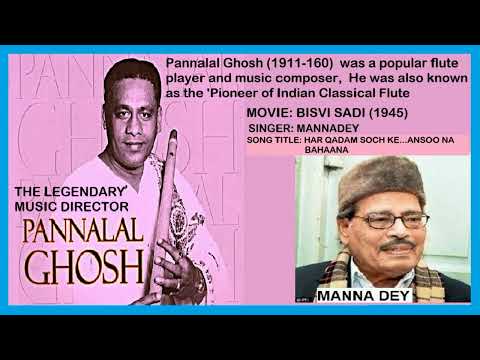
- आँसू न बहाना Aansu Na Bahana
- आवाज़ आ रही है Aawaz Aa Rahi Hai
- आया है बगिया में कौन निराला Aaya Hai Bagiya Mein Kaun Nirala
- बहुत दिनों के बाद मिला था Bahut Dino Ke Baad Mila Tha
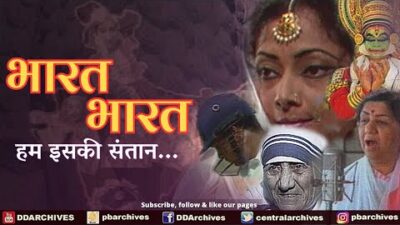
- भारत की संतान (संस्करण 1) Bharat Ki Santan (Version 1)

- भारत की संतान (संस्करण 2) Bharat Ki Santan (Version 2)
- बीसवीं सदी Bisvin Sadi
- चला चल री ज़रा Chala Chal Ri Zara
- चली चल री जमुना किनारे Chali Chal Ri Jamuna Kinare
- दिखा तो प्यारी Dikha To Pyari
- होली का त्योहार मना लो Holi Ka Tyohar Mana Lo
- कूक रे तू प्राण पपीहे Kook Re Tu Pran Papihe स्वर: Parul Ghosh

- माँग रही हूँ तुझसे Maang Rahi Hoon Tujhse स्वर: Parul Ghosh
- प्यारी दुल्हन को दूल्हा जी Pyari Dulhan Ko Dulha Ji

- तूने जायो है राजकुमार Tune Jayo Hai Rajkumar
पट्टिका-लेख
The Monographपर्दे के पीछे Behind the Scenes
मोहन भवनानी उन पहले भारतीयों में से थे जिन्होंने विदेश में औपचारिक फ़िल्म-प्रशिक्षण लिया: उन्होंने 1921 से 1924 तक मैनचेस्टर के कॉलेज ऑफ़ टेक्नोलॉजी में पढ़ाई की और फिर बर्लिन के यूएफ़ए स्टूडियो में — 'मेट्रोपोलिस' के स्टूडियो में — प्रशिक्षु रहे। उन्होंने मूक-युग में कोहिनूर और इम्पीरियल के लिए सुलोचना को निर्देशित किया, अपनी तीन कंपनियाँ चलाईं, 'मज़दूर' (1934) के लिए प्रेमचंद को सिनेमा में लाए — श्रम बनाम पूँजी की वह फ़िल्म जिसे साम्यवादी प्रचार कहकर प्रतिबंधित कर दिया गया — और 1935 में जे. जे. स्कूल ऑफ़ आर्ट के कलाकारों तथा 'मेट्रोपोलिस' पर काम कर चुके एक जर्मन तकनीशियन के साथ एक एनिमेशन इकाई बनाई। पन्नालाल घोष उसी शहर में दूसरी दिशा से आए: वे कलकत्ता में न्यू थिएटर्स में सहायक रह चुके थे, 1940 में फ़िल्म-काम के लिए बंबई आए, और 1928 में किशोरावस्था में बंगाल के स्वतंत्रता आंदोलन से जुड़े — अखाड़े में प्रशिक्षण और लाठी-चालन सीखा, जब तक पुलिस की नज़र ने उन्हें कलकत्ता जाने पर विवश नहीं किया। उस्ताद अलाउद्दीन ख़ाँ के अधीन उनकी व्यवस्थित तालीम इस फ़िल्म के दो वर्ष बाद, 1947 में ही शुरू होगी।
अंग्रेज़ी में पढ़ें · Read in English
Mohan Bhavnani was among the very first Indians to train formally in film abroad: he studied at the College of Technology in Manchester from 1921 to 1924 and then apprenticed at UFA in Berlin, the studio of Metropolis. He had directed Sulochana in the silent era at Kohinoor and Imperial, run three companies of his own, brought Premchand into cinema for Mazdoor (1934) — a labour-versus-capital film banned as communist propaganda — and set up an animation unit in 1935 staffed with artists from the J. J. School of Art and a German technician who had worked on Metropolis. Pannalal Ghosh came to the same city from a different direction: he had assisted at New Theatres in Calcutta, moved to Bombay in 1940 for film work, and as a teenager in 1928 had joined the independence movement in Bengal, taking up gymnasium training and stick-fighting until police attention forced him to leave for Calcutta. He would not begin his systematic study under Ustad Allauddin Khan until 1947, two years after this film.
महत्व Significance
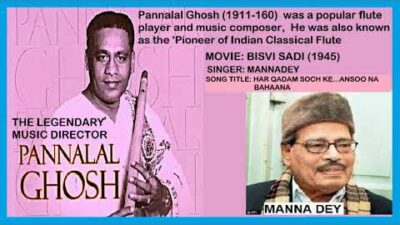
इस फ़िल्म का स्थायी महत्व इसके संगीतकार में है। पन्नालाल घोष (1911–1960) को उस व्यक्ति के रूप में याद किया जाता है जिन्होंने बाँसुरी को हिंदुस्तानी संगीत का मंचीय वाद्य बनाया — उन्होंने बाँसुरी को बत्तीस इंच लंबा किया, तीव्र-मध्यम का छिद्र जोड़ा और सात-छिद्र वाली रचना प्रस्तुत की — और फ़िल्म-संगीत उस जीवन में केवल एक संकरी उपधारा थी। 'बीसवीं सदी' उन गिनी-चुनी पूर्ण हिंदी फ़िल्मों में से एक है जिन पर उनके संगीत के हस्ताक्षर हैं — स्वतंत्र संगीतकार के रूप में उनकी पहली फ़िल्म 'स्नेह बंधन' (1940) के पाँच वर्ष बाद और 'आंदोलन' (1951) से छह वर्ष पहले। यह नरगिस के आरंभिक अभिनय का दस्तावेज़ भी है — 'बरसात' और 'अंदाज़' से पहले का, जिनके बाद वे अगले दशक की निर्णायक पर्दा-उपस्थिति बनीं — और मोहन भवनानी की उन अंतिम व्यावसायिक फ़िल्मों में से एक जिन्हें उन्होंने 1948 में भारत सरकार द्वारा फ़िल्म्स डिवीज़न का पहला मुख्य निर्माता नियुक्त किए जाने से पहले निर्देशित किया।
अंग्रेज़ी में पढ़ें · Read in English
The film's lasting interest is its music director. Pannalal Ghosh (1911–1960) is remembered as the man who made the bansuri a Hindustani concert instrument — he lengthened the flute to thirty-two inches, added the teevra-madhyam hole and introduced the seven-hole design — and film scoring was only a narrow side-channel in that life. Bisvi Sadi is one of the few complete Hindi film scores he signed, coming five years after his debut as an independent composer on Sneh Bandhan (1940) and six years before Andolan (1951). It is also a document of an early Nargis performance, made before Barsaat and Andaz turned her into the defining screen presence of the following decade, and one of the last commercial features Mohan Bhavnani directed before the Government of India appointed him the first Chief Producer of the Films Division in 1948.
विरासत Legacy
'बीसवीं सदी' लगभग पूरी तरह प्रचलन से बाहर हो चुकी है। यह 1945 की उन फ़िल्मों में नहीं है जिन पर बाद के लेखक लौटते हैं, और उसी वर्ष की 'ज़ीनत' या 'हुमायूँ' के विपरीत इसने कोई ऐसा गीत नहीं दिया जो मानक भंडार में शामिल हुआ हो; जो बचा है वह हिंदी फ़िल्म गीत कोश से व्युत्पन्न गीत-सूचियों में दर्ज प्रविष्टि है — पंद्रह शीर्षक, एक संगीतकार, एक नामित गायिका। यह अधूरा बचाव ही असल बात है: यह याद दिलाता है कि 1940 के दशक का कितना बड़ा हिस्सा आज केवल गीत-शीर्षकों की सूची के रूप में मौजूद है। पन्नालाल घोष को खोजने वाले श्रोताओं के लिए यह फ़िल्म इसलिए मायने रखती है कि यह उन गिने-चुने संगीत-कार्यों में से एक है जिनमें भारत के अग्रणी शास्त्रीय बाँसुरी-वादक ने व्यावसायिक फ़िल्म-संगीतकार के रूप में काम किया, और नरगिस का अनुसरण करने वालों के लिए यह इस बात का चिह्न है कि उनका करियर कितनी जल्दी शुरू हो गया था।
अंग्रेज़ी में पढ़ें · Read in English
Bisvi Sadi has almost entirely fallen out of circulation. It is not among the 1945 films that later writers return to, and unlike Zeenat or Humayun of the same year it produced no song that entered the standard repertoire; what survives is the catalogue entry — fifteen titles, one composer, one named singer — in the Hindi Film Geet Kosh–derived song databases. That partial survival is itself the point: it is a reminder of how much of the 1940s output exists now only as a list of song titles. For listeners tracing Pannalal Ghosh, the film matters because it is one of the small number of scores in which India's foremost classical flautist worked as a commercial film composer, and for anyone following Nargis it is a marker of how early her career began.
अन्य विवरण
More Details- https://en.wikipedia.org/wiki/List_of_Hindi_films_of_1945
- https://www.hindigeetmala.net/movie/beesvi_sadi.htm
- https://myswar.co/album/beesvin-sadi-1945
- https://en.wikipedia.org/wiki/Mohan_Bhavnani
- https://en.wikipedia.org/wiki/Pannalal_Ghosh
- https://en.wikipedia.org/wiki/Parul_Ghosh
- https://indiancine.ma/EDJ/info
- https://letterboxd.com/film/bisvi-sadi/
- https://en.wikipedia.org/wiki/Gope_(actor)
- https://commons.wikimedia.org/wiki/File:Mohan_Bhavnani.jpg
References
नमूना-पट्टी
The Specimen Table| शीर्षक | बीसवीं सदी · Bisvi Sadi |
|---|---|
| वर्ष · युग | 1945 — Pre Independence |
| निर्देशक | मोहन भवनानी · Mohan Bhavnani |
| संगीत-निर्देशक | पन्नालाल घोष · Pannalal Ghosh |
| कलाकार-मंडली | मोतीलाल · Motilal · नरगिस · Nargis · मज़हर ख़ान · Mazhar Khan · गोप · Gope · आशालता · Ashalata · भूडो आडवाणी · Bhudo Advani · नवीन · Navin · मजूमदार · Majumdar |
| निर्माण-गृह | Bhavnani Productions, Bombay |
| लेबल | Columbia Records |
| शैली | Social · Drama |
| भाषा | hindi |
| प्रकार | कथा-चित्र (फ़ीचर) |
| गीत | 15 गीत — ऊपर पूरी संगीत-सूची |
जुड़े हुए पन्ने
Connected Plates · The Graph Made Visibleअटलस में कोई पन्ना अकेला नहीं — 'बीसवीं सदी' से उसके गीत, कलाकार, राग और युग, सब जुड़े हैं।
इस फ़िल्म के गीत · Songs of this Film
कलाकार · Cast & Crew
युग · The Era
साझा कीजिए · Share this Plate