गीत विंग · गीत-पट्टिका · Song Plate
छोटा सा सन्सार हमारा
Chhota Sa Sansar Hamara
शांता आप्टे की एक छोटी-सी दुनिया को पूर्ण बनाने की कोमल कल्पना — वह गीत जो फ़िल्म से अधिक जीवित रहा।
भावपुरानी यादें · शांत · रोमांटिक
भाषाhindi गतिमध्यम स्वरूपएकल महिला
श्रेय
The Creditsसूत्र-वाक्य · The Hook
सूत्र-वाक्य
शांता आप्टे की एक छोटी-सी दुनिया को पूर्ण बनाने की कोमल कल्पना — वह गीत जो फ़िल्म से अधिक जीवित रहा।
In EnglishShanta Apte's tender vision of a small world made whole — the song that survived the film.
पट्टिका-लेख
The Monographपरिचय Overview
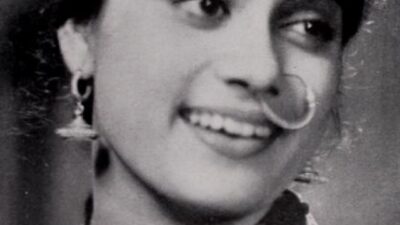
ज़मींदार (1943) की हर चीज़ में से, यह 'छोटा सा सन्सार हमारा' ही है जो टिका रहा। ग़ुलाम हैदर की रचना पर शांता आप्टे द्वारा गाया और क़मर जलालाबादी द्वारा लिखा गया यह गीत एक यादगार हिट बना और नियमित रूप से फ़िल्म के हस्ताक्षर संगीत-क्षण के रूप में उद्धृत किया जाता है। आप्टे — जो प्रभात की फ़िल्मों से पहले ही एक बड़ी स्टार थीं — ने अपनी प्रशिक्षित, शास्त्रीय-आधारित आवाज़ एक ऐसे गीत को दी जिसका आकर्षण उसकी आत्मीय, लगभग घरेलू ऊष्मा में था।
अंग्रेज़ी में पढ़ें · Read in English
Of everything in Zamindar (1943), it is 'Chhota Sa Sansar Hamara' that endured. Sung by Shanta Apte to Ghulam Haider's composition and written by Qamar Jalalabadi, the song became a memorable hit and is routinely cited as the film's signature musical moment. Apte — already a major star from her Prabhat films — brought her trained, classically grounded voice to a number whose appeal lay in its intimate, almost domestic warmth.
संगीत The Music
ग़ुलाम हैदर इस गीत को एक कोमल मध्यम लय पर रखते हैं, अपने शमशाद बेगम वाले गीतों की ढोलक-प्रधान लोक-आक्रामकता के बजाय हारमोनियम और एक नरम तबला-आधार पर टिकते हुए। संगीत-संयोजन शांता आप्टे को उनकी शास्त्रीय-प्रशिक्षित गायकी के लिए जगह देता है, और धुन की इत्मीनान भरी मिठास ही इसकी चिरस्थायी पकड़ का स्रोत है।
अंग्रेज़ी में पढ़ें · Read in English
Ghulam Haider sets the song at a gentle medium tempo, leaning on harmonium and a soft tabla bed rather than the dholak-forward folk attack of his Shamshad Begum numbers. The arrangement gives Shanta Apte room for her classically schooled phrasing, and the melody's unhurried sweetness is the source of its lasting hold.
काव्य The Poetry
गीत की केंद्रीय छवि — 'छोटा सा सन्सार हमारा' — 1940 के दशक के लोकप्रिय फ़िल्म-गीतों में आम भव्य रोमांटिक विस्तार का एक जानबूझकर उलटाव है। जहाँ अधिकतर ऐसे गीत अनंत को खोजते हैं (तारे, आकाश, सारी सृष्टि), यह गीत सीमित में पूर्णता पाता है: दो लोगों की छोटी दुनिया, एक घर, एक साझा जीवन। क़मर जलालाबादी — ज़मींदार के साथ फ़िल्म गीतकार के रूप में अपने आगाज़ में — उर्दू ग़ज़ल परंपरा में प्रशिक्षित एक कवि थे, और यह गीत ग़ज़ल की आत्मीय कम-कहने की क्षमता को दर्शाता है: थोड़े से बोलकर सब कह देना। 'सन्सार' हिंदी-उर्दू गीत में 'संसार' के पूर्ण ब्रह्मांडीय अर्थ में भार वहन करता है, और 'छोटा सा' (छोटा, ज़रा-सा छोटा) उस ब्रह्मांडीय पैमाने के विरुद्ध लघु-प्रत्यय लगाकर गीत की भावात्मक ऊष्मा रचता है — एक दुनिया जो भुजाओं में समाने लायक छोटी, पूर्ण होने के लिए पर्याप्त बड़ी। गीत संतोष के बारे में है, जो फ़िल्म-गीत में तड़प से दुर्लभ भाव है, जो इस गीत को अपने काल में असाधारण बनाता है।
अंग्रेज़ी में पढ़ें · Read in English
The song's governing image — 'our world is a small one' — is a deliberate inversion of the grand romantic sweep common to popular film songs of the 1940s. Where most such songs seek the infinite (the stars, the sky, all of creation), this lyric finds completeness in the limited: the small world of two people, a household, a shared life. Qamar Jalalabadi — making his debut as a film lyricist with Zamindar — was a poet trained in the Urdu ghazal tradition, and this song reflects the ghazal's capacity for intimate understatement: saying everything by speaking of a little. 'Sansar' in Hindi-Urdu lyric carries the weight of 'world' in the fullest cosmic sense, and 'chhota sa' (small, just a little small) applies the diminutive against that cosmic scale to create the song's emotional warmth — a world small enough to hold in the arms, large enough to be complete. The lyric is about contentment, which is a rarer emotion in film song than longing, making this song unusual in its period.
कहानी The Story
ज़मींदार (1942/1943) डी. एम. पंचोली द्वारा पंचोली आर्ट पिक्चर्स, लाहौर में निर्मित था — वही स्टूडियो जिसने हिट ख़ानदान (1942) बनाई थी। ग़ुलाम हैदर, जिन्होंने ख़ानदान का संगीत तैयार किया था, ने ज़मींदार का संगीत भी रचा, और फ़िल्म में शांता आप्टे — जो पुणे की प्रभात फ़िल्म कंपनी में अपने काम से पहले से ही एक बड़ी सितारा थीं — ने मुख्य भूमिका निभाई। 'छोटा सा सन्सार हमारा' को लगातार फ़िल्म के हस्ताक्षर-गीत और उस गीत के रूप में पहचाना जाता है जो फ़िल्म से अधिक सार्वजनिक स्मृति में टिका। क़मर जलालाबादी (1919–2003) ज़मींदार के साथ फ़िल्म गीतकार के रूप में अपना आगाज़ कर रहे थे; वे आगे चलकर 1950 और 1960 के दशक के हिंदी सिनेमा के कुछ सबसे चिरस्थायी गीत लिखेंगे। गीत को एक कोमल, हारमोनियम-प्रधान तरीके से रचने का ग़ुलाम हैदर का निर्णय — अन्य गीतों में उनके द्वारा प्रयुक्त ढोलक-प्रधान लोक-ऊर्जा की जगह — ने शांता आप्टे की आवाज़ और स्वभाव के प्रति उनकी संवेदनशीलता दिखाई, जो पुणे की शास्त्रीय परंपरा में प्रशिक्षित थीं।
अंग्रेज़ी में पढ़ें · Read in English
Zamindar (1942/1943) was produced by D.M. Pancholi at Pancholi Art Pictures in Lahore, the same studio that had made the hit Khandaan (1942). Ghulam Haider, who had composed Khandaan's score, also scored Zamindar, and the film featured Shanta Apte — already a major star from her Prabhat Film Company work in Pune — in its lead role. 'Chhota Sa Sansar Hamara' is consistently identified as the film's signature song and the number that outlasted the film in public memory. Qamar Jalalabadi (1919–2003) was making his debut as a film lyricist with Zamindar; he would go on to write some of the most enduring songs of the 1950s and 1960s Hindi cinema. Ghulam Haider's decision to set the lyric in a gentler, harmonium-led manner — rather than the dholak-forward folk energy he used in other songs — showed his sensitivity to the voice and temperament of Shanta Apte, who had been trained in Pune's classical tradition.
विरासत The Legacy
यह गीत शांता आप्टे के काम के सर्वेक्षणों में उनकी सबसे चिरस्थायी हिंदी फ़िल्म रिकॉर्डिंग के रूप में नियमित रूप से उद्धृत होता है — वह गीत जो फ़िल्म से अधिक टिका और ज़मींदार के स्वयं प्रचलन से ओझल हो जाने के बाद भी याद रहा। इसे क़मर जलालाबादी के कैरियर के वृत्तांतों में उस गीत के रूप में भी नोट किया जाता है जिसने एक बड़े नए फ़िल्म-गीत लेखक की घोषणा की, और ग़ुलाम हैदर के उत्पादन के वृत्तांतों में लोक-तालमय शैली और एक अधिक आत्मीय सुरीले ढंग के बीच मुड़ने की उनकी क्षमता के प्रमाण के रूप में। गीत को 1940 के दशक के हिंदी फ़िल्म संगीत के संकलनों में पुनः जारी किया गया है और उस युग की कम आँकी गई महिला गायिकाओं के बारे में लेखों में नियमित रूप से उद्धृत किया जाता है।
अंग्रेज़ी में पढ़ें · Read in English
The song is routinely cited in surveys of Shanta Apte's work as her most enduring Hindi film recording — the song that outlasted the film and was remembered long after Zamindar itself had faded from circulation. It is also noted in accounts of Qamar Jalalabadi's career as the lyric that announced a major new film-song writer, and in accounts of Ghulam Haider's output as evidence of his ability to modulate between the folk-percussive style and a more intimate melodic manner. The song has been reissued in compilations of 1940s Hindi film music and is regularly cited in articles about the era's underrated female singers.
वर्गीकरण
Classification- Tempo
- Medium
Genre
अन्य विवरण
More Details- https://www.hindigeetmala.net/song/chota_sa_sansar_hamara.htm
- https://www.songsofyore.com/the-stormy-petrel-of-the-indian-screen-i-knew-very-late-shanta-apte/
- https://en.wikipedia.org/wiki/Ghulam_Haider_(composer)
- https://grokipedia.com/page/Qamar_Jalalabadi
- https://www.imdb.com/title/tt0215382/
References
रोचक तथ्य
Margin Notesज़मींदार (1942/1943) गीतकार क़मर जलालाबादी (1919–2003) की पदार्पण फ़िल्म थी, जिन्होंने आगे चलकर 1950-1960 के दशकों के हिंदी सिनेमा के कुछ सबसे प्रसिद्ध गीत लिखे।
अंग्रेज़ी में पढ़ें · Read in English
Zamindar (1942/1943) was the debut film for lyricist Qamar Jalalabadi (1919–2003), who went on to write some of the most celebrated songs of 1950s–1960s Hindi cinema.
शांता आप्टे (1916–1964) ज़मींदार में आने से पहले ही प्रभात फ़िल्म कंपनी की मराठी-हिंदी प्रस्तुतियों की सितारा थीं; उन्होंने एक शास्त्रीय गायिका के रूप में प्रशिक्षण लिया था, जिसने उनकी आवाज़ को उस दौर की लोकप्रिय फ़िल्म के लिए असामान्य एक औपचारिक अनुशासन दिया।
अंग्रेज़ी में पढ़ें · Read in English
Shanta Apte (1916–1964) was already a star of the Prabhat Film Company's Marathi-Hindi productions before appearing in Zamindar; she had trained as a classical singer, which gave her voice a formal discipline unusual in the popular film of the period.
ग़ुलाम हैदर (1908–1953) ने ज़मींदार के 'छोटा सा संसार' के लिए अपने पहले के ख़ज़ांची गीतों की तुलना में स्पष्ट रूप से भिन्न संगीत-बनावट रची: यहाँ उन्होंने एक संयमित, हारमोनियम-आधारित स्वररचना चुनी, जो शांता आप्टे की प्रभात-प्रशिक्षित संवेदनशीलता के अनुकूल थी।
अंग्रेज़ी में पढ़ें · Read in English
Ghulam Haider (1908–1953) produced markedly different musical textures for Zamindar's 'Chhota Sa Sansar' than for his earlier Khazanchi numbers: here he chose a restrained, harmonium-based setting suited to Shanta Apte's Prabhat-trained sensibility.
एक छोटे, आत्मीय संसार में पूर्णता पाने का इस गीत का विषय 1940 के दशक के हिंदी फ़िल्म संगीत में असामान्य था, जहाँ लालसा और खोना कहीं अधिक आम भावनात्मक स्वर थे; इसके संतोष-भाव ने इसे एक व्यापक और स्थायी आकर्षण दिया।
अंग्रेज़ी में पढ़ें · Read in English
The song's theme of finding completeness in a small, intimate world was unusual in 1940s Hindi film music, where longing and loss were far more common emotional registers; its contentment-ethos gave it a broad and lasting appeal.
नमूना-पट्टी
The Specimen Table| शीर्षक | छोटा सा सन्सार हमारा · Chhota Sa Sansar Hamara |
|---|---|
| फ़िल्म | ज़मींदार · 1943 |
| वर्ष · युग | 1943 |
| गायक | Shanta Apte |
| गीतकार | Qamar Jalalabadi |
| संगीतकार | Ghulam Haider |
| स्वरूप | एकल महिला |
| गति | मध्यम |
| भाषा | hindi |
| भाव | पुरानी यादें · शांत · रोमांटिक |
| लोकप्रियता | Popular |
| बोल-स्थिति | केवल झलक |
जुड़े हुए पन्ने
Connected Plates · The Graph Made Visibleअटलस में कोई पन्ना अकेला नहीं — इस गीत से जुड़े गीत, कलाकार, फ़िल्म, राग-ताल-विधा, सब यहाँ से खुलते हैं।
मिलते-जुलते गीत · Related Songs
कलाकार · The Artists
फ़िल्म · The Film
साझा कीजिए · Share this Plate