शास्त्र विंग · राग-पट्टिका · Raag Plate
ब्रिंदावनी सारंग
Brindāvanī Sāraṅg
दोपहर का चरवाही राग · The Pastoral Afternoon Raag
भावरोमांटिक · चरवाही · मनोहर · गर्म · स्नेही
गतिvilambit_to_madhya ऊर्जाधीमी से मध्यम
अन्य नामBrindabani · ब्रिंदावनी · Sarang
स्वर-चित्र · The Swara Panel
आरोह — अवरोह · The Ascent and the Descent
कोमल स्वर — Ni♭ — तीव्रित हरे रंग में।
आरोह · Aroha चढ़ती हुई सीढ़ी
अवरोह · Avaroha उतरती हुई सीढ़ी
कोमल स्वर — नीचे की ओर झुका चिह्न (◌॒)सˊ = तार सप्तक का षड्ज
ब्रिंदावनी सारंग कोमल निषाद का प्रयोग करता है, जो इसे एक अलग चरवाही चरित्र देता है। आरोहण में गा और ध का अभाव राग को दोपहर के प्रदर्शन के लिए आदर्श बनाता है।
अंग्रेज़ी में पढ़ें · Read in English
Brindabani Sarang uses komal Ni♭ as its only flattened note, giving it a distinct pastoral character. The absence of both Ga and Dha in the arohana creates a sparse, open quality ideal for afternoon performances. The raag's bright yet soft character comes from its balanced use of natural notes with one komal.
वर्जित स्वर — अवरोह में: Ga
पकड़ · पहचान वाक्यांश
रे म प नि♭ सˊ
Re Ma Pa Ni♭ Sa'
ब्रिंदावनी सारंग को परिभाषित करने वाला सौम्य आरोही वाक्यांश — दोपहर में कृष्ण की बांसुरी की मधुर ध्वनि को जागृत करता है।
अंग्रेज़ी में पढ़ें · Read in English
The gentle ascending phrase that identifies Brindabani Sarang — pastoral and romantic, evoking the sweet melodies of Krishna's flute in the afternoon. This is the soul of the raag.
वादी–संवादी टिप्पणी · Vadi–Samvadi note
Vadi — The most important note in Brindabani Sarang, where the raag's pastoral character is most felt and expressed.
Samvadi — The second most important note, the supporting minister to the vadi.
चलन · स्वर-यात्रा
सा रे म, प नि♭ सˊ। नि♭ ध प म रे स, रे म प, सा रे म प नि♭ सˊ
Sa Re Ma, Pa Ni♭ Sa'. Ni♭ Dha Pa Ma Re Sa, Re Ma Pa, Sa Re Ma Pa Ni♭ Sa'
दोपहर के राग का पूर्ण संगीत प्रवाह — निचले अष्टक से शुरू होकर पकड़ तक ऊपर उठता है, फिर सुंदरता से अवरोहण करता है।
अंग्रेज़ी में पढ़ें · Read in English
The complete melodic progression of Brindabani Sarang — starting from the lower register, rising gently to the pakad in the upper octave, then descending with ease. Omits Ga and Dha in ascent.
न्यास स्वर — Sa, Re, Pa अनुवादी — Sa, Ma, Ni♭
विशेष स्वर-वाक्य
Characteristic Phrasesसमय और भाव
Time Theory & Moodसमय-सिद्धांत · Time Theory
पूर्व मध्याह्न प्रहर
दोपहर का राग — दोपहर से दोपहर के बाद तक गाया जाता है, जब दिन सबसे गर्म और उज्ज्वल हो।
Afternoon raag — traditionally performed from midday through mid-afternoon. Ideal for the warmest, brightest hours when pastoral activities are in full swing.
Monsoon
भाव और गति · Mood & Tempo
श्रृंगार · Love / Romance / Pastoral Longing
ब्रिंदावनी सारंग का प्राथमिक रस — रोमांटिक चरवाही अभिलाषा, कृष्ण की बांसुरी का मधुर आह्वान।
vilambit_to_madhya
ऊर्जा · Energyधीमी से मध्यम
स्तर · Levelintermediate — ब्रिंदावनी सारंग में कोमल निषाद और आरोहण-अवरोहण संतुलन की समझ आवश्यक है।
लक्षण गीत · The Mnemonic Verse
लक्षण गीत
ब्रिंदावनी सारंग काफी थाट में
नि कोमल राग विशेष बनाय बैठ
सा रे म प नि को आरोहण
नि ध प म रे सा को अवरोहण
अंग्रेज़ी में पढ़ें · Read in English
Brindabani Sarang Kafi thaat mein
Ni komal raag vishesh banay beth
Sa Re Ma Pa Ni ko arohana
Ni Dha Pa Ma Re Sa ko avarohana
Brindabani Sarang in the Kafi thaat, with komal Ni making the raag special. Ascent: Sa Re Ma Pa Ni♭. Descent: Ni♭ Dha Pa Ma Re Sa.
पट्टिका-लेख
The Monographपरिचय Introduction
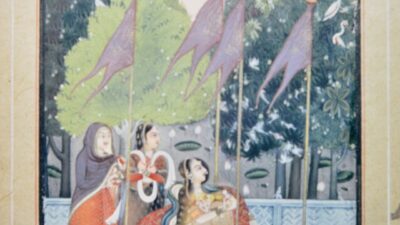
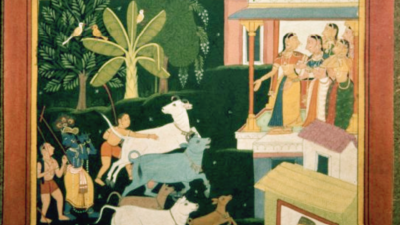
ब्रिंदावनी सारंग कृष्ण भक्ति और चरवाही कल्पना से गहराई से जुड़ा राग है। इसका नाम ब्रिंदावन को जागृत करता है, जहाँ कृष्ण की बांसुरी हरी-भरी घाटियों में गूंजती है। यह राग दोपहर के गर्म समय की चमक, कृष्ण भक्ति और प्रकृति के प्रेम को व्यक्त करता है।
अंग्रेज़ी में पढ़ें · Read in English
Brindabani Sarang is a raag deeply connected to Krishna devotion and pastoral imagery. Its name evokes Brindavan (Vrindavan), the sacred homeland of Lord Krishna, where pastoral life and divine love intertwine. Unlike the evening romance of Yaman, Brindabani Sarang celebrates the bright, warm afternoon when Krishna's flute calls across green fields and peacocks dance. The raag's sparse arohana (ascending scale omitting Ga and Dha) creates a minimalist opening gesture that builds anticipation, while the fuller avarohana (descent) brings completeness and emotional satisfaction. With komal Ni♭ as its only flattened note, Brindabani Sarang maintains a generally bright character while achieving a soft, affectionate mood. It is traditionally associated with monsoon seasons when the landscape is most lush and pastoral activities are in full swing. In both classical concert and devotional contexts, Brindabani Sarang remains a favorite vehicle for expressing the sweet longing of Krishna worship and the romance of pastoral life.
सांस्कृतिक महत्व Cultural Significance
ब्रिंदावनी सारंग कृष्ण-केंद्रित संगीत परंपराओं में गहरा महत्व रखता है। यह राग मंदिरों, भक्ति संदर्भों और शास्त्रीय संगीत सभाओं में व्यापक रूप से प्रदर्शित होता है।
अंग्रेज़ी में पढ़ें · Read in English
Brindabani Sarang holds profound significance in Krishna-centric musical traditions. The raag is extensively performed in temples, devotional contexts, and classical concerts, especially during monsoon festivals. It remains a primary choice for Krishna bhajans and thumri compositions. The raag's pastoral character makes it beloved in rural and village traditions across North India, where Krishna legends remain central to cultural identity. Its association with the flute — Krishna's characteristic instrument — gives it a special place in Indian musical imagination.
ऐतिहासिक महत्व Historical Significance
ब्रिंदावनी सारंग काफी थाट से संबंधित एक राग है जो कृष्ण पूजा परंपराओं से जुड़ा है। इसका विकास उत्तर भारत में, विशेष रूप से मथुरा और ब्रिंदावन क्षेत्रों में कृष्ण पूजा परंपराओं से जुड़ा है।
अंग्रेज़ी में पढ़ें · Read in English
Brindabani Sarang is documented in classical music treatises as a raag belonging to the Kafi thaat. Its development is closely tied to Krishna worship traditions in North India, particularly in Mathura and Brindavan regions. The raag gained prominence in thumri and semi-classical traditions during the late 19th and early 20th centuries, when singers began emphasizing the devotional and pastoral dimensions of Hindi music. It remains a cornerstone of Krishna-themed classical and devotional music.
शिक्षा
Teaching & Learning| बंदिश | ताल · लय | बोल |
|---|---|---|
| Krishna Charan Kadamb Darshan Pai Traditional |
Teentaal | |
| Brij Khari Chhayi Traditional |
Dadra |
पकड़ (रे म प नि♭ सˊ) में महारत हासिल करें। यह राग की पहचान है।
अंग्रेज़ी में पढ़ें · Read in English
Master the pakad first (Re Ma Pa Ni♭ Sa'). This ascending phrase is the signature of Brindabani Sarang. Practice it slowly with proper intonation of the komal Ni♭.
आरोहण में गा और ध अनुपस्थित हैं, लेकिन अवरोहण में दोनों हैं। यह विषमता राग की पहचान है।
अंग्रेज़ी में पढ़ें · Read in English
Understand the constraint: arohana OMITS both Ga and Dha, but avarohana includes them. This sparseness in ascent vs. completeness in descent is essential to the raag's structure.
कोमल निषाद को नरम और प्राकृतिक होना चाहिए। यह राग को उसका चरवाही चरित्र देता है।
अंग्रेज़ी में पढ़ें · Read in English
The komal Ni♭ should feel natural and soft, not harsh. It gives Brindabani Sarang its gentle, pastoral character — practice its intonation carefully.
कृष्ण परंपरा से जुड़ाव समझें। यह राग के आध्यात्मिक आयाम को समझने में मदद करता है।
अंग्रेज़ी में पढ़ें · Read in English
Explore the connection to Krishna traditions. Understanding the Krishna mythology and pastoral context enriches your interpretation of the raag.
आरोहण में गा का प्रयोग करना, राग को अन्य काफी रागों से भ्रमित करना
अंग्रेज़ी में पढ़ें · Read in English
Using Ga in the arohana, confusing Brindabani Sarang with other Kafi-based raags
सुधार: Brindabani Sarang arohana OMITS Ga: Sa Re Ma Pa Ni♭ Sa'. Only use Ga in avarohana.
ध को अत्यधिक जोर देना, इसे अप्राकृतिक बनाना
अंग्रेज़ी में पढ़ें · Read in English
Over-emphasizing Dha, making it sound forced rather than organic
सुधार: Dha appears only in avarohana and should feel like a natural bridge between Ni♭ and Pa.
समय की गलत व्याख्या — राग को दोपहर के बजाय संध्या राग मानना
अंग्रेज़ी में पढ़ें · Read in English
Misinterpreting the time — performing Brindabani Sarang as an evening raag rather than afternoon
सुधार: Brindabani Sarang is a MIDDAY to AFTERNOON raag, not evening. Its character reflects the bright warmth of the day.
तुलना
A Specimen Comparisonदोनों काफी थाट के रागों में कोमल निषाद है, लेकिन काफी 7-स्वर राग है जबकि ब्रिंदावनी सारंग आरोहण में 5 स्वर है।
| तुलनाSpecimen | ब्रिंदावनी सारंग | काफी |
|---|---|---|
| स्वर-अंतर | Kafi: Sa Re Ga Ma Pa Dha Ni♭ | Brindabani Sarang: Sa Re Ma Pa Ni♭ (arohana only) | |
| भाव-अंतर | Kafi = Introspective evening melancholia; Brindabani Sarang = Bright afternoon pastoral romance | |
| समय-अंतर | Kafi = Evening; Brindabani Sarang = Afternoon/midday | |
यमन संध्या रोमांस है; ब्रिंदावनी सारंग दोपहर का चरवाही राग है। दोनों उज्ज्वल हैं, लेकिन भिन्न समय में।
| तुलनाSpecimen | ब्रिंदावनी सारंग | यमन |
|---|---|---|
| स्वर-अंतर | Yaman uses tivra Ma♯; Brindabani Sarang uses komal Ni♭ | |
| भाव-अंतर | Yaman = Majestic romantic; Brindabani Sarang = Pastoral affectionate | |
| समय-अंतर | Yaman = Evening; Brindabani Sarang = Afternoon | |
रोचक तथ्य
Margin Notesब्रिंदावनी सारंग उन कुछ रागों में से एक है जिसका नाम एक भौगोलिक स्थान — ब्रिंदावन के नाम पर रखा गया है।
अंग्रेज़ी में पढ़ें · Read in English
Brindabani Sarang is one of the few raags specifically named after a geographical location — Brindavan (Vrindavan), the birthplace of Krishna in Hindu mythology.
राग का आरोहण गा और ध दोनों को छोड़ता है, जो इसे काफी थाट में सबसे विरल आरोही पैटर्न में से एक बनाता है।
अंग्रेज़ी में पढ़ें · Read in English
The raag's arohana omits both Ga and Dha, making it one of the sparsest ascending patterns in Kafi thaat raags. This constraint forces artists to be more creative and expressive within the limited pitch space.
ब्रिंदावनी सारंग को परंपरागत रूप से बांसुरी पर गाया जाता है, जो इसे कृष्ण की बांसुरी से सीधे जोड़ता है।
अंग्रेज़ी में पढ़ें · Read in English
Brindabani Sarang is traditionally performed on the bamboo flute (bansuri), directly connecting it to Krishna iconography. The raag's pastoral character is inseparable from the flute's warm, intimate tone.
वर्षा ऋतु में, जब मोर नाचते हैं और परिदृश्य हरा-भरा हो जाता है, ब्रिंदावनी सारंग सर्वोत्तम राग बन जाता है।
अंग्रेज़ी में पढ़ें · Read in English
In monsoon season, when peacocks dance and the landscape turns emerald green, Brindabani Sarang becomes the raag of choice. This seasonal-geographic connection is rare and sacred in Hindustani music.
प्रस्तुति
Performance- Description
- दोपहर का राग — दोपहर से दोपहर के बाद तक गाया जाता है, जब दिन सबसे गर्म और उज्ज्वल हो। Afternoon raag — traditionally performed from midday through mid-afternoon. Ideal for the warmest, brightest hours when pastoral activities are in full swing.
- Prahar Number
- 3
- Prahar Name
- पूर्व मध्याह्न प्रहर Purva Madhyahna Prahar
- Time Start
- 12:00
- Time End
- 16:00
- Time Flexibility
- flexible
- Time Notes
- Primarily an afternoon raag, but can be performed in monsoon contexts
Time
और जानें
More to Know- raag-kafi — Kafi — काफी — Both are Kafi thaat raags with komal Ni♭, but Kafi is a complete 7-note raag while Brindabani Sarang is sparse in arohana (5 notes). Kafi is evening; Brindabani Sarang is afternoon. — दोनों काफी थाट के रागों में कोमल निषाद है, लेकिन काफी 7-स्वर राग है जबकि ब्रिंदावनी सारंग आरोहण में 5 स्वर है। — Kafi: Sa Re Ga Ma Pa Dha Ni♭ | Brindabani Sarang: Sa Re Ma Pa Ni♭ (arohana only) — Kafi = Introspective evening melancholia; Brindabani Sarang = Bright afternoon pastoral romance — Kafi = Evening; Brindabani Sarang = Afternoon/midday
- raag-yaman — Yaman — यमन — Yaman is evening romance; Brindabani Sarang is afternoon pastoral. Yaman has tivra Ma♯; Brindabani Sarang has komal Ni♭. Both are bright, but in different times and contexts. — यमन संध्या रोमांस है; ब्रिंदावनी सारंग दोपहर का चरवाही राग है। दोनों उज्ज्वल हैं, लेकिन भिन्न समय में। — Yaman uses tivra Ma♯; Brindabani Sarang uses komal Ni♭ — Yaman = Majestic romantic; Brindabani Sarang = Pastoral affectionate — Yaman = Evening; Brindabani Sarang = Afternoon
Comparisons
सीखने के लिए
For Learners- Difficulty Level
- intermediate
नमूना-पट्टी
The Specimen Table| नाम | ब्रिंदावनी सारंग · Brindabani Sarang |
|---|---|
| थाट | काफी |
| आरोह | सा रे म प नि♭ सˊ |
| अवरोह | सˊ नि♭ ध प म रे स |
| पकड़ | रे म प नि♭ सˊ |
| जाति | औडव-षडव · Audav-Shadav |
| कोमल स्वर | Ni♭ |
| समय | पूर्व मध्याह्न प्रहर |
| ऋतु | Monsoon |
| गति | vilambit_to_madhya |
| ऊर्जा | धीमी से मध्यम |
| प्रकृति | Komal |
| परिवार | काफी परिवार |
| स्तर | intermediate |
| लोकप्रियता | Popular |
| कर्नाटक समतुल्य | Dheerashankarabharanam · Melakarta 29 |
| पाश्चात्य समतुल्य | Mixolydian |
| अन्य नाम | Brindabani · ब्रिंदावनी · Sarang |
जुड़े हुए पन्ने
Connected Plates · The Graph Made Visibleअटलस में कोई पन्ना अकेला नहीं — इस राग से गीत, प्रस्तुतियाँ, कलाकार, ताल, घराने और मिलते-जुलते राग, सब यहाँ से खुलते हैं।
प्रसिद्ध प्रस्तुतियाँ · Legendary Renditions
फ़िल्मी गीत इस राग में · Famous Film Songs
इस राग के कलाकार · Notable Artists
ताल-साथी · Taal Pairings
घराने · Gharanas
मिलते-जुलते राग · Similar Raags
शास्त्र-सूत्र · Shastra Threads
श्रवण-कक्ष · The Listening Room
सुनिए — ब्रिंदावनी सारंग · Hear the Raag
Brindabani Sarang — Pastoral Afternoon Raag
प्रश्नोत्तर
Questions & Answersराग ब्रिंदावनी सारंग का आरोहन-अवरोहन क्या है?
आरोहन: सा रे म प नि♭ सˊ | अवरोहन: सˊ नि♭ ध प म रे स
अंग्रेज़ी में पढ़ें · Read in English
What is the arohana and avarohana of Raag Brindabani Sarang? — Arohana: Sa Re Ma Pa Ni♭ Sa' | Avarohana: Sa' Ni♭ Dha Pa Ma Re Sa
राग ब्रिंदावनी सारंग किस समय गाया जाता है?
दोपहर का राग, दोपहर 12 बजे से 4 बजे तक गाया जाता है। विशेष रूप से वर्षा ऋतु से जुड़ा।
अंग्रेज़ी में पढ़ें · Read in English
When is Raag Brindabani Sarang performed? — Afternoon raag, performed from midday to 4 PM. Especially associated with monsoon season.
ब्रिंदावनी सारंग की पकड़ क्या है?
पकड़ है: रे म प नि♭ सˊ। यह राग की आरोही, चरवाही पहचान है।
अंग्रेज़ी में पढ़ें · Read in English
What is the pakad of Raag Brindabani Sarang? — The pakad is: Re Ma Pa Ni♭ Sa'. This ascending, pastoral phrase identifies the raag.
यह राग कृष्ण से कैसे जुड़ा है?
ब्रिंदावन का नाम कृष्ण के पवित्र जन्मस्थान से आता है। राग के चरवाही चरित्र और बांसुरी कृष्ण कथाओं से जुड़े हैं।
अंग्रेज़ी में पढ़ें · Read in English
How is this raag connected to Krishna? — Brindavan is Krishna's sacred birthplace. The raag's pastoral character and flute connections evoke Krishna mythology.
आरोहण में गा और ध क्यों नहीं हैं?
यह राग की विशिष्ट संरचना है। आरोहण में केवल 5 स्वर हैं (औडव), जबकि अवरोहण में 6 स्वर हैं (षडव)। यह विरलता सौंदर्य बढ़ाती है।
अंग्रेज़ी में पढ़ें · Read in English
Why are Ga and Dha absent from the arohana? — This is the raag's distinctive structure. Arohana has only 5 notes (audav), avarohana has 6 (shadav). This sparseness adds aesthetic beauty.
साझा कीजिए · Share this Plate