सिनेमा विंग · फ़िल्म-पट्टिका · Film Plate
सैरंध्री
Sairandhri
शैलीMythological · Historical
भाषाhindi-marathi प्रकारकथा-चित्र (फ़ीचर)
गीत9 — नीचे पूरी संगीत-सूची
कथा-सार
Synopsisमहाभारत का एक प्रसंग — शांताराम की प्रभात फ़िल्म कंपनी के हाथों: पांडवों के अज्ञातवास के तेरहवें वर्ष में द्रौपदी 'सैरंध्री' बनकर राजा विराट के महल में सेवा करती है। सेनापति कीचक उसे सताने लगता है; छद्मवेश में भीम आकर उसका वध करता है। 1933 में प्रभात की सबसे महत्त्वाकांक्षी फ़िल्म — भारत का पहला रंगीन चलचित्र बनने की कोशिश थी, किंतु जर्मनी में बाईपैक रंग-प्रक्रिया विफल हो गई और फ़िल्म श्वेत-श्याम जारी हुई।
अंग्रेज़ी में पढ़ें · Read in English
A Mahabharata episode rendered by Shantaram's Prabhat Film Company: Draupadi, disguised as the maidservant Sairandhri, serves in King Virata's palace during the Pandavas' thirteenth year of exile. When the commander Kichaka attempts to molest her, the disguised Bhima intervenes and slays him. Prabhat's most technically ambitious production of 1933, Sairandhri was shot on Agfa black-and-white negative and intended as India's first colour film — release prints were processed in Germany by Bipack colour printing, but the colours came out garish and the print failed commercially.
संगीत-सूची
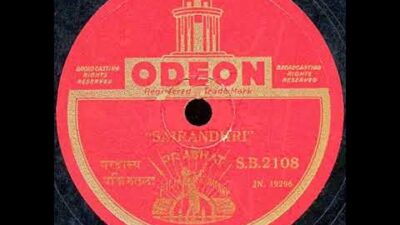
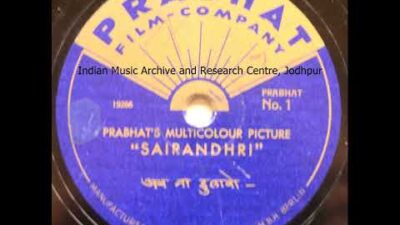
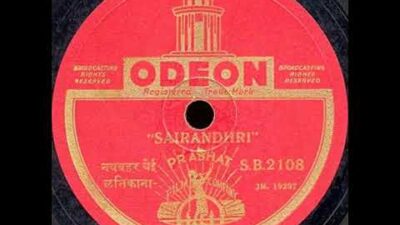
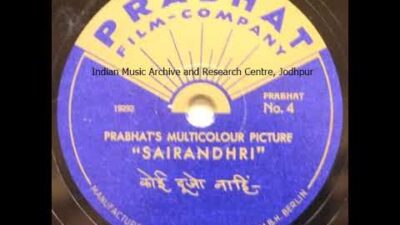
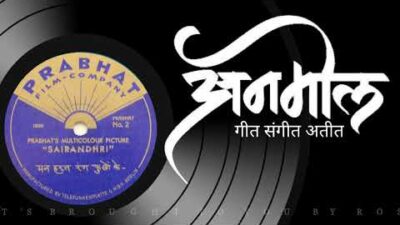
The Soundtrackगोविंदराव टेंबे के नौ हिंदी गीत — महाभारत-प्रसंग के लिए शास्त्रीय राग-आधारित धुनें। 'मन हरत रंग फूलों के' (लीला द्वारा) सबसे प्रामाणिक रूप से दर्ज गीत है। साउंडट्रैक डिस्क जर्मनी में रंग-प्रसंस्करण के साथ दबाई गईं — भारतीय फ़िल्म-संगीत के विदेशी पोस्ट-प्रॉडक्शन के आरंभिक उदाहरणों में एक।
अंग्रेज़ी में पढ़ें · Read in English
Govindrao Tembe's nine-song Hindi soundtrack for Sairandhri — leaning on classical raga settings suited to the Mahabharata episode. 'Man Harat Rang Phoolo Ke' sung by Leela is the best-documented surviving number. Soundtrack discs were pressed in Germany alongside the colour processing — an early instance of offshore post-production for Indian film music.
- आइये बल निर्बलों के दिन के धन आइये Aaiye Bal Nirbalon Ke Din Ke Dhan Aaiye स्वर: Leela
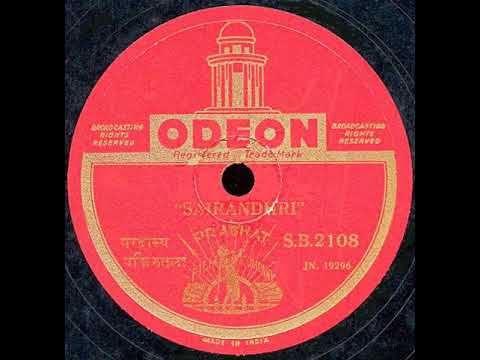
- अब न बुलाओ जमुना के तीर पर Ab Na Bulao Jamuna Ke Teer Par
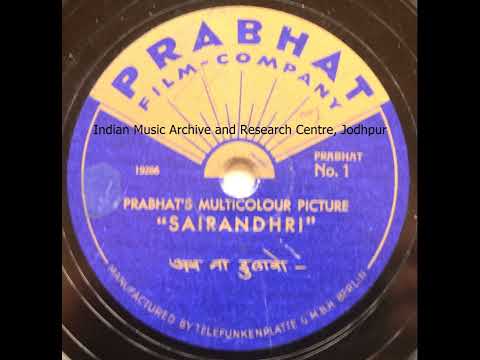
- ग़ुलामी के ग़म को वो क्या जानते हैं Ghulami Ke Gham Ko Who Kya Jante Hain स्वर: Leela
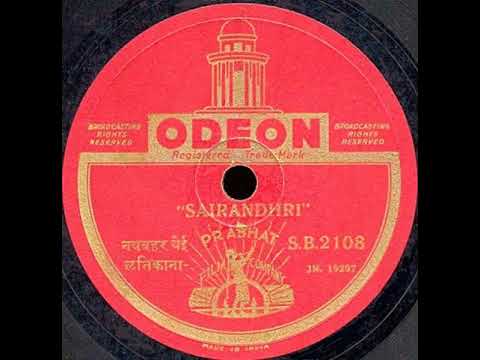
- कोई दूजो नहीं हरि बिन Koi Dujo Nahin Hari Bin
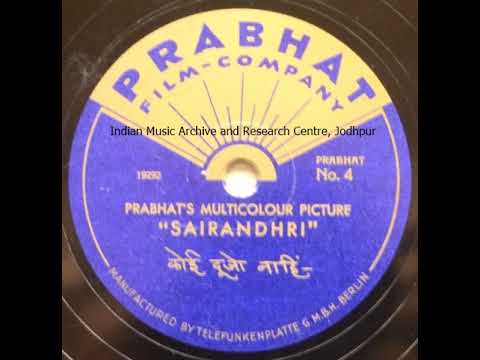
- कुसुम कुमकुम अमित वर्षा Kusum Kumkum Amit Varsha स्वर: Leela
- मन हरत रंग फूलों के Man Harat Rang Phoolon Ke स्वर: Leela
- नित दिन सोच रहत मन मोरा Nisdin Soch Rahat Man Mora
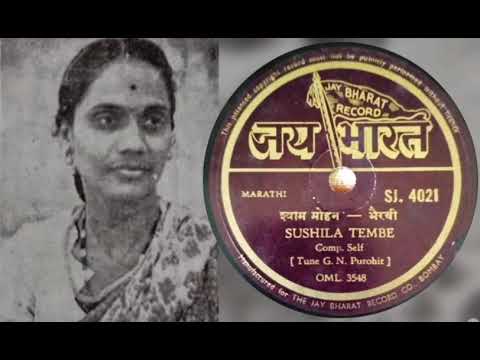
- रुचिर रची माला फूलों की सखी Ruchir Rachi Mala Phoolon Ki Sakhi स्वर: Leela, प्रभावती
- शरण गुण शरम से हो Saran Gun Sharam Se Ho
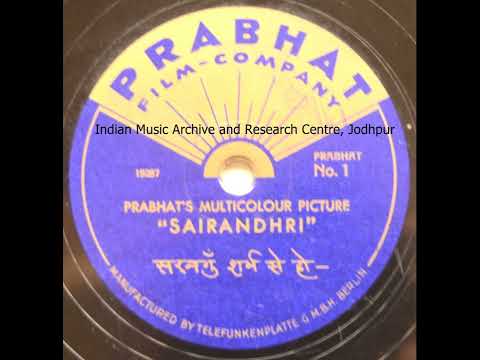
पट्टिका-लेख
The Monographपर्दे के पीछे Behind the Scenes
शांताराम का रंग-जुआ: प्रभात ने नेगेटिव जर्मनी के यूएफए को भेजा बाईपैक रंग-मुद्रण के लिए। परिणाम बहुत कर्कश रंगों वाला; फ़िल्म एक सप्ताह से कम चली। इस असफलता ने शांताराम को नहीं रोका — वे जीवनभर तकनीकी प्रयोग करते रहे।
अंग्रेज़ी में पढ़ें · Read in English
V. Shantaram's colour gamble: Prabhat sent the negative to UFA Germany for Bipack colour printing. The resulting release prints were too garish; the film ran for less than a week. The failure did not deter Shantaram — he would pursue technical innovation throughout his career.
महत्व Significance
भारत की पहली रंगीन फ़िल्म का असफल प्रयास — जर्मनी के यूएफए स्टूडियो में बाईपैक रंग-प्रक्रिया विफल रही, श्वेत-श्याम प्रदर्शन हुआ। प्रभात की पहली मूल साउंडट्रैक डिस्क का श्रेय भी इसे। NFAI के संस्थापक पी.के. नायर द्वारा 21 'सर्वाधिक वांछित खोई भारतीय फ़िल्मों' में सूचीबद्ध।
अंग्रेज़ी में पढ़ें · Read in English
India's first attempted colour film — Bipack colour processing failed at UFA Germany, forcing a black-and-white release. Also credited as having the first original soundtrack disc pressed for a Prabhat film (gramophone records pressed in Germany). Listed by NFAI founder P.K. Nair among the 21 most wanted missing Indian film treasures.
विरासत Legacy
भारतीय सिनेमा की रंग की दीर्घकालिक खोज का आरंभिक पूर्वज — वह बैटन जो किसान कन्या (1937, सोहराब मोदी) और फिर 'आन' (1952) को मिली। सैरंध्री की विफलता रंग-तकनीक में क्षेत्र का पहला महँगा सबक था।
अंग्रेज़ी में पढ़ें · Read in English
The precedent for Indian cinema's long pursuit of colour — a baton passed to Kisan Kanya (1937, Sohrab Modi) and then to Aan (1952). Sairandhri's failure was the field's first costly lesson in colour technology.
नमूना-पट्टी
The Specimen Table| शीर्षक | सैरंध्री · Sairandhri |
|---|---|
| वर्ष · युग | 1933 — Talkie Dawn |
| निर्देशक | वी. शांताराम · V. Shantaram |
| संगीत-निर्देशक | गोविंदराव टेंबे · Govindrao Tembe |
| गीतकार | अप्रलेखित · Undocumented |
| कलाकार-मंडली | मास्टर विनायक · Master Vinayak · लीला · Leela · निम्बाळकर · Nimbalkar · शकुंतला परांजपे · Shakuntala Paranjpye |
| निर्माण-गृह | Prabhat Film Company |
| शैली | Mythological · Historical |
| भाषा | hindi-marathi |
| प्रकार | कथा-चित्र (फ़ीचर) |
| गीत | 9 गीत — ऊपर पूरी संगीत-सूची |
जुड़े हुए पन्ने
Connected Plates · The Graph Made Visibleअटलस में कोई पन्ना अकेला नहीं — 'सैरंध्री' से उसके गीत, कलाकार, राग और युग, सब जुड़े हैं।
इस फ़िल्म के गीत · Songs of this Film
कलाकार · Cast & Crew
युग · The Era
साझा कीजिए · Share this Plate