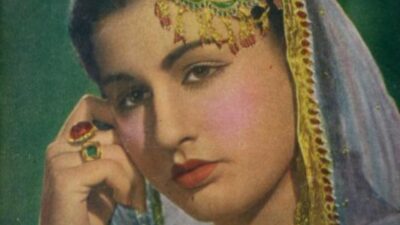
गीत विंग · गीत-पट्टिका · Song Plate
ओ टोपी वाले बाबू
O Topi Wale Babu
टोपीधारी बाबू को गली की ओर से पुकार — 'छमिया' का वह गीत जिसका शीर्षक चार शब्दों में पूरी वर्ग-कॉमेडी समेट लेता है।
भावचुलबुला · रोमांटिक
भाषाhindi
श्रेय
The Creditsसूत्र-वाक्य · The Hook
सूत्र-वाक्य
टोपीधारी बाबू को गली की ओर से पुकार — 'छमिया' का वह गीत जिसका शीर्षक चार शब्दों में पूरी वर्ग-कॉमेडी समेट लेता है।
In EnglishA street-level address to the hat-wearing sahib — the Chhamia song whose title carries the film's whole class comedy in four words.
पट्टिका-लेख
The Monographपरिचय Overview
'छमिया' (1945) के लिए ज्ञान दत्त द्वारा रचे ग्यारह गीतों में से एक 'ओ टोपी वाले बाबू' इस संगीत का सबसे स्पष्ट सामाजिक संबोधन है। सूचियाँ शीर्षक, संगीतकार और गीतकार — पंडित इंद्र तथा काबिल अमृतसरी — को सुरक्षित रखती हैं, पर गायक को नहीं, और कोई सत्यापित श्रेय उपलब्ध नहीं है, इसलिए यहाँ कोई दर्ज नहीं किया गया। जो कहा जा सकता है वह वही है जो शीर्षक कहता है: कोई किसी टोपी वाले बाबू को पुकार रहा है, और 1945 की हिंदुस्तानी में ये दोनों ही शब्द भारी हैं।
अंग्रेज़ी में पढ़ें · Read in English
One of the eleven songs Gyan Dutt composed for Chhamia (1945), 'O Topi Wale Babu' is the score's clearest piece of social address. The catalogues preserve the title, the composer and the lyricists — Pandit Indra and Kabil Amritsari — but not a singer, and no verified attribution exists, so none is recorded here. What can be said is what the title says: someone is calling out to a babu in a topi, and in the Hindustani of 1945 both nouns are loaded.
संगीत The Music
इस गीत की कोई रिकॉर्डिंग प्रचलन में नहीं है और सूचियों में इसकी संगीत-रचना का कोई विवरण या स्वरलिपि सुरक्षित नहीं है, इसलिए इसकी धुन, लय या वाद्य-संयोजन के बारे में रचयिता के अलावा कुछ नहीं कहा जा सकता। यह इस फ़िल्म में ज्ञान दत्त के ग्यारह गीतों में से एक है, जो शैली की विस्तृत परास में लिखे गए — भजन, ब्रज लोक, पंजाबी लोक-युगल, हास्य फेरीवाला गीत और उर्दू ग़ज़ल — और इसका शीर्षक इसे संगीत के गीतात्मक बड़े टुकड़ों के बजाय हल्के, चरित्र-आधारित गीतों के बीच रखता है।
अंग्रेज़ी में पढ़ें · Read in English
No recording of the song is in circulation and no notation or description of the setting survives in the catalogues, so nothing can be said about its melody, tempo or scoring beyond its authorship. It is one of eleven numbers by Gyan Dutt in this film, written across a wide stylistic range — bhajan, Braj folk, Punjabi folk duet, comic street song and Urdu ghazal — and its title places it among the lighter, character-driven items rather than the score's lyrical set-pieces.
काव्य The Poetry
बचा केवल शीर्षक है, पर यह शीर्षक बहुत काम करता है। 1945 की हिंदुस्तानी में 'बाबू' केवल सज्जन नहीं है: वह क्लर्क है, औपनिवेशिक मध्यवर्ग का दफ़्तर जाने वाला आदमी, और इस शब्द में एक स्थायी हल्की चुटकी हमेशा रहती है। 'टोपी' — पहनने वाले के अनुसार यूरोपीय हैट या गांधी टोपी — उसे और भी उस आदमी के रूप में चिह्नित करती है जिसे उसका सिर पर धरा हुआ ही परिभाषित करता है। उसे बाहर से, बेतकल्लुफ़ 'ओ' के साथ संबोधित करना वर्ग-रेखा के आर-पार बिना अनुमति माँगे ऊपर की ओर बोलना है। 'पिग्मेलियन' से रूपांतरित एक फ़िल्म में, जहाँ सारा कथानक ही एक श्रमजीवी स्त्री की बोली छीनकर उसे नए सिरे से गढ़ना है, वह गीत जो एक शरीफ़ आदमी को ठीक उसी लहजे में पुकारकर शुरू होता है जिसे छोड़ना उसे सिखाया जा रहा है — कुछ नुकीला कर रहा है। यह पाठ एक पाठ के रूप में ही प्रस्तुत है: गीत का फ़िल्मांकन, गायक और फ़िल्म में इसका क्रम प्रलेखित नहीं है।
अंग्रेज़ी में पढ़ें · Read in English
Only the title survives, but it is a title that does a great deal of work. A babu in 1945 Hindustani is not simply a gentleman: it is the clerk, the office-going man of the colonial middle class, and the word carries a permanent faint edge of mockery. The topi — the hat, specifically the European or Gandhi cap depending on the wearer — marks him further as a man defined by what he puts on his head. To address him from outside, with an unceremonious 'O', is to speak upward across a class line without asking permission for it. In a film adapted from Pygmalion, where the whole plot is the confiscation and rebuilding of a working woman's speech, a song that begins by hailing a respectable man in exactly the register she is being taught to abandon is doing something pointed. That reading is offered as a reading: the picturisation, the singer and the film's scene order are not documented.
कहानी The Story
'छमिया' (1945) का निर्माण और निर्देशन प्रतिमा दासगुप्ता ने अपनी ही संस्था 'पी.डी.जी. पिक्चर्स' के लिए किया, जो जॉर्ज बर्नार्ड शॉ के 'पिग्मेलियन' के रूपांतरण पर आधारित थी; मुख्य भूमिका में बेगम पारा थीं और सहायक भूमिकाओं में हास्य-अभिनेता डेविड, नर्तकी अज़ूरी और दीक्षित। ज्ञान दत्त ने पंडित इंद्र और काबिल अमृतसरी के बोलों पर ग्यारह गीत रचे। फ़िल्म व्यावसायिक रूप से सफल रही और दासगुप्ता के संक्षिप्त निर्देशकीय करियर का शिखर बनी रही; आज यह प्रचलन में नहीं है, इसलिए इसके गीत मुख्यतः सूची-प्रविष्टियों और बचे हुए 78-आरपीएम रिकॉर्डों से ही जाने जाते हैं।
अंग्रेज़ी में पढ़ें · Read in English
Chhamia (1945) was produced and directed by Protima Dasgupta for her own company, P.D.G. Pictures, from an adaptation of George Bernard Shaw's Pygmalion, with Begum Para in the lead and a supporting company that included the comedian David, the dancer Azurie and Dixit. Gyan Dutt supplied eleven songs to lyrics by Pandit Indra and Kabil Amritsari. The picture was a commercial success and remained the high point of Dasgupta's short career behind the camera; it is not in circulation today, so its songs are known chiefly through catalogue listings and surviving 78-rpm discs.
विरासत The Legacy
यह रिकॉर्डिंग व्यावसायिक रूप से प्रचलन में नहीं है और 1940 के दशक के मानक पुनर्प्रकाशित संकलनों में नहीं मिलती; यह जीवित परंपरा के बजाय 'छमिया' की गीत-सूची के एक शीर्षक के रूप में बची है। आज इसका महत्व 1945 में एक स्त्री द्वारा निर्देशित सफल फ़िल्म के प्रलेखित संगीत-अंश के रूप में है — वह संचय जिसकी ओर पुनर्प्रकाशन-बाज़ार कभी लौटा ही नहीं।
अंग्रेज़ी में पढ़ें · Read in English
The recording is not in commercial circulation and does not appear in the standard 1940s reissue compilations; it survives as a title in the Chhamia song list rather than as living repertoire. Its interest today is as part of the documented output of a hit film directed by a woman in 1945 — a body of work that the reissue market has never gone back for.
वर्गीकरण
ClassificationGenre
अन्य विवरण
More Details- https://www.hindigeetmala.net/movie/chhamiya.htm
- https://myswar.co/album/chhamiya-1945
- https://en.wikipedia.org/wiki/List_of_Hindi_films_of_1945
- https://en.wikipedia.org/wiki/Begum_Para
- https://indiancine.ma/EDQ/info
References
रोचक तथ्य
Margin Notesयह फ़िल्म जॉर्ज बर्नार्ड शॉ के नाटक 'पिग्मेलियन' से रूपांतरित थी — इस नाटक का एक आरंभिक भारतीय रूपांतरण। 'छमिया' हिंदुस्तानी बोलचाल में मुखर, भड़कीले कपड़ों वाली युवती के लिए प्रयुक्त शब्द है, और यही फ़िल्म की 'एलाइज़ा डूलिटल' का नाम है।
अंग्रेज़ी में पढ़ें · Read in English
The film was adapted from George Bernard Shaw's Pygmalion — an early Indian transposition of the play. 'Chhamiya' is colloquial Hindustani for a loud, showily dressed young woman, and names the film's Eliza Doolittle figure.
'छमिया' प्रतिमा दासगुप्ता की बतौर निर्देशक पहली फ़िल्म थी; उन्होंने इसे अपने ही बैनर 'पी.डी.जी. पिक्चर्स' के तहत बनाया और इसमें अभिनय भी किया — जिससे यह 1940 के दशक की उन गिनी-चुनी हिंदी फ़िल्मों में शामिल हो जाती है जिनकी रचनात्मक कमान एक स्त्री के हाथ में थी।
अंग्रेज़ी में पढ़ें · Read in English
Chhamia was the directorial debut of Protima Dasgupta, who also produced it under her own banner, P.D.G. Pictures, and acted in it — making it one of a bare handful of Hindi features of the 1940s controlled above the line by a woman.
नमूना-पट्टी
The Specimen Table| शीर्षक | ओ टोपी वाले बाबू · O Topi Wale Babu |
|---|---|
| फ़िल्म | छमिया · 1945 |
| वर्ष · युग | 1945 |
| गीतकार | Pandit Indra, Kabil Amritsari |
| संगीतकार | Gyan Dutt |
| भाषा | hindi |
| भाव | चुलबुला · रोमांटिक |
| लोकप्रियता | Obscure |
| बोल-स्थिति | केवल झलक |
जुड़े हुए पन्ने
Connected Plates · The Graph Made Visibleअटलस में कोई पन्ना अकेला नहीं — इस गीत से जुड़े गीत, कलाकार, फ़िल्म, राग-ताल-विधा, सब यहाँ से खुलते हैं।
कलाकार · The Artists
फ़िल्म · The Film
साझा कीजिए · Share this Plate