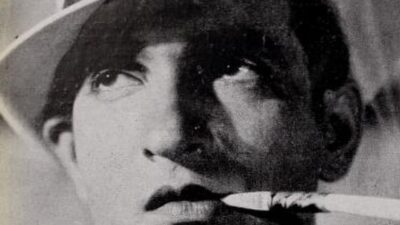
गीत विंग · गीत-पट्टिका · Song Plate
नैन बाण से करके घायल रूपवती कहाँ जाए
Nain Baan Se Karke Ghayal Roopwati Kahan Jaaye
नैनों के बाण से घायल करके अब वह रूपवती जाए कहाँ — सुरेंद्र और शमशाद बेगम भारतीय प्रेम-काव्य की सबसे पुरानी उक्ति पर आमने-सामने।
भावतीव्र · चुलबुला · रोमांटिक
भाषाhindi गतिमध्यम स्वरूपयुगल
श्रेय
The Creditsसूत्र-वाक्य · The Hook
सूत्र-वाक्य
नैनों के बाण से घायल करके अब वह रूपवती जाए कहाँ — सुरेंद्र और शमशाद बेगम भारतीय प्रेम-काव्य की सबसे पुरानी उक्ति पर आमने-सामने।
In EnglishHaving wounded him with the arrow of her glance, where is the beautiful one to go — Surendra and Shamshad Begum trade the oldest conceit in Indian love poetry.
पट्टिका-लेख
The Monographपरिचय Overview
'रत्नावली' (1945) से सुरेंद्र और शमशाद बेगम का युगल, बोल व्रजेंद्र गौड़, संगीत पंडित गोबिंद राम। शीर्षक उक्ति को प्रश्न की तरह रखता है — नैनों के बाण से घायल करके अब वह रूपवती भागकर जाए कहाँ — और इस तरह घायल प्रेमी की पारंपरिक शिकायत को एक चुनौती-भरी छेड़ में बदल देता है। केवल ऑडियो बचा हुआ ज्ञात है।
अंग्रेज़ी में पढ़ें · Read in English
A duet for Surendra and Shamshad Begum from Ratnavali (1945), lyrics by Vrajendra Gaur and music by Pt. Gobind Ram. The title poses the conceit as a question — having wounded with the arrow of her eyes, where can the beautiful one now escape to — which turns the standard complaint of the wounded lover into a flirtation with a challenge in it. Only the audio is known to survive.
संगीत The Music
रिकॉर्डिंग केवल ऑडियो में प्रचलित है और उसका संयोजन अदर्ज है। श्रेय-पंक्ति जो तय करती है वह है जोड़ी: सुरेंद्र, जो अपने लिए स्वयं गाते थे, और सामने शमशाद बेगम — वह आवाज़ जिसे गोबिंद राम ने किसी भी और से अधिक बरता, उन्नीस फ़िल्मों में छियासी गीत, जो उस दौर के किसी भी संगीतकार के साथ उनका सबसे बड़ा काम है। पंडित गोबिंद राम के नाम लगभग तीस हिंदी फ़िल्में हैं और उन्हें मुख्यतः उन गायकों के लिए याद किया जाता है जिन्हें उन्होंने आगे बढ़ाया: उन्होंने उन्नीस फ़िल्मों में शमशाद बेगम के साथ छियासी गीत रिकॉर्ड किए, ज़ोहराबाई अम्बालेवाली को स्थापित करने में किसी से कम काम नहीं किया, ज़ीनत बेगम को फ़िल्मों में लाए और मोहम्मद रफ़ी को शुरुआती प्रोत्साहन दिया। इन वर्षों का उनका मुहावरा सुगम संगीत, ग़ज़ल और ठुमरी को लोक-सामग्री तथा एक स्पष्ट पंजाबी रंगत के साथ मिलाता है।
अंग्रेज़ी में पढ़ें · Read in English
The recording circulates as audio only and its scoring is undocumented. What the credit fixes is the pairing: Surendra, who sang for himself, opposite Shamshad Begum, the voice Gobind Ram used more than any other — eighty-six songs across nineteen films, the largest single body of work she recorded with any composer of the period. Pt. Gobind Ram is credited with about thirty Hindi films and is remembered chiefly for the singers he advanced: he recorded eighty-six songs with Shamshad Begum across nineteen films, did as much as anyone to establish Zohrabai Ambalewali, brought Zeenat Begum into films and gave early encouragement to Mohammed Rafi. His idiom of these years mixes light music, ghazal and thumri with folk material and a distinct Punjabi tinge.
काव्य The Poetry
'नैन बाण' — दृष्टि का बाण — संस्कृत और ब्रज प्रेम-काव्य की सबसे पुरानी छवियों में है, जहाँ प्रिय के नेत्र कामदेव के पुष्प-बाण हैं। व्रजेंद्र गौड़ भाषा को दृढ़ता से हिंदी रखते हैं (नैन, बाण, घायल, रूपवती), उन उर्दू पर्यायों की ओर नहीं जाते जो 1945 के किसी बंबइया गीतकार के हाथ में तैयार रहते थे — और यह चुनाव संस्कृत नाटक के दरबार में रची फ़िल्म से मेल खाता है। मोड़ पंक्ति के उत्तरार्ध में है: घाव का विलाप करने के बजाय गायक पूछता है कि घायल करने वाली सुंदरी अब जाएगी कहाँ — पीड़ित पक्ष यहाँ अभियोक्ता बन जाता है।
अंग्रेज़ी में पढ़ें · Read in English
Nain baan — the glance as arrow — is among the oldest images in Sanskrit and Braj love poetry, where the eyes of the beloved are Kamadeva's flower-tipped shafts. Vrajendra Gaur keeps the diction firmly Hindi (nain, baan, ghaayal, roopwati) rather than reaching for the Urdu equivalents a Bombay lyricist of 1945 would have had ready to hand, and the choice fits a film set in a Sanskrit-drama court. The twist is in the second half of the line: instead of lamenting the wound, the singer asks where the wounding beauty thinks she can now go — the injured party turning prosecutor.
कहानी The Story
'रत्नावली' का निर्देशन सुरेंद्र देसाई ने अमर पिक्चर्स, बंबई के लिए किया; इसमें सुरेंद्र और रत्नमाला थे, पर किसी उपलब्ध स्रोत में अलग-अलग भूमिकाओं का बँटवारा दर्ज नहीं है। व्रजेंद्र गौड़ ने फ़िल्म के आठ में से दो गीत लिखे — यह युगल और 'ये मेरे हैं मैं इनकी हूँ'; आगे चलकर उन्होंने बंबई में पटकथा और संवाद लेखक के रूप में लंबा कैरियर बनाया। 'फ़िल्मइंडिया' ने फ़िल्म को समय की बरबादी कहकर ख़ारिज किया और असफलता की भविष्यवाणी की — व्यवसाय के मामले में वह ग़लत निकली।
अंग्रेज़ी में पढ़ें · Read in English
Ratnavali was directed by Surendra Desai for Amar Pictures, Bombay, and starred Surendra and Ratnamala; no source consulted assigns the individual roles. Vrajendra Gaur wrote two of the film's eight songs, this duet and 'Ye Mere Hain Main Inki Hoon'; he would go on to a long career as a screenwriter and dialogue writer in Bombay. Filmindia dismissed the picture as a waste of time and predicted failure, and was wrong about the business.
विरासत The Legacy
यह गीत सुरेंद्र–शमशाद बेगम जोड़ी के नमूने के रूप में बचा है, जिसे गोबिंद राम ने 1940 के दशक में बार-बार बरता और जिसे आज लगभग कोई भी इन दोनों गायकों से नहीं जोड़ता: सुरेंद्र मेहबूब ख़ान की फ़िल्मों के लिए याद किए जाते हैं और शमशाद नौशाद तथा ओ. पी. नैयर के काम के लिए, इसलिए गोबिंद राम के लिए दोनों का किया हुआ बड़ा काम प्रचलित वृत्तांत से बाहर छूट गया है।
अंग्रेज़ी में पढ़ें · Read in English
The song survives as a specimen of the Surendra–Shamshad Begum pairing, which Gobind Ram used repeatedly through the 1940s and which almost nobody now associates with either singer: Surendra is remembered for his Mehboob Khan films and Shamshad for her work with Naushad and O. P. Nayyar, so the sizeable body of work they both did for Gobind Ram has fallen out of the standard account.
वर्गीकरण
Classification- Tempo
- Medium
Genre
अन्य विवरण
More Details- https://www.hindigeetmala.net/movie/ratnavali.htm
- https://myswar.co/album/ratnavali-1945
- https://en.wikipedia.org/wiki/List_of_Hindi_films_of_1945
- https://indiancine.ma/EFW/info
- https://atulsongaday.me/2015/05/04/nain-baan-se-karke-ghaayal-roopwati-kahaan-jaaye/
References
रोचक तथ्य
Margin Notesगोबिंद राम ने उन्नीस फ़िल्मों में शमशाद बेगम के साथ छियासी गीत रिकॉर्ड किए — 1940 के दशक के किसी भी एक संगीतकार के साथ उनका सबसे बड़ा काम।
अंग्रेज़ी में पढ़ें · Read in English
Gobind Ram recorded eighty-six songs with Shamshad Begum across nineteen films — the largest body of work she did with any single music director of the 1940s.
इस गीत के लेखक व्रजेंद्र गौड़ आज गीतकार से अधिक पटकथा और संवाद लेखक के रूप में जाने जाते हैं; 'रत्नावली' उनके शुरुआती हिंदी फ़िल्म श्रेयों में है।
अंग्रेज़ी में पढ़ें · Read in English
Vrajendra Gaur, who wrote this song, is better known today as a screenwriter and dialogue writer than as a lyricist; Ratnavali is among his early Hindi film credits.
नमूना-पट्टी
The Specimen Table| शीर्षक | नैन बाण से करके घायल रूपवती कहाँ जाए · Nain Baan Se Karke Ghayal Roopwati Kahan Jaaye |
|---|---|
| फ़िल्म | रत्नावली · 1945 |
| वर्ष · युग | 1945 |
| गायक | Surendra, Shamshad Begum |
| गीतकार | व्रजेंद्र गौड़ |
| संगीतकार | Gobind Ram |
| स्वरूप | युगल |
| गति | मध्यम |
| भाषा | hindi |
| भाव | तीव्र · चुलबुला · रोमांटिक |
| लोकप्रियता | Obscure |
| बोल-स्थिति | केवल झलक |
जुड़े हुए पन्ने
Connected Plates · The Graph Made Visibleअटलस में कोई पन्ना अकेला नहीं — इस गीत से जुड़े गीत, कलाकार, फ़िल्म, राग-ताल-विधा, सब यहाँ से खुलते हैं।
मिलते-जुलते गीत · Related Songs
कलाकार · The Artists
फ़िल्म · The Film
साझा कीजिए · Share this Plate