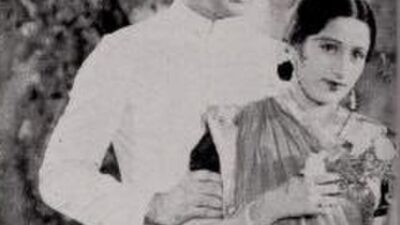
गीत विंग · गीत-पट्टिका · Song Plate
सँभल कर रहना रे दिल
Sambhal Kar Rehna Re Dil
अकेले सुरेंद्र, अपने ही दिल को होशियार रहने की चेतावनी देते हुए — 'आरती' (1945) का सतर्कता का एकल गीत।
भावमीठा-कड़वा · तीव्र · दार्शनिक
भाषाhindi स्वरूपएकल पुरुष
श्रेय
The Creditsसूत्र-वाक्य · The Hook
सूत्र-वाक्य
अकेले सुरेंद्र, अपने ही दिल को होशियार रहने की चेतावनी देते हुए — 'आरती' (1945) का सतर्कता का एकल गीत।
In EnglishSurendra alone, warning his own heart to keep its guard up — the cautionary solo of Aarti (1945).
पट्टिका-लेख
The Monographपरिचय Overview
'आरती' (1945) में सुरेंद्र के नाम दर्ज तीन एकल गीतों में से एक, 'सँभल कर रहना रे दिल' एक चेतावनी-गीत है — गायक अपने ही दिल को मध्यम पुरुष में संबोधित करता है और उसे सँभले रहने को कहता है। हिंदीगीतमाला और माईस्वर दोनों गायक के रूप में सुरेंद्र को दर्ज करते हैं, संगीत अशोक घोष और अली बख़्श का, और कोई भी गीतकार दर्ज नहीं करता। इस रूप की हिंदी फ़िल्म संगीत में लंबी उम्र है: दिल को एक अलग, भोले साथी की तरह मानकर उसे समझाना उर्दू फ़िल्मी गीत की स्थायी युक्ति है, और यह किसी गीत को एक साथ प्रेम-गीत और सांसारिक नसीहत दोनों बना देती है — जो 'सोशल' श्रेणी में दर्ज फ़िल्म के अनुकूल है।
अंग्रेज़ी में पढ़ें · Read in English
One of three solos credited to Surendra in Aarti (1945), 'Sambhal Kar Rehna Re Dil' is a warning song — the singer addressing his own heart in the second person and telling it to stay careful. Both HindiGeetMala and MySwar list Surendra as the singer, with music by Ashok Ghosh and Ali Baksh, and neither records a lyricist. The form has a long life in Hindi film music: the heart as a separate, gullible companion who must be lectured is a standing device of Urdu film lyric, and it lets a song be simultaneously a love song and a piece of worldly advice — which suits a film catalogued as a 'social'.
संगीत The Music
रिकॉर्डिंग की कोई प्रति सार्वजनिक रूप से उपलब्ध नहीं है, इसलिए संगीत-सज्जा का वर्णन नहीं किया जा सकता। श्रेय जो कहने देते हैं वह यह है: यह गीत उस आवाज़ के लिए लिखा गया था जिसे महबूब ख़ान ने ख़ास तौर पर के. एल. सैगल के बंबइया प्रतिसंतुलन के रूप में चुना था, और सुरेंद्र के दर्ज हिट — 'डेक्कन क्वीन' (1936) का 'बिरहा की आग लगी', उसी फ़िल्म की ग़ज़ल 'याद न कर दिल-ए-हसीन', 'ग्रामोफ़ोन सिंगर' (1938) का 'एक छोटा सा मंदिर बनाया हुआ है' — सभी उसी घराने के धीमे, उद्घोषक, ग़ज़ल-नुमा ढंग में बैठते हैं। अशोक घोष 1936 से ठीक उसी आवाज़ के लिए लिख रहे थे और उसकी सीमाएँ जानते होंगे। अली बख़्श का योगदान अलग नहीं किया जा सकता; फ़िल्म के हर गीत पर दोनों का साझा श्रेय है।
अंग्रेज़ी में पढ़ें · Read in English
No copy of the recording is publicly accessible, so the setting cannot be described. What the credits allow is this: the song was written for a voice that Mehboob Khan had recruited specifically as a Bombay counterweight to K. L. Saigal, and Surendra's documented hits — 'Birha Ki Aag Lagi' from Deccan Queen (1936), the ghazal 'Yaad Na Kar Dil-e-Haseen' from the same film, 'Ek Chhota Sa Mandir Banaya Hua Hai' from Gramophone Singer (1938) — all sit in the slow, declamatory, ghazal-adjacent manner of that school. Ashok Ghosh had written for exactly that voice since 1936 and would have known its limits. Ali Baksh's contribution cannot be separated out; the two are billed jointly on every song in the film.
काव्य The Poetry
दिल को 'रे दिल' कहकर संबोधित करना — 'रे' के संबोधन-कण के साथ, जो अपनापन और थोड़ी झुँझलाहट दोनों लिए हुए है — पूरी कविता का रुख़ तय कर देता है। वक्ता किसी प्रिय के सामने इक़रार नहीं कर रहा; वह उस अंग को डाँट रहा है जो उसे बार-बार मुसीबत में डालता है, और इस तरह प्रेम-गीत आत्म-प्रबंधन का उपदेश बन जाता है। 'सँभल कर रहना' रोज़मर्रा की नसीहत है — यात्रा पर निकलते किसी को या बुरे मुहल्ले में घुसते किसी को कही जाने वाली — इसलिए इसे दिल पर लागू करना चुपचाप प्रेम को एक ख़तरनाक यात्रा बना देता है। एक 'सोशल' फ़िल्म में, जिसके एक गीत का शीर्षक ही दोरंगी दुनिया पर है, यह पाठ आसपास की सामग्री से मेल खाता है। शीर्षक के आगे की रचना नहीं बची: फ़िल्म का कोई गीतकार दर्ज नहीं है और कोई रिकॉर्डिंग प्रचलन में नहीं है।
अंग्रेज़ी में पढ़ें · Read in English
Addressing the heart as 're dil' — with the vocative particle 're', which carries familiarity and a shade of exasperation — sets the poem's whole posture. The speaker is not confessing to a beloved; he is scolding the organ that keeps getting him into trouble, which turns the love song into a piece of self-management. 'Sambhal kar rehna' is everyday advice, the phrase used to a traveller setting out or to someone entering a bad neighbourhood, so applying it to the heart quietly makes love into a hazardous journey. In a film catalogued as a social, and one of whose songs is titled after a two-faced world, that reading is consistent with the surrounding material. The verse beyond the title has not survived: no lyricist is recorded for the film and no recording circulates.
कहानी The Story
'आरती' ने दस गीतों में से तीन एकल और दो युगल सुरेंद्र को दिए — यह भारी बोझ बताता है कि ये फ़िल्में कैसे बनती थीं: गायक-सितारा ही साउंडट्रैक होता था, और संगीत उसी के इर्द-गिर्द रचा जाता था जो वह कैमरे पर दे सकता था। निर्देशक रामचंद्र ठाकुर ने उनके साथ पहली बार 'ग्रामोफ़ोन सिंगर' (1938) में काम किया था — संगीत-प्रधान एक प्रेम-त्रिकोण, जो ठाकुर की पहली निर्देशित फ़िल्म थी और जिसने सुरेंद्र को उनके आरंभिक हिटों में से एक दिया। 1945 का यह पुनर्मिलन उस साझेदारी के अंतिम दौर में आया; ठाकुर आगे चलकर 'बैजू बावरा' (1952) की कथा लिखने वाले थे, और सुरेंद्र का अपना आख़िरी बड़ा वर्ष 1946 था, 'अनमोल घड़ी' के साथ।
अंग्रेज़ी में पढ़ें · Read in English
Aarti gave Surendra three solos and two duets out of ten songs — a heavy load that reflects how these films were built: the singing star was the soundtrack, and the score was designed around what he could deliver on camera. Ramchandra Thakur, directing, had first worked with him on Gramophone Singer (1938), a music-driven love triangle that was Thakur's debut behind the camera and that gave Surendra one of his early hits. The 1945 reunion came late in that partnership; Thakur would go on to write the story of Baiju Bawra (1952), and Surendra's own last great year was 1946, with Anmol Ghadi.
विरासत The Legacy
यह गीत किसी भी रूप में प्रचलन में नहीं है — न कोई स्ट्रीमिंग प्रविष्टि, न यूट्यूब अपलोड, न 1945 की स्मृति-सूचियों में उल्लेख। चूँकि 'डेक्कन क्वीन', 'ग्रामोफ़ोन सिंगर', 'औरत' और 'अनमोल घड़ी' के सुरेंद्र के अधिक जाने-माने एकल बच गए, यहाँ की हानि गायक की आवाज़ की हानि नहीं है, बल्कि उसके एक और उदाहरण की है: उस दौर के एक बड़े गायक-सितारे की एक दर्ज प्रस्तुति, जिसने कोई श्रव्य निशान नहीं छोड़ा। इस युग के किसी कोश के लिए ईमानदार प्रविष्टि यही श्रेय है।
अंग्रेज़ी में पढ़ें · Read in English
The song is not in circulation in any form — no streaming entry, no YouTube upload, no mention in the 1945 retrospectives. Because Surendra's better-known solos from Deccan Queen, Gramophone Singer, Aurat and Anmol Ghadi did survive, the loss here is not a loss of the singer's voice but of one more example of it: a documented performance by a major singing star of the period that simply left no audible trace. For a database of this era the honest entry is the credit itself.
वर्गीकरण
ClassificationGenre
अन्य विवरण
More Details- https://www.hindigeetmala.net/movie/aarti_1945.htm
- https://myswar.co/album/aarti-1945
- https://en.wikipedia.org/wiki/List_of_Hindi_films_of_1945
- https://en.wikipedia.org/wiki/Surendra_(actor)
References
रोचक तथ्य
Margin Notes1940 में बॉम्बे टर्फ़ क्लब के मैदान में घोड़े से गिरने के बाद सुरेंद्र महीनों अस्पताल में रहे; अफ़वाह फैल गई कि उन्होंने संन्यास ले लिया है, और लौटने पर उनके पैर में वह लँगड़ाहट रह गई जो जीवन भर बनी रही।
अंग्रेज़ी में पढ़ें · Read in English
Surendra was hospitalised for months in 1940 after falling from a horse on the Bombay Turf Club lawns; rumours went round that he had retired, and he returned with a limp that stayed with him for the rest of his life.
'आरती' के निर्देशक रामचंद्र ठाकुर ने बाद में 'बैजू बावरा' (1952) की कथा लिखी — विजय भट्ट की वह शास्त्रीय संगीत पर आधारित फ़िल्म जो उद्योग के इस संदेह के बावजूद कि इसमें 'जन-अपील नहीं है', सिनेमाघरों में सौ हफ़्ते चली।
अंग्रेज़ी में पढ़ें · Read in English
Aarti's director Ramchandra Thakur later wrote the story of Baiju Bawra (1952) — the Vijay Bhatt classical-music film that ran a hundred weeks in theatres despite the industry's scepticism about its 'lack of mass appeal'.
नमूना-पट्टी
The Specimen Table| शीर्षक | सँभल कर रहना रे दिल · Sambhal Kar Rehna Re Dil |
|---|---|
| फ़िल्म | आरती · 1945 |
| वर्ष · युग | 1945 |
| गायक | Surendra |
| संगीतकार | Ashok Ghosh, अली बख़्श |
| स्वरूप | एकल पुरुष |
| भाषा | hindi |
| भाव | मीठा-कड़वा · तीव्र · दार्शनिक |
| लोकप्रियता | Obscure |
| बोल-स्थिति | केवल झलक |
जुड़े हुए पन्ने
Connected Plates · The Graph Made Visibleअटलस में कोई पन्ना अकेला नहीं — इस गीत से जुड़े गीत, कलाकार, फ़िल्म, राग-ताल-विधा, सब यहाँ से खुलते हैं।
मिलते-जुलते गीत · Related Songs
कलाकार · The Artists
फ़िल्म · The Film
साझा कीजिए · Share this Plate