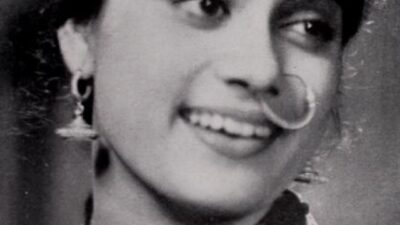
गीत विंग · गीत-पट्टिका · Song Plate
मैं चाँद को क्यूँ देखूँ
Main Chand Ko Kyun Dekhoon
उर्दू काव्य की सबसे पुरानी तारीफ़, इनकार की शक्ल में — मैं चाँद को क्यूँ देखूँ?
भावचुलबुला · रोमांटिक
भाषाhindi गतिमध्यम
श्रेय
The Creditsसूत्र-वाक्य · The Hook
सूत्र-वाक्य
उर्दू काव्य की सबसे पुरानी तारीफ़, इनकार की शक्ल में — मैं चाँद को क्यूँ देखूँ?
In EnglishThe oldest compliment in Urdu poetry, delivered as a refusal: why would I look at the moon?
पट्टिका-लेख
The Monographपरिचय Overview
'मैं चाँद को क्यूँ देखूँ' 'सावन' के उन छह गीतों में से एक और है जिनके गायक अनदर्ज हैं। संगीत सी. रामचंद्र का, बोल आई. सी. कपूर के। शीर्षक एक परिचित काव्य-चाल चलता है — चाँद को देखने से इनकार करके प्रिय के मुख की प्रशंसा — और वह भी उत्तम पुरुष में, जिससे तारीफ़ ऐसी बहस बन जाती है जो वक्ता ख़ुद से कर रहा है।
अंग्रेज़ी में पढ़ें · Read in English
'Main Chand Ko Kyun Dekhoon' is another of the six Sawan songs whose singer is unrecorded. C. Ramchandra composed it to I. C. Kapoor's lyric. The title performs a familiar poetic manoeuvre — the beloved's face is praised by refusing to look at the moon — and does it in the first person, which makes the compliment an argument the speaker is having with themselves.
संगीत The Music
कोई रिकॉर्डिंग उपलब्ध नहीं है। शीर्षक का कहन-रूप — एक प्रश्न जो असल में वक्तव्य है — इस दौर में आमतौर पर बातचीत जैसी, मध्यम लय की बंदिश के साथ आता था, जिसे बोलचाल की लय के पास गाया जाता ताकि तर्क सुनाई देता रहे। सी. रामचंद्र के 1945 के गीत पूरे के पूरे इसी सादे बंबइया सुगम-मधुर ढंग में हैं; वाद्य-रंग और लयात्मक आविष्कार, जिन्होंने बाद में उन्हें परिभाषित किया, फ़िल्मिस्तान-वृत्त में आने के बाद के वर्षों के हैं।
अंग्रेज़ी में पढ़ें · Read in English
No recording is available. The rhetorical shape of the title — a question that is really a statement — usually went with a conversational, mid-tempo setting in this period, sung close to speech rhythm so the argument stays audible. C. Ramchandra's 1945 songs sit in that unfussy Bombay light-melodic manner throughout; the orchestral colour and rhythmic invention that later defined him belong to the years after he joined the Filmistan orbit.
काव्य The Poetry
उर्दू-हिंदी काव्य में चाँद सौंदर्य की डिफ़ॉल्ट इकाई है: चाँद, चेहरा-ए-महताब, चाँदनी — पूरी शब्दावली इसी तुलना पर टिकी है। और चूँकि यह डिफ़ॉल्ट है, इसलिए दिलचस्प रचनाएँ वही होती हैं जो इसे नकार देती हैं — यह शीर्षक ठीक वही रास्ता लेता है। 'मैं चाँद को क्यूँ देखूँ' पूछना बिना कहे यह मान लेता है कि कुछ और पास ही अधिक उजला है; और तुलना अधूरी छोड़ देने से पंक्ति सीधी उपमा की तुलना में कहीं अधिक कुशलता से तारीफ़ कर जाती है। उत्तम-पुरुष की बुनावट एक और परत जोड़ती है: वक्ता हमें प्रिय का वर्णन नहीं कर रहा, वह आसमान के प्रति अपनी उदासीनता की सफ़ाई दे रहा है — जिससे तारीफ़ एक छोटी-सी निष्ठा बन जाती है। 'हिंदी फ़िल्म गीत कोश' में मुखड़ा सुरक्षित है, जो इनकार को यह कहकर पूरा करता है कि वक्ता का अपना चाँद आसमान वाले से निराला है; इससे आगे अंतरों का विकास अज्ञात है।
अंग्रेज़ी में पढ़ें · Read in English
The moon is the default unit of beauty in Urdu-Hindi poetry: chand, chehra-e-mahtab, chandni — an entire vocabulary rests on the comparison. Because it is the default, the interesting poems are the ones that refuse it, and this title takes exactly that route. Asking 'why would I look at the moon' implies without ever stating it that something nearer is brighter, and by leaving the comparison unfinished the line flatters more efficiently than a direct simile could. The first-person framing adds a second layer: the speaker is not describing the beloved to us, they are explaining their own indifference to the sky, which turns a compliment into a small act of loyalty. The Hindi Film Geet Kosh preserves the mukhda, which completes the refusal by claiming the speaker's own moon outshines the one in the sky; beyond that the verses' development is unknown.
कहानी The Story
'सावन' (1945) का निर्माण बंबई की संजीवन आर्ट प्रोडक्शंस ने किया और निर्देशन द्वारका खोसला ने; कलाकारों में सबसे आगे मोतीलाल और शांता आपटे थे। सी. रामचंद्र ने सभी नौ गीत रचे, बोल आई. सी. कपूर के थे। फ़िल्म का कोई कथा-सारांश उपलब्ध स्रोतों में नहीं बचा — इसलिए इसकी अंतर्वस्तु के बारे में जो कुछ ज्ञात है, वह लगभग पूरी तरह रिकॉर्ड-सूचियों में सुरक्षित गीत-शीर्षकों से आता है। शीर्षक के लिप्यंतरण पर स्रोत थोड़ा भिन्न हैं: hindigeetmala.net 'Mai Chand Ko Kyun Dekhu' दर्ज करता है और myswar.co 'Main Chand Ko Kyun Dekhoon'। यहाँ पूर्ण वर्तनी ली गई है; दोनों एक ही रिकॉर्ड की ओर संकेत करते हैं।
अंग्रेज़ी में पढ़ें · Read in English
Sawan (1945) was produced by Sanjivan Art Productions of Bombay and directed by Dwarka Khosla, with Motilal and Shanta Apte at the head of the cast. C. Ramchandra wrote all nine songs to lyrics by I. C. Kapoor; no plot summary of the film survives in accessible sources, so what is known of its content comes almost entirely from the song titles preserved in the record catalogues. Sources differ slightly on the title's transliteration: hindigeetmala.net lists 'Mai Chand Ko Kyun Dekhu' and myswar.co 'Main Chand Ko Kyun Dekhoon'. The fuller spelling has been used here; both refer to the same disc.
विरासत The Legacy
यह गीत किसी भी रूप में उपलब्ध नहीं है और किसी संकलन में नहीं मिलता। यह विशेषज्ञ सूचियों में एक शीर्षक के रूप में बचा है, और इसकी बची हुई दिलचस्पी इस टिकाऊ काव्य-चाल — इनकार से प्रशंसा — के एक और उदाहरण के रूप में है, जो 1940 के दशक के मध्य के एक साधारण व्यावसायिक फ़िल्मी संगीत में दिखाई देती है।
अंग्रेज़ी में पढ़ें · Read in English
The song is unavailable in any form and appears in no compilation. It survives as a title in the specialist listings, and its residual interest is as one more instance of a durable poetic move — praise by refusal — appearing in an ordinary commercial film score of the mid-1940s.
वर्गीकरण
Classification- Tempo
- Medium
Genre
अन्य विवरण
More Details- https://www.hindigeetmala.net/movie/sawan_1945.htm
- https://myswar.co/album/sawan-1945
- https://en.wikipedia.org/wiki/List_of_Hindi_films_of_1945
- https://indiancine.ma/EGA/info
- https://en.wikipedia.org/wiki/C._Ramchandra
- https://hamraaz.org/filmssite/public/film.php?id=1347
References
रोचक तथ्य
Margin Noteshindigeetmala.net इस शीर्षक को 'Mai Chand Ko Kyun Dekhu' लिखता है और myswar.co 'Main Chand Ko Kyun Dekhoon' — एक ही रिकॉर्ड, दो वर्तनियाँ।
अंग्रेज़ी में पढ़ें · Read in English
The title is transliterated as 'Mai Chand Ko Kyun Dekhu' by hindigeetmala.net and 'Main Chand Ko Kyun Dekhoon' by myswar.co — the same record listed two ways.
इस गीत का गायक-श्रेय सुरक्षित नहीं है। 'सावन' के दर्ज नौ गीतों में से तीन पर आवाज़ का श्रेय मिलता है — 'बरखा की रुत है' (सी. रामचंद्र, कुसुम मंत्री, हमीदा बानू और अनाम साथी — 'हिंदी फ़िल्म गीत कोश' के अनुसार), 'मोरी ऊँची अटरिया पे' (अमीरबाई कर्नाटकी) और 'हँसो ग़रीबों पे' (हमीदा बानू व ख़ान मस्ताना) — इसलिए यहाँ अनुमान से नाम भरने के बजाय गायक-क्षेत्र ख़ाली रखा गया है।
अंग्रेज़ी में पढ़ें · Read in English
Singer credit for this song is not preserved. Of Sawan's nine documented songs, three carry a voice credit — 'Barkha Ki Rut Hai' (C. Ramchandra, Kusum Mantri, Hamida Banu and unnamed others, per the Hindi Film Geet Kosh), 'Mori Oonchi Atariya Pe' (Amirbai Karnataki) and 'Hanso Garibo Pe' (Hamida Banu and Khan Mastana) — so the singer field here has been left empty rather than filled by inference.
माईस्वर के अनुसार 'सावन' के रिकॉर्ड रीगल रिकॉर्ड्स पर जारी हुए, और hindigeetmala.net फ़िल्म के संगीतकार को 'चितलकर रामचंद्र' दर्ज करता है (किसी असली डिस्क-लेबल का चित्र नहीं देखा गया) — यह उन कम से कम चार पेशेवर नामों में से एक है जो सी. रामचंद्र ने 1940 के दशक में इस्तेमाल किए: राम चितलकर, अन्नासाहेब और मराठी फ़िल्मों के लिए आर. एन. चितलकर।
अंग्रेज़ी में पढ़ें · Read in English
MySwar lists the Sawan records as a Regal Records release, and hindigeetmala.net catalogues the film's composer as 'Chitalkar Ramchandra' — one of at least four professional signatures C. Ramchandra used in the 1940s, alongside Ram Chitalkar, Annasaheb and, for Marathi films, R. N. Chitalkar. No scan of an actual Sawan disc label has been seen.
नमूना-पट्टी
The Specimen Table| शीर्षक | मैं चाँद को क्यूँ देखूँ · Main Chand Ko Kyun Dekhoon |
|---|---|
| फ़िल्म | सावन · 1945 |
| वर्ष · युग | 1945 |
| गीतकार | I. C. Kapoor |
| संगीतकार | C. Ramchandra |
| गति | मध्यम |
| भाषा | hindi |
| भाव | चुलबुला · रोमांटिक |
| लोकप्रियता | Obscure |
| बोल-स्थिति | केवल झलक |
जुड़े हुए पन्ने
Connected Plates · The Graph Made Visibleअटलस में कोई पन्ना अकेला नहीं — इस गीत से जुड़े गीत, कलाकार, फ़िल्म, राग-ताल-विधा, सब यहाँ से खुलते हैं।
कलाकार · The Artists
फ़िल्म · The Film
साझा कीजिए · Share this Plate