गीत विंग · गीत-पट्टिका · Song Plate
कोयलियों में कली हूँ अनारकली
Koyaliyon Mein Kali Hoon Anarkali
एक श्लेष जो केवल उर्दू-हिंदी में चलता है: गाती कोयलों के बीच मैं कली हूँ — अनारकली, अनार का फूल।
भावचुलबुला · रोमांटिक
भाषाhindi गतिमध्यम स्वरूपएकल महिला
श्रेय
The Creditsसूत्र-वाक्य · The Hook
सूत्र-वाक्य
एक श्लेष जो केवल उर्दू-हिंदी में चलता है: गाती कोयलों के बीच मैं कली हूँ — अनारकली, अनार का फूल।
In EnglishA pun that only works in Urdu-Hindi: among the singing koels I am the bud — Anarkali, the pomegranate blossom.
पट्टिका-लेख
The Monographपरिचय Overview
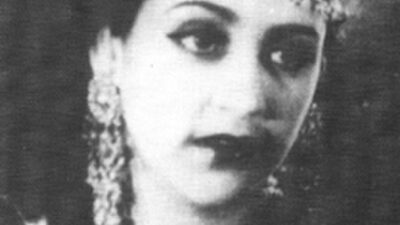
'कोयलियों में कली हूँ अनारकली' बेगम (1945) का नसीम बानो का एकल है, बोल गोपाल सिंह नेपाली के, संगीत हरि प्रसन्न दास का। इसका शीर्षक अनारकली के उल्लेख पर घूमता है — एक ऐसा नाम जो उस दौर की हिंदी फ़िल्मी कल्पना में पहले से ही बहुत भारी था।
अंग्रेज़ी में पढ़ें · Read in English
'Koyaliyon Mein Kali Hoon Anarkali' is a Naseem Banu solo from Begum (1945), lyrics by Gopal Singh Nepali, music by Hari Prasanna Das. Its title turns on an Anarkali reference — a name that already carried enormous charge in the Hindi film imagination of the period.
संगीत The Music
कोई सुलभ रिकॉर्ड नहीं मिला, इसलिए संगीत-रचना को सुनकर वर्णित नहीं किया जा सकता। बोल की बनावट किसी धीमे विलाप के बजाय हल्के, आगे बढ़ते गीत की ओर इशारा करती है, और उस दौर का संगीतकार शब्द-क्रीड़ा पर बनी पंक्ति मिलने पर धुन को सामान्यतः सादा रखता ताकि श्लेष पकड़ में आए — पर यह पाठ का विश्लेषण है, रिकॉर्डिंग का वर्णन नहीं, और इसे उसी रूप में लिया जाना चाहिए।
अंग्रेज़ी में पढ़ें · Read in English
No accessible pressing has been located, so the setting cannot be described from listening. The lyric's shape suggests a light, forward-moving number rather than a slow lament, and a composer of the period handed a line built on wordplay would normally keep the tune uncluttered so the pun lands — but this is a reading of the text, not a description of the recording, and it should be treated as such.
काव्य The Poetry
पंक्ति ध्वनि और अर्थ के तिहरे खेल पर चलती है: कोयलियों (कोयलें, गाने वालियाँ), कली (न खिली हुई कली, पर काली कोयल का लगभग-समध्वनि भी), और अनारकली, जिसके नाम का शाब्दिक अर्थ अनार की कली है और जो किंवदंती में वह कनीज़ थी जिससे मुग़ल शहज़ादा सलीम प्रेम करता था। गायिका स्वयं को गाने वालियों के बीच रखती है और दावा करती है कि वही है जो अभी खिली नहीं — और अपने को अनारकली कहकर उस दावे से किंवदंती का पूरा बोझ जोड़ देती है: वह सौंदर्य जिससे प्रेम किया गया और फिर जिसे दीवार में चुनवा दिया गया। नेपाली एक पंक्ति में वह कर रहे हैं जिसके लिए उस दौर के फ़िल्मी गीतों को अक्सर पूरा अंतरा चाहिए होता था।
अंग्रेज़ी में पढ़ें · Read in English
The line runs on a triple play of sound and sense: koyaliyon (the cuckoos, the singers), kali (the unopened bud, but also a near-homophone of the black koel), and Anarkali, whose name literally means pomegranate bud and who, in the legend, was the courtesan the Mughal prince Salim loved. The speaker places herself among singers and claims to be the one who has not yet opened — and by naming herself Anarkali attaches to that claim the whole freight of the legend, beauty that is loved and then walled up. Nepali is doing in one line what film songs of the period usually needed a full antara to do.
कहानी The Story
बेगम का निर्देशन सुशील मजूमदार ने ताजमहल पिक्चर्स के लिए किया, मुख्य भूमिकाओं में नसीम बानो और अशोक कुमार। जब यह गीत लिखा गया तब तक अनारकली की किंवदंती भारतीय सिनेमा में जमी हुई थी — आर. एस. चौधरी ने 1928 में मूक फ़िल्म के रूप में अनारकली बनाई थी और 1935 में उसे हिंदी बोलती फ़िल्म के रूप में दोहराया था — और वह 1953 की बीना राय वाली फ़िल्म तथा 1960 की मुग़ल-ए-आज़म के रूप में लौटने वाली थी। 1945 की नायिका का प्रसंगवश स्वयं को अनारकली कहना उस कथा का आह्वान था जिसे उसके दर्शक पूरी तरह जानते थे।
अंग्रेज़ी में पढ़ें · Read in English
Begum was directed by Sushil Majumdar for Taj Mahal Pictures with Naseem Banu and Ashok Kumar in the leads. The Anarkali legend was already a fixture of Indian cinema when this song was written — R. S. Choudhury had filmed Anarkali as a silent in 1928 and remade it as a Hindi talkie in 1935 — and it would return as the Bina Rai film of 1953 and as Mughal-e-Azam in 1960. A 1945 heroine calling herself Anarkali in passing was invoking a story her audience knew completely.
विरासत The Legacy
यह गीत फ़िल्म से अधिक नहीं जिया। यह हिंदी फ़िल्मी-गीत डेटाबेस में दर्ज है और बेगम के साउंडट्रैक की आधुनिक सूचियों में आता है, पर न कोई पुनःप्रकाशन है, न कवर, न प्रसारण का कोई दस्तावेज़ी इतिहास। इसकी दिलचस्पी लेखन के नमूने के रूप में है — इसका संक्षिप्त उदाहरण कि 1940 के दशक का गीतकार शब्द-क्रीड़ा की एक पंक्ति में कितना भर सकता था।
अंग्रेज़ी में पढ़ें · Read in English
The song did not outlive the film. It is listed in the Hindi film-song databases and appears in modern census lists of Begum's soundtrack, but there is no reissue, no cover and no documented broadcast history. Its interest is as a piece of writing — a compact example of how much a 1940s lyricist could load into a single line of wordplay.
वर्गीकरण
Classification- Tempo
- Medium
Genre
अन्य विवरण
More Details- https://www.hindigeetmala.net/movie/begum.htm
- https://myswar.co/album/begum-1945
- https://indiancine.ma/EDF/info
- https://en.wikipedia.org/wiki/List_of_Hindi_films_of_1945
- https://en.wikipedia.org/wiki/Gopal_Singh_Nepali
- https://en.wikipedia.org/wiki/Naseem_Banu
- https://en.wikipedia.org/wiki/Anarkali
References
रोचक तथ्य
Margin Notes'अनारकली' का शाब्दिक अर्थ अनार का फूल है; यह नाम अकबर के दरबार की उस पौराणिक कनीज़ का है जो शहज़ादा सलीम से जुड़ी है। आर. एस. चौधरी इस कथा को 1928 में मूक फ़िल्म के रूप में और 1935 में हिंदी बोलती फ़िल्म के रूप में बना चुके थे — इस गीत के लिखे जाने से पहले।
अंग्रेज़ी में पढ़ें · Read in English
'Anarkali' literally means pomegranate blossom; the name belongs to the legendary courtesan of Akbar's court associated with Prince Salim. R. S. Choudhury had already filmed the story as a silent in 1928 and remade it as a Hindi talkie in 1935, before this song was written.
नमूना-पट्टी
The Specimen Table| शीर्षक | कोयलियों में कली हूँ अनारकली · Koyaliyon Mein Kali Hoon Anarkali |
|---|---|
| फ़िल्म | बेगम · 1945 |
| वर्ष · युग | 1945 |
| गायक | Naseem Banu |
| गीतकार | गोपाल सिंह नेपाली |
| संगीतकार | Hari Prasanna Das |
| स्वरूप | एकल महिला |
| गति | मध्यम |
| भाषा | hindi |
| भाव | चुलबुला · रोमांटिक |
| लोकप्रियता | Obscure |
| बोल-स्थिति | केवल झलक |
जुड़े हुए पन्ने
Connected Plates · The Graph Made Visibleअटलस में कोई पन्ना अकेला नहीं — इस गीत से जुड़े गीत, कलाकार, फ़िल्म, राग-ताल-विधा, सब यहाँ से खुलते हैं।
मिलते-जुलते गीत · Related Songs
कलाकार · The Artists
फ़िल्म · The Film
साझा कीजिए · Share this Plate