गीत विंग · गीत-पट्टिका · Song Plate
जोगन बना के पिया छोड़ गया
Jogan Bana Ke Piya Chhod Gaya
'चाँद चकोरी' का वह इकलौता गीत जो आज भी सुना जा सकता है — एक स्त्री बता रही है कि प्रीतम के जाने ने उसे क्या बना दिया।
भावभक्ति · उदास
भाषाhindi गतिधीमी स्वरूपएकल महिला
श्रेय
The Creditsसूत्र-वाक्य · The Hook
सूत्र-वाक्य
'चाँद चकोरी' का वह इकलौता गीत जो आज भी सुना जा सकता है — एक स्त्री बता रही है कि प्रीतम के जाने ने उसे क्या बना दिया।
In EnglishThe one Chand Chakori song still in circulation - a woman naming what her lover's leaving has turned her into.
पट्टिका-लेख
The Monographपरिचय Overview
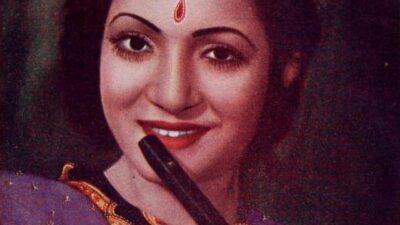
'चाँद चकोरी' (1945) का यह सबसे अच्छी तरह प्रलेखित गीत है और अब तक इसका इकलौता गीत जिसकी ध्वनि-प्रति सार्वजनिक रूप से फिर सामने आई है। गायिका अमीरबाई कर्नाटकी हैं, और शीर्षक एक ही वाक्यांश में फ़िल्म की पूरी भावभूमि रख देता है: प्रीतम चला गया, और पीछे उसने कोई शोक-मग्न स्त्री भर नहीं छोड़ी, बल्कि एक जोगन छोड़ी है — एक संन्यासिनी। संगीत बुलो सी. रानी का है और सूचियाँ शब्दों का श्रेय पंडित इंद्र को देती हैं। जब गीत-ब्लॉग 'अतुल्स सॉन्ग अ डे' ने 2011 में यह रिकॉर्डिंग पोस्ट की, तो उसने इसे 'पैथोस' और 'दुर्लभ गीत' के अंतर्गत रखा और यह भी लिखा कि केवल ध्वनि ही उपलब्ध है — वहाँ यह बात कि गीत मुमताज़ शांति पर फ़िल्माया गया है, स्पष्ट रूप से अनुमान के रूप में कही गई है, प्रमाणित तथ्य के रूप में नहीं; फ़िल्म के परदे के बारे में इसके अलावा कुछ भी दर्ज नहीं है।
अंग्रेज़ी में पढ़ें · Read in English
This is the best-documented song of Chand Chakori (1945) and, so far, the only one whose audio has resurfaced publicly. Amirbai Karnataki sings it, and the title states the film's whole emotional argument in a single clause: the beloved has gone, and what he has left behind is not simply a grieving woman but a jogan - a renunciant. Bulo C. Rani composed it and the catalogues credit the words to Pandit Indra. When the song blog Atul's Song A Day posted the recording in 2011 it filed the number under 'pathos' and 'rare song' and noted that only the audio survives - the blogger's remark that the song is picturised on Mumtaz Shanti is offered there explicitly as a guess, not as a documented fact, and nothing else is on record about how this film looked on screen.
संगीत The Music
रिकॉर्डिंग की एक प्रति ऑनलाइन प्रचलन में है, पर इसके वाद्य-संयोजन का कोई प्रकाशित विवरण उपलब्ध नहीं, इसलिए यहाँ जो कहा जा सकता है वह ब्योरे का नहीं, मुहावरे का है। स्वतंत्र संगीतकार के अपने आरंभिक वर्षों में बुलो सी. रानी ने रणजीत के लिए जान-बूझकर सादगी भरे ढंग से लिखा: ऐसी स्वर-रेखा जो गाए जाने के लिए बनी हो, न कि जिसके चारों ओर वाद्य-वृंद सजाया जाए; हारमोनियम और गज़ से बजने वाले तार आवाज़ के पीछे-पीछे चलते हुए, और ताल इतनी हल्की कि शब्द साफ़ सुनाई देते रहें। इस मुहावरे में करुण-रस का गीत नीचे के सप्तक में धीमी चाल से बैठता है और पूरा अग्रभाग गायिका को सौंप देता है। अमीरबाई कर्नाटकी का हल्का खुरदरा मध्य-सप्तक — वही गुण जो दो साल पहले 'किस्मत' के आठ में से छह गीत सँभालता है — असल में वही इस गीत की असली संगत है।
अंग्रेज़ी में पढ़ें · Read in English
A transfer of the recording circulates online, but no published description of its scoring exists, so what can responsibly be said here is about idiom rather than detail. Bulo C. Rani in his first years as an independent composer wrote for Ranjit in a deliberately unornamented manner: a melodic line built to be sung rather than orchestrated around, harmonium and bowed strings shadowing the voice, percussion kept light enough to leave the words legible. A pathos number in that idiom sits low and slow and gives the singer the whole of the foreground. Amirbai Karnataki's slightly grainy middle register - the quality that carries six of the eight songs of Kismet two years earlier - is what the song is actually written for.
काव्य The Poetry
शीर्षक जिस शब्द पर घूमता है वह है 'जोगन' — जोगी का स्त्रीलिंग, वह स्त्री जिसने गृहस्थ संसार त्याग दिया हो। उत्तर भारतीय भक्ति-काव्य में इस आकृति का एक ही महान आदि-रूप है, मीरा — जिन्होंने ऐसे प्रेम के लिए महल छोड़ा जिसे कोई विवाह समेट नहीं सकता था — और यह शब्द जहाँ भी आता है, मीरा का आवेश साथ लाता है। 1945 के किसी फ़िल्मी गीत में, और उस स्त्री के मुँह में जिसका प्रीतम छोड़कर चला गया हो, यह शब्द शिकायत से कहीं अधिक दिलचस्प काम करता है: यह परित्याग को एक व्रत में बदल देता है। वक्ता यह नहीं कहती कि वह छोड़ दी गई; वह कहती है कि उसे जोगन बना दिया गया — जाना उस पर किया गया एक कर्म बनकर सामने आता है, और जो अवस्था उससे बनी, उसे भारतीय परंपरा दया से नहीं, आदर से देखती है। इसीलिए यह पंक्ति आत्म-दैन्य के बिना गाई जा सकती है, और इसीलिए 'चाँद चकोरी' का पूरा संगीत — जो बार-बार प्रतीक्षा और दूरी पर लौटता है — इसी एक शीर्षक से खुलता है।
अंग्रेज़ी में पढ़ें · Read in English
The word the title turns on is jogan: the feminine of jogi, a woman who has renounced the household world. In north Indian devotional poetry that figure has one great archetype, Meera, who left a palace for a love that no marriage could contain, and the word carries her charge wherever it is used. Placed in a film song of 1945 and spoken by a woman whose lover has walked out, it does something more interesting than complaint. It converts abandonment into a vocation. The speaker does not say she has been left; she says she has been made into a jogan - the leaving is presented as an act performed upon her, and the state it produced is one that Indian tradition treats with reverence rather than pity. That is why the line can be sung without self-abasement, and it is why the whole score of Chand Chakori, which returns again and again to waiting and distance, opens out from this one title.
कहानी The Story
'चाँद चकोरी' रणजीत मूवीटोन की फ़िल्म थी, निर्देशक केदार शर्मा, कलाकार मुमताज़ शांति और गायक-अभिनेता सुरेंद्र, और तेरह गीत बुलो सी. रानी के। 'बॉक्स ऑफ़िस इंडिया' की पूर्वदृष्टि सूची में यह 1945 की छठी सबसे अधिक कमाई करने वाली भारतीय फ़िल्म है, और फिर भी इसने लगभग कोई निशान नहीं छोड़ा: उपलब्ध स्रोतों में इसका कोई कथासार नहीं है और कोई प्रिंट प्रचलन में नहीं जाना जाता। किसी भी सूची में इस फ़िल्म के लिए नामित एकमात्र गायिका अमीरबाई कर्नाटकी हैं, जिनके नाम तेरह में से सात गीत दर्ज हैं — यह उन्हीं में से एक है। दो साल पहले बॉम्बे टॉकीज़ की 'किस्मत' के आठ में से छह गीत उन्होंने ही गाए थे — उसी फ़िल्म में जिसने उस समय के सारे बॉक्स-ऑफ़िस कीर्तिमान तोड़ दिए और जिसकी नायिका भी मुमताज़ शांति थीं — और इस तरह 'चाँद चकोरी' ने वही गायिका और वही नायिका रणजीत में फिर एक साथ ला दीं।
अंग्रेज़ी में पढ़ें · Read in English
Chand Chakori was a Ranjit Movietone picture directed by Kidar Sharma, starring Mumtaz Shanti and the singer-actor Surendra, with thirteen songs by Bulo C. Rani. It was the sixth highest-grossing Indian release of 1945 on Box Office India's retrospective ranking, and it has still left almost no trace: no plot summary survives in accessible sources and no print is known to circulate. Amirbai Karnataki is the only singer any catalogue names for the film, credited on seven of the thirteen titles, of which this is one. She had sung six of the eight songs of Bombay Talkies' Kismet two years earlier - the film that broke every box-office record then standing, and whose female lead was also Mumtaz Shanti - so Chand Chakori brought the same singer and the same star together again at Ranjit.
विरासत The Legacy
यही वह धागा है जिससे 'चाँद चकोरी' आज भी लटकी हुई है। तेरह दर्ज गीतों में यही एक है जो दोबारा सुना गया, और कलाकारों की सूची तथा बॉक्स-ऑफ़िस की रैंक के अलावा फ़िल्म के बारे में जो कुछ आज ज्ञात है, उसका अधिकांश 2011 में इसी गीत के साथ लगाई गई ब्लॉगर की टिप्पणी से आता है। यह बुलो सी. रानी के बारे में भी एक छोटा प्रमाण है, जिन्हें 'जोगन' (1950) के लिए याद किया जाता है और उसके बाद लगभग भुला दिया गया: उस चर्चित संगीत से पाँच साल पहले, पच्चीस की उम्र में और स्वतंत्र रूप से संगीत देते हुए बमुश्किल एक साल में, वे पहले से ही उसी सादे, आवाज़-प्रधान ढंग में लिख रहे थे जिसने आगे चलकर उसे कारगर बनाया। यानी यह गीत किसी हिट के रूप में नहीं, एक दस्तावेज़ के रूप में बचा है — एक गायिका, एक संगीतकार और एक ऐसी फ़िल्म का, जिसे अभिलेख ने वैसे गिरा दिया।
अंग्रेज़ी में पढ़ें · Read in English
This is the thread by which Chand Chakori still hangs on. Of thirteen catalogued songs it is the one that has been heard again, and almost everything now known about the film beyond a cast list and a box-office rank comes from the note the blogger attached to it in 2011. It is also a small piece of evidence about Bulo C. Rani, who is remembered for Jogan (1950) and then largely forgotten: five years before that celebrated score, at twenty-five and a year into composing on his own, he was already writing in the plain, voice-first manner that made it work. The song survives, in other words, less as a hit than as documentation - of a singer, a composer and a picture that the archive otherwise dropped.
वर्गीकरण
Classification- Tempo
- Slow
Genre
अन्य विवरण
More Details- https://www.hindigeetmala.net/movie/chand_chakori.htm
- https://en.wikipedia.org/wiki/Chand_Chakori
- https://en.wikipedia.org/wiki/List_of_Hindi_films_of_1945
- https://www.cinemaazi.com/film/chand-chakori
- https://atulsongaday.me/2011/09/27/jogan-banaa-ke-piyaa-chhod-gayo-galiyon-mein/
- https://www.hindigeetmala.net/song/jogan_bana_ke_piya_chod_gaya.htm
- https://en.wikipedia.org/wiki/Amirbai_Karnataki
- https://en.wikipedia.org/wiki/Kismet_(1943_film)
References
रोचक तथ्य
Margin Notesगीत-ब्लॉग 'अतुल्स सॉन्ग अ डे' ने यह रिकॉर्डिंग 27 सितंबर 2011 को पोस्ट की, उसे 'पैथोस' और 'दुर्लभ गीत' के अंतर्गत रखा, और लिखा कि 'चाँद चकोरी' का पन्ना रखने वाली अधिकांश वेबसाइटें समीक्षा और संगीत-विवरण होने का दावा तो करती हैं, पर पन्ना असल में लगभग ख़ाली है।
अंग्रेज़ी में पढ़ें · Read in English
The song blog Atul's Song A Day posted this recording on 27 September 2011, filing it under 'pathos' and 'rare song', and noted that most websites carrying a page for Chand Chakori claim to hold reviews and music details while the page itself is essentially blank.
अमीरबाई कर्नाटकी ने 'किस्मत' (1943) के आठ में से छह गीत गाए थे, और उस फ़िल्म की नायिका मुमताज़ शांति थीं; वह फ़िल्म कोलकाता के रॉक्सी सिनेमा में लगातार 187 सप्ताह चली — एक कीर्तिमान जो बत्तीस साल क़ायम रहा। 'चाँद चकोरी' ने वही गायिका और वही नायिका रणजीत मूवीटोन में फिर एक साथ ला दीं।
अंग्रेज़ी में पढ़ें · Read in English
Amirbai Karnataki sang six of the eight songs of Kismet (1943), whose female lead was Mumtaz Shanti; that film ran 187 consecutive weeks at Kolkata's Roxy cinema, a record that stood for thirty-two years. Chand Chakori brought the same singer and the same star together again at Ranjit Movietone.
इस शीर्षक का शब्द 'जोगन' उसी संगीत का नाम भी है जिसने आगे चलकर बुलो सी. रानी की ख्याति बनाई — 'जोगन' (1950), पाँच साल बाद — जिससे उनके शिक्षु-काल के काम और उनके सबसे प्रसिद्ध काम के बीच शब्दों का यह संयोग दर्ज करने लायक़ हो जाता है।
अंग्रेज़ी में पढ़ें · Read in English
The word in this title, jogan, is also the name of the score that would finally make Bulo C. Rani's reputation - Jogan (1950), five years later - which makes the coincidence of vocabulary between his apprentice work and his best-known one worth noting.
नमूना-पट्टी
The Specimen Table| शीर्षक | जोगन बना के पिया छोड़ गया · Jogan Bana Ke Piya Chhod Gaya |
|---|---|
| फ़िल्म | चाँद चकोरी · 1945 |
| वर्ष · युग | 1945 |
| गायक | Amirbai Karnataki |
| गीतकार | Pandit Indra |
| संगीतकार | Bulo C. Rani |
| स्वरूप | एकल महिला |
| गति | धीमी |
| भाषा | hindi |
| भाव | भक्ति · उदास |
| लोकप्रियता | Known |
| बोल-स्थिति | केवल झलक |
जुड़े हुए पन्ने
Connected Plates · The Graph Made Visibleअटलस में कोई पन्ना अकेला नहीं — इस गीत से जुड़े गीत, कलाकार, फ़िल्म, राग-ताल-विधा, सब यहाँ से खुलते हैं।
मिलते-जुलते गीत · Related Songs
कलाकार · The Artists
फ़िल्म · The Film
साझा कीजिए · Share this Plate