गीत विंग · गीत-पट्टिका · Song Plate
हँसने हँसाने के दिन आ गए हैं
Hansne Hansane Ke Din Aa Gaye Hain
अमीरबाई कर्नाटकी की घोषणा कि हँसने-हँसाने के दिन आ गए हैं — 1945 के मेलोड्रामा की वही शुरुआती ख़ुशी, जिसे छीनने के लिए ही कहानी बनी होती थी।
भावउत्सव · चुलबुला
भाषाhindi गतिमध्यम स्वरूपएकल महिला
श्रेय
The Creditsसूत्र-वाक्य · The Hook
सूत्र-वाक्य
अमीरबाई कर्नाटकी की घोषणा कि हँसने-हँसाने के दिन आ गए हैं — 1945 के मेलोड्रामा की वही शुरुआती ख़ुशी, जिसे छीनने के लिए ही कहानी बनी होती थी।
In EnglishAmirbai Karnataki announcing that the good days have arrived — the kind of early-reel optimism a 1945 melodrama existed to take away.
पट्टिका-लेख
The Monographपरिचय Overview
'कुल कलंक' में अमीरबाई कर्नाटकी के तीन गीतों में से दूसरा, और फ़िल्म के उन चार रिकॉर्डों में से एक जो सारेगामा की सूची में हैं। इसका शीर्षक एक आगमन की घोषणा है — हँसने और हँसाने के दिन आ पहुँचे — और 1940 के दशक की सामाजिक फ़िल्म की बुनावट में ऐसी घोषणा लगभग हमेशा शुरुआती दृश्य की होती है, इससे पहले कि कथानक अपना काम कर चुके। फ़िल्म के शीर्षक के सामने रखें तो यह गीत वही ऊँचाई है जहाँ से कहानी गिरती है।
अंग्रेज़ी में पढ़ें · Read in English
The second of Amirbai Karnataki's three songs in Kul Kalank, and one of the four sides from the film held in the Saregama catalogue. Its title is a declaration of arrival — the days of laughing and making others laugh are here — which in the structure of a 1940s social almost always marks an early scene, before the plot has done its damage. Read against the film's title, the song is the height from which the story falls.
संगीत The Music
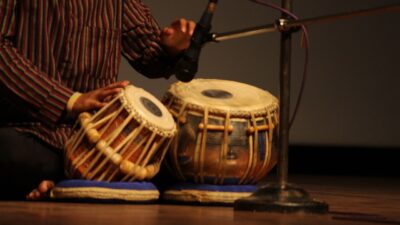
इस प्रकार के गीत तुरंत पकड़ में आने के लिए लिखे जाते हैं — चमकीली, मध्यम गति की धुन और ऐसी टेक जिसे दर्शक एक ही बार सुनकर याद रख ले, ढोलक और छोटे स्टूडियो-वृंद पर, तीन मिनट के 78-आरपीएम रिकॉर्ड में। अल्ला रक्खा के फ़िल्मी लेखन में दिलचस्पी प्रायः धुन के अलंकरण से अधिक लय के ढाँचे में रहती है, और उत्सव के गीत में तबला वादक से बने संगीतकार का काम सबसे सीधा होता है: गति बनाए रखना। अमीरबाई कर्नाटकी की आवाज़ — नीची और हल्की खुरदरी, जबकि बाद का पार्श्व-आदर्श ऊँचा और साफ़ होने वाला था — ऐसे गीत को उसकी भावना की माँग से अधिक भार दे देती है।
अंग्रेज़ी में पढ़ें · Read in English
Songs of this type are written to be immediately catchable — a bright, mid-tempo tune with a refrain the audience can hold after one hearing, carried on dholak and a small studio ensemble on a three-minute 78-rpm side. In Allah Rakha's film writing the interest usually lies in the rhythmic frame rather than in melodic ornament, and a celebratory number is where a tabla-player-turned-composer has the most straightforward job: keep it moving. Amirbai Karnataki's voice, low and slightly grainy where the later playback ideal would be high and clear, gives a song like this more weight than its sentiment strictly asks for.
काव्य The Poetry
रूपबानी की पंक्ति महज़ उत्सव मनाने से अधिक सूक्ष्म काम करती है। वह यह नहीं कहती कि गायिका ख़ुश है; वह कहती है कि हँसने के दिन आ गए हैं — यानी ख़ुशी उसके भीतर नहीं, बाहर है, और समय की बात है: एक ऋतु जो आई है और इसलिए जा भी सकती है। हिंदुस्तानी काव्य में यह जानी-पहचानी युक्ति है, जहाँ ख़ुशी लगभग हमेशा तिथि-बद्ध होती है, इस निश्चय के सामने रखी हुई कि पंचांग करवट लेगा। परिवार के कलंक की कहानी में यह उत्सव के रूप में दी गई चेतावनी जैसी पढ़ी जाती है।
अंग्रेज़ी में पढ़ें · Read in English
Roopbani's line does something subtler than simply celebrating. It does not say the singer is happy; it says the days for laughter have arrived, which puts the joy outside her and makes it a matter of timing — of a season that has come and can therefore go again. That is a standard device in Hindustani lyric, where happiness is nearly always dated, held against the certainty that the calendar will turn. In a film about a family disgrace it reads as a warning issued in the form of a celebration.
कहानी The Story
'कुल कलंक' सनराइज़ पिक्चर्स में नानूभाई बी. वकील के निर्देशन में बनी और 1945 में उस बंबई उद्योग में रिलीज़ हुई जिसने उस साल सत्तर से अधिक हिंदी फ़िल्में बनाईं। शांता हुबळीकर — जो छह साल पहले प्रभात की 'आदमी' (1939) के अपने बहुभाषी गीत के कारण भारतीय सिनेमा की सबसे चर्चित कलाकारों में थीं — इसकी नायिका थीं; अमीरबाई कर्नाटकी ने इसमें अभिनय भी किया और ग्यारह में से तीन गीत भी गाए। न फ़िल्म का प्रिंट सुरक्षित है, न उसकी कथा।
अंग्रेज़ी में पढ़ें · Read in English
Kul Kalank was made at Sunrise Pictures under Nanubhai B. Vakil and released in 1945 into a Bombay industry that produced more than seventy Hindi films that year. Shanta Hublikar, who had been one of the most talked-about performers in Indian cinema six years earlier for her multilingual song in Prabhat's Aadmi (1939), was the film's lead; Amirbai Karnataki both acted in it and sang three of its eleven songs. Neither a print nor a synopsis of the film has been preserved.
विरासत The Legacy
1945 पर लिखे बाद के साहित्य में इस गीत की कोई चर्चा नहीं है; यह इसलिए बचा है कि 'कुल कलंक' के चार रिकॉर्डों के मास्टर सारेगामा के संग्रह तक पहुँच गए। यह जो दर्ज करता है वह आज़ादी से एक साल पहले के हिंदी फ़िल्म-संगीत का सामान्य कामकाजी स्तर है — कुशल, जल्दी बना, दूसरी क़तार के निर्माण के लिए पहली क़तार की आवाज़ में गाया हुआ — और उस संगीतकार की छोटी फ़िल्मी सूची में एक और प्रविष्टि, जिसे अपने जीवन के उत्तरार्ध में हमेशा अपनी पीढ़ी के सबसे बड़े तबला वादक के रूप में पेश किया जाने वाला था।
अंग्रेज़ी में पढ़ें · Read in English
Nothing in the later literature on 1945 discusses this song; it survives because the masters for four Kul Kalank sides reached the Saregama archive. What it documents is the ordinary working level of Hindi film music in the year before independence — competent, quickly made, sung by a first-rank voice for a second-rank production — and one more entry in the short film discography of a musician who would spend the second half of his life being introduced as the greatest tabla player of his generation.
वर्गीकरण
Classification- Tempo
- Medium
Genre
अन्य विवरण
More Details- https://www.hindigeetmala.net/movie/kul_kalank.htm
- https://myswar.co/album/kul-kalank-1945
- https://www.saregama.com/album/kul-kalank_107711
- https://en.wikipedia.org/wiki/List_of_Hindi_films_of_1945
- https://en.wikipedia.org/wiki/Alla_Rakha
- https://www.cinemaazi.com/people/alla-rakha-qureshi
- https://www.indianfilmhistory.com/movie/kul-kalank
- https://bombaymann2.blogspot.com/2020/08/film-kul-kalank1945.html
- https://indiancine.ma/EEQ/info
- https://www.songsofyore.com/the-evolution-of-mohammad-rafi-part-one-1944-55/
References
रोचक तथ्य
Margin Notes1945 बंबई के लिए असामान्य रूप से भरा हुआ साल था: सत्तर से अधिक हिंदी फ़िल्में रिलीज़ हुईं, जिनमें 'कुल कलंक' छोटे निर्माणों में से एक थी और जिसने प्रेस में लगभग कोई निशान नहीं छोड़ा।
अंग्रेज़ी में पढ़ें · Read in English
1945 was an unusually crowded year in Bombay: more than seventy Hindi films were released, of which Kul Kalank was one of the smaller productions and left almost no press trace.
बीजापुर में जन्मीं और 'कन्नड़ कोकिला' कही जाने वाली अमीरबाई कर्नाटकी दो साल पहले बॉम्बे टॉकीज़ की 'किस्मत' (1943) के 'धीरे धीरे आ रे बादल' से देशव्यापी नाम बन चुकी थीं।
अंग्रेज़ी में पढ़ें · Read in English
Amirbai Karnataki, born in Bijapur and known as the 'Kannada Kokila', had become a national name two years earlier with 'Dheere Dheere Aa Re Badal' in Bombay Talkies' Kismet (1943).
नमूना-पट्टी
The Specimen Table| शीर्षक | हँसने हँसाने के दिन आ गए हैं · Hansne Hansane Ke Din Aa Gaye Hain |
|---|---|
| फ़िल्म | कुल कलंक · 1945 |
| वर्ष · युग | 1945 |
| गायक | Amirbai Karnataki |
| गीतकार | Roopbani |
| संगीतकार | Allah Rakha |
| स्वरूप | एकल महिला |
| गति | मध्यम |
| भाषा | hindi |
| भाव | उत्सव · चुलबुला |
| लोकप्रियता | Obscure |
| बोल-स्थिति | केवल झलक |
जुड़े हुए पन्ने
Connected Plates · The Graph Made Visibleअटलस में कोई पन्ना अकेला नहीं — इस गीत से जुड़े गीत, कलाकार, फ़िल्म, राग-ताल-विधा, सब यहाँ से खुलते हैं।
मिलते-जुलते गीत · Related Songs
कलाकार · The Artists
फ़िल्म · The Film
साझा कीजिए · Share this Plate