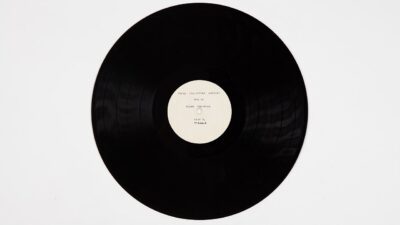
गीत विंग · गीत-पट्टिका · Song Plate
बदनाम न कर दें मुझे अरमान वफ़ा के
Badnaam Na Kar Den Mujhe Armaan Wafa Ke
संगीतकार अपना ही गीत गाते हैं: एक आदमी जिसे डर है कि वफ़ा की उसकी अपनी तड़प ही उसे बदनाम कर देगी।
भावमीठा-कड़वा · तीव्र · उदास
भाषाhindi-urdu गतिधीमी स्वरूपएकल पुरुष
श्रेय
The Creditsसूत्र-वाक्य · The Hook
सूत्र-वाक्य
संगीतकार अपना ही गीत गाते हैं: एक आदमी जिसे डर है कि वफ़ा की उसकी अपनी तड़प ही उसे बदनाम कर देगी।
In EnglishThe composer sings his own song: a man afraid that his longing to be faithful will be the thing that disgraces him.
पट्टिका-लेख
The Monographपरिचय Overview
'नीलम' का यही एक गीत है जिसके लिए किसी पुरुष गायक का नाम दर्ज है — और वह गायक ख़ुद ख़ान मस्ताना हैं, यानी फ़िल्म के संगीतकार, जिन्होंने अपना करियर पार्श्वगायक के रूप में शुरू किया था और जो आदतन अपनी ही बंदिशें रिकॉर्ड करते थे। मायस्वर की सूची में सुरक्षित पूरा शीर्षक इस विचार को खोलकर रख देता है: बदनामी का ख़तरा किसी और से नहीं, वफ़ा के अरमानों से ही है।
अंग्रेज़ी में पढ़ें · Read in English
The only Neelam song for which a male singer is named, and the singer is Khan Mastana himself — the film's composer, who had begun his career as a playback voice and habitually recorded his own compositions. The full title preserved in the myswar catalogue makes the thought explicit: it is the yearnings of fidelity themselves that threaten to bring the speaker into disrepute.
संगीत The Music
ख़ान मस्ताना की अपनी गायकी को उद्योग में 'शहद झरती आवाज़' कहा जाता था, और जो गीत वे अपने लिए रखते थे वे प्रायः धीमे, ग़ज़ल-नुमा होते थे — वही जिनमें यह गुण खुलकर सामने आता है। जो संगीतकार अपनी रचनाएँ ख़ुद गाते हैं वे किसी काल्पनिक आदर्श पंक्ति के बजाय अपनी ही आवाज़ की सीमाओं पर लिखते हैं, और इतने लंबे तथा वज़नी शीर्षक से यही ध्वनित होता है: बिना जल्दबाज़ी की लय, एक साँस में सधने वाला लंबा स्वर-वाक्य, और इतनी पीछे रखी हुई संगत कि शब्द सुनाई देते रहें।
अंग्रेज़ी में पढ़ें · Read in English
Khan Mastana's own singing voice was known in the trade by the phrase shehad jharti aawaz — a voice with honey dripping from it — and the songs he kept for himself tend to be the slow, ghazal-shaped ones that reward that quality. Composers who sing their own work usually write to the seams of their own range rather than to an abstract ideal line, and a title of this length and metrical weight implies exactly that: an unhurried tempo, a long melodic phrase carried in one breath, and accompaniment kept far enough back that the words stay audible.
काव्य The Poetry
यह पंक्ति उर्दू के एक जाने-पहचाने बिंब को उलटकर रख देती है। आम तौर पर आशिक़ बदनामी से डरता है और वह बदनामी बाहर से आती है: चर्चा से, रक़ीब से, प्रिय की लापरवाही से। हुनर ख़तरे को भीतर की ओर मोड़ देते हैं। उसे उजागर करने वाली चीज़ है 'अरमान-ए-वफ़ा' — वफ़ादार बने रहने की चाह — क्योंकि जो दुनिया खुली निष्ठा को ही तमाशा मान लेती है, उसमें निभाना ही वह बात है जिसे छिपाकर नहीं रखा जा सकता। यह उलटफेर गीत को एक 'सोशल' फ़िल्म के भीतर भी कारगर बना देता है, जहाँ जोड़े पर दबाव प्रायः रक़ीब से नहीं, परिवार और मोहल्ले से आता है, और जहाँ 'ग़लत' व्यक्ति से प्रेम करते हुए देख लिया जाना ही पूरी कहानी होती है।
अंग्रेज़ी में पढ़ें · Read in English
The line turns a familiar Urdu figure inside out. Ordinarily the lover fears badnami — public disgrace — as something inflicted from outside: by gossip, by the rival, by the beloved's carelessness. Hunar shifts the danger inward. It is armaan-e-wafa, the desire to keep faith, that will expose him, because in a world that reads open devotion as scandal, constancy is precisely the thing that cannot be kept private. That inversion also makes the song usable inside a 'Social' picture, where the pressure on a couple usually comes from family and neighbourhood rather than from a rival, and where being seen to love the wrong person is the whole plot.
कहानी The Story
'नीलम' (1945) ए. एच. प्रोडक्शंस, बंबई की एक सामाजिक फ़िल्म थी, जिसका निर्देशन अहमद ईसा ने किया; नौ के नौ गीत सी. एम. हुनर ने लिखे और संगीत ख़ान मस्ताना का है। कास्ट का नेतृत्व हरीश और मीना ने किया, और उनके साथ जगदीश सेठी, यशोधरा काटजू, कन्हैयालाल, कल्याणी, सत्यरानी, मेहदी रज़ा, सयानी तथा अब्दुल हुसैन थे। फ़िल्म की कथा-रूपरेखा कहीं भी सुरक्षित नहीं है और न ही इसका कोई प्रिंट प्रचलन में जाना जाता है; गीत एचएमवी के बजाय स्वदेशी लेबल 'यंग इंडिया' पर जारी हुए, और वही शेलैक तवे इस फ़िल्म का संगीत आज तक ले आए हैं।
अंग्रेज़ी में पढ़ें · Read in English
Neelam (1945) was a social picture from A. H. Productions, Bombay, directed by Ahmed Essa, with all nine songs written by C. M. Hunar and composed by Khan Mastana. The cast was led by Harish and Meena, with Jagdish Sethi, Yashodhara Katju, Kanhaiyalal, Kalyani, Satyarani, Mehdi Raza, Sayani and Abdul Hussain in support. No plot summary of the film survives anywhere, and no print is known to circulate; the songs were issued on the indigenous Young India label rather than on HMV, and it is those shellac discs that carried the film's music into the present.
विरासत The Legacy
इस गीत का कोई ऑडियो नहीं मिला है, और लगभग 2018 में एक संग्राहक द्वारा ऑनलाइन डाली गई 'नीलम' की दो रिकॉर्डिंगों में यह शामिल नहीं था। इसकी दस्तावेज़ी अहमियत ख़ुद उस श्रेय में है: यह ख़ान मस्ताना द्वारा अपनी ही बंदिश गाए जाने का एक अंतिम-दौर का उदाहरण है — उस हैदराबाद प्रसंग से कोई सात साल पहले जिसने उनसे बंबई का काम छीन लिया और उस ग़रीबी की राह पर डाल दिया जिसमें 1972 में उनका देहांत हुआ। संगीतकार-गायक के रूप में उनके 1940 के दशक के काम का बहुत कम हिस्सा दोबारा जारी हुआ है, इसलिए ऐसी प्रविष्टियाँ ही उसकी गिनती का बड़ा ज़रिया हैं।
अंग्रेज़ी में पढ़ें · Read in English
No audio of this song has been located, and it was not among the two Neelam recordings a collector put online around 2018. Its documentary interest lies in the credit itself: it is a late instance of Khan Mastana singing his own composition, some seven years before the Hyderabad absence that cost him his Bombay work and set him on the road to the poverty in which he died in 1972. Very little of his 1940s work as composer-singer has been reissued, so entries like this one are largely how it is still counted.
वर्गीकरण
Classification- Tempo
- Slow
Genre
अन्य विवरण
More Details- https://www.hindigeetmala.net/movie/neelam.htm
- https://myswar.co/album/neelam-1945
- https://en.wikipedia.org/wiki/List_of_Hindi_films_of_1945
- https://atulsongaday.me/2021/08/24/aaj-bas-mein-nahin-dil-mera/
- https://archive.org/details/a_20210503_20210503_1724
- https://en.wikipedia.org/wiki/Khan_Mastana
- https://en.wikipedia.org/wiki/Roshan_Ara_Begum
- https://www.cinemaazi.com/people/khan-mastana-
- https://www.theheritagelab.in/young-india-record-label-homegrown/
References
रोचक तथ्य
Margin Notesख़ान मस्ताना का जन्म लगभग 1916 में आगरा में हाफ़िज़ ख़ान के रूप में हुआ; उनके पिता सितारवादक थे। 'बहादुर किसान' (1938) के समय संगीतकार मीर साहब ने उनके बेफ़िक्र मिज़ाज के कारण उन्हें 'मस्ताना' नाम दिया। 1950 के दशक के शुरू में पिता ने उन्हें हैदराबाद में संगीत सिखाने बुला लिया; लंबी अनुपस्थिति के कारण बंबई के निर्माताओं ने उन्हें काम देना बंद कर दिया और 1952 के बाद उन्हें असाइनमेंट मिलने लगभग बंद हो गए। 1972 में माहिम में ग़रीबी में उनका देहांत हुआ।
अंग्रेज़ी में पढ़ें · Read in English
Khan Mastana was born Hafiz Khan in Agra around 1916, the son of a sitar player, and was nicknamed 'Mastana' by the composer Mir Saheb on Bahadur Kisan (1938) for his carefree manner. In the early 1950s his father called him away to teach music in Hyderabad; Bombay producers refused him work over the long absence and his assignments dried up after 1952. He died in poverty in Mahim in 1972.
सी. एम. हुनर ने 'नीलम' के नौ के नौ गीत लिखे। सिनेमाज़ी विश्वकोश उनकी कुल पाँच फ़िल्मों की सूची दर्ज करता है — 'नीलम' (1945), 'कांगू' (1946), 'दिलदार' (1947), 'नाइट बर्ड' (1961) और 'काला जादू' (1963) — और इसके अलावा उनके बारे में लगभग कुछ भी दर्ज नहीं है।
अंग्रेज़ी में पढ़ें · Read in English
C. M. Hunar wrote all nine of Neelam's songs. The Cinemaazi encyclopaedia records a filmography of only five films for him — Neelam (1945), Kangoo (1946), Dildar (1947), Night Bird (1961) and Kala Jadoo alias Black Magic (1963) — and almost nothing else about him is recorded.
'नीलम' के गीत 'यंग इंडिया' पर जारी हुए — बंबई का वह लेबल जिसे नैशनल ग्रामोफ़ोन रिकॉर्ड मैन्युफ़ैक्चरिंग कं. लि. ने 1934 में विदेशी ग्रामोफ़ोन कंपनियों के स्वदेशी प्रतिद्वंद्वी के रूप में शुरू किया था। उसने सैकड़ों 78-आरपीएम शेलैक तवे दबाए और उभरते कलाकारों को प्रोत्साहित करने पर ज़ोर दिया, और 1955 में उसका वडाला कारख़ाना बंद हो गया — यही वजह है कि उस पर छपा लगभग कुछ भी दोबारा जारी नहीं हुआ।
अंग्रेज़ी में पढ़ें · Read in English
Neelam's songs were issued on Young India, the Bombay label founded in 1934 by The National Gramophone Record Manufacturing Co. Ltd. as an indigenous rival to the foreign-owned gramophone companies. It pressed hundreds of 78-rpm shellac discs and made a point of encouraging emerging talent, and its Wadala plant shut in 1955 — which is why almost nothing on it was ever reissued.
नमूना-पट्टी
The Specimen Table| शीर्षक | बदनाम न कर दें मुझे अरमान वफ़ा के · Badnaam Na Kar Den Mujhe Armaan Wafa Ke |
|---|---|
| फ़िल्म | नीलम · 1945 |
| वर्ष · युग | 1945 |
| गायक | Khan Mastana |
| गीतकार | सी. एम. हुनर |
| संगीतकार | Khan Mastana |
| स्वरूप | एकल पुरुष |
| गति | धीमी |
| भाषा | hindi-urdu |
| भाव | मीठा-कड़वा · तीव्र · उदास |
| लोकप्रियता | Obscure |
| बोल-स्थिति | केवल झलक |
जुड़े हुए पन्ने
Connected Plates · The Graph Made Visibleअटलस में कोई पन्ना अकेला नहीं — इस गीत से जुड़े गीत, कलाकार, फ़िल्म, राग-ताल-विधा, सब यहाँ से खुलते हैं।
मिलते-जुलते गीत · Related Songs
कलाकार · The Artists
फ़िल्म · The Film
साझा कीजिए · Share this Plate