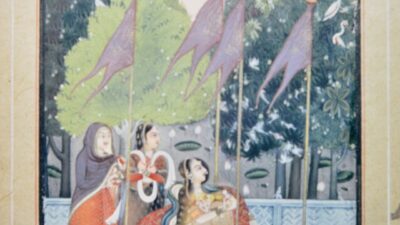
शास्त्र विंग · राग-पट्टिका · Raag Plate
पटदीप
Patdīp
दीपक संध्या का राग · The Lamp-Lit Evening Raag
भावध्यानपूर्ण · आत्मविश्लेषणपूर्ण · कोमल · स्नेही · ध्यान
गतिvilambit ऊर्जाधीमी
अन्य नामPat-deep · पट-दीप · Patdeep
स्वर-चित्र · The Swara Panel
आरोह — अवरोह · The Ascent and the Descent
कोमल स्वर — Ga♭, Ni♭ — तीव्रित हरे रंग में।
आरोह · Aroha चढ़ती हुई सीढ़ी
अवरोह · Avaroha उतरती हुई सीढ़ी
कोमल स्वर — नीचे की ओर झुका चिह्न (◌॒)सˊ = तार सप्तक का षड्ज
पटदीप दो कोमल स्वर — गा♭ और नि♭ का उपयोग करता है, जो इसे ध्यानपूर्ण, थोड़ा उदास चरित्र देता है। आरोहण में पा की वक्र गति विशिष्ट है।
अंग्रेज़ी में पढ़ें · Read in English
Patdeep uses two komal swaras — Ga♭ and Ni♭ — giving it a introspective, mildly melancholic character. The vakra (curved) movement of Pa in the arohana is distinctive. Unlike the bright raags of Kalyan thaat, Patdeep maintains a softer, more philosophical mood through its komal notes.
पकड़ · पहचान वाक्यांश
ग♭ म प नि♭ ध
Ga♭ Ma Pa Ni♭ Dha
पटदीप को परिभाषित करने वाला आरोही वाक्यांश — ध्यानपूर्ण, आत्मविश्लेषणपूर्ण, धीमे-धीमे ऊपर उठता है।
अंग्रेज़ी में पढ़ें · Read in English
The contemplative ascending phrase that defines Patdeep — gentle, introspective, rising slowly. This is the heart of the raag's character.
वादी–संवादी टिप्पणी · Vadi–Samvadi note
Vadi — The most important note in Patdeep, where the raag's contemplative character is most strongly expressed.
Samvadi — The foundational supporting note, grounding the raag's spiritual character.
चलन · स्वर-यात्रा
सा ग♭ म प नि♭ ध प, सा नि♭ ध प म ग♭ रे स
Sa Ga♭ Ma Pa Ni♭ Dha Pa, Sa Ni♭ Dha Pa Ma Ga♭ Re Sa
पटदीप की पूर्ण मधुर प्रगति — आरोहण में धीमी, ध्यानपूर्ण दृष्टिकोण, फिर अधिक विस्तृत अवरोहण।
अंग्रेज़ी में पढ़ें · Read in English
The complete melodic progression of Patdeep — slow, meditative approach in ascent, then more elaborate descent showcasing all notes.
न्यास स्वर — Sa, Ma, Pa अनुवादी — Re, Ma, Ni♭
विशेष स्वर-वाक्य
Characteristic Phrasesसमय और भाव
Time Theory & Moodसमय-सिद्धांत · Time Theory
संध्या प्रहर (प्रारंभिक)
दोपहर के अंत से शाम की शुरुआत तक गाया जाता है, जब दिन रात की ओर संक्रमण करता है।
Late afternoon to early evening raag — traditionally performed as the day transitions toward night. The contemplative mood suits the quieter, more introspective hours.
All seasons — no seasonal restriction
भाव और गति · Mood & Tempo
वत्सल्य · Tender / Affectionate / Contemplative
पटदीप का प्राथमिक रस — स्नेहपूर्ण ध्यान, आत्मविश्लेषणपूर्ण कोमलता, शांत भक्ति।
vilambit
ऊर्जा · Energyधीमी
स्तर · Levelintermediate — पटदीप में कोमल गा♭ और नि♭, तथा पा की वक्र गति की समझ आवश्यक है। इसका ध्यानपूर्ण चरित्र प्रदर्शनकारियों से भावन…
लक्षण गीत · The Mnemonic Verse
लक्षण गीत
पटदीप काफी थाट में गा को कोमल धरे
ध नि को कोमल करे, पा को वक्र करे
सा ग कोमल म प नि कोमल ध प आरोहण
सा नि कोमल ध प म ग कोमल रे स अवरोहण
अंग्रेज़ी में पढ़ें · Read in English
Patdeep Kafi thaat mein ga ko komal dhare
Dha ni ko komal kare, pa ko vakra kare
Sa g-komal m p n-komal d p arohana
Sa n-komal d p m g-komal r S avarohana
Patdeep in Kafi thaat uses komal Ga. Both Dha and Ni are komal, with Pa curved. Ascent: Sa Ga♭ Ma Pa Ni♭ Dha Pa. Descent: Sa Ni♭ Dha Pa Ma Ga♭ Re Sa.
पट्टिका-लेख
The Monographपरिचय Introduction
पटदीप शांत ध्यान और कोमल भक्ति का राग है, काफी थाट परिवार में गहराई से निहित है फिर भी अपना अलग चरित्र है। नाम पटदीप शाम को जलती दीप की छवि बनाता है। यह यमन के सार्वजनिक रोमांस से अलग, व्यक्तिगत हृदय का संगीत है।
अंग्रेज़ी में पढ़ें · Read in English
Patdeep is a raag of quiet contemplation and tender affection, deeply rooted in the Kafi thaat family yet bearing its own distinct character. The name 'Patdeep' evokes an oil lamp (dīp) flickering as evening falls (pat = moment), creating an image of solitary, meditative reflection. Unlike Yaman's public romanticism or Kafi's broader introspection, Patdeep is intensely personal — the music of a solitary heart examining devotion, longing, and the subtle interplay of emotions. The raag uses two komal swaras (Ga♭ and Ni♭) that soften the palette, while the distinctive vakra movement of Pa creates a distinctive, slightly irregular melodic contour that mirrors the hesitation and introspection of the human heart. Patdeep is rarely heard in popular music or cinema, making it a raag for the serious student and connoisseur — one that rewards deep study with profound emotional insights.
सांस्कृतिक महत्व Cultural Significance
पटदीप हिंदुस्तानी संगीत के दार्शनिक, ध्यानपूर्ण पहलू का प्रतिनिधित्व करता है। यह रहस्यवादी, ऋषि और गंभीर शिक्षार्थी का राग है।
अंग्रेज़ी में पढ़ें · Read in English
Patdeep represents the philosophical, introspective strand of Hindustani music. While many raags celebrate emotion or occasion, Patdeep is the raag of the mystic, the sage, and the serious student. It appears in devotional traditions, particularly in Krishna bhakti circles, and is a preferred choice for late-afternoon meditation in ashrams and spiritual communities. Patdeep's rarity in popular music paradoxically increases its value among classical connoisseurs — it is a raag for those who listen deeply and understand the nuances of Indian classical music.
ऐतिहासिक महत्व Historical Significance
पटदीप काफी परिवार के एक राग के रूप में शास्त्रीय संगीत ग्रंथों में प्रलेखित है। हालांकि काफी जितना लोकप्रिय नहीं है, पटदीप ने शास्त्रीय संगीत सभाओं में एक स्थिर उपस्थिति बनाए रखी है।
अंग्रेज़ी में पढ़ें · Read in English
Patdeep is documented in classical music texts as a raag of the Kafi family. While less popular than Kafi itself, Patdeep has maintained a steady presence in classical concert traditions, particularly in North Indian cities like Delhi, Lucknow, and Varanasi where contemplative music traditions remain strong. The raag is thought to have evolved from folk traditions and been refined into its current classical form over centuries. Its association with Krishna bhakti and spiritual practice suggests deep roots in devotional music history.
शिक्षा
Teaching & Learning| बंदिश | ताल · लय | बोल |
|---|---|---|
| Nain Milai Tore Mohan Sayam Traditional |
Teentaal | |
| Shyam Nahi Aayenge Traditional |
Dadra |
पकड़ (ग♭ म प नि♭ ध) में महारत हासिल करें। कोमल गा♭ को सावधानीपूर्वक अभ्यास करें।
अंग्रेज़ी में पढ़ें · Read in English
Master the pakad (Ga♭ Ma Pa Ni♭ Dha) carefully. The komal Ga♭ requires proper intonation — it should sound naturally flat, not forced. This phrase is Patdeep's identity.
आरोहण में पा की वक्र गति को समझें। यह सीधे ऊपर नहीं जाता, बल्कि वापस आता है।
अंग्रेज़ी में पढ़ें · Read in English
Understand the vakra movement of Pa in arohana. Pa is not used in simple ascending order like other notes — it returns after reaching higher notes. This curved movement is characteristic.
पटदीप एक ध्यानपूर्ण राग है — शांत चिंतन दिखाएँ, भव्य प्रदर्शन नहीं।
अंग्रेज़ी में पढ़ें · Read in English
Patdeep is an introspective raag — let your performance reflect quiet contemplation rather than display. The beauty lies in subtle expression and emotional depth, not technical flash.
अवरोहण (सˊ नि♭ ध प म ग♭ रे स) का विस्तार से अभ्यास करें। पूर्ण 7-स्वर अवरोहण राग का पूर्ण चरित्र दिखाता है।
अंग्रेज़ी में पढ़ें · Read in English
Practice the descent (Sa' Ni♭ Dha Pa Ma Ga♭ Re Sa) extensively. The full 7-note avarohana gives you space to explore the raag's complete character and emotional range.
पटदीप को काफी या बागेश्री से भ्रमित करना क्योंकि दोनों में कोमल स्वर हैं
अंग्रेज़ी में पढ़ें · Read in English
Confusing Patdeep with Kafi or Bageshree due to similar komal swaras and Kafi thaat connection
सुधार: Patdeep has distinctive vakra Pa in arohana (Pa comes after Ni♭ Dha, then returns). This curved movement is unique to Patdeep.
राग को उदास या नकारात्मक बनाना — पटदीप कोमल और स्नेही होना चाहिए, उदास नहीं
अंग्रेज़ी में पढ़ें · Read in English
Sounding melancholic or depressed — Patdeep should be tender and affectionate, not sad
सुधार: Patdeep's komal notes give it introspection, not sadness. The mood is contemplative affection, like a mother's tender gaze or meditation on devotion.
पा की वक्र गति को अत्यधिक जटिल बनाना
अंग्रेज़ी में पढ़ें · Read in English
Overcomplicating the vakra movement of Pa — treating it as complex when it's actually natural
सुधार: The Pa vakra is simple and natural in practice — just let the phrase flow: Ga♭ Ma Pa (then continue up), and later Pa comes naturally in descent.
तुलना
A Specimen Comparisonदोनों में कोमल गा♭ और नि♭ हैं, लेकिन काफी पूर्ण 7-स्वर राग है, पटदीप में वक्र पा है।
| तुलनाSpecimen | पटदीप | काफी |
|---|---|---|
| स्वर-अंतर | Kafi: Sa Re Ga♭ Ma Pa Dha Ni♭ | Patdeep: Sa Ga♭ Ma Pa (vakra) Ni♭ Dha in arohana | |
| भाव-अंतर | Kafi = Evening introspection, melancholic depth; Patdeep = Afternoon-early evening tenderness, contemplative affection | |
| समय-अंतर | Both evening/late afternoon, but Kafi emphasizes pure evening mood, Patdeep emphasizes transition time | |
दोनों ध्यानपूर्ण काफी-परिवार के राग हैं, लेकिन बागेश्री अधिक संध्या-विशिष्ट है।
| तुलनाSpecimen | पटदीप | बागेश्री |
|---|---|---|
| स्वर-अंतर | Patdeep uses vakra Pa; Bageshree does not have this vakra movement | |
| भाव-अंतर | Patdeep = Tender affection; Bageshree = Melancholic intoxication | |
| समय-अंतर | Both late day, but Bageshree is pure evening; Patdeep bridges afternoon-evening | |
रोचक तथ्य
Margin Notesपटदीप उन दुर्लभ हिंदुस्तानी रागों में से एक है जो फिल्म संगीत या लोकप्रिय रिकॉर्डिंग में शायद ही कभी सुना जाता है।
अंग्रेज़ी में पढ़ें · Read in English
Patdeep is one of the rare Hindustani raags that is rarely heard in film music or popular recordings, making it a 'connoisseur's raag' — beloved by serious students and masters, but unknown to casual listeners.
पटदीप के आरोहण में पा की वक्र गति विशिष्ट और प्रतिष्ठित है। यह अनियमित मधुर आकार ध्यानपूर्ण हृदय की झिझक को दर्शाता है।
अंग्रेज़ी में पढ़ें · Read in English
The vakra (curved) movement of Pa in Patdeep's arohana is distinctive and iconic. Pa is used but then returns, creating an irregular melodic shape that mirrors the hesitation of a contemplative heart.
पटदीप कृष्ण भक्ति परंपराओं, विशेष रूप से वल्लभ संप्रदाय से दृढ़ता से जुड़ा है।
अंग्रेज़ी में पढ़ें · Read in English
Patdeep is strongly associated with Krishna devotion traditions, particularly the Vallabha sampradaya. The raag appears frequently in temple music and ashram recitations.
अधिकांश दोपहर रागों के विपरीत जो उज्ज्वलता की ओर जाते हैं, पटदीप ध्यानपूर्ण और आत्मविश्लेषणपूर्ण है।
अंग्रेज़ी में पढ़ें · Read in English
Unlike most afternoon raags which tend toward brightness and liveliness, Patdeep is contemplative and introspective — a rare exception in the time-raag hierarchy.
प्रस्तुति
Performance- Description
- दोपहर के अंत से शाम की शुरुआत तक गाया जाता है, जब दिन रात की ओर संक्रमण करता है। Late afternoon to early evening raag — traditionally performed as the day transitions toward night. The contemplative mood suits the quieter, more introspective hours.
- Prahar Number
- 4
- Prahar Name
- संध्या प्रहर (प्रारंभिक) Sandhya Prahar (Early)
- Time Start
- 15:00
- Time End
- 18:00
- Time Flexibility
- flexible
- Time Notes
- Primarily late afternoon to early evening, with contemplative character
Time
और जानें
More to Know- raag-kafi — Kafi — काफी — Both use komal Ga♭ and Ni♭, but Kafi is complete (7 notes, no vakra), while Patdeep has vakra Pa and is performed at different times. Kafi is broader, Patdeep more intimate. — दोनों में कोमल गा♭ और नि♭ हैं, लेकिन काफी पूर्ण 7-स्वर राग है, पटदीप में वक्र पा है। — Kafi: Sa Re Ga♭ Ma Pa Dha Ni♭ | Patdeep: Sa Ga♭ Ma Pa (vakra) Ni♭ Dha in arohana — Kafi = Evening introspection, melancholic depth; Patdeep = Afternoon-early evening tenderness, contemplative affection — Both evening/late afternoon, but Kafi emphasizes pure evening mood, Patdeep emphasizes transition time
- raag-bageshree — Bageshree — बागेश्री — Both are introspective Kafi-family raags with komal notes, but Bageshree is more evening-specific and broader in scope. Patdeep is more restrained and contemplative. — दोनों ध्यानपूर्ण काफी-परिवार के राग हैं, लेकिन बागेश्री अधिक संध्या-विशिष्ट है। — Patdeep uses vakra Pa; Bageshree does not have this vakra movement — Patdeep = Tender affection; Bageshree = Melancholic intoxication — Both late day, but Bageshree is pure evening; Patdeep bridges afternoon-evening
Comparisons
सीखने के लिए
For Learners- Difficulty Level
- intermediate
नमूना-पट्टी
The Specimen Table| नाम | पटदीप · Patdeep |
|---|---|
| थाट | काफी |
| आरोह | सा ग♭ म प नि♭ ध प |
| अवरोह | सˊ नि♭ ध प म ग♭ रे स |
| पकड़ | ग♭ म प नि♭ ध |
| जाति | औडव-संपूर्ण · Audav-Sampurna |
| कोमल स्वर | Ga♭, Ni♭ |
| समय | संध्या प्रहर (प्रारंभिक) |
| ऋतु | All seasons — no seasonal restriction |
| गति | vilambit |
| ऊर्जा | धीमी |
| प्रकृति | Komal |
| परिवार | काफी परिवार |
| स्तर | intermediate |
| लोकप्रियता | Popular |
| कर्नाटक समतुल्य | Kharaharapriya · Melakarta 22 |
| पाश्चात्य समतुल्य | Dorian |
| अन्य नाम | Pat-deep · पट-दीप · Patdeep |
जुड़े हुए पन्ने
Connected Plates · The Graph Made Visibleअटलस में कोई पन्ना अकेला नहीं — इस राग से गीत, प्रस्तुतियाँ, कलाकार, ताल, घराने और मिलते-जुलते राग, सब यहाँ से खुलते हैं।
प्रसिद्ध प्रस्तुतियाँ · Legendary Renditions
इस राग के कलाकार · Notable Artists
ताल-साथी · Taal Pairings
घराने · Gharanas
मिलते-जुलते राग · Similar Raags
शास्त्र-सूत्र · Shastra Threads
श्रवण-कक्ष · The Listening Room
सुनिए — पटदीप · Hear the Raag
Ustad Rashid Khan | Raag Patdeep
प्रश्नोत्तर
Questions & Answersराग पटदीप का आरोहन-अवरोहन क्या है?
आरोहन: सा ग♭ म प नि♭ ध प | अवरोहन: सˊ नि♭ ध प म ग♭ रे स
अंग्रेज़ी में पढ़ें · Read in English
What is the arohana and avarohana of Raag Patdeep? — Arohana: Sa Ga♭ Ma Pa Ni♭ Dha Pa | Avarohana: Sa' Ni♭ Dha Pa Ma Ga♭ Re Sa
पटदीप की वक्र गति क्या है?
पा वक्र (curved) है — आरोहण में पा का प्रयोग होता है लेकिन यह सीधे ऊपर नहीं जाता। यह राग की विशिष्ट विशेषता है।
अंग्रेज़ी में पढ़ें · Read in English
What is the vakra (curved) movement in Patdeep? — Pa is vakra (curved) — used in arohana but not in simple ascending order. This distinctive curved movement is central to Patdeep's identity.
पटदीप किस समय गाया जाता है?
दोपहर के अंत से शाम की शुरुआत तक गाया जाता है (3 PM से 6 PM तक)।
अंग्रेज़ी में पढ़ें · Read in English
When is Raag Patdeep performed? — Performed from late afternoon to early evening (3 PM to 6 PM).
साझा कीजिए · Share this Plate