शास्त्र विंग · वाद्य-पट्टिका · Instrument Plate
ट्रॉम्बोन
Trombone
अन्य नामट्रॉम्बोन · स्लाइड ट्रॉम्बोन · टेनर ट्रॉम्बोन · Trombone (also: Slide Trombone)
परिचय
Overviewट्रॉम्बोन पीतल-परिवार का वह साज़ है जो वाल्व के बजाय खिसकती स्लाइड से बजता है, और इसी से यह किसी भी दो स्वरों के बीच मींड जैसी फिसलन दे पाता है। हिंदी सिनेमा के स्वर्ण-युग में बंबई के स्टूडियो-ऑर्केस्ट्रा — जिनकी पीतल-भाषा बड़ी हद तक गोवा-मूल के अरेंजरों ने गढ़ी — इसकी गहरी गर्जना से कैबरे, क्लब-डांस और भव्य शिखरों को स्वर देते थे।
अंग्रेज़ी में पढ़ें · Read in English
The trombone is the brass-family instrument that plays through a sliding tube rather than valves, and this lets it produce a meend-like glide between any two pitches. In the golden age of Hindi cinema, Bombay's studio orchestras — whose brass language was largely shaped by Goan-origin arrangers — used its deep roar to voice cabaret, club-dance, and grand climaxes.
वर्गीकरण
ClassificationNatya Shastra Category
सुषिर (Sushira - wind/hollow instruments)
ट्रॉम्बोन एक पश्चिमी वाद्य है और नाट्यशास्त्र की मूल चार-वर्गीय पद्धति का अंग नहीं है, किंतु वर्गीकरण की दृष्टि से यह 'सुषिर' (फूँक से बजने वाले खोखले वाद्य) वर्ग के सबसे निकट है — जैसे शहनाई और बाँसुरी। ध्वनि होंठों के कंपन (लिप-रीड) और हवा के स्तंभ से उत्पन्न होती है, तारों या चमड़े से नहीं।
The trombone is a Western instrument and is not part of the Natya Shastra's original four-fold system; but for classification it sits closest to the 'Sushira' (wind/hollow, blown) category — like the shehnai and bansuri. Its sound arises from lip vibration (a lip-reed) energising an air column, not from strings or membranes.
Western Category
Brass wind instrument (aerophone / labrosone)
Western Family
Brass family — the slide brass; a lip-vibrated aerophone alongside trumpet, French horn, and tuba, but uniquely using a telescoping slide instead of valves
Sub Classification
बनावट
PhysicalDescription Hindi
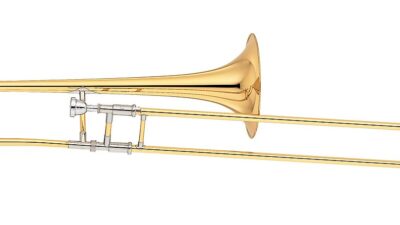
ट्रॉम्बोन पीतल की लंबी नलियों से बना एक वाद्य है जिसकी सबसे बड़ी विशेषता उसकी 'स्लाइड' है — एक U-आकार की खिसकने वाली नली जिसे आगे-पीछे सरकाकर स्वर बदले जाते हैं। अधिकांश अन्य पीतल वाद्य वाल्व (बटन) से स्वर बदलते हैं, पर ट्रॉम्बोन स्लाइड की लंबाई घटा-बढ़ाकर हवा के स्तंभ को छोटा-बड़ा करता है। सबसे आम रूप 'टेनर ट्रॉम्बोन' है, जो B♭ में होता है।
Description English
The trombone is a length of brass tubing whose defining feature is its slide — a U-shaped telescoping section that the player pushes out and draws in to change pitch. Where most brass instruments alter pitch with valves (buttons), the trombone lengthens or shortens the air column by moving the slide. The most common form is the tenor trombone, pitched in B♭.
Body
Long looped tube ending in a flared bell, with a straight U-shaped slide projecting forward
एक लंबी मुड़ी हुई नली जो चौड़े 'बेल' (घंटी) में खुलती है, तथा आगे की ओर सीधी U-आकार की स्लाइड
Brass (yellow brass, gold brass, or rose/red brass); often lacquered or silver-plated
पीतल (पीला, स्वर्णिम या गुलाबी/लाल पीतल); प्रायः लाख-लेपित या चाँदी-मुलम्मा किया हुआ
Tube length ~ 275 cm (9 ft) when unwound; instrument ~ 90-120 cm in playing form
The flared bell projects and colours the tone; the cylindrical bore gives the trombone its clear, brassy carrying power
Strings
The trombone has no strings; pitch is produced by the player's vibrating lips (the 'lip-reed') and controlled by slide position and air/embouchure
None — the trombone is an aerophone and has no sympathetic strings
No drone; sustained bass notes are produced by the player, and bass/contrabass trombones extend the low register
Bow
स्लाइड
Slide
Two concentric brass tubes (inner and outer slide) machined to precise tolerances, lubricated with slide cream or spray
Slide travel ~ 60-70 cm from 1st to 7th position
Held in the right hand and moved smoothly along seven positions; continuous slide motion produces the trombone's signature glissando (portamento)
Tuning Pegs
ट्यूनिंग स्लाइड
Tuning slide
A separate curved tuning slide near the bell is adjusted to set overall pitch; some trombones add an F-attachment (a valve-controlled extra loop) to reach lower notes
Bridge
मुखनली (माउथपीस)
Mouthpiece
A detachable cup-shaped brass mouthpiece into which the player buzzes the lips; its size shapes tone and range
Brass, usually silver- or gold-plated
Frets
ट्रॉम्बोन 'फ़्रेटलेस' के समान है — स्लाइड पर कोई निश्चित पड़ाव अंकित नहीं होते, इसलिए वादक को हर स्वर की सही स्थिति कान और अभ्यास से खोजनी पड़ती है। यही गुण इसे मानवीय आवाज़ या भारतीय मींड जैसी सहज सुर-फिसलन (ग्लिसांडो) देने में सक्षम बनाता है।
The trombone is effectively 'fretless' — the slide has no marked stops, so the player must find each pitch by ear and practice. This is exactly what lets it produce a smooth, vocal glissando reminiscent of the human voice or of Indian meend.
ध्वनि-चरित्र
SoundTonal Character Hindi
ट्रॉम्बोन की ध्वनि गंभीर, भरी-पूरी और तेजस्वी होती है — मुलायम 'लिगेटो' गायन से लेकर विजयोल्लास भरी गर्जना तक। पीतल की चमक और स्लाइड की सहज फिसलन इसे एक साथ भव्य और शरारती बनाती है।
Tonal Character English
The trombone's tone is grave, full-bodied and resonant — from a smooth, singing legato to a triumphant blaze. Brass brilliance combined with the slide's effortless glide makes it at once majestic and mischievous.
Timbre
Warm and round when played softly; broad, powerful and metallic when played loud; the only wind able to slur seamlessly between any two pitches
Range
Tenor trombone: E2 to about B♭4 and higher (roughly two and a half octaves); bass and contrabass extend well below
Dynamic Range
Very wide — from a hushed background pad to one of the loudest voices in the orchestra and big band
Techniques
सुनने का मार्गदर्शन
The Listening Guideट्रॉम्बोन का रस लेना हो तो 1950-60 के दशक के भव्य फ़िल्मी कैबरे और क्लब-डांस गीत सुनिए और पीतल-वृंद के सबसे गहरे, फिसलते स्वर पर ध्यान दीजिए — वही ट्रॉम्बोन है। फिर किसी जैज़ रिकॉर्डिंग में इसका एकल सुनिए, जहाँ यह मानवीय आवाज़-सा 'गाता' है। ग्लिसांडो के उन पलों को पकड़िए जहाँ स्वर सहजता से ऊपर-नीचे फिसलता है — यही इस साज़ का हस्ताक्षर है।
अंग्रेज़ी में पढ़ें · Read in English
To recognise the trombone, listen to the lavish film dance and cabaret numbers of the 1950s-60s and follow the deepest, sliding voice of the brass section — that is the trombone. Hear its solo in jazz, where it 'sings' almost like a human voice. Catch the moments of glissando, where the pitch glides effortlessly up and down — that is the instrument's signature.
परिचय
Identity- Year Of Origin
- 1450
अन्य विवरण
More DetailsTimbre
Warm and round when played softly; broad, powerful and metallic when played loud; the only wind able to slur seamlessly between any two pitches
रोचक तथ्य
Margin Notesस्लाइड की सात स्थितियाँ — ट्रॉम्बोन पर स्वर बदलने के लिए वादक स्लाइड को सात मुख्य स्थितियों में ले जाता है; प्रत्येक अगली स्थिति स्वर को आधा-स्वर नीचे उतारती है। कोई फ़्रेट या निशान न होने से हर स्थिति कान और अभ्यास से खोजनी पड़ती है।
To change pitch on the trombone, the player moves the slide through seven main positions; each further position lowers the pitch by a semitone. With no frets or markings, every position must be found by ear and practice.
जल-कपाट (वॉटर की) — फूँकने से बनी नमी नली में जमा होती है, इसलिए ट्रॉम्बोन में एक छोटा 'वॉटर की' (जिसे मज़ाक में 'स्पिट वाल्व' कहते हैं) होता है जिसे दबाकर संघनित नमी बाहर निकाली जाती है।
Moisture from the player's breath collects inside the tubing, so the trombone has a small 'water key' (jokingly called the 'spit valve') that is pressed to release the condensation.
गोवा का पीतल-योगदान — बंबई फ़िल्म-उद्योग के पीतल-वृंद और अरेंजमेंट की रीढ़ गोवा के चर्च-संगीत में प्रशिक्षित संगीतकार थे। सेबेस्टियन डिसूज़ा, एंथनी गोंज़ाल्विस और चिक चॉकलेट जैसे नामों ने पश्चिमी हार्मनी और बिग-बैंड ब्रास को हिंदी गीतों में गूँथा।
The backbone of the Bombay film industry's brass sections and arrangements were musicians trained in Goa's church music. Names like Sebastian D'Souza, Anthony Gonsalves, and Chic Chocolate wove Western harmony and big-band brass into Hindi songs.
सबसे नज़दीक 'गाने' वाला पीतल-वाद्य — क्योंकि स्लाइड किसी भी दो स्वरों के बीच अटूट फिसलन देती है, ट्रॉम्बोन को अक्सर पीतल-परिवार का सबसे 'गायन-सुलभ' साज़ कहा जाता है — इसकी ग्लिसांडो-क्षमता भारतीय मींड के भाव के निकट है।
Because the slide allows an unbroken glide between any two pitches, the trombone is often called the most 'vocal' member of the brass family — its glissando capability sits close in feeling to the Indian meend.
सवाल-जवाब
Questions & Answersट्रॉम्बोन क्या है?
ट्रॉम्बोन पीतल-परिवार का एक वाद्य है जो वाल्व (बटन) के बजाय एक खिसकने वाली स्लाइड से स्वर बदलता है। वादक मुखनली में होंठ कंपाकर ध्वनि बनाता है और स्लाइड की सात स्थितियों से स्वर नियंत्रित करता है।
ट्रॉम्बोन अन्य पीतल-वाद्यों से कैसे अलग है?
अधिकांश पीतल-वाद्य (ट्रम्पेट, ट्यूबा, फ़्रेंच हॉर्न) वाल्व से स्वर बदलते हैं, पर ट्रॉम्बोन खिसकती स्लाइड का उपयोग करता है। इसी से यह किसी भी दो स्वरों के बीच सहजता से फिसल (ग्लिसांडो) सकता है — भारतीय मींड जैसा प्रभाव।
हिंदी फ़िल्म संगीत में ट्रॉम्बोन की क्या भूमिका थी?
1950-60 के दशक के भव्य स्टूडियो-ऑर्केस्ट्रा में ट्रॉम्बोन पीतल-वृंद का गहरा-स्वर आधार था। शंकर-जयकिशन, ओ.पी. नैयर और आर.डी. बर्मन की बिग-बैंड शैली में यह कैबरे, क्लब-डांस और नाटकीय टुकड़ों को स्वर देता था। यह परंपरा मुख्यतः गोवा-मूल के अरेंजरों ने गढ़ी।
क्या ट्रॉम्बोन एक भारतीय वाद्य है?
नहीं, ट्रॉम्बोन एक पश्चिमी पीतल-वाद्य है जिसकी उत्पत्ति 15वीं सदी के यूरोप में हुई। हिंदी सिनेमा और भारतीय ब्रास-बैंड संस्कृति में यह पश्चिमी प्रभाव के रूप में आया, विशेषकर फ़िल्मी बिग-बैंड ऑर्केस्ट्रा के माध्यम से।
नमूना-पट्टी
The Specimen Table| नाम | ट्रॉम्बोन · Trombone |
|---|---|
| अन्य नाम | ट्रॉम्बोन · स्लाइड ट्रॉम्बोन · टेनर ट्रॉम्बोन · Trombone (also: Slide Trombone) · Sackbut (Renaissance ancestor) |
| उद्गम | 1450 |
| प्रकार | वाद्य · Instruments |
जुड़े हुए पन्ने
Connected Plates · The Graph Made Visibleअटलस में कोई पन्ना अकेला नहीं — इस वाद्य से जुड़े गीत, कलाकार, शास्त्र और कहानियाँ, सब यहाँ से खुलते हैं।
जुड़े गीत · Songs
इस वाद्य के गीत
Songs of this Instruments


साझा कीजिए · Share this Plate