शास्त्र विंग · वाद्य-पट्टिका · Instrument Plate
ट्यूबा
Tuba
अन्य नामबॉम्बार्डन (Bombardon — पुराना बैंड नाम) · बास ट्यूबा (Bass Tuba) · सूज़ाफोन (Sousaphone — मार्चिंग रूप) · Tuba (also: Bass tuba, Contrabass tuba)
परिचय
Overviewट्यूबा पीतल-परिवार का सबसे बड़ा और सबसे नीची आवाज़ वाला वाद्य है — 1835 में बर्लिन में जन्मा, जो ब्रिटिश बैंडों के साथ भारत आया और 'बैंड-बाजा-बारात' का बास-दिल बन गया। इसकी गहरी, गोल धड़कन तुरही और क्लैरिनेट की धुनों को नीचे से थामे रखती है; बॉलीवुड के स्वर्ण-युग ऑर्केस्ट्रा में गोवा के पीतल-वादकों के हाथों यही ट्यूबा गीत की नींव देता था। शास्त्रीय राग-परंपरा से बाहर होते हुए भी, ट्यूबा भारतीय उत्सव की सबसे परिचित बास-ध्वनि है।
अंग्रेज़ी में पढ़ें · Read in English
The tuba is the largest and lowest-pitched member of the brass family — born in Berlin in 1835, it came to India with British bands and became the bass-heart of the 'band-baja-baraat'. Its deep, round pulse holds up the melodies of trumpet and clarinet from below; in Bollywood's golden-age orchestras it was this tuba, in the hands of Goan brass players, that gave a song its foundation. Though outside the classical raga tradition, the tuba is the most familiar bass sound of Indian celebration.
वर्गीकरण
ClassificationNatya Shastra Category
सुषिर (Sushira - wind/hollow instruments)
नाट्यशास्त्र की चार वाद्य-श्रेणियों (तत, सुषिर, अवनद्ध, घन) में ट्यूबा 'सुषिर' वर्ग में आता है — अर्थात् खोखली नली में फूँकी गई साँस से बजने वाला वाद्य। यह पश्चिमी वाद्य है, अतः शास्त्रीय भारतीय वर्गीकरण में इसे सुषिर (वायु/फूँक वाद्य) के अंतर्गत रखा जा सकता है, शहनाई और तुरही की भाँति।
Among the four instrument classes of the Natya Shastra (Tata/string, Sushira/wind, Avanaddha/membrane, Ghana/solid), the tuba falls under 'Sushira' — an instrument sounded by breath blown through a hollow tube. Being a Western instrument, it maps to the Sushira (wind/blown) category alongside shehnai and turahi.
Western Category
Brass wind instrument (lip-reed aerophone) — the lowest-pitched of the brass family
Western Family
Brass / low-brass family (saxhorn-bugle lineage; relatives include euphonium, sousaphone, bombardon; ancestors the serpent and ophicleide)
Sub Classification
बनावट
PhysicalDescription Hindi
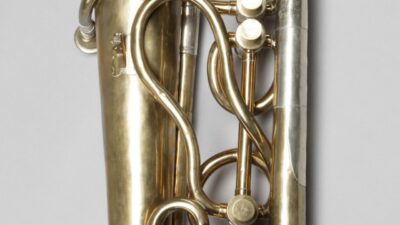
ट्यूबा पीतल-परिवार का सबसे बड़ा और सबसे नीची आवाज़ वाला वाद्य है। इसमें शंकु-आकार में मुड़ी हुई लंबी पीतल की नली होती है जो एक चौड़े फैले हुए मुख (बेल) पर जाकर खुलती है। वादक एक बड़े कप-आकार के मुखनाल में होंठ कँपाकर (बज़िंग) ध्वनि उत्पन्न करता है और वाल्वों से स्वर बदलता है। बैठकर गोद में या स्टैंड पर रखकर बजाया जाता है; बारात व जुलूस में इसका मार्चिंग रूप 'सूज़ाफोन' शरीर के चारों ओर लपेटकर पहना जाता है।
Description English
The tuba is the largest and lowest-pitched member of the brass family. It consists of a long conical brass tube coiled compactly, opening into a wide flared bell. The player produces sound by buzzing the lips into a large cup-shaped mouthpiece and changes pitch with valves. It is played seated, resting on the lap or a stand; its marching form, the sousaphone, is worn wrapped around the body for wedding processions and parades.
Body
Upright coiled conical tube ending in an upward- or forward-facing flared bell
ऊपर की ओर मुड़ी शंक्वाकार नली, अंत में चौड़ी फैली हुई बेल
Brass (yellow brass), often lacquered or silver/nickel-plated
पीतल (कभी-कभी चाँदी या निकल की परत, या लाख-पॉलिश)
70-105 (upright); tubing unwound approx 350-550 cm depending on pitch
The entire conical bore and flared bell act as the resonator, radiating deep bass through the wide opening
Bell
बेल (मुख)
Bell
35-50 across the flare
चौड़ा फैला हुआ पीतल का मुख जहाँ से गहरी बास ध्वनि बाहर निकलती है; ऑर्केस्ट्रा-ट्यूबा में ऊपर की ओर और सूज़ाफोन में आगे की ओर मुड़ा होता है।
The wide flared opening from which the deep bass tone radiates; upward-facing on orchestral tubas and forward-facing on the sousaphone.
Valves
3 to 6 (piston or rotary)
वाल्व / पिस्टन
Valves (piston or rotary)
वाल्व दबाने से हवा अतिरिक्त नली-लूपों से होकर गुजरती है जिससे नली की प्रभावी लंबाई बदलती है और स्वर नीचे उतरता है। चौथा-पाँचवाँ वाल्व निचले सप्तक की सुर-शुद्धता (इंटोनेशन) सुधारता है।
Pressing a valve routes air through extra tubing loops, lengthening the effective tube and lowering the pitch. Fourth and fifth valves correct intonation in the lowest register.
Piston valves (common in British/American models) or rotary valves (common in German/Central-European models)
Mouthpiece
मुखनाल (माउथपीस)
Mouthpiece
Large deep cup/funnel
Metal (brass, often silver-plated)
बड़ा गहरा कप-आकार का मुखनाल जिसमें वादक अपने होंठ कँपाकर (बज़) कंपन उत्पन्न करता है — यही कंपन नली में गूँजकर स्वर बनता है।
A large, deep cup-shaped mouthpiece into which the player buzzes the lips; this lip vibration resonates through the tube to produce tone.
Leadpipe
मुख्य नली (लीडपाइप)
Leadpipe
मुखनाल से वाल्व-खंड तक जाने वाली शुरुआती नली जो साँस की धारा को वाद्य में ले जाती है।
The initial tube carrying the airstream from the mouthpiece into the valve section and main bore.
Pitches And Keys
स्वर-कुंजियाँ
Pitches / Keys
मुख्य किस्में: कॉन्ट्राबास ट्यूबा (BBb और CC — सबसे बड़ी, सबसे गहरी) और बास ट्यूबा (Eb और F — कुछ छोटी, ऑर्केस्ट्रा में एकल के लिए)। मूल 1835 का जर्मन वाद्य F में था।
Main varieties: contrabass tuba (BBb and CC — largest, deepest) and bass tuba (Eb and F — smaller, for orchestral solo lines). The original 1835 German instrument was pitched in F.
5-13 (approx 11-30 lb)
Frets
ट्यूबा में तार या फ्रेट नहीं होते — यह पीतल का फूँक-वाद्य है। स्वर होंठों के कंपन (एम्बशर) और वाल्वों के संयोजन से बदलता है, न कि किसी फ्रेट या तार दबाने से।
The tuba has no strings or frets — it is a brass wind instrument. Pitch changes through lip vibration (embouchure) and valve combinations, not by pressing frets or strings.
ध्वनि-चरित्र
SoundTonal Character Hindi
ट्यूबा की ध्वनि गहरी, भरी हुई और गोल है — यह किसी भी बैंड या ऑर्केस्ट्रा की बुनियाद (बास) है। इसका स्वर मखमली और गंभीर है, जो नीचे से पूरे संगीत को थामे रखता है; तेज़ बजने पर यह ऊष्ण और भव्य लगता है, धीमे बजने पर कोमल और गूँजता हुआ।
Tonal Character English
The tuba's tone is deep, full, and rounded — the foundation (bass) of any band or orchestra. Velvety and grave, it holds the entire music up from below; loud, it is warm and majestic, soft, it is mellow and resonant.
Timbre
Dark, warm, round bass; rich low fundamentals with a broad, enveloping resonance
Range
Approximately from low D1/E1 (well below the bass staff, into pedal tones) up to about F4-B4 in skilled hands — roughly three to four octaves
Dynamic Range
Very wide — from a soft cushioning drone under an ensemble to a powerful, hall-filling fortissimo that anchors an entire brass band
Techniques
सुनने का मार्गदर्शन
The Listening Guideट्यूबा का रस लेना हो तो पहले किसी बारात या ब्रास बैंड की धुन में सबसे नीची, गड़गड़ाती धड़कन पकड़िए — वही ट्यूबा है, जो हर बीट पर संगीत को ज़मीन देता है। फिर किसी एकल ट्यूबा-प्रदर्शन को सुनिए और देखिए कि यह विशाल वाद्य कितनी फुर्ती और कोमलता से गा सकता है। अंत में बड़े ऑर्केस्ट्रा में महसूस कीजिए कि ट्यूबा के बिना पूरा संगीत कैसे खोखला-सा लगने लगता है।
अंग्रेज़ी में पढ़ें · Read in English
To appreciate the tuba, first listen in any baraat or brass-band recording for the lowest, rumbling pulse — that is the tuba, grounding the music on every beat. Then hear a solo tuba performance (such as Øystein Baadsvik) and marvel at how nimbly and tenderly this giant can sing. Finally, listen in a full orchestra and notice how hollow the whole sound becomes when the tuba falls silent.
परिचय
Identity- Year Of Origin
- 1835
अन्य विवरण
More DetailsTimbre
Dark, warm, round bass; rich low fundamentals with a broad, enveloping resonance
रोचक तथ्य
Margin Notesपीतल-परिवार का सबसे युवा दैत्य — ट्यूबा का पेटेंट 12 सितंबर 1835 को बर्लिन में विल्हेल्म वीप्रेष्ट और योहान गॉटफ़्रीड मोरित्ज़ ने 'बास ट्यूबा इन F' के रूप में लिया। इससे पहले सर्पेंट और ऑफ़िक्लाइड जैसे कठिन वाद्य बास की भूमिका निभाते थे, जिन्हें ट्यूबा ने जल्दी ही विस्थापित कर दिया।
The tuba was patented on 12 September 1835 in Berlin by Wilhelm Wieprecht and Johann Gottfried Moritz as the 'Bass tuba in F'. Earlier, awkward instruments like the serpent and ophicleide had filled the bass role, which the tuba quickly displaced.
सूज़ाफोन — चलता-फिरता ट्यूबा — बारात और जुलूस के लिए ट्यूबा का एक विशेष रूप 'सूज़ाफोन' बनाया गया, जो वादक के कंधे और शरीर के चारों ओर लिपटा रहता है और बेल आगे की ओर मुड़ी होती है — ताकि चलते-चलते बास बजाया जा सके। यही रूप भारतीय विवाह-बैंडों में सबसे परिचित है।
For baraats and processions a special form of the tuba, the 'sousaphone', is made to wrap around the player's shoulder and body with a forward-facing bell — so the bass can be played while walking. This is the form most familiar in Indian wedding bands.
गोवा के संगीतकार और फ़िल्म-ऑर्केस्ट्रा का पीतल — 1940-1970 के बॉम्बे फ़िल्म-ऑर्केस्ट्रा में पश्चिमी पीतल और वुडविंड बड़े पैमाने पर गोवा के संगीतकारों ने बजाए, जो पुर्तगाली-कैथोलिक व चर्च-संगीत परंपरा में प्रशिक्षित थे। ट्यूबा व निचला पीतल उन भव्य वाद्यवृंदों की बास-नींव देता था, जब तक इलेक्ट्रिक बास ने यह जगह न ले ली।
In Bombay's film orchestras of 1940-1970, the Western brass and woodwinds were played largely by Goan musicians trained in the Portuguese-Catholic and church-music tradition. The tuba and low brass gave those grand ensembles their bass foundation, until the electric bass took over the role.
साँस की भारी माँग — अपने विशाल आकार के कारण ट्यूबा को किसी भी पीतल-वाद्य से अधिक हवा चाहिए। लंबे बास-स्वरों को थामने के लिए कुशल वादक 'सर्कुलर ब्रीदिंग' का प्रयोग करते हैं — नाक से साँस लेते हुए भी गालों में भरी हवा से स्वर बिना टूटे बजता रहता है।
Because of its huge size the tuba needs more air than any other brass instrument. To sustain long bass notes, skilled players use 'circular breathing' — inhaling through the nose while the note continues unbroken on air stored in the cheeks.
सवाल-जवाब
Questions & Answersट्यूबा क्या है?
ट्यूबा पीतल-परिवार का सबसे बड़ा और सबसे नीची आवाज़ वाला वाद्य है। इसमें शंकु-आकार में मुड़ी लंबी पीतल की नली और चौड़ी बेल होती है; वादक मुखनाल में होंठ कँपाकर और वाल्व दबाकर गहरी बास ध्वनि उत्पन्न करता है। यह बैंड और ऑर्केस्ट्रा की बास-नींव देता है।
ट्यूबा भारत में कैसे आया?
ट्यूबा और अन्य पश्चिमी पीतल-वाद्य ब्रिटिश औपनिवेशिक सैन्य बैंडों के साथ 18वीं-19वीं शताब्दी में भारत आए। भारतीय संगीतकारों ने इन्हें सीखा और धीरे-धीरे यह विवाह-बारात के 'बैंड-बाजा' का अनिवार्य बास-वाद्य बन गया।
क्या ट्यूबा का प्रयोग बॉलीवुड संगीत में हुआ?
हाँ। बॉलीवुड के स्वर्ण-युग (1950-1970) के बड़े स्टूडियो ऑर्केस्ट्रा में ट्यूबा और निचला पीतल गीत की बास-नींव देते थे, जिन्हें बड़े पैमाने पर गोवा के प्रशिक्षित संगीतकार बजाते थे। बाद में इलेक्ट्रिक बास ने यह भूमिका ले ली, पर बारात-बैंड में ट्यूबा आज भी जीवित है।
ट्यूबा और सूज़ाफोन में क्या अंतर है?
सूज़ाफोन ट्यूबा का ही मार्चिंग रूप है, जो वादक के शरीर के चारों ओर लिपटा रहता है और इसकी बेल आगे की ओर मुड़ी होती है, ताकि जुलूस में चलते-चलते बजाया जा सके। भारतीय विवाह-बैंडों में यही रूप सबसे आम है, जबकि बैठकर बजाने वाला ऑर्केस्ट्रा-ट्यूबा गोद या स्टैंड पर रखा जाता है।
ट्यूबा का आविष्कार कब हुआ?
ट्यूबा का पेटेंट 12 सितंबर 1835 को बर्लिन (प्रशिया) में बैंडमास्टर विल्हेल्म वीप्रेष्ट और वाद्य-निर्माता योहान गॉटफ़्रीड मोरित्ज़ ने 'बास ट्यूबा इन F' के रूप में लिया। यह पीतल-परिवार का सबसे नया सदस्य है।
नमूना-पट्टी
The Specimen Table| नाम | ट्यूबा · Tuba |
|---|---|
| अन्य नाम | बॉम्बार्डन (Bombardon — पुराना बैंड नाम) · बास ट्यूबा (Bass Tuba) · सूज़ाफोन (Sousaphone — मार्चिंग रूप) · Tuba (also: Bass tuba, Contrabass tuba) |
| उद्गम | 1835 |
| प्रकार | वाद्य · Instruments |
साझा कीजिए · Share this Plate