शास्त्र विंग · वाद्य-पट्टिका · Instrument Plate
रबाब
Rabab
अन्य नामरुबाब · रबाब (Rubab / Robab) · काबुली रबाब (Kabuli Rabab) · सेनी रबाब (Seni / Seniya Rabab)
परिचय
Overviewरबाब को भारत, पंजाब, कश्मीर और अफ़ग़ानिस्तान की साझी संगीत-विरासत का सेतु माना जाता है — तूत की एक ही लकड़ी से तराशा, बकरी-खाल से मढ़ा और तरब तारों से झनझनाता एक कोटी-गर्दन का प्लक-वाद्य। यही वह वाद्य है जिसकी संगत में भाई मरदाना ने गुरु नानक के शबद बजाए, और यही वह जड़ है जिससे सरोद फूटा। सारंगी जहाँ रोती है, रबाब वहाँ थिरकता और बोलता है — वीरता से भक्ति तक हर रस को साधता हुआ।
अंग्रेज़ी में पढ़ें · Read in English
The rabab is regarded as a bridge across the shared musical heritage of India, Punjab, Kashmir and Afghanistan — a short-necked plucked lute carved from a single block of mulberry, bellied with goatskin and ringing with sympathetic strings. It is the instrument to whose accompaniment Bhai Mardana played Guru Nanak's shabads, and the root from which the sarod grew. Where the sarangi weeps, the rabab dances and speaks — spanning every mood from valour to devotion.
वर्गीकरण
ClassificationNatya Shastra Category
तत (Tata - stringed instruments)
तत वर्ग में रबाब एक मिज़राब (गज़ नहीं) से बजाया जाने वाला कोटी-गर्दन वाला वीणा-प्रकार का वाद्य है। यह तारों को छेड़कर (प्लक करके) ध्वनि उत्पन्न करता है, धनुष से नहीं। इसका निचला कक्ष चमड़े की झिल्ली से ढका होता है, जिससे इसे एक स्वाभाविक तालवाद्य-सी गूँज मिलती है।
In the Tata (stringed) category, the rabab is a short-necked lute-type instrument played with a plectrum (mizrab), not a bow. It produces sound by plucking the strings, and its lower resonating chamber is covered with a stretched skin membrane, giving it a naturally percussive, drum-like resonance.
Western Category
Plucked lute (chordophone)
Western Family
Short-necked fretted lute family — the ancestor of the sarod, and a cousin of the Central Asian rubab, dutar and tanbur
Sub Classification
बनावट
PhysicalDescription Hindi
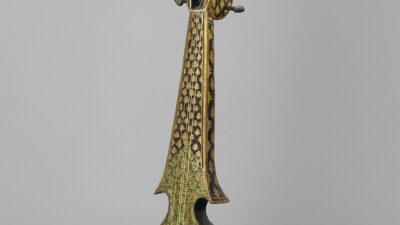
रबाब एक कोटी-गर्दन वाला, कमर-कटा (डबल-चैम्बर) प्लक-वाद्य है, जिसका पूरा ढाँचा तूत (शहतूत) की एक ही लकड़ी से खोखला तराशा जाता है। इसका निचला गोल कक्ष बकरी की खाल की झिल्ली से मढ़ा होता है, और उसी झिल्ली पर पुल (ब्रिज) टिका रहता है — यही इसे इसकी विशिष्ट गूँजती-ढपलीनुमा आवाज़ देता है। ऊपरी गर्दन पर बंधे हुए (टाइड) पर्दे (फ्रेट) होते हैं, और मुख्य तारों के नीचे कई तरब (अनुनाद) तार चलते हैं।
Description English
The rabab is a short-necked, waisted (double-chambered) plucked lute whose entire body is hollowed from a single block of mulberry wood. Its lower rounded chamber is covered with a goatskin membrane, and the bridge rests directly on this skin — which gives the rabab its distinctive resonant, drum-like voice. The upper neck carries tied (movable) gut/nylon frets, and a bank of sympathetic (tarab) strings runs beneath the main strings.
Body
Waisted / double-chambered — a hollowed bowl body narrowing at a 'waist' to a fretted neck, with a carved ornamental head
कमर-कटा दोहरा-कक्ष — खोखला कटोरा जो कमर पर सिकुड़कर पर्देदार गर्दन बनता है, ऊपर तराशा हुआ सजावटी सिरा
Single block of mulberry wood (toot); membrane of goat/kid skin; ornamental mother-of-pearl (sadaf) inlay
तूत (शहतूत) की एक ठोस लकड़ी; बकरी/मेमने की खाल की झिल्ली; सीप (सदफ़) की सजावटी जड़ाई
60-90 (overall length)
Lower bowl chamber sealed by a stretched skin membrane on which the bridge sits; an upper hollow chamber in the neck adds resonance
Strings
Primary melody strings, plucked with the plectrum (traditionally gut, now nylon), grouped as double or single courses
Fine metal resonating strings (तरब तार / tarab tar) running under the frets, which shimmer in sympathy with the plucked melody and give the rabab its ringing halo
Steel drone / rhythm strings (chikari-like) plucked for rhythmic drone and jhala-style flourishes
Bow
मिज़राब / शाहबाज़ (धनुष नहीं)
Mizrab / Shahbaz (plectrum — NOT a bow)
Plectrum carved from wood, bone, or ivory-substitute, held in the right hand
N/A (plucked, not bowed)
The rabab is plucked, not bowed. The right hand strikes the strings with a plectrum in down-up strokes; rapid tremolo (zarb) and jhala flourishes on the drone strings are characteristic.
Tuning Pegs
खूँटी
Khunti
Wooden lateral tuning pegs for the main strings, set into the carved head; smaller side pegs tension the sympathetic strings
Bridge
पुल / घोड़ी
Pul / Ghodi
A bridge that rests directly on the stretched skin membrane, transmitting string vibration into the skin and body — the source of the rabab's percussive resonance
Wood or bone
Frets
रबाब में गर्दन पर बँधे हुए (टाइड, हिलाए जा सकने वाले) आँत/नायलॉन के पर्दे होते हैं — साधारणतः चार से छह। सारंगी या सरोद के विपरीत यह फ्रेटलेस नहीं है; पर्दे स्वरों को निश्चित करते हैं जबकि मीड और गमक तार को खींचकर तथा तरब तारों की गूँज से पाई जाती है।
Unlike the fretless sarangi or sarod, the rabab has tied (movable) gut/nylon frets on the neck — usually four to six. The frets fix the pitches, while meend and gamak come from string-pulling and the shimmer of the sympathetic strings.
ध्वनि-चरित्र
SoundTonal Character Hindi
रबाब की आवाज़ उजली, गूँजती और स्वाभाविक रूप से तालबद्ध है — चमड़े की झिल्ली पर पड़ती हर छेड़ एक गहरी, ढपलीनुमा थाप छोड़ती है, जिसके पीछे तरब तारों की झनझनाती चमक तैरती रहती है। यह सारंगी की तरह रोती नहीं, बल्कि बोलती-थिरकती है — पहाड़ी, वीर और भक्ति-रस दोनों को साध लेती है।
Tonal Character English
The rabab's voice is bright, resonant and naturally rhythmic — every pluck lands on the skin membrane with a deep, drum-like thud, over which the sympathetic strings float a jingling shimmer. Where the sarangi weeps, the rabab speaks and dances — equally at home in martial, pastoral and devotional moods.
Timbre
Bright, woody and percussive with a ringing metallic sustain from the sympathetic strings; warm low end from the skin belly
Range
Roughly two to two-and-a-half octaves
Dynamic Range
Wide — from a soft plucked murmur to loud, driving strummed passages; naturally loud for an acoustic lute
Techniques
सुनने का मार्गदर्शन
The Listening Guideरबाब का रस लेना हो तो पहले उसकी थाप पर कान दीजिए — हर मिज़राब चमड़े की झिल्ली पर एक हल्की ढपलीनुमा थाप छोड़ती है, जिसके पीछे तरब तारों की झनझनाती चमक तैरती है। होमायून सखी के अफ़ग़ान वादन या राग भैरवी की रबाब-प्रस्तुति से शुरुआत कीजिए; फिर सिख कीर्तन की रबाबी धारा सुनिए, जहाँ यही वाद्य शबद का श्रृंगार करता है। याद रखिए — रबाब रोता नहीं, थिरकता और बोलता है।
अंग्रेज़ी में पढ़ें · Read in English
To understand the rabab, first listen for its thud — every pluck lands a soft drum-like beat on the skin membrane, with the sympathetic strings shimmering behind it. Begin with Homayoun Sakhi's Afghan classical playing or a rabab rendering of Raag Bhairavi; then hear the rababi tradition of Sikh kirtan, where the same instrument adorns the shabad. Notice that the rabab does not weep — it dances and speaks.
परिचय
Identity- Year Of Origin
- 700
अन्य विवरण
More DetailsTimbre
Bright, woody and percussive with a ringing metallic sustain from the sympathetic strings; warm low end from the skin belly
रोचक तथ्य
Margin Notesभाई मरदाना — पहले रबाबी — भाई मरदाना (लगभग 1459–1534) गुरु नानक देव के बचपन के मित्र और आजीवन संगी थे। वे रबाब बजाते और गुरु नानक शबद गाते — यही जोड़ी सिख कीर्तन की नींव बनी। इसीलिए गुरबाणी गाने वाले पारंपरिक संगीतकार 'रबाबी' कहलाए।
Bhai Mardana (c. 1459–1534) was Guru Nanak's childhood friend and lifelong companion. He played the rabab while Guru Nanak sang the shabads — this pairing became the foundation of Sikh kirtan. It is why the traditional musicians who sang Gurbani came to be called 'rababis'.
फिरंदिया रबाब का किस्सा — परंपरा के अनुसार गुरु नानक ने भाई फिरंदा नामक कारीगर से मरदाना के लिए एक विशेष रबाब बनवाया। उसी कारीगर के नाम पर इस शैली का रबाब 'फिरंदिया रबाब' कहलाया। 1947 के विभाजन के बाद यह परंपरा लगभग लुप्त हो गई, जिसे बाद में संगीत-शोधकर्ताओं ने पुनर्निर्मित किया।
Tradition holds that Guru Nanak had a special rabab made for Mardana by a craftsman named Bhai Firanda. After that craftsman, this style of rabab came to be called the 'Firandia rabab'. The tradition was nearly lost after the 1947 Partition and was later reconstructed by music scholars.
रबाब से सरोद तक — आधुनिक सरोद रबाब का ही परिष्कृत रूप है। बंगश (अफ़ग़ान वंश) और सेनिया घराने ने रबाब की बँधे पर्दों वाली लकड़ी की गर्दन को हटाकर चिकनी धातु की उँगली-पट्टी लगाई और चमड़े के ऊपर धातु के तार जोड़े — जिससे फिसलती मीड और लंबी गूँज सम्भव हुई और सरोद बना।
The modern sarod is a refinement of the rabab. The Bangash (Afghan lineage) and Seniya gharana removed the rabab's fretted wooden neck for a smooth metal fingerboard and added metal strings over the skin — enabling gliding meend and long sustain, and giving birth to the sarod.
तीन रबाब — एक परिवार — भारतीय उपमहाद्वीप में रबाब के कई रूप हैं: अफ़ग़ान 'काबुली रबाब' (शास्त्रीय एवं पश्तो लोक), तानसेन-वंश का 'सेनी रबाब' (मुग़ल दरबारी), और कश्मीर का 'कश्मीरी रबाब' (सूफ़ियाना कलाम)। रूप और शैली भिन्न हैं पर सबकी जड़ एक ही प्लक-वाद्य परिवार है।
Across the subcontinent the rabab has several forms: the Afghan 'Kabuli rabab' (classical and Pashto folk), the 'Seni rabab' of Tansen's lineage (Mughal court), and the 'Kashmiri rabab' (Sufiana Kalam). Their shapes and styles differ, but all descend from the one plucked-lute family.
सवाल-जवाब
Questions & Answersरबाब क्या है?
रबाब एक कोटी-गर्दन वाला प्लक (मिज़राब से बजने वाला) तारवाद्य है, जिसका शरीर तूत की एक ही लकड़ी से तराशा जाता है और निचला कक्ष बकरी की खाल से मढ़ा होता है। यह अफ़ग़ानिस्तान, पंजाब और कश्मीर की साझी संगीत-विरासत का वाद्य है और आधुनिक सरोद का पूर्वज है।
रबाब का सिख कीर्तन से क्या संबंध है?
गुरु नानक देव के आजीवन साथी भाई मरदाना 'पहले रबाबी' थे — वे रबाब बजाते जबकि गुरु नानक शबद गाते। इसी संगत से सिख कीर्तन की शुरुआत हुई। परंपरा के अनुसार यह रबाब भाई फिरंदा ने बनाया था, इसलिए इसे 'फिरंदिया रबाब' कहते हैं।
क्या रबाब और सरोद अलग हैं?
हाँ। सरोद रबाब से ही विकसित हुआ। बंगश (अफ़ग़ान) और सेनिया वंशों ने रबाब की बँधे पर्दों वाली लकड़ी की गर्दन को धातु की चिकनी उँगली-पट्टी से बदला और धातु के तार जोड़े, जिससे फिसलती मीड और लंबी गूँज सम्भव हुई — इस तरह सरोद बना। रबाब आज भी अपने मूल रूप में बजता है।
रबाब में कितने तार होते हैं?
अफ़ग़ान रबाब में आमतौर पर 3 मुख्य सुर तार, 2-3 द्रोण/लय तार, और 11-15 तरब (अनुनाद) तार होते हैं (कुछ में 21 तक)। तरब तार बजाई हुई धुन के साथ झनझनाकर वाद्य को उसकी चमकती गूँज देते हैं।
रबाब आज कहाँ सुना जाता है?
रबाब अफ़ग़ानिस्तान का राष्ट्रीय वाद्य है और होमायून सखी जैसे कलाकारों द्वारा विश्व-मंच पर बजाया जाता है। पश्तो और पंजाबी लोक-संगीत, कश्मीर के सूफ़ियाना कलाम, तथा पुनर्जीवित सिख रबाबी कीर्तन परंपरा में यह आज भी जीवंत है।
नमूना-पट्टी
The Specimen Table| नाम | रबाब · Rabab |
|---|---|
| अन्य नाम | रुबाब · रबाब (Rubab / Robab) · काबुली रबाब (Kabuli Rabab) · सेनी रबाब (Seni / Seniya Rabab) · फिरंदिया रबाब (Firandia Rabab) · कश्मीरी रबाब (Kashmiri Rabab) |
| उद्गम | 700 |
| प्रकार | वाद्य · Instruments |
जुड़े हुए पन्ने
Connected Plates · The Graph Made Visibleअटलस में कोई पन्ना अकेला नहीं — इस वाद्य से जुड़े गीत, कलाकार, शास्त्र और कहानियाँ, सब यहाँ से खुलते हैं।
जुड़े गीत · Songs
इस वाद्य के गीत
Songs of this Instruments



साझा कीजिए · Share this Plate