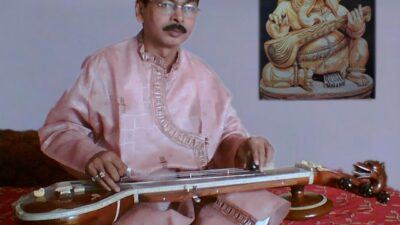
शास्त्र विंग · वाद्य-पट्टिका · Instrument Plate
रंजन वीणा
Ranjan Veena
अन्य नामरंजनवीणा · Ranjanveena · RANJANVEENA (trademark) · Ranjan Vina
परिचय
Overviewरंजन वीणा इक्कीसवीं सदी की एक भारतीय वाद्य-रचना है, जिसे पंडित निरंजन हालदार ने 2007 में विचित्र वीणा से प्रेरित होकर बनाया। यह वीणा-सितार-गिटार का संकर है — सितार के पर्दे, गिटार की सहजता, और काँच/पत्थर के बट्टे से निकलती विचित्र-वीणा-सी मींड, साथ में बारह तरब तारों की झिलमिल और चार सप्तक की परास।
अंग्रेज़ी में पढ़ें · Read in English
The Ranjan Veena is a 21st-century Indian instrument, created in 2007 by Pandit Niranjan Haldar in inspiration from the Vichitra Veena. It is a veena-sitar-guitar hybrid — sitar frets, guitar ease, and the Vichitra-Veena-like meend drawn from a glass/stone batta, together with the shimmer of twelve tarab strings and a four-octave range.
वर्गीकरण
ClassificationNatya Shastra Category
तत (Tata - stringed instruments)
तत वर्ग में रंजन वीणा एक कोमल-तंत्री (plucked) वाद्य है जो अंगुलियों में पहने मिज़राब (पिक) से तार छेड़कर ध्वनि उत्पन्न करती है — धनुष से नहीं, बल्कि आघात एवं फिसलन (मीड) से।
In the Tata (stringed) category of the Natya Shastra, the Ranjan Veena is a plucked chordophone: sound is produced by striking the strings with picks (mizrab) worn on the fingers, not with a bow — using both plucking and gliding (meend).
Western Category
Plucked string instrument (fretted lute with sympathetic strings)
Western Family
Long-necked fretted lute family — conceptually a hybrid of the veena, sitar and guitar, played both with a fretted fingerboard and with a slide (like a lap-steel / Mohan Veena)
Sub Classification
बनावट
PhysicalDescription Hindi
रंजन वीणा एक आधुनिक भारतीय तंत्री वाद्य है जिसे पंडित निरंजन हालदार ने विचित्र वीणा से प्रेरणा लेकर विकसित किया। यह वीणा, सितार और गिटार के गुणों का समन्वय है — इसमें सितार जैसे फ्रेट (पर्दे) हैं, गिटार जैसी बजाने में सहजता है, और विचित्र वीणा जैसी फिसलती (slide) मींड की क्षमता है। शरीर लकड़ी का है जिसमें अनुनाद के लिए दो तूँबे (गोल तुम्बियाँ) लगे हैं।
Description English
The Ranjan Veena is a modern Indian stringed instrument developed by Pandit Niranjan Haldar, drawing inspiration from the Vichitra Veena. It fuses qualities of the veena, sitar and guitar — it has sitar-like frets, the playing ease of a guitar, and the sliding meend capability of the Vichitra Veena. The body is wooden, fitted with two gourd resonators for tone and balance.
Body
Long fretted fingerboard over a wooden body with two disk-like gourd resonators
लम्बी फ्रेट-युक्त डाँड़ी के नीचे लकड़ी का शरीर, संतुलन एवं अनुनाद के लिए दो गोल तूँबे
Wood, with gourd (tumba) resonators
लकड़ी, तथा तूँबे (लौकी) के अनुनादक
Approximately 1070–1100 mm length × 330–345 mm width × 150 mm height
लगभग 1070–1100 मि.मी. लम्बाई × 330–345 मि.मी. चौड़ाई × 150 मि.मी. ऊँचाई
About 3.6 kg (7.9 lbs)
Two disk-like gourds (tumba) provide resonance and balance, in the manner of a veena
Strings
Primary melody / playing strings
Chikari / drone-rhythm strings; the inventor's account describes two right-side chikari tuned Sa–Sa, with additional supportive strings on the left tuned per raga
Sympathetic resonating strings (तरब / tarab) that shimmer in resonance with the played notes, as in sitar and sarod
Picks
मिज़राब / पिक
Mizrab / finger picks
Played with two finger picks (fore-finger and middle-finger) plus one thumb pick; the thumb pick supplies the 'Ra' stroke essential to 'Da–Ra' bol combinations
तर्जनी व मध्यमा पर दो पिक तथा अँगूठे पर एक पिक से बजाई जाती है; अँगूठे का पिक 'रा' आघात देता है जो 'दा–रा' बोलों के लिए आवश्यक है
Slide
बट्टा (काँच/पत्थर की गोली)
Batta (glass / stone slide)
A glass or stone ball ('batta') is used as a slide to glide over the strings for continuous meend, in the tradition of the Vichitra Veena and Mohan Veena
तारों पर फिसलाकर निरन्तर मींड निकालने के लिए काँच या पत्थर की गोली (बट्टा) का प्रयोग होता है, विचित्र वीणा एवं मोहन वीणा की परम्परा में
Tuning Pegs
खूँटियाँ
Tuning knobs
21
Twenty-one tuning knobs of an Indian design combined with a guitar-like machine-head mechanism for stable, precise tuning
Frets
19 reference frets
रंजन वीणा में सितार-सदृश लगभग 19 पर्दे (फ्रेट) होते हैं — इसी कारण यह विचित्र वीणा की तुलना में नौसिखिए के लिए सरल है, फिर भी बट्टे की सहायता से पूर्ण मींड सम्भव रहती है।
The Ranjan Veena has about 19 sitar-like reference frets — which makes it easier for a beginner than the fretless Vichitra Veena, while the batta slide still allows full meend.
ध्वनि-चरित्र
SoundTonal Character Hindi
रंजन वीणा का स्वर सितार के निकट किन्तु अपना विशिष्ट, स्वाभाविक रंग लिए हुए है — गिटार की सहजता के साथ वीणा-सितार की गहराई। तरब तारों की गूँज इसे झिलमिलाती चमक देती है और बट्टे की फिसलन इसमें गायकी-अंग की मींड भरती है।
Tonal Character English
The Ranjan Veena's tone sits close to the sitar yet carries its own distinct, natural colour — the ease of a guitar with the depth of veena-sitar. The tarab strings lend a shimmering resonance, and the batta slide fills it with the vocal-style meend of gayaki-ang.
Timbre
Bright, resonant plucked tone with a sustained sympathetic-string halo; slide passages sound smooth and vocal
Range
Four octaves
Dynamic Range
Moderate to full — capable of delicate slide phrases and vigorous jhala
Techniques
सुनने का मार्गदर्शन
The Listening Guideरंजन वीणा को समझना हो तो पहले आविष्कारक का एकल राग (जैसे राग देसी) सुनिए — कान लगाइए कि बट्टे की फिसलन कैसे स्वर को गायकी-सी सरकन देती है, और पर्दे उसे सितार-सा रूप कैसे देते हैं। फिर हालदार के व्याख्यात्मक वीडियो देखिए, जिनमें वे स्वयं विचित्र वीणा से रंजन वीणा तक की यात्रा सुनाते हैं।
अंग्रेज़ी में पढ़ें · Read in English
To understand the Ranjan Veena, first hear the inventor's solo raga (such as Raga Desi) and notice how the batta slide gives the notes a vocal glide while the frets lend a sitar-like shape. Then watch the explanatory videos in which Haldar himself narrates why and how the journey from Vichitra Veena to Ranjan Veena took place.
परिचय
Identity- Year Of Origin
- 2007
अन्य विवरण
More DetailsTimbre
Bright, resonant plucked tone with a sustained sympathetic-string halo; slide passages sound smooth and vocal
रोचक तथ्य
Margin Notesएक दशक की तपस्या — आकाशवाणी के वरिष्ठ कलाकार पंडित निरंजन हालदार ने लगभग दस वर्ष के प्रयोग के बाद रंजन वीणा को अंतिम रूप दिया और 2007 में इसका पेटेंट कराया। उनके पास भारतीय एवं पाश्चात्य शास्त्रीय संगीत का चालीस वर्षों से अधिक का अनुभव है।
Pandit Niranjan Haldar, a senior All India Radio artist, finalised the Ranjan Veena after about ten years of experimentation and patented it in 2007. He carries over forty years of experience in both Indian and Western classical music.
गिटार-वादकों के लिए द्वार — रंजन वीणा का एक स्पष्ट उद्देश्य था — गिटार-पृष्ठभूमि वाले वादकों को शास्त्रीय भारतीय स्वर एवं मींड तक ले आना। इसीलिए इसमें गिटार-सी मशीन-हेड ट्यूनिंग एवं बजाने की सहजता है, पर स्वर सितार के निकट रहता है।
A clear aim of the Ranjan Veena was to bring guitar-background players into authentic Indian pitch and meend. Hence it has guitar-like machine-head tuning and playing ease, while its tone stays close to the sitar.
अँगूठे का 'रा' — रंजन वीणा दो अंगुलियों एवं एक अँगूठे के पिक से बजती है; अँगूठे का पिक वह 'रा' आघात देता है जो 'दा–रा' बोलों की लयकारी के लिए अनिवार्य है — यही इसकी वादन-शैली की एक विशेषता है।
The Ranjan Veena is played with two finger picks and one thumb pick; the thumb pick delivers the 'Ra' stroke essential to the rhythmic 'Da–Ra' bols — a signature of its playing style.
स्रोतों में मतभेद — तारों की सटीक संख्या पर स्रोत थोड़े भिन्न हैं: सभी पाँच मुख्य एवं बारह तरब तारों पर सहमत हैं, पर चिकारी/सहायक तारों की गिनती किसी में चार तो आविष्कारक के विस्तृत विवरण में दो (सा–सा) दाहिनी ओर एवं कुछ बाईं ओर बताई गई है। HindiGeet इसे पारदर्शिता के साथ दर्ज करता है।
Sources differ slightly on the exact string count: all agree on five main and twelve tarab strings, but chikari/supportive strings are given as four in one source and, in the inventor's detailed account, as two (Sa–Sa) on the right plus a few on the left. HindiGeet records this transparently.
सवाल-जवाब
Questions & Answersरंजन वीणा क्या है?
रंजन वीणा एक आधुनिक भारतीय तंत्री (plucked) वाद्य है जिसे पंडित निरंजन हालदार ने 2007 में आविष्कृत किया। यह वीणा, सितार और गिटार का संकर है — इसमें सितार जैसे पर्दे, गिटार-सी सहजता तथा विचित्र वीणा जैसी बट्टा-मींड होती है।
रंजन वीणा का आविष्कार किसने किया?
इसे पंडित निरंजन हालदार ने आविष्कृत एवं पेटेंट कराया — कलकत्ता में जन्मे, इंदौर-स्थित एक वरिष्ठ आकाशवाणी 'ए-ग्रेड' कलाकार, जो विचित्र वीणा एवं गिटार भी बजाते हैं।
रंजन वीणा में कितने तार होते हैं?
इसमें पाँच मुख्य वादन तार, कुछ चिकारी/सहायक तार (स्रोतों में दो से चार तक) तथा बारह तरब (अनुनाद) तार होते हैं; कुल स्वर-परास लगभग चार सप्तक है।
रंजन वीणा विचित्र वीणा से कैसे भिन्न है?
विचित्र वीणा फ्रेटलेस है और पूरी तरह बट्टे की फिसलन पर निर्भर है, जिससे यह कठिन है। रंजन वीणा में लगभग 19 पर्दे जोड़े गए हैं, जिससे यह सरल हो जाती है, फिर भी बट्टे से पूर्ण मींड सम्भव रहती है।
क्या रंजन वीणा फ़िल्म संगीत में प्रयुक्त हुई है?
अब तक इसका कोई प्रलेखित फ़िल्मी प्रयोग नहीं है। यह एक नवीन शास्त्रीय मंच एवं शिक्षण-वाद्य है, जिसे मुख्यतः इसके आविष्कारक बजाते हैं; ग्रामोफ़ोन-कालीन रिकॉर्डिंग में इसकी उपस्थिति नहीं है क्योंकि यह 2007 का आविष्कार है।
नमूना-पट्टी
The Specimen Table| नाम | रंजन वीणा · Ranjan Veena |
|---|---|
| अन्य नाम | रंजनवीणा · Ranjanveena · RANJANVEENA (trademark) · Ranjan Vina |
| उद्गम | 2007 |
| प्रकार | वाद्य · Instruments |
साझा कीजिए · Share this Plate