शास्त्र विंग · वाद्य-पट्टिका · Instrument Plate
पुंग
Pung
अन्य नामपुं · पुंग (मणिपुरी ढोल) · मणिपुरी मृदंग · Pung (also: Manipuri Mridang, Meitei drum)
परिचय
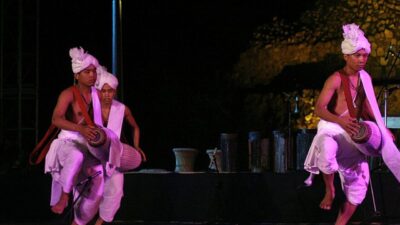
Overviewपुंग मणिपुर का लकड़ी का दो-मुखी बैरल ढोल है — खोल और मृदंग का पूर्वोत्तरी सगा, जिसकी दोनों पुड़ियाँ लगभग समान आकार की और केंद्र पर स्याही से मढ़ी होती हैं। इसे गले में सूती पट्टे से लटकाकर दोनों हाथों से बजाया जाता है, और नाट संकीर्तन तथा पुंग चोलोम में यही ढोल गीत, नृत्य और भक्ति को एक साथ बाँधता है। महाराजा भाग्यचंद्र के युग में यह मणिपुरी शास्त्रीय नृत्य की आत्मा बना, और 2013 में यूनेस्को द्वारा संकीर्तन को धरोहर घोषित किए जाने पर इसे वैश्विक पहचान मिली।
अंग्रेज़ी में पढ़ें · Read in English
The pung is Manipur's wooden two-headed barrel drum — the Northeastern kin of the khol and mridangam, with near-equal heads each bearing a black syahi paste at the centre. Slung from the neck by a cotton strap and struck with both hands, it is the very drum that binds song, dance and devotion together in Nata Sankirtana and Pung Cholom. It became the soul of Manipuri classical dance in the age of Maharaja Bhagyachandra, and won global recognition when UNESCO inscribed Sankirtana as heritage of humanity in 2013.
वर्गीकरण
ClassificationNatya Shastra Category
अवनद्ध (Avanaddha - membranophone / drums covered with skin)
नाट्यशास्त्र के चार वाद्य-वर्गों में पुंग 'अवनद्ध' वर्ग का वाद्य है — अर्थात् चमड़े से मढ़ा हुआ ताल-वाद्य, जो झिल्ली (पुड़ी) पर आघात से ध्वनि उत्पन्न करता है। मृदंग, पखावज और खोल की भाँति यह भी दो-मुखी बैरल ढोल है।
In the Avanaddha (membranophone) category of the Natya Shastra's four instrument classes, the pung is a skin-covered percussion instrument that produces sound when its stretched hide heads are struck. Like the mridangam, pakhawaj and khol, it is a two-headed barrel drum.
Western Category
Membranophone (two-headed barrel drum)
Western Family
Barrel-drum family — closely related to the Bengali khol and the classical mridangam/pakhawaj, but with a wooden, tube-shaped body and near-symmetrical heads
Sub Classification
बनावट
PhysicalDescription Hindi
पुंग एक खोखला, लकड़ी का बैरल-आकार का दो-मुखी ढोल है जिसे गले में पट्टे से लटकाकर दोनों हाथों से बजाया जाता है। इसका ढाँचा कटहल, आम या 'वांग' की लकड़ी से बनाया जाता है; दोनों सिरों पर चमड़े की पुड़ियाँ चढ़ाई जाती हैं और उन्हें चमड़े/बेंत की डोरियों से कसा जाता है। पुड़ियों के केंद्र पर काली स्याही (मसाला) लगाई जाती है जो गहरी, गूँजती ध्वनि देती है।
Description English
The pung is a hollow, wooden, barrel-shaped two-headed drum, slung from the neck by a strap and played with both hands. Its shell is carved from jackfruit, mango, or 'vang' wood; both ends are covered with leather membranes lashed tight with cowhide or cane straps. A black tuning paste (syahi/masala) is fixed at the centre of the heads, giving the drum its deep, resonant, singing tone.
Body
Elongated barrel / tube-shaped (more tubular than the rounder khol)
लंबा बैरल या नली-नुमा (खोल की तुलना में अधिक बेलनाकार)
Hollowed hardwood — traditionally jackfruit, mango, or vang (a local Manipuri wood)
खोखली की गई कठोर लकड़ी — परंपरागत रूप से कटहल, आम या स्थानीय 'वांग' लकड़ी
approx. 55-65 (varies by maker and use)
Single hollow wooden shell open through both ends, sealed by the two skin heads; the enclosed air column produces a warm, sustained resonance
Heads
The smaller/tighter treble head that carries the crisp, articulate strokes
The bass head producing the deep, rolling low tones; unlike the khol, the pung's two heads are of similar size, giving a more balanced sound
Lacing
तस्मे / डोरियाँ
Straps / Lacing
Cowhide (or cane) straps
चमड़े की डोरियाँ दोनों पुड़ियों को शरीर से बाँधती और खींचती हैं; उन्हें कसकर या ढीला करके तनाव और स्वर समायोजित किया जाता है।
Leather straps run the length of the shell, binding and tensioning both heads; tightening or loosening them adjusts the drum's tension and pitch.
Sling
गले का पट्टा
Neck strap
Cotton belt attached to the lacing via a metal ring
एक सूती पट्टा धातु के छल्ले से डोरियों में जुड़ा रहता है, जिससे वादक ढोल को गले में लटकाकर खड़े-खड़े या नाचते हुए बजा सके।
A cotton belt joins the lacing through a metal ring so the player can hang the drum from the neck and play it while standing or dancing.
Playing Position
पुंग को क्षैतिज रूप से पेट के सामने गले से लटकाया जाता है और दोनों हथेलियों तथा उँगलियों से दोनों मुखों को बजाया जाता है — बैठकर संगत में, और खड़े होकर 'पुंग चोलोम' नृत्य में।
The pung hangs horizontally across the front of the body from the neck, and both heads are struck with palms and fingers of both hands — seated for accompaniment, and standing for the acrobatic 'Pung Cholom' dance.
Frets
ढोल-वाद्य होने के कारण पुंग में फ्रेट नहीं होते; स्वर पुड़ी के तनाव, स्याही और आघात के स्थान से नियंत्रित होता है।
As a drum, the pung has no frets; pitch is governed by head tension, the syahi paste, and where the head is struck.
ध्वनि-चरित्र
SoundTonal Character Hindi
पुंग की ध्वनि गहरी, गोल और गायन-सी होती है — मंद्र से आरंभ होकर तीव्र, गड़गड़ाती चरम-सीमा तक पहुँचती है। यह मृदंग-परिवार की सबसे मधुर आवाज़ों में गिनी जाती है, जिसमें भक्ति की कोमलता और उत्सव की ऊर्जा दोनों समाई रहती हैं।
Tonal Character English
The pung's tone is deep, round and almost vocal — beginning soft and building to a thunderous climax. It is counted among the sweetest voices of the barrel-drum family, holding both devotional tenderness and celebratory energy.
Timbre
Warm, woody, resonant; crisp treble from the right head over a rolling bass from the left
Range
Percussive — a tuned fundamental (set by lacing and syahi) with a wide dynamic and timbral palette rather than a melodic scale
Dynamic Range
Very wide — from a whispered devotional pulse to a thundering full-hand roll, all acoustic and unamplified
Techniques
सुनने का मार्गदर्शन
The Listening Guideपुंग को समझना हो तो पहले किसी धीमे संकीर्तन में सुनिए, जहाँ ढोल गायन के भाव का अनुसरण करता है। फिर पूरा पुंग चोलोम देखिए — देखिए कैसे कोमल आरंभ धीरे-धीरे कलाबाज़ छलाँगों के साथ गड़गड़ाहट में बदलता है, और लय फिर भी अटूट रहती है। यही पुंग की आत्मा है।
अंग्रेज़ी में पढ़ें · Read in English
To appreciate the pung, begin with a slow Sankirtana accompaniment, where the drum follows the emotion of the singing. Then watch and hear a full Pung Cholom — notice how the rhythm rises from a gentle opening to a thunderous climax amid acrobatic leaps, and yet never drops a single beat. That is its miracle.
परिचय
Identity- Year Of Origin
- 200
अन्य विवरण
More DetailsTimbre
Warm, woody, resonant; crisp treble from the right head over a rolling bass from the left
रोचक तथ्य
Margin Notesराज-घोषणा का ढोल — स्रोतों के अनुसार आरंभिक मणिपुर में पुंग का प्रयोग राजा की घोषणाओं ('याइबुंग') के लिए होता था — अर्थात् यह पहले सत्ता और सूचना का ढोल था, बाद में भक्ति और नृत्य का।
According to sources, in early Manipur the pung was used to broadcast royal proclamations ('Yaibung') — meaning it was first a drum of authority and announcement, and only later of devotion and dance.
एक शरीर में वादक और नर्तक — पुंग चोलोम विश्व-संगीत की उन दुर्लभ परंपराओं में है जहाँ एक ही कलाकार साथ-साथ वादक और नर्तक होता है — ढोल बजाते हुए कलाबाज़ी करना, बिना ताल तोड़े, वर्षों के अभ्यास की माँग करता है।
Pung Cholom is among the rare traditions in world music where one artist is at once player and dancer — drumming while performing acrobatics, without breaking the beat, demands years of training.
मार्शल आर्ट से जुड़ी लय — पुंग चोलोम मणिपुर की मार्शल कलाओं थांग-ता और सारित सारक तथा पारंपरिक माइबी जागोइ से गति-तत्व ग्रहण करता है — इसीलिए इसमें छलाँगें और घुमाव इतने साहसिक होते हैं।
Pung Cholom borrows movement elements from Manipur's martial arts Thang-Ta and Sarit Sarak, and from the traditional Maibi Jagoi — which is why its leaps and spins are so daring.
यूनेस्को की धरोहर — जिस संकीर्तन परंपरा का पुंग हृदय है, उसे 2013 में यूनेस्को ने 'मानवता की अमूर्त सांस्कृतिक धरोहर' की प्रतिनिधि सूची में अंकित किया — जिससे यह पूर्वोत्तर भारत के गौरव का प्रतीक बना।
The Sankirtana tradition of which the pung is the heart was inscribed in 2013 on UNESCO's Representative List of the Intangible Cultural Heritage of Humanity — making it a symbol of Northeast India's pride.
सवाल-जवाब
Questions & Answersपुंग क्या है?
पुंग मणिपुर का लकड़ी का दो-मुखी बैरल ढोल है — खोल और मृदंग का पूर्वोत्तरी सगा। इसे गले में पट्टे से लटकाकर दोनों हाथों से बजाया जाता है और यह नाट संकीर्तन तथा पुंग चोलोम नृत्य का प्रमुख ताल-वाद्य है।
पुंग और खोल में क्या अंतर है?
पुंग का शरीर लकड़ी का और उसके दोनों मुख लगभग समान आकार के होते हैं, जिससे ध्वनि संतुलित रहती है; जबकि खोल का शरीर मिट्टी का और उसके दोनों मुख बहुत भिन्न आकार के होते हैं। पुंग अधिक बेलनाकार, खोल अधिक गोल होता है।
पुंग चोलोम क्या है?
पुंग चोलोम मणिपुर का शास्त्रीय ढोल-नृत्य है जिसमें कलाकार गले में पुंग लटकाकर बजाते हुए छलाँग, घुमाव और कलाबाज़ी करते हैं — बिना लय तोड़े। यह प्रायः रास लीला की भूमिका के रूप में प्रस्तुत होता है।
पुंग किस परंपरा से जुड़ा है और क्या इसे यूनेस्को की मान्यता प्राप्त है?
पुंग मैतै वैष्णव 'नाट संकीर्तन' का हृदय है — गायन, वादन और नृत्य की भक्ति परंपरा जिसे 2013 में यूनेस्को की मानवता की अमूर्त सांस्कृतिक धरोहर सूची में अंकित किया गया।
पुंग किस चीज़ से बनता है?
पुंग का ढाँचा कटहल, आम या 'वांग' की लकड़ी को खोखला करके बनाया जाता है; दोनों सिरों पर चमड़े की पुड़ियाँ चढ़ाकर उन्हें चमड़े/बेंत की डोरियों से कसा जाता है, और पुड़ियों के केंद्र पर काली स्याही लगाई जाती है।
नमूना-पट्टी
The Specimen Table| नाम | पुंग · Pung |
|---|---|
| अन्य नाम | पुं · पुंग (मणिपुरी ढोल) · मणिपुरी मृदंग · Pung (also: Manipuri Mridang, Meitei drum) · ꯄꯨꯪ (Meitei Mayek) |
| उद्गम | 200 |
| प्रकार | वाद्य · Instruments |
साझा कीजिए · Share this Plate