कहानियाँ विंग · कहानी · Film Music · 1955
मन्ना डे का वह सागर जो भजन बन गया
The Ocean That Became a Prayer: Manna Dey's Tu Pyar Ka Sagar Hai
जब एक फ़िल्मी गाना मंदिरों में गूँजने लगे, तो समझो कि कला ने ईश्वर को छू लिया।
प्रकाशित3 July 2026
आमुख
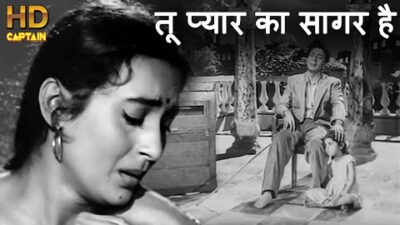
'तू प्यार का सागर है' (सीमा, १९५५) की कहानी — कैसे मन्ना डे की शास्त्रीय तालीम, शंकर-जयकिशन की भैरवी-रचना और शैलेंद्र की कविता ने एक ऐसा गाना बनाया जो मंदिरों का भजन बन गया।
अंग्रेज़ी में पढ़ें · Read in English
The story of 'Tu Pyar Ka Sagar Hai' (Seema, 1955) — how Manna Dey's classical training, Shankar-Jaikishan's Bhairavi composition, and Shailendra's devotional poetry created a film song that transcended cinema to become a genuine bhajan sung in temples across India.
वह कंठ जो रागों में प्रार्थना करता था
मन्ना डे उस्ताद अमान अली खाँ से पटियाला घराने की तालीम लेकर फ़िल्म-संगीत में आए। शंकर-जयकिशन ने 'तू प्यार का सागर है' भैरवी में बनाया — जानते थे कि इसके लिए मन्ना डे चाहिए।
अंग्रेज़ी में पढ़ें · Read in English
Manna Dey's musical journey is a separate chapter in Hindi film music. While Mukesh, Rafi, and Kishore Kumar were 'the common man's voice,' Manna Dey was a classically trained singer who entered film music after studying under Ustad Aman Ali Khan of the Patiala gharana. This training gave him a rare capacity: the ability to sing classical raag grammar with full honesty. Shankar-Jaikishan, knowing this, composed 'Tu Pyar Ka Sagar Hai' in Raag Bhairavi — they knew they needed Manna Dey.
भैरवी और भक्ति का रहस्य
भैरवी में कोमल स्वर एक ऐसा माहौल बनाते हैं जो उदास और शांत, विदाई और समर्पण का है। शैलेंद्र ने इसे शब्द दिए: 'तू प्यार का सागर है / तेरी एक बूँद के प्यासे हम' — भक्ति-परंपरा की प्राचीन छवि।
अंग्रेज़ी में पढ़ें · Read in English
Raag Bhairavi is called the 'all-pervading raag' — in Hindustani classical music, every programme ends with Bhairavi. Its flattened notes create an atmosphere simultaneously sad and serene, of farewell and surrender. Bhairavi carries separation, but it is sweet separation — the pain of parting that is also proof of love. Shailendra gave this raga's emotional grammar words: 'Tu pyar ka sagar hai / teri ek bund ke pyase hum.' The image is ancient in bhakti tradition — Kabir had used it. But Shailendra wrote it for cinema in a way that made it travel beyond cinema to the temple.
जब मन्ना डे ने प्रार्थना की
मन्ना डे ने अपनी आत्मकथा में लिखा कि यह उन गानों में था जिन्हें गाते समय उन्हें लगा वे वास्तव में प्रार्थना कर रहे हैं। पटियाला घराने के अंदाज़ में भैरवी के कोमल स्वर — स्टूडियो में सब शांत हो गए थे।
अंग्रेज़ी में पढ़ें · Read in English
Manna Dey wrote in his autobiography 'Memories Come Alive' that 'Tu Pyar Ka Sagar Hai' was one of his favourite recordings — one of the songs during which he felt he was actually praying, not merely singing. In the recording with Shankar-Jaikishan, he navigated Bhairavi's flattened notes in the Patiala gharana style — that special meend (glide), the komal Ga that drops further, the Ni that sinks in the pain of parting. The studio reportedly fell silent.
मंदिर तक पहुँचा एक फ़िल्मी गाना
यह गाना महाराष्ट्र-गुजरात के स्कूलों की प्रातःकालीन प्रार्थना बना, मंदिरों में गाया गया, भजन-संकलनों में शामिल हुआ। मन्ना डे के हर कार्यक्रम का केंद्रबिंदु — उनकी सबसे यादगार विरासत।
अंग्रेज़ी में पढ़ें · Read in English
The song transcended cinema in its own time. It became a morning prayer in government schools in Maharashtra and Gujarat. It was sung at temple bhajan evenings. It found its place in devotional compilations alongside bhajans of Kabir and Mirabai. For seven decades it was the centrepiece of every Manna Dey concert. After his death in 2013, it is considered one of his most enduring legacies. A song made for cinema became a bridge between God and devotee — that is its greatest achievement.
परिचय
IdentityEpithet
जब एक फ़िल्मी गाना मंदिरों में गूँजने लगे, तो समझो कि कला ने ईश्वर को छू लिया।
When a film song begins to ring in temples across India, it has ceased to be cinema and become prayer.
अन्य विवरण
More Details- Very few songs gave me the feeling of actually praying.
- मन्ना डे
- शंकर-जयकिशन
- शैलेंद्र
- बलराज साहनी
- 1930s — Manna Dey trains under Ustad Aman Ali Khan, Patiala gharana — मन्ना डे उस्ताद अमान अली खाँ से पटियाला घराने में प्रशिक्षित
- 1955 — Seema filmed; Tu Pyar Ka Sagar Hai recorded with Manna Dey — 'सीमा' फ़िल्मायी गई; 'तू प्यार का सागर है' मन्ना डे के साथ रिकॉर्ड
- 1955 — Film released; song immediately adopted beyond cinema context — फ़िल्म प्रदर्शित; गाना तुरंत सिनेमा से बाहर भी अपनाया गया
- 1960s-70s — Song becomes school morning prayer in Maharashtra and Gujarat — गाना महाराष्ट्र और गुजरात में स्कूलों की प्रातःकालीन प्रार्थना बना
- Wikipedia: Manna Dey. https://en.wikipedia.org/wiki/Manna_Dey
- Manna Dey. Memories Come Alive. Penguin India, 2011.
- Wikipedia: Seema (1955 film). https://en.wikipedia.org/wiki/Seema_(1955_film)
- Wikipedia: Shankar-Jaikishan. https://en.wikipedia.org/wiki/Shankar-Jaikishan
Pull Quotes
Key Figures
Timeline Within Story
References
कहानी-नमूना
The Story Specimen| शीर्षक | मन्ना डे का वह सागर जो भजन बन गया · The Ocean That Became a Prayer: Manna Dey's Tu Pyar Ka Sagar Hai |
|---|---|
| श्रेणी | Film Music |
| प्रकार | विशेष लेख |
| प्रकाशित | 3 July 2026 — admin |
| वर्ष | 1955 |
और कहानियाँ
More Stories from the Atlas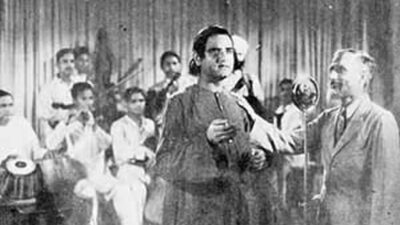

साझा कीजिए · Share this Plate
यह पन्ना आगे बढ़ाइए
सवाल-जवाब
Questions & Answersक्या 'तू प्यार का सागर है' फ़िल्मी गाना है या भजन? · Is Tu Pyar Ka Sagar Hai a film song or a bhajan?
दोनों। यह १९५५ की फ़िल्म 'सीमा' से आया, लेकिन भारत के मंदिरों और प्रार्थना-सभाओं ने इसे असली भजन के रूप में अपना लिया।
Both. It originated in the 1955 film Seema, but was adopted as a genuine bhajan by temples and prayer communities across India. It is sung in both film music retrospectives and religious gatherings.