कहानियाँ विंग · कहानी · Film Music · 1955
बारिश में एक छाता: हिंदी सिनेमा का सबसे रोमांटिक दृश्य
One Umbrella in the Rain: How Hindi Cinema's Most Romantic Scene Was Made
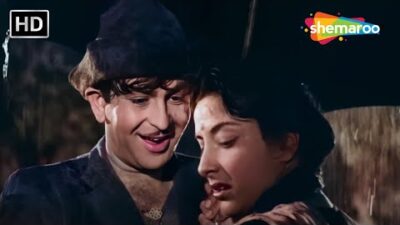
'प्यार हुआ इक़रार हुआ' — एक छाता, दो लोग, बारिश, और हिंदी सिनेमा का सबसे अमर रोमांटिक क्षण।
प्रकाशित3 July 2026
आमुख
श्री ४२० (१९५५) में राज कपूर और नरगिस के उस बारिश-दृश्य की कहानी जिसमें 'प्यार हुआ इक़रार हुआ' गाया — कैसे एक जानबूझकर छोटे छाते ने हिंदी प्रेम-सिनेमा की सबसे यादगार छवि बनाई।
अंग्रेज़ी में पढ़ें · Read in English
The story behind the rain scene of Shree 420 (1955) where 'Pyar Hua Ikraar Hua' was filmed — how a deliberately small umbrella created Hindi cinema's most iconic romantic image, and how Shailendra found the philosophy of love in four lines of haunting uncertainty.
एक छाता जो जानबूझकर छोटा था
राज कपूर ने सुनिश्चित किया कि छाता जानबूझकर छोटा हो — इतना कि दोनों को करीब आना पड़े। यह सिनेमाई चाल थी लेकिन इसके पीछे गहरी समझ थी: परिस्थिति-जन्य निकटता अभिनय से ज़्यादा सच्ची लगती है।
अंग्रेज़ी में पढ़ें · Read in English
Raj Kapoor reportedly told film historians that before filming the rain scene of 'Pyar Hua Ikraar Hua,' he ensured one thing: the umbrella would be small. Small enough that Raju and Vidya would have to lean into each other to fit beneath it. This was a simple cinematic trick, but behind it lay Kapoor's deep instinct: physical proximity created by circumstance, not by an actor's performance, feels more truthful. Raj Kapoor and Nargis actually had to come close under that umbrella — and the camera captured that reality.
शैलेंद्र का दार्शनिक प्रेम
शैलेंद्र ने लिखा: 'प्यार से फिर क्यूँ डरता है दिल... मालूम नहीं है कहाँ मंज़िल।' यह वयस्क प्रेम-काव्य था — प्रतिबद्धता की काँपती हिम्मत। शैलेंद्र ने अपने जीवन से लिखा: एक प्रवासी मज़दूर जो जानता था कि प्रेम की मंज़िल हमेशा ज्ञात नहीं होती।
अंग्रेज़ी में पढ़ें · Read in English
What Shailendra wrote for this song was extraordinary: 'Pyar hua, iqrar hua / pyar se phir kyun darta hai dil.' Love has happened, love has been admitted — yet the heart still fears. This was adult love poetry — not the fireworks of new infatuation but the trembling courage of commitment. Shailendra said he only wrote what he had lived. A railway worker who came to the city, who loved, who knew that love's destination is not always known — he compressed this into one line: 'maloom nahin hai kahan manzil.'
मन्ना डे की आवाज़ क्यों?
मन्ना डे को मुकेश की जगह इसलिए लिया गया क्योंकि धुन में शास्त्रीय गहराई थी। लता ने इसे एक ही सत्र में रिकॉर्ड किया — धुन ने तुरंत छू लिया था।
अंग्रेज़ी में पढ़ें · Read in English
In this song, Manna Dey sang for Raj Kapoor rather than Mukesh — a deliberate musical decision. Shankar-Jaikishan felt the melody's classical underpinning required Manna Dey's trained voice. Mukesh's natural simplicity was right for 'Mera Joota Hai Japani,' but 'Pyar Hua Ikraar Hua' needed the depth that comes from classical training. Lata Mangeshkar later recalled recording the song in a single session — the melody had moved her immediately.
एक अमर दृश्य का जन्म
बारिश में छाते का वह दृश्य हिंदी सिनेमा की सर्वाधिक पुनरुत्पादित छवियों में से एक बना। 'छोटा छाता, दो लोग, बारिश' — भारतीय रोमांस का दृश्य-शब्दकोश। रेडियो सीलोन ने १९५६ में इसे शीर्ष दस में रखा।
अंग्रेज़ी में पढ़ें · Read in English
The rain scene under the umbrella became one of Hindi cinema's most reproduced images — dozens of films paid tribute to it across decades. 'Small umbrella, two people, rain' became the visual vocabulary of Indian romance. Radio Ceylon listed it among its ten most-requested songs in 1956. Seven decades later it is on every 'Greatest Duets of Hindi Cinema' list. But its real victory is perhaps this: the song that says the destination is unknown has become the anthem of every couple who has ever chosen to walk into the unknown together.
परिचय
IdentityEpithet
'प्यार हुआ इक़रार हुआ' — एक छाता, दो लोग, बारिश, और हिंदी सिनेमा का सबसे अमर रोमांटिक क्षण।
'Pyar Hua Ikraar Hua' — one umbrella, two people, rain, and Hindi cinema's most immortal romantic moment.
अन्य विवरण
More Details- Pyar se phir kyun darta hai dil — love has been admitted, yet the heart trembles. Shailendra named love's true condition.
- राज कपूर
- नरगिस
- शैलेंद्र
- मन्ना डे
- लता मंगेशकर
- Early 1955 — Shankar-Jaikishan compose the melody; Shailendra writes the philosophical lyric — शंकर-जयकिशन ने धुन बनाई; शैलेंद्र ने दार्शनिक बोल लिखे
- 1955 (recording) — Lata records in single session; Manna Dey chosen over Mukesh for classical depth — लता ने एक सत्र में रिकॉर्ड किया; मन्ना डे को मुकेश की जगह शास्त्रीय गहराई के लिए चुना
- 1955 (filming) — Rain scene filmed on Bombay outskirts with deliberately small umbrella — बारिश-दृश्य बंबई के बाहरी इलाके में जानबूझकर छोटे छाते के साथ फ़िल्माया
- 1955-56 — Song tops charts; Radio Ceylon lists among most-requested — गाना चार्ट में शीर्ष; रेडियो सीलोन में सबसे माँगे जाने वालों में
- Wikipedia: Shree 420. https://en.wikipedia.org/wiki/Shree_420
- Kabir, Nasreen Munni. Talking Films. Oxford University Press, 2002.
- Wikipedia: Manna Dey. https://en.wikipedia.org/wiki/Manna_Dey
- Binaca Geetmala archives 1955-1956, Radio Ceylon
Pull Quotes
Key Figures
Timeline Within Story
References
कहानी-नमूना
The Story Specimen| शीर्षक | बारिश में एक छाता: हिंदी सिनेमा का सबसे रोमांटिक दृश्य · One Umbrella in the Rain: How Hindi Cinema's Most Romantic Scene Was Made |
|---|---|
| श्रेणी | Film Music |
| प्रकार | विशेष लेख |
| प्रकाशित | 3 July 2026 — admin |
| वर्ष | 1955 |
और कहानियाँ
More Stories from the Atlas

साझा कीजिए · Share this Plate
यह पन्ना आगे बढ़ाइए
सवाल-जवाब
Questions & Answers'श्री ४२०' का छाते वाला दृश्य इतना प्रसिद्ध क्यों है? · Why is the umbrella scene in Shree 420 so famous?
राज कपूर ने जानबूझकर छोटा छाता चुना ताकि दोनों वास्तव में करीब आएँ — निकटता असली थी, अभिनय नहीं। शैलेंद्र के दार्शनिक बोल और शंकर-जयकिशन की कोमल धुन ने मिलकर एक अविस्मरणीय क्षण बनाया।
Raj Kapoor deliberately chose a small umbrella so Raj Kapoor and Nargis had to lean into each other — the intimacy was real, not acted. Combined with Shailendra's philosophical lyric and Shankar-Jaikishan's tender melody, it created an unforgettable moment.