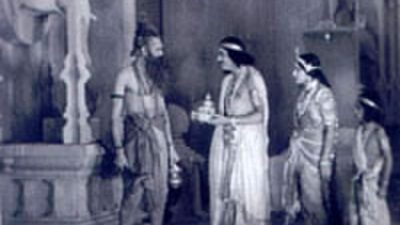
गीत विंग · गीत-पट्टिका · Song Plate
सुख पाकर जो दुख पाये
Sukh Pakar Jo Dukh Paaye
सुख जो दुख में बदल जाये — मेरी ख़्वाहिश (1941) का चिंतनशील, लगभग भक्तिपरक पद्य।
भावउदास · दार्शनिक
भाषाhindi गतिधीमी स्वरूपUnknown
श्रेय
The Creditsसूत्र-वाक्य · The Hook
सूत्र-वाक्य
सुख जो दुख में बदल जाये — मेरी ख़्वाहिश (1941) का चिंतनशील, लगभग भक्तिपरक पद्य।
In EnglishOn joy that turns to sorrow — a reflective, almost devotional verse from Meri Khwahish (1941).
पट्टिका-लेख
The Monographपरिचय Overview
मेरी ख़्वाहिश (1941) के आठ गीतों के संगीत से एक दार्शनिक गीत, वसंत और शांति कुमार द्वारा रचित, बोल बालम परदेसी और ए. के. सिंधु के। विषय — कि सांसारिक सुख अपने भीतर दुख समेटे रहता है — भजन और उस नैतिक-सामाजिक गीत की ओर पहुँचता है जिसे आरंभिक हिंदी सिनेमा अपने मेलोड्रामा में बुनता था। फ़िल्म के गीतों का गायक श्रेय उपलब्ध संदर्भों में नहीं बचा है।
अंग्रेज़ी में पढ़ें · Read in English
A philosophical song from the eight-song score of Meri Khwahish (1941), composed by Vasant and Shanti Kumar to lyrics by Baalam Pardesi and A. K. Sindhu. The theme — that worldly pleasure carries sorrow within it — reaches toward the bhajan and the moral-social song that early Hindi cinema wove into its melodramas. Singer attribution for the film's songs has not survived in available references.
काव्य The Poetry
'सुख पाकर जो दुख पाये' — 'जो सुख पाकर दुख पाता है' — हिंदी-उर्दू नैतिक काव्य के सूत्रात्मक प्रारूप में है: एक सशर्त-वर्णनात्मक प्रस्ताव जो एक विरोधाभास बताता है और श्रोता को अपने अनुभव से उसकी सच्चाई परखने का निमंत्रण देता है। सुख में दुख का समाया होना संस्कृत नैतिक साहित्य — विशेष रूप से महाभारत के शांति पर्व, जो सांसारिक आनंद की नश्वरता पर विस्तृत चिंतन करता है — का केंद्रीय विषय है, और सूफ़ी प्रवचन की आधारशिला है जहाँ सांसारिक सुख से आसक्ति को दुख की जड़ बताया जाता है। भजन परंपरा में यह विषय माया की अवधारणा से जुड़ता है: जो वस्तुएँ सुख देती प्रतीत होती हैं — धन, प्रेम, परिवार — वही अनिवार्यतः खोने या छिनने पर सबसे बड़े दुख का स्रोत बनती हैं। गीतकार बालम परदेसी — जिनका उपनाम 'परदेसी' (विदेशी, घर से दूर) भटकते नैतिकतावादी-गायक का आदर्शरूप जगाता है — इस विषय को दोहा-कवि के दृष्टिकोण से लाते हैं।
अंग्रेज़ी में पढ़ें · Read in English
'Sukh Pakar Jo Dukh Paaye' — 'He who, having grasped happiness, finds sorrow' — is in the aphoristic format of Hindi-Urdu moral verse: a conditional-descriptive proposition that states a paradox and invites the listener to verify it from their own experience. The paradox of sukh (happiness, ease) containing dukh (sorrow, suffering) is central to Sanskrit moral literature — particularly the Mahabharata's Shanti Parva, which contains extensive meditation on the transience of worldly joy — and is a cornerstone of Sufi discourse, where attachment to worldly happiness is identified as the root of suffering. In the bhajan tradition, this theme connects to the concept of maya (worldly illusion): the things that seem to bring happiness (wealth, love, family) are precisely the sources of greatest suffering when they are inevitably lost or withheld. Lyricist Baalam Pardesi — whose pen-name 'pardesi' (foreigner, one away from home) evokes the archetype of the wandering moralist-singer — brings a doha-poet's perspective to this theme: the short, aphoristic form states the paradox boldly in the mukhdha, and the antraas would have elaborated examples drawn from ordinary life, each one confirming the opening thesis. The slow tempo and philosophical mood suggest a composition in a meditative raga — perhaps Bhairavi or Yaman Kalyan — that allows the paradox to settle into the listener's consciousness rather than pass quickly by.
कहानी The Story
मेरी ख़्वाहिश (1941) में 'सुख पाकर जो दुख पाये' इस अभिलेखागार में 'काले काले बादल छाये' के साथ दर्ज दूसरा गीत है, और इसका स्वर उल्लेखनीय रूप से भिन्न है: जहाँ मानसून-गीत वातावरणीय विरह-बिंबों पर टिका है, वहीं यह दार्शनिक गीत सुख की प्रकृति के बारे में एक नैतिक विरोधाभास प्रस्तुत करता है। 'सुख पाकर जो दुख पाये' — 'जो सुख पाकर दुख भोगता है' — अपने शीर्षक में ही गीत का सूत्र बता देता है; फिर अंतरों में यह अवलोकन के साक्ष्य और निहितार्थ उजागर करता है। इस तरह का ज्ञान-गीत 1940 के दशक के हिंदी फ़िल्म-संगीत की एक अलग धारा था: यह दर्शकों को सीधे एक नैतिक-दार्शनिक तर्क के साथ संबोधित करता है, जो सामाजिक-नाटक को रोमांटिक या घरेलू नाटक के साथ-साथ एक नैतिक आयाम भी देता है। फ़िल्म के गीतों का गायक श्रेय उपलब्ध संदर्भों में नहीं बचा है।
अंग्रेज़ी में पढ़ें · Read in English
Meri Khwahish (1941) — 'My Desire' — was a social drama featuring Sharifa, with music jointly composed by Vasant and Shanti Kumar and lyrics by Baalam Pardesi and A.K. Sindhu. 'Sukh Pakar Jo Dukh Paaye' is the second of the film's eight songs represented in this archive alongside 'Kale Kale Badal Chaye,' and its theme is strikingly different: where the monsoon song draws on atmospheric virah imagery, this philosophical number proposes a moral paradox about the nature of happiness. 'He who, having grasped happiness, finds sorrow' states the song's thesis in its title — and then the song proper would unfold the evidence and implications of this observation across its antraas. This kind of wisdom-song (gyan-geet) was a distinct strand within the 1940s Hindi film score: it addresses the audience directly with a moral-philosophical proposition, functioning as the film's didactic interlude that gives the social drama its ethical dimension alongside the romantic or domestic drama. The dual-composer arrangement for Meri Khwahish again points to a modestly-budgeted production where costs were managed by sharing labor. Singer attribution for the film's songs has not survived in available references.
वर्गीकरण
Classification- Tempo
- Slow
Genre
अन्य विवरण
More Details- https://en.wikipedia.org/wiki/Meri_Khwahish
- https://www.hindigeetmala.net/movie/meri_khwahish.htm
References
रोचक तथ्य
Margin Notes'सुख पकर जो दुःख पाए' का दार्शनिक प्रस्ताव महाभारत के शांति पर्व और सूफ़ी प्रवचन के विषयों की प्रतिध्वनि करता है, जहाँ सांसारिक सुख के प्रति आसक्ति को दुख की जड़ माना जाता है।
अंग्रेज़ी में पढ़ें · Read in English
The philosophical proposition 'sukh pakar jo dukh paaye' (he who grasps happiness finds sorrow) echoes themes in the Mahabharata's Shanti Parva and in Sufi discourse, where attachment to worldly happiness is identified as the root of suffering.
गीतकार बालम परदेसी का उपनाम — 'परदेसी' अर्थात विदेशी या घर से दूर रहने वाला — उस भटकते नैतिकतावादी-गायक के आदर्श प्रतिरूप को जगाता है जिसका विस्थापन का अनुभव उसे अनित्यता और शोक पर बोलने का अधिकार देता है।
अंग्रेज़ी में पढ़ें · Read in English
Lyricist Baalam Pardesi's pen-name — 'pardesi' meaning foreigner or one away from home — evokes the archetype of the wandering moralist-singer whose experience of dislocation gives him authority to speak on impermanence and sorrow.
मेरी ख़्वाहिश (1941) ने दोहरी-संगीतकार व्यवस्था — वसंत और शांति कुमार — का प्रयोग किया, जो छोटी बंबई प्रस्तुतियों में सामान्य थी जहाँ रचना-कार्य को बाँटना लागत प्रबंधन की एक रणनीति थी।
अंग्रेज़ी में पढ़ें · Read in English
Meri Khwahish (1941) used a dual-composer arrangement — Vasant and Shanti Kumar — common in smaller Bombay productions where sharing compositional labor was a cost management strategy.
1940 के दशक के हिंदी फिल्म संगीत में ज्ञान-गीत परंपरा कबीर जैसे संत-कवियों की दोहा परंपरा से प्रेरित थी, जिनके संक्षिप्त सूक्तिपूर्ण रूप एक नैतिक विरोधाभास को साहसपूर्वक कहने और अनुभव को उसकी पुष्टि करने देने के लिए रचे गए थे — ठीक इस गीत के शीर्षक की संरचना की तरह।
अंग्रेज़ी में पढ़ें · Read in English
The wisdom-song (gyan-geet) tradition in Hindi film music of the 1940s drew on the doha (couplet) tradition of saint-poets like Kabir, whose short aphoristic forms were designed to state a moral paradox boldly and let experience confirm it — exactly the structure of this song's title.
नमूना-पट्टी
The Specimen Table| शीर्षक | सुख पाकर जो दुख पाये · Sukh Pakar Jo Dukh Paaye |
|---|---|
| फ़िल्म | मेरी ख़्वाहिश · 1941 |
| वर्ष · युग | 1941 |
| गीतकार | बालम परदेसी, A. K. Sindhu |
| संगीतकार | Vasant, Shanti Kumar |
| स्वरूप | Unknown |
| गति | धीमी |
| भाषा | hindi |
| भाव | उदास · दार्शनिक |
| बोल-स्थिति | केवल झलक |
जुड़े हुए पन्ने
Connected Plates · The Graph Made Visibleअटलस में कोई पन्ना अकेला नहीं — इस गीत से जुड़े गीत, कलाकार, फ़िल्म, राग-ताल-विधा, सब यहाँ से खुलते हैं।
कलाकार · The Artists
फ़िल्म · The Film
साझा कीजिए · Share this Plate