गीत विंग · गीत-पट्टिका · Song Plate
शीश हमारा चरण तिहारे
Sees Hamara Charan Tihare
प्रभात की संत-फ़िल्म 'संत सखू' (1941) का एक भक्ति-गीत, केशवराव भोले के भजन-रंगी संगीत में रचा हुआ।
भावभक्ति · शांत · आध्यात्मिक
भाषाhindi गतिमध्यम स्वरूपभक्ति
श्रेय
The Creditsसूत्र-वाक्य · The Hook
सूत्र-वाक्य
प्रभात की संत-फ़िल्म 'संत सखू' (1941) का एक भक्ति-गीत, केशवराव भोले के भजन-रंगी संगीत में रचा हुआ।
In EnglishA devotional number from Prabhat's saint-film 'Sant Sakhu' (1941), set to Keshavrao Bhole's bhajan-flavoured score.
पट्टिका-लेख
The Monographपरिचय Overview
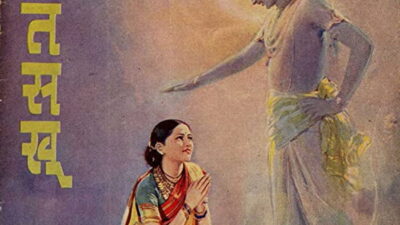
"शीश हमारा चरण तिहारे" फ़िल्म संत सखू (1941) में आता है — पूना की प्रभात फ़िल्म कंपनी द्वारा निर्मित और दामले–फ़त्तेलाल जोड़ी द्वारा निर्देशित हिंदी-मराठी संत-जीवनी। संगीत केशवराव भोले का है। फ़िल्म का संगीत महाराष्ट्रीय भक्ति परंपरा के भक्ति-भजन और अभंग मुहावरे में निहित है, जो प्रभात की प्रसिद्ध संत-फ़िल्म परंपरा के अनुरूप है। यहाँ पूरे बोल नहीं दिए गए हैं; यह केवल एक मेटाडेटा और खोज पृष्ठ है।
अंग्रेज़ी में पढ़ें · Read in English
"Sees Hamara Charan Tihare" appears in Sant Sakhu (1941), the Hindi-Marathi saint biography produced by the Prabhat Film Company of Poona and directed by the Damle–Fattelal partnership. The music is by Keshavrao Bhole. The film's score is rooted in the devotional bhajan and abhang idiom of the Maharashtrian Bhakti tradition, in keeping with Prabhat's celebrated lineage of saint films. Full lyrics are not reproduced here; this is a metadata and discovery page only.
काव्य The Poetry
'शीश हमारा चरण तिहारे' — 'हमारा शीश आपके चरणों में' — एक शरणागति गीत है: पूर्ण समर्पण का गीत जिसमें भक्त साष्टांग प्रणाम करते हुए अपना शीश ईश्वर के चरणों (चरण) में रखता है। यह भाव-भंगिमा अपने सभी क्षेत्रीय रूपों में भक्ति परंपरा के लिए मूलभूत है। 'तिहारे' 'तुम्हारे' का ब्रज/अवधी रूप है, जो गीत को एक पुरातन, श्रद्धापूर्ण गुण देता है जो भक्ति स्वर के लिए उपयुक्त है। यह पद एक पूर्ण क्रिया है: चरणों में शीश एक साथ शारीरिक मुद्रा और आत्म-त्याग का आध्यात्मिक कथन है। प्रभात की संत-फ़िल्म परंपरा में ऐसे समर्पण-गीतों को अतिरिक्त कथात्मक भार मिला क्योंकि संत की जीवनी ठीक इसी चाप को नाटकीय बनाती थी — साधारण व्यक्तित्व से उस विलीन, पारदर्शी अवस्था तक की यात्रा जिसमें भक्त ने सब-कुछ ईश्वर को दे दिया है। केशवराव भोले ने ऐसे पदों को अभंग और भजन की धुन-शैली में स्वरबद्ध किया, निरंतर स्वर और सरल, आवर्ती पदावली का उपयोग करते हुए समर्पण की निश्चलता को अभिव्यक्त किया।
अंग्रेज़ी में पढ़ें · Read in English
'Sees Hamara Charan Tihare' — 'Our heads [are bowed] at your feet/threshold' — is a sharanagati lyric: the song of complete surrender in which the devotee prostrates, placing the head (sees/sheesh) at the feet (charan) of the divine. This gesture is fundamental to the bhakti tradition across its regional variants. 'Tihare' is a Braj/Awadhi form of 'tumhare' (yours), lending the lyric an archaic, reverential quality appropriate to the devotional register. The phrase is a complete act: head at feet is both a physical posture and a metaphysical statement of total relinquishment of selfhood. In Prabhat's saint-film tradition, such surrender songs carried added narrative weight because the saint's biography dramatised precisely this arc — the journey from ordinary personhood to the dissolved, transparent state of the devotee who has given everything to the divine. Keshavrao Bhole set such texts in the abhang and bhajan melodic idiom, using sustained notes and simple, repeated phrases to enact the stillness of surrender.
कहानी The Story
'जाये देव नगरिया जाये' की तरह, 'शीश हमारा चरण तिहारे' भी संत सखू (1941) से है — प्रभात फ़िल्म कंपनी की हिंदी-मराठी द्विभाषी संत-जीवनी जिसका निर्देशन दामले, फ़त्तेलाल और राजा नेने ने किया। संगीत केशवराव भोले का था, वसंत देसाई उनके सहायक थे। फ़िल्म हंसा वाडकर के इर्द-गिर्द केंद्रित थी जो संत सखू की भूमिका में थीं, साथ में गौरी, शंकरराव कुलकर्णी, शांता मुजुमदार, सुमित्रा और मास्टर छोटू थे। फ़िल्म के आठ गीत पी.एल. संतोषी ने और दो पंडित मुखराम शर्मा ने लिखे; बचे हुए अभिलेखों में छह अश्रेयित रहे। 'शीश हमारा चरण तिहारे' — 'हमारा शीश आपके चरणों में' — एक समर्पण-गीत है, जो उस भक्ति-स्वर का प्रतिनिधित्व करता है जिसे प्रभात ने अपनी संत-जीवनियों में लगातार अपनाया — भक्ति परंपरा की शरणागति (ईश्वर के प्रति पूर्ण आत्म-समर्पण) पर आधारित।
अंग्रेज़ी में पढ़ें · Read in English
Like its companion devotional 'Jaye Dev Nagariya Jaye', 'Sees Hamara Charan Tihare' comes from Sant Sakhu (1941), the Prabhat Film Company's Hindi-Marathi bilingual saint-film directed by Damle, Fattelal, and Raja Nene. Music was by Keshavrao Bhole, with Vasant Desai as his assistant. The cast centred on Hansa Wadkar as the saint Sakhu, with Gauri, Shankar Rao Kulkarni, Shanta Mujumdar, Sumitra, and Master Chhotu. Eight of the film's songs were written by P.L. Santoshi and two by Pandit Mukhram Sharma; six were left uncredited in surviving records. The title 'Sees Hamara Charan Tihare' — 'Our heads [are bowed] at your feet' — is a surrender song, characteristic of the devotional register Prabhat consistently employed for its saint-biographies, drawing on the Bhakti tradition of sharanagati (complete self-surrender to the divine).
विरासत The Legacy
संत सखू (1941) प्रभात फ़िल्म कंपनी की संत-फ़िल्मों की परिभाषित परंपरा से संबंधित है, और इन फ़िल्मों में केशवराव भोले का संगीत-दृष्टिकोण — संगीत को अभंग और वारकरी भजन परंपरा में आधारित करना — का बाद की मराठी और हिंदी-भाषी सिनेमा में भक्ति संगीत के संचालन पर प्रलेखित प्रभाव था। भोले का काम मराठी संगीत-इतिहास में महाराष्ट्रीय भक्ति परंपरा को ध्वनि-फ़िल्म माध्यम में लाने में सहायक के रूप में लगातार उद्धृत किया जाता है। फ़िल्म के सहायक संगीतकार वसंत देसाई एक प्रतिष्ठित करियर की ओर बढ़े, इस भक्ति संगीत-शब्दावली के तत्त्वों को मुख्यधारा हिंदी सिनेमा में आगे ले जाते हुए। संत सखू के अलग-अलग गीत स्वतंत्र रचनाओं के रूप में शायद ही कभी कवर या पुनरुज्जीवित होते हैं, लेकिन प्रभात कैनन के एक कलाकृति के रूप में फ़िल्म को भारतीय सिनेमा के शैक्षणिक और लोकप्रिय दोनों इतिहासों में नियमित रूप से संदर्भित किया जाता है।
अंग्रेज़ी में पढ़ें · Read in English
Sant Sakhu (1941) belongs to Prabhat Film Company's defining lineage of saint-films, and Keshavrao Bhole's compositional approach on these films — rooting the score in the abhang and Varkari bhajan tradition — had a documented influence on how devotional music was handled in subsequent Marathi and Hindi-language cinema. Bhole's work is consistently cited in Marathi musical history as instrumental in bringing the Maharashtrian Bhakti tradition into the sound-film medium. The film's assistant composer Vasant Desai went on to a distinguished career, carrying forward elements of this devotional musical vocabulary into mainstream Hindi cinema. The individual songs of Sant Sakhu are rarely covered or revived as standalone pieces, but the film as an artifact of the Prabhat canon is regularly referenced in both academic and popular histories of Indian cinema.
वर्गीकरण
Classification- Tempo
- Medium
Genre
अन्य विवरण
More Details- https://en.wikipedia.org/wiki/Sant_Sakhu
- https://en.wikipedia.org/wiki/Keshavrao_Bhole
- https://www.hindigeetmala.net/movie/sant_sakhu.htm
- https://indiancine.ma/DKI/info
References
रोचक तथ्य
Margin Notesसंत साखू (1941) का निर्देशन एक साथ तीन फिल्मकारों — वी. दामले, एस. फत्तेलाल और राजा नेने — ने किया, जो अपनी प्रतिष्ठित संत-फिल्मों के लिए सहयोगी निर्देशन की प्रभात की परिपाटी को जारी रखता है।
अंग्रेज़ी में पढ़ें · Read in English
Sant Sakhu (1941) was directed by three filmmakers simultaneously — V. Damle, S. Fattelal, and Raja Nene — continuing Prabhat's practice of collaborative direction for its prestige saint-films.
पी.एल. संतोषी, जिन्होंने फिल्म के आठ गीत लिखे, बाद में 1950 के दशक के हिंदी सिनेमा के एक प्रशंसित गीतकार और संवाद लेखक बने।
अंग्रेज़ी में पढ़ें · Read in English
P.L. Santoshi, who wrote eight of the film's songs, later became a celebrated lyricist and dialogue writer in 1950s Hindi cinema.
वसंत देसाई, जो इस फिल्म में केशवराव भोले के संगीत सहायक थे, आगे चलकर दो बीघा ज़मीन (1953, निर्देशक बिमल रॉय) सहित ऐतिहासिक फिल्मों का संगीत रचने वाले बने।
अंग्रेज़ी में पढ़ें · Read in English
Vasant Desai, Keshavrao Bhole's music assistant on this film, went on to score landmark films including Do Bigha Zamin (1953, dir. Bimal Roy).
फिल्म में महाराष्ट्रीय संत साखू — वारकरी भक्ति परंपरा की एक हस्ती — को दर्शाया गया था, और शीर्षक भूमिका में हंसा वाडकर के प्रदर्शन का उल्लेख उनके करियर के विवरणों में उनकी एक महत्वपूर्ण नाटकीय उपलब्धि के रूप में किया जाता है।
अंग्रेज़ी में पढ़ें · Read in English
The film depicted the Maharashtrian saint Sakhu — a figure in the Varkari bhakti tradition — and Hansa Wadkar's performance in the title role is referenced in accounts of her career as one of her significant dramatic achievements.
नमूना-पट्टी
The Specimen Table| शीर्षक | शीश हमारा चरण तिहारे · Sees Hamara Charan Tihare |
|---|---|
| फ़िल्म | संत सखू · 1941 |
| वर्ष · युग | 1941 |
| संगीतकार | Keshavrao Bhole |
| स्वरूप | भक्ति |
| गति | मध्यम |
| भाषा | hindi |
| भाव | भक्ति · शांत · आध्यात्मिक |
| लोकप्रियता | Obscure |
| बोल-स्थिति | केवल झलक |
जुड़े हुए पन्ने
Connected Plates · The Graph Made Visibleअटलस में कोई पन्ना अकेला नहीं — इस गीत से जुड़े गीत, कलाकार, फ़िल्म, राग-ताल-विधा, सब यहाँ से खुलते हैं।
कलाकार · The Artists
फ़िल्म · The Film
साझा कीजिए · Share this Plate