गीत विंग · गीत-पट्टिका · Song Plate
कोई किसी से दिल न लगाये
Koi Kisi Se Dil Na Lagaye
शादी के संगीत से कांतिलाल का एक चेतावनी भरा प्रेम-गीत।
भावउदास · दार्शनिक
भाषाhindi स्वरूपएकल पुरुष
श्रेय
The Creditsसूत्र-वाक्य · The Hook
सूत्र-वाक्य
शादी के संगीत से कांतिलाल का एक चेतावनी भरा प्रेम-गीत।
In EnglishA cautionary love-song by Kantilal from the Shaadi soundtrack.
पट्टिका-लेख
The Monographपरिचय Overview
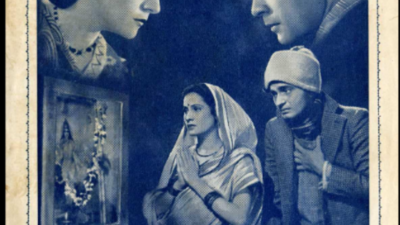
'कोई किसी से दिल न लगाये' 1941 की रणजीत मूवीटोन फ़िल्म शादी में कांतिलाल द्वारा गाया गीत है, संगीत खेमचंद प्रकाश का। शीर्षक की चेतावनी — कि किसी को अपना दिल नहीं देना चाहिए — फ़िल्म के विवाह में विश्वासघात और पुनर्मिलन के विषय से मेल खाती है, और मुख्यतः ख़ुर्शीद-प्रधान संगीत के भीतर पुरुष-स्वर का प्रतिनिधित्व करती है।
अंग्रेज़ी में पढ़ें · Read in English
'Koi Kisi Se Dil Na Lagaye' is a song sung by Kantilal in the 1941 Ranjit Movietone film Shaadi, composed by Khemchand Prakash. The title's warning — that one should not give one's heart away — fits the film's theme of betrayal and reconciliation in marriage, and represents the male voice within an otherwise Khursheed-dominated score.
काव्य The Poetry
'कोई किसी से दिल न लगाये' — 'कोई किसी को दिल न लगाए' — ज़ाहिदाना या चेतावनी-भरे प्रेम-गीत की श्रेणी में आता है: यह प्रेम को वांछनीय लक्ष्य नहीं, खतरे के रूप में प्रस्तुत करता है। तृतीय-पुरुष सार्वभौमिक संबोधन ('कोई', 'किसी') — अंतरंग 'तू' या 'तुम' के बजाय — संकेत देता है कि वक्ता किसी प्रिय को नहीं, बल्कि सामान्य चेतावनी दे रहा है — व्यक्तिगत अनुभव से सीखा पाठ दुनिया को दे रहा है। यह उपदेशात्मक-अंतरंग संकर उर्दू ग़ज़ल में एक मान्य मुद्रा है, जहाँ वक्ता का प्रेम-भ्रम उस ज्ञान के रूप में प्रस्तुत होता है जिससे दूसरे लाभ उठाएँ। 'दिल लगाना' मुहावरे में 'लगाना' आसक्त होने का बोध देता है — प्रेम को मुक्ति नहीं, फँसाव बताता है। गायक कांतिलाल ने इस गीत को गाया — वे 1940 के दशक की शुरुआत में बम्बई फ़िल्म उद्योग में सक्रिय एक पुरुष स्वर थे।
अंग्रेज़ी में पढ़ें · Read in English
The title 'Koi Kisi Se Dil Na Lagaye' — 'let no one give their heart to anyone' — belongs to the category of the zāhidānah or cautionary love-lyric, a song that presents love not as a desirable end but as a danger to be warned against. The third-person universal address ('koi', 'kisi') rather than an intimate 'tu' or 'tum' signals that the speaker is not addressing a beloved but issuing a general warning — broadcasting a lesson learned from personal experience to the world at large. This didactic-intimate hybrid, where the singer's pain becomes public counsel, is a recognised stance in Urdu ghazal poetry, where the speaker's disillusionment with love is presented as wisdom others should profit from. The verb 'lagānā' in 'dil lagānā' (to attach the heart, to fall in love) is idiomatic Hindi-Urdu for falling in love, but it carries the connotation of adhesion, of being stuck — implying that love is a form of entrapment rather than liberation. The lyricist for this number is not per-song documented (the film Shaadi credits Munshi Dil and D. N. Madhok at the film level), but whoever wrote this lyric worked in the cautionary-romantic tradition. Singer Kantilal, who performed this number, was a male vocalist active at several studios in the early 1940s Bombay film industry.
कहानी The Story
शादी (1941) रणजीत मूवीटोन की निर्मिति थी — बम्बई के 1930 और 1940 के दशक के सबसे स्थापित और व्यावसायिक रूप से सफल स्टूडियो में से एक, जिसकी स्थापना 1929 में चंदूलाल शाह ने की थी। रणजीत मूवीटोन की निर्मितियाँ अपनी परिष्कृतता, मजबूत महिला-प्रमुख और संगीत-सामग्री के प्रति प्रतिबद्धता के लिए जानी जाती थीं; स्टूडियो की इस काल की सबसे प्रमुख गायिका ख़ुर्शीद थीं। कांतिलाल का 'कोई किसी से दिल न लगाये' महिला-प्रधान गीतों के बीच शादी की संगीत-पट्टी में पुरुष-स्वर का योगदान था। संगीत खेमचंद प्रकाश ने रचा। फ़िल्म का विषय — विवाह — और प्रेम के खतरों, धोखे और वैवाहिक पुनर्मिलन का काव्यात्मक उपचार रणजीत की सामाजिक ड्रामा चिंताओं को दर्शाता है। खेमचंद प्रकाश 1940 के दशक की शुरुआत में अपनी रचनात्मक शक्ति के शीर्ष पर थे; वे बाद में महल (1949) के लिए किंवदंती बनी 'आएगा आनेवाला' रचेंगे — 1950 में लगभग 45 वर्ष की आयु में उनकी असामयिक मृत्यु से पहले।
अंग्रेज़ी में पढ़ें · Read in English
Shaadi (1941) was a Ranjit Movietone production — one of the most established and commercially successful studios in Bombay during the 1930s and early 1940s, founded by Chandulal Shah in 1929. Ranjit Movietone's productions were known for their polish, their strong female leads, and their commitment to musical content; the studio's most prominent singer in this period was Khursheed (Khurshid), and 'Koi Kisi Se Dil Na Lagaye' by Kantilal represented the studio's male vocal contribution to the Shaadi soundtrack alongside the female-dominated numbers. Khemchand Prakash composed the score. The film's theme of marriage — 'shaadi' means wedding — and its lyrical treatment of love's dangers and the possibility of betrayal and reconciliation within marriage reflects the social-drama concerns of Ranjit's films. Khemchand Prakash was at the height of his creative powers at Ranjit in the early 1940s; he would go on to compose the legendary 'Aayega Aanewala' for Mahal (1949) before his early death in 1950 at around age 45. The film credits Munshi Dil and D. N. Madhok as the principal lyricists for the soundtrack at the film level, though per-song attribution has not been confirmed.
विरासत The Legacy
खेमचंद प्रकाश की प्रतिष्ठा इस रणजीत मूवीटोन काल से उनकी मरणोपरांत महल (1949) की 'आएगा आनेवाला' के साथ जुड़ाव से पुनर्जीवित और विस्तारित हुई — हिंदी फ़िल्म इतिहास के सबसे प्रसिद्ध गीतों में से एक। प्रकाश के करियर पर चर्चा करने वाले संगीत-इतिहासकार उनके 1940 के दशक के रणजीत मूवीटोन कार्य को उस विशिष्ट स्वर-संवेदनशीलता की नींव के रूप में निरंतर संदर्भित करते हैं जो उनकी परवर्ती उपलब्धियों में उभरी। यद्यपि 'कोई किसी से दिल न लगाये' को इस पूर्वव्यापी साहित्य में स्वयं उद्धृत नहीं किया गया है, खेमचंद प्रकाश द्वारा आकारित रणजीत मूवीटोन कॉर्पस के भाग के रूप में इसका अस्तित्व उस करियर के चाप को समझने में प्रलेखनीय मूल्य देता है।
अंग्रेज़ी में पढ़ें · Read in English
Khemchand Prakash's reputation from this Ranjit Movietone period was revived and enormously amplified by his posthumous association with 'Aayega Aanewala' from Mahal (1949) — one of the most celebrated songs in Hindi film history. Music historians discussing Prakash's career consistently reference his 1940s Ranjit Movietone work as the foundation that produced the distinctive harmonic sensibility of his later achievements. While 'Koi Kisi Se Dil Na Lagaye' itself is not cited in this retrospective literature, its existence as part of the Ranjit Movietone corpus shaped by Khemchand Prakash gives it documentary value in understanding the arc of that career. Kantilal's work in Shaadi has not been the subject of separate critical attention; his contribution here is documented as a historical data point in the record of male playback singing in early 1940s Bombay.
वर्गीकरण
ClassificationGenre
अन्य विवरण
More Details- hindigeetmala.net — Shaadi (1941) song listing with Kantilal singer credit
- Hindi Film Geet Kosh Vol. 3 — 1941 entries
- Khemchand Prakash biographical documentation: Ranjit Movietone career and Mahal (1949)
- Ranjit Movietone studio history: founded 1929 by Chandulal Shah, documented in Indian cinema histories
References
रोचक तथ्य
Margin Notesशादी (1941) की निर्माता कंपनी रणजीत मूवीटोन भारत के सबसे व्यावसायिक रूप से सफल फ़िल्म स्टूडियो में से एक थी, जिसकी स्थापना 1929 में चंदूलाल शाह ने की थी; यह स्टूडियो विशेष रूप से महिला-प्रधान सामाजिक फ़िल्मों और फ़िल्म संगीत में अपने गहरे निवेश के लिए जाना जाता था।
अंग्रेज़ी में पढ़ें · Read in English
Ranjit Movietone, the producer of Shaadi (1941), was one of India's most commercially successful film studios, founded in 1929 by Chandulal Shah; it was particularly known for female-led social dramas and its deep investment in film music.
शादी (1941) का संगीत रचने वाले संगीतकार खेमचंद प्रकाश ने बाद में महल (1949) के लिए 'आएगा आने वाला' की रचना की — जिसे व्यापक रूप से हिंदी फ़िल्म संगीत के स्वर्ण-युग की एक परिभाषित उपलब्धि माना जाता है — इसके कुछ ही समय बाद 1950 में लगभग 45 वर्ष की आयु में उनका निधन हो गया।
अंग्रेज़ी में पढ़ें · Read in English
Composer Khemchand Prakash, who scored Shaadi (1941), would later compose 'Aayega Aanewala' for Mahal (1949) — a song widely cited as one of the defining achievements of the golden era of Hindi film music — before his death in 1950 aged approximately 45.
गायक कांतिलाल 1940 के दशक की शुरुआत में रणजीत मूवीटोन और संबद्ध स्टूडियो में एक दर्ज पुरुष पार्श्वगायक थे; शादी के लिए उनका गीत उस साउंडट्रैक में पुरुष स्वर का प्रतिनिधित्व करता है जिस पर स्टूडियो की प्रमुख गायिका ख़ुर्शीद का प्रभुत्व था।
अंग्रेज़ी में पढ़ें · Read in English
Singer Kantilal was a documented male playback vocalist at Ranjit Movietone and related studios in the early 1940s; his song for Shaadi represents the male voice within a score dominated by the studio's leading female singer Khursheed.
शादी (1941) के गीतकारों के रूप में मुंशी दिल और डी.एन. मधोक को दर्ज किया गया है; डी.एन. मधोक (1900-1982) उस युग के सर्वाधिक विपुल गीतकारों में से थे, जिनका श्रेय हिंदी सिनेमा के चार दशकों तक फैला है।
अंग्रेज़ी में पढ़ें · Read in English
The film-level lyricists for Shaadi (1941) are documented as Munshi Dil and D. N. Madhok; D. N. Madhok (1900–1982) was among the most prolific lyricists of the era, with credits spanning four decades of Hindi cinema.
नमूना-पट्टी
The Specimen Table| शीर्षक | कोई किसी से दिल न लगाये · Koi Kisi Se Dil Na Lagaye |
|---|---|
| फ़िल्म | शादी · 1941 |
| वर्ष · युग | 1941 |
| गायक | Kantilal |
| संगीतकार | Khemchand Prakash |
| स्वरूप | एकल पुरुष |
| भाषा | hindi |
| भाव | उदास · दार्शनिक |
| लोकप्रियता | Obscure |
| बोल-स्थिति | केवल झलक |
जुड़े हुए पन्ने
Connected Plates · The Graph Made Visibleअटलस में कोई पन्ना अकेला नहीं — इस गीत से जुड़े गीत, कलाकार, फ़िल्म, राग-ताल-विधा, सब यहाँ से खुलते हैं।
मिलते-जुलते गीत · Related Songs
कलाकार · The Artists
फ़िल्म · The Film
साझा कीजिए · Share this Plate