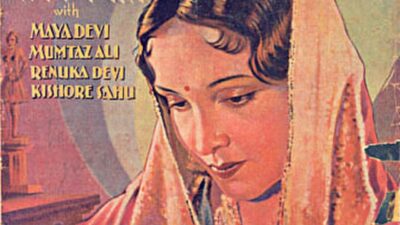
गीत विंग · गीत-पट्टिका · Song Plate
गा तु हरि गुन गा
Gaa Tu Hari Gun Gaa
1941 की सामाजिक फ़िल्म प्रभात का एक भक्ति-गीत — 'हरि के गुण गा' — फ़कीर मोहम्मद की आवाज़ में।
भावभक्ति · आध्यात्मिक
भाषाhindi स्वरूपएकल पुरुष
श्रेय
The Creditsसूत्र-वाक्य · The Hook
सूत्र-वाक्य
1941 की सामाजिक फ़िल्म प्रभात का एक भक्ति-गीत — 'हरि के गुण गा' — फ़कीर मोहम्मद की आवाज़ में।
In EnglishA devotional 'sing the praises of Hari' number from the 1941 social Prabhat, sung by Fakir Mohammed.
पट्टिका-लेख
The Monographपरिचय Overview
'गा तु हरि गुन गा' विष्णु (वी.एम.) व्यास की 1941 की सामाजिक ड्रामा प्रभात का एक भक्ति-गीत है, जो बचे हुए गीत-डेटाबेस में फ़कीर मोहम्मद के पार्श्वगायन के साथ दर्ज है। फ़िल्म का संगीत-निर्देशन श्रेय मानक संदर्भों के बीच विवादित है, इसलिए यहाँ केवल सत्यापित गायक दर्ज किया गया है। यह एक मेटाडेटा/खोज प्रविष्टि है — पूर्ण बोल संग्रहीत नहीं किए गए।
अंग्रेज़ी में पढ़ें · Read in English
'Gaa Tu Hari Gun Gaa' is a devotional number from Vishnu (V.M.) Vyas's 1941 social drama Prabhat, documented in surviving song databases with playback by Fakir Mohammed. The film's music-direction credit is disputed between standard references, so only the verified singer is recorded here. This is a metadata/discovery entry — no full lyrics are stored.
काव्य The Poetry
शीर्षक 'गा तु हरि गुन गा' एक दोहरे आदेश के रूप में निर्मित है: 'गा' (गाओ) आरंभ और अंत दोनों में आता है, 'हरि गुन' (हरि की महिमा) को एक ऐसे ढाँचे में लपेटे हुए जो स्वयं एक साथ गीत-आज्ञा और भक्ति-संकेत है। 'तु' (तुम, अंतरंग संबोधन में) गायक के अपने स्व को संबोधित — मध्यकालीन संतों से चली आती भक्ति पद्य की एक परिपाटी है: कबीर अपने 'मन' को संबोधित करते हैं, मीराबाई अपने हृदय से बात करती हैं, तुकाराम अपनी जीभ को परमात्मा की स्तुति के लिए प्रेरित करते हैं। फ़िल्मी गीत के मुहावरे में यह शिल्प आत्मीयता उत्पन्न करता है — दर्शक को संबोधित 'तु' और इस आदेश का साक्षी, दोनों की भूमिका में एक साथ। क्रिया 'गुण गाना' (गुणों/महिमा का गायन) भक्ति शब्दावली की सबसे पुरानी संयुक्त क्रियाओं में से एक है, जो संस्कृत 'गुण' (विशेषता, सद्गुण) से भक्ति कवियों की लोकभाषा के माध्यम से छनकर आई है।
अंग्रेज़ी में पढ़ें · Read in English
The title 'Gaa Tu Hari Gun Gaa' is constructed as a doubled imperative: 'gaa' (sing) appears at both start and end, wrapping 'hari gun' (the praises of Hari) in a frame that is itself a song-command and a devotional gesture simultaneously. The 'tu' (you, in intimate address) directed at the singer's own self is a convention of bhakti verse going back to medieval saints: Kabir addressing his own 'mana' (mind), Mirabai speaking to her own heart, Tukaram urging his own tongue to praise the divine. In the film-song register, this device creates intimacy by positioning the audience as both the 'tu' addressed and the witness to the instruction. The verb 'gun gaana' (to sing the virtues/praises) is among the oldest compound verbs in bhakti vocabulary, drawing on Sanskrit 'guna' (quality, virtue) filtered through the bhakti poets' vernacular usage.
कहानी The Story
प्रभात (1941) का निर्देशन वी.एम. (विष्णु मोरेश्वर) व्यास ने किया था, जो प्रारंभिक बोली-युग में कई सामाजिक-नाटक फ़िल्मों में सक्रिय बंबई के फ़िल्मकार थे। फ़कीर मोहम्मद — इस गीत के दर्ज गायक — एक गायक-अभिनेता थे जो उस दौर की कई बंबई फ़िल्मों में दिखे, पार्श्वगायन और परदे पर दोनों भूमिकाओं में। 1940 के दशक के आरंभिक सामाजिक नाटकों में भजन-शैली के भक्ति गीत नियमित रूप से घरेलू या सामुदायिक जीवन की कहानियों में अंतर्निहित होते थे; वे अन्यथा धर्मनिरपेक्ष कथा-संसार में नैतिक अधिकार और आध्यात्मिक आकांक्षा के चिह्न के रूप में काम करते थे। 'गा तु हरि गुन गा' (गाओ, हरि के गुण गाओ) अपने गायक को इसी परंपरा में रखता है: गाने का यह आदेश — स्वयं को या एक निहित श्रोता को संबोधित — स्वयं एक भक्ति-कर्म है, जो प्रदर्शन को प्रार्थना में समेट लेता है।
अंग्रेज़ी में पढ़ें · Read in English
Prabhat (1941) was directed by V.M. (Vishnu Moreshwar) Vyas, a Bombay filmmaker active across multiple social-drama productions in the early sound era. Fakir Mohammed — the film's documented singer for this number — was a singer-actor who appeared in several Bombay films of the period, working across both playback and onscreen roles. In the social dramas of the early 1940s, bhajan-style devotional numbers were regularly embedded within narratives of domestic or community life; they served as markers of moral authority and spiritual aspiration within the otherwise secular story-world. 'Gaa Tu Hari Gun Gaa' (Sing, sing the praises of Hari) places its singer in this tradition: the instruction to sing — directed at the self or at an implied listener — is itself a devotional act, collapsing performance into prayer.
वर्गीकरण
ClassificationGenre
अन्य विवरण
More Details- https://www.imdb.com/title/tt0386725/
- https://www.bollywoodhungama.com/movie/prabhat/
- https://www.bollywoodmdb.com/movies/prabhat/11644
References
रोचक तथ्य
Margin Notesइस गीत के दर्ज गायक फ़क़ीर मोहम्मद, 1930 के दशक के अंत और 1940 के दशक की शुरुआत की बॉम्बे फ़िल्मों में सक्रिय गायक-अभिनेता थे, जो पार्श्वगायन और परदे पर, दोनों भूमिकाओं में नज़र आते थे।
अंग्रेज़ी में पढ़ें · Read in English
Fakir Mohammed, the documented singer of this song, was a singer-actor active in Bombay productions of the late 1930s and early 1940s, appearing in both playback and onscreen roles.
स्वयं को संबोधित निर्देश की संरचना — 'गा तू' (तू गा) — भक्ति-काव्य की एक संरचनात्मक पहचान है, जो कबीर, मीराबाई और तुकाराम जैसे मध्यकालीन संत-कवियों तक जाती है।
अंग्रेज़ी में पढ़ें · Read in English
The instruction-to-self construction — 'gaa tu' (you, sing) — is a structural hallmark of bhakti verse going back to medieval saint-poets including Kabir, Mirabai, and Tukaram.
निर्देशक वी.एम. व्यास बॉम्बे में सामाजिक-नाटक विधा में काम करते थे; प्रभात (1941) के लिए विवादित संगीत-निर्देशन श्रेय उस दौर के छोटे स्टूडियो में स्टाफ़ संगीतकारों बनाम अनुबंधित संगीतकारों को लेकर आम अभिलेखीय अनिश्चितता को दर्शाता है।
अंग्रेज़ी में पढ़ें · Read in English
Director V.M. Vyas worked in the social-drama genre in Bombay; the disputed music-direction credit for Prabhat (1941) reflects the common archival uncertainty about staff composers vs. contracted musicians in small studios of the period.
नमूना-पट्टी
The Specimen Table| शीर्षक | गा तु हरि गुन गा · Gaa Tu Hari Gun Gaa |
|---|---|
| फ़िल्म | प्रभात · 1941 |
| वर्ष · युग | 1941 |
| गायक | Fakir Mohammed |
| स्वरूप | एकल पुरुष |
| भाषा | hindi |
| भाव | भक्ति · आध्यात्मिक |
| लोकप्रियता | Obscure |
| बोल-स्थिति | केवल झलक |
जुड़े हुए पन्ने
Connected Plates · The Graph Made Visibleअटलस में कोई पन्ना अकेला नहीं — इस गीत से जुड़े गीत, कलाकार, फ़िल्म, राग-ताल-विधा, सब यहाँ से खुलते हैं।
मिलते-जुलते गीत · Related Songs
कलाकार · The Artists
फ़िल्म · The Film
साझा कीजिए · Share this Plate