गीत विंग · गीत-पट्टिका · Song Plate
तुम बिन कल न आवे मोहे
Tum Bin Kal Na Aave Mohe
तुम बिन मुझे चैन नहीं आता — कानन देवी विरह को ठहराव की तरह गाती हैं।
भावउदास · रोमांटिक
भाषाhindi गतिधीमी स्वरूपएकल महिला
श्रेय
The Creditsसूत्र-वाक्य · The Hook
सूत्र-वाक्य
तुम बिन मुझे चैन नहीं आता — कानन देवी विरह को ठहराव की तरह गाती हैं।
In EnglishWithout you, no peace comes to me — Kanan Devi sings longing as stillness.
पट्टिका-लेख
The Monographपरिचय Overview
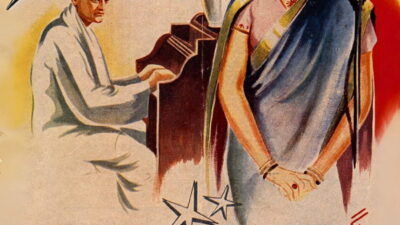
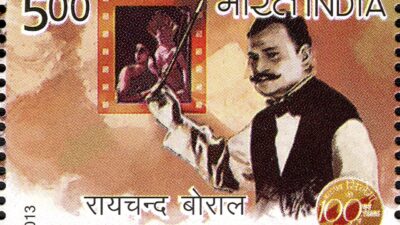
'तुम बिन कल न आवे मोहे' लगन (1941) का एक कानन देवी एकल है, जिसे आर.सी. बोराल ने रचा और डी.एन. माधोक ने लिखा। अनुपस्थित प्रिय के विरह का यह गीत उन कानन देवी गीतों में से है जिन्हें फ़िल्म की व्यावसायिक सफलता का श्रेय दिया जाता है।
अंग्रेज़ी में पढ़ें · Read in English
'Tum Bin Kal Na Aave Mohe' is a Kanan Devi solo from Lagan (1941), composed by R.C. Boral with lyrics by D.N. Madhok. A song of longing for an absent beloved, it is among the Kanan Devi numbers credited with carrying the film's commercial success.
काव्य The Poetry
कानन देवी के लिए डी.एन. माधोक का गीत 'कल' शब्द पर टिका है — जो हिंदी में एक साथ दो अर्थ रखता है: 'चैन/आराम' और 'कल' (अगला दिन)। 'तुम बिन कल न आवे मोहे' को दोनों तरह पढ़ा जा सकता है: 'तुम्हारे बिना मुझे चैन नहीं आता' और 'तुम्हारे बिना मेरा कल नहीं आता।' यह व्याकरणिक द्विअर्थता, चाहे जानबूझकर हो या विरह-काव्य की परंपरा से आकारित, शीर्षक वाक्यांश को असामान्य घनत्व देती है। यह गीत बिरहा-गीत के रूप में है — अनुपस्थित प्रिय के लिए स्त्री का विलाप — जिसकी जड़ें भागवत की गोपी-गीतों से मीराबाई होते हुए ठुमरी परंपरा तक जाती हैं। माधोक इस प्राचीन रूप को फ़िल्म-पद्य में ढालते हैं: ब्रज का 'मोहे' (मुझे, पुरातन स्त्रीलिंग प्रयोग) शीर्षक को देशी काव्य-परंपरा में जमीन देता है।
अंग्रेज़ी में पढ़ें · Read in English
D.N. Madhok's lyric for Kanan Devi hinges on the word 'kal' — which in Hindi carries two meanings simultaneously: 'peace/rest' and 'tomorrow'. 'Tum bin kal na aave mohe' can be read both as 'Without you, peace does not come to me' and 'Without you, tomorrow does not come for me'. This grammatical doubleness, whether deliberate or shaped by the tradition of virah (separation) poetry, gives the title phrase unusual density. The song belongs to the biraha-geet form — the woman's lament for the absent beloved — which has roots stretching back to the gopis' songs in the Bhagavatam and forward through Mirabai to the Thumri tradition. D.N. Madhok adapts this ancient form into film verse: the Braj 'mohe' (to me, archaic feminine usage) grounds the title in the vernacular poetic tradition even as the rest of the lyric uses standard Hindi.
कहानी The Story
लगन (1941) में कानन देवी की भूमिका ने उन्हें के.एल. सहगल के बराबर परदे का अवसर दिया, और फ़िल्म में उनके पाँच गीतों ने भक्ति ('तुम ही मेरे मंदिर') से रोमांटिक ('तुम बिन कल न आवे') से चंचल ('मदभरी मदभरी') तक की रेंज दिखाई। विविधता ने सहगल की तुलना में उनकी व्यापक रेंज का प्रदर्शन किया, और आर.सी. बोराल ने उनके लिए उन रजिस्टरों में रचा जो सहगल की गहरी मननशील शैली की बजाय उनकी आवाज़ की उज्जवलता को समायोजित करते थे। 'तुम बिन कल न आवे मोहे' फ़िल्म का महिला-विरह गीत था — कथानक में पुरुष नायक के दार्शनिक चिंतन का प्रतिरूप। निर्देशक नितिन बोस ने महिला गीतों को उन क्षणों पर रखा जहाँ रोमांटिक कथानक को नायिका की आंतरिकता की अभिव्यक्ति की जरूरत थी।
अंग्रेज़ी में पढ़ें · Read in English
Kanan Devi's role in Lagan (1941) gave her equal screen space to K.L. Saigal, and her five songs in the film ran the range from devotional ('Tum Hi Mere Mandir') through romantic ('Tum Bin Kal Na Aave') to playful ('Madbhari Madbhari'). The variety demonstrated her wider range than Saigal's, and R.C. Boral composed for her in registers that accommodated her voice's brightness rather than Saigal's deeper contemplative mode. 'Tum Bin Kal Na Aave Mohe' was the film's female longing song — narratively the counterpart to the male protagonist's philosophical meditations. Director Nitin Bose placed the film's female songs at moments where the romantic plot required articulation of the heroine's interiority.
विरासत The Legacy
कानन देवी ने लगन के बांग्ला संस्करण (परिचय/परिचया) के लिए 1942 में बंगाल फ़िल्म पत्रकार संघ का सर्वश्रेष्ठ अभिनेत्री पुरस्कार जीता, और उनके करियर के पूर्वव्यापी वृत्तांत लगातार लगन के गीतों — विशेषकर उनके विरह एकल — को उस मान्यता का केंद्र मानते हैं। 'तुम बिन कल न आवे मोहे' विरह-गीत परंपरा से था जो शास्त्रीय काल के दौरान भारतीय फ़िल्म संगीत में एक श्रेणी के रूप में बनी रही। 1950 के दशक की आकाशवाणी पूर्वव्यापी शृंखलाओं से कानन देवी को जानने वाले श्रोताओं ने इस प्रकार की संख्या को उनकी पहचान के रूप में पहचाना।
अंग्रेज़ी में पढ़ें · Read in English
Kanan Devi won the Bengal Film Journalists' Association Best Actress award in 1942 for the Bengali version of Lagan (titled Porichoy/Parichaya), and retrospective accounts of her career consistently cite the Lagan songs — particularly her longing solos — as central to that recognition. 'Tum Bin Kal Na Aave Mohe' belonged to the virah-geet tradition that persisted as a category in Indian film music through the classical period; listeners who discovered Kanan Devi through All India Radio retrospectives of the 1950s would have known this type of number as her signature. The 'kal' double-meaning in the title was noted by at least one commentator as an example of Madhok's quiet structural intelligence.
वर्गीकरण
Classification- Tempo
- Slow
Genre
अन्य विवरण
More Details- Wikipedia: Lagan (1941 film) — https://en.wikipedia.org/wiki/Lagan_(1941_film)
- Wikipedia: Kanan Devi — https://en.wikipedia.org/wiki/Kanan_Devi
- Wikipedia: D.N. Madhok — https://en.wikipedia.org/wiki/D._N._Madhok
References
रोचक तथ्य
Margin Notesकानन देवी (1916–1992) हिंदी-बंगाली सिनेमा की पहली महिला सुपरस्टार्स में से एक थीं; लगन (1941) में उनके पाँच गीतों ने उसी फ़िल्म में के.एल. सहगल के गीतों की तुलना में अधिक व्यापक भावनात्मक दायरा प्रस्तुत किया।
अंग्रेज़ी में पढ़ें · Read in English
Kanan Devi (1916–1992) was one of the first female superstars of Hindi-Bengali cinema; her five songs in Lagan (1941) covered a wider emotional range than those of K.L. Saigal in the same film.
लगन के बंगाली संस्करण का शीर्षक 'परिचय' (पोरिचोय) था; कानन देवी ने उस संस्करण में अपने अभिनय के लिए 1942 में बंगाल फ़िल्म जर्नलिस्ट्स एसोसिएशन का सर्वश्रेष्ठ अभिनेत्री पुरस्कार जीता।
अंग्रेज़ी में पढ़ें · Read in English
The Bengali version of Lagan was titled Porichoy (also written Parichaya); Kanan Devi won the Bengal Film Journalists' Association Best Actress award in 1942 for her performance in that version.
शीर्षक में प्रयुक्त ब्रज/अवधी शब्द 'मोहे' (मुझे) विरह-गीत परंपरा से लिया गया एक प्राचीन स्त्रीलिंग प्रयोग है, जो इस गीत को भाषाई रूप से सदियों पुरानी उत्तर भारतीय स्त्री-विलाप काव्य-परंपरा में जड़ें देता है।
अंग्रेज़ी में पढ़ें · Read in English
The Braj/Awadhi word 'mohe' (to me) in the title is an archaic feminine usage drawn from the virah-geet tradition, grounding the song linguistically in the centuries-old North Indian woman's lament poetry.
डी.एन. मधोक ने लगन में कानन देवी के छह में से पाँच गीतों के बोल लिखे, जबकि आरज़ू लखनवी ने सहगल के एक या दो गीतों के बोल लिखे — जो न्यू थिएटर्स की किसी प्रस्तुति के लिए एक असामान्य दोहरी-गीतकार व्यवस्था थी।
अंग्रेज़ी में पढ़ें · Read in English
D.N. Madhok provided lyrics for five of the six Kanan Devi songs in Lagan, while Arzoo Lucknowi contributed lyrics for one or two of the Saigal numbers — an unusual dual-lyricist arrangement for a New Theatres production.
नमूना-पट्टी
The Specimen Table| शीर्षक | तुम बिन कल न आवे मोहे · Tum Bin Kal Na Aave Mohe |
|---|---|
| फ़िल्म | लगन · 1941 |
| वर्ष · युग | 1941 |
| गायक | Kanan Devi |
| गीतकार | D. N. Madhok |
| संगीतकार | Rai Chand Boral |
| स्वरूप | एकल महिला |
| गति | धीमी |
| भाषा | hindi |
| भाव | उदास · रोमांटिक |
| लोकप्रियता | Popular |
| बोल-स्थिति | केवल झलक |
जुड़े हुए पन्ने
Connected Plates · The Graph Made Visibleअटलस में कोई पन्ना अकेला नहीं — इस गीत से जुड़े गीत, कलाकार, फ़िल्म, राग-ताल-विधा, सब यहाँ से खुलते हैं।
मिलते-जुलते गीत · Related Songs
कलाकार · The Artists
फ़िल्म · The Film
साझा कीजिए · Share this Plate