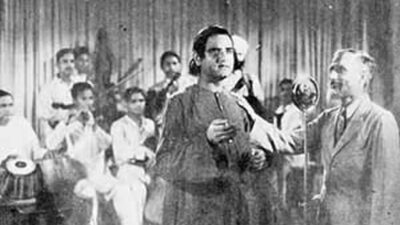
गीत विंग · गीत-पट्टिका · Song Plate
तुम बिन कैसे काटूँ सावन की रैन है
Tum Bin Kaise Katu Sawan Ki Rain Hai
तुम बिन सावन की रात कैसे कटे? — 'टॉरपीडो' (1941) से एक विरह-गीत।
भावविरह · उदास
भाषाhindi गतिधीमी
श्रेय
The Creditsसूत्र-वाक्य · The Hook
सूत्र-वाक्य
तुम बिन सावन की रात कैसे कटे? — 'टॉरपीडो' (1941) से एक विरह-गीत।
In EnglishHow shall I pass the monsoon night without you? — a viraha song from 'Torpedo' (1941).
पट्टिका-लेख
The Monographपरिचय Overview
'टॉरपीडो' (1941) का एक गीत, बोल क़ाबिल अमृतसरी के और संगीत श्याम बाबू पाठक एवं शांति कुमार का। शीर्षक एक उत्कृष्ट विरह-दृश्य रचता है — सावन की वह रात जो प्रिय के बिना नहीं कटती, हिंदी फ़िल्म-रोमांस के केंद्र का एक बिंब। उपलब्ध स्रोतों में गायक प्रलेखित नहीं है, और वहाँ कोई बोल प्रकाशित नहीं हैं।
अंग्रेज़ी में पढ़ें · Read in English
A song from 'Torpedo' (1941) with lyrics by Kabil Amritsari and music by Shyam Babu Pathak and Shanti Kumar. The title sets a classic viraha (separation) scene — the monsoon night that cannot be endured without the beloved, an image at the heart of Hindi film romanticism. The singer is not documented in the available sources, and no lyrics text is published there.
काव्य The Poetry
शीर्षक का प्रश्न — 'तुम बिन सावन की रात कैसे काटूँ?' — विरह-गीत के समस्त भावात्मक ढाँचे को एक पंक्ति में समेट देता है। 'सावन की रैन' (सावन की रात) एक सम्मिश्र बिंब है जो काल, ऋतु और भावना के अंधेरे को एक साथ संचित करता है: रात विरह का समय है, सावन वर्षा और तीव्र संवेदना का महीना है, और मिलकर ये दोनों प्रिय की अनुपस्थिति के सबसे चरम क्षण की रचना करते हैं। क़ाबिल अमृतसरी की काव्य-रचना पंजाबी-रंगी उर्दू परंपरा पर आधारित थी, जहाँ मानसून की संवेदनशीलता — नम मिट्टी, छत पर वर्षा की आवाज़, खाली बिस्तर को रोशन करती बिजली — विछोह की पीड़ा को शांत करने के बजाय और गहरा करती है। क्रिया 'काटूँ' (काटना, समय गुज़ारना) निर्णायक है: यह वक्ता को निष्क्रिय रूप से पीड़ित नहीं बल्कि रात से जूझते हुए दिखाती है — और इसी में गीत का तनाव और उसकी गरिमा है। प्रारंभ में 'तुम बिन' (तुम्हारे बिना) व्याकरणिक रूप से अनुपस्थिति को वर्णन से पहले ही स्थापित कर देता है।
अंग्रेज़ी में पढ़ें · Read in English
The title question — 'How shall I pass the monsoon night without you?' — compresses the entire emotional architecture of the viraha song into a single line. 'Sawan ki rain' (the monsoon night) is a compound image that layers temporal, seasonal and emotional darkness: night is the time of longing, Sawan is the month of rain and heightened sensory experience, and together they constitute the most extreme instance of the beloved's absence. Kabil Amritsari's lyric-writing drew on the Punjabi-inflected Urdu tradition, where the monsoon's sensory saturation — wet earth, the sound of rain on rooftops, lightning illuminating an empty bed — amplifies rather than soothes the ache of separation. The verb 'katun' (to pass, to cut through time) is key: it positions the speaker not as passively suffering but as actively struggling to survive the night — which gives the lyric its tension and its dignity. 'Tum bin' (without you) as the opening phrase enacts absence grammatically before the song has described it.
कहानी The Story
टॉरपीडो (1941) का निर्देशन एन.ए. मंसूरी ने किया था और इसमें यशवंत, मुनव्वर सुल्ताना, शाज़ादी, सैमसन, फ़ज़लू, गुलाब और अमीना थे। संगीत श्याम बाबू पाठक और शांति कुमार के बीच विभाजित था — उस दौर की एक सामान्य व्यवस्था जिसमें एकल फ़िल्म की संगीत-रचना दो संगीतकारों में बाँटी जाती थी — बोल अमृतसर के कवि क़ाबिल अमृतसरी के थे। फ़िल्म के पार्श्व-गायकों में राजकुमारी और गुलशन सूफ़ी थे, जो प्रारंभिक 1940 के हिंदी फ़िल्म परिपथ में सक्रिय दोनों गायक थे। 'तुम बिन कैसे काटूँ सावन की रैन है' उस बरसात-विरह धारा का अंग है जो उस काल के लगभग हर हिंदी फ़िल्म-संगीत में बहती थी: एक धीमे स्वर का विरह-गीत, जो इस केंद्रीय प्रश्न पर बना है कि प्रिय के बिना सावन की रात कैसे कटे। गीत का शीर्षक उस दौर की गीत-सूचियों में प्रमाणित है और डिजिटल अभिलेखागारों में कम-से-कम एक ऑडियो अपलोड उपलब्ध है, जो बताता है कि यह रिकॉर्डिंग बच गई।
अंग्रेज़ी में पढ़ें · Read in English
Torpedo (1941) was directed by N.A. Mansuri with a cast that included Yashwant, Munawar Sultana, Shazadi, Samson, Fazlu, Gulab and Ameena. The score was shared between Shyam Babu Pathak and Shanti Kumar — a common arrangement of the period in which compositional duties within a single film were divided between two music directors — with lyrics by the Amritsar-based poet Kabil Amritsari. The film's playback roster featured Rajkumari and Gulshan Sufi, both active singers in the early-1940s Hindi film circuit. 'Tum Bin Kaise Katu Sawan Ki Rain Hai' belongs to the monsoon-viraha strand that ran through virtually every Hindi film soundtrack of the era: a slow-tempo song of longing built on the central question of how to endure the monsoon night without the beloved. The song's title is confirmed in period song catalogues, and at least one audio upload exists in digital archives, indicating the recording survived.
वर्गीकरण
Classification- Tempo
- Slow
Genre
अन्य विवरण
More Details- https://www.hindilyrics4u.com/movie/torpedo.htm
- https://www.hindilyrics4u.com/song/tum_bin_kaise_katu_sawan_ki_rain_hai.htm
- https://cinemaazi.com/people/shyam-babu-pathak
References
रोचक तथ्य
Margin Notesटॉरपीडो (1941) का निर्देशन एन.ए. मंसूरी ने किया था और इसमें राजकुमारी तथा गुलशन सूफ़ी की पार्श्व-आवाज़ थी — ये दोनों हिंदी फ़िल्म-गायकी की स्वर्ण-युग-पूर्व पीढ़ी के गायक थे।
अंग्रेज़ी में पढ़ें · Read in English
Torpedo (1941) was directed by N.A. Mansuri and featured playback by Rajkumari and Gulshan Sufi — two singers from the pre-Golden-Era generation of Hindi film voices.
फ़िल्म का संगीत श्याम बाबू पाठक और शांति कुमार के बीच बँटा हुआ था, जो 1940 के दशक की शुरुआत की आम प्रथा — दोहरे संगीत निर्देशन — को दर्शाता है, जिसमें रचनात्मक जिम्मेदारी एक ही संगीत निर्देशक को सौंपने के बजाय दो संगीतकारों के बीच बाँटी जाती थी।
अंग्रेज़ी में पढ़ें · Read in English
The film's score was divided between Shyam Babu Pathak and Shanti Kumar, reflecting the common early-1940s practice of dual music direction, in which compositional duties were split between two composers rather than assigned to a single music director.
गीतकार काबिल अमृतसरी (जिन्हें क़ाबिल अमृतसरी भी लिखा जाता है) ने अमृतसर क्षेत्र की पंजाबी-उर्दू साहित्यिक परंपरा के भीतर काम किया — जो विभाजन से पहले, जब उद्योग की सांस्कृतिक भूगोल बदल गई, आरंभिक हिंदी फ़िल्म गीत-लेखन के महत्वपूर्ण उद्गम-स्थलों में से एक था।
अंग्रेज़ी में पढ़ें · Read in English
Kabil Amritsari (also spelled Qaabil Amritsari), the lyricist, worked within the Punjabi-Urdu literary tradition of the Amritsar region — one of the significant seedbeds for early Hindi film lyric-writing before Partition redirected the cultural geography of the industry.
इस गीत में निहित विरह-वर्षा काव्य-परंपरा की जड़ें गहरी शास्त्रीय हैं, जो संस्कृत में कालिदास के मेघदूत से होते हुए, ब्रजभाषा की भक्ति-कविता से गुज़रते हुए, उन 'सावन' गीतों तक पहुँचती हैं जो आरंभिक हिंदी टॉकी के पहले दशक से ही उसकी पहचान बन गए थे।
अंग्रेज़ी में पढ़ें · Read in English
The viraha-monsoon lyric tradition engaged by this song has deep classical roots, tracing back to Kalidasa's Meghaduta in Sanskrit, through Braj-bhasha devotional poetry, to the 'sawan' songs that became a staple of the early Hindi talkie from its first decade.
नमूना-पट्टी
The Specimen Table| शीर्षक | तुम बिन कैसे काटूँ सावन की रैन है · Tum Bin Kaise Katu Sawan Ki Rain Hai |
|---|---|
| फ़िल्म | टॉरपीडो · 1941 |
| वर्ष · युग | 1941 |
| गीतकार | Kabil Amritsari |
| संगीतकार | Shyam Babu Pathak, Shanti Kumar |
| गति | धीमी |
| भाषा | hindi |
| भाव | विरह · उदास |
| लोकप्रियता | Obscure |
| बोल-स्थिति | केवल झलक |
जुड़े हुए पन्ने
Connected Plates · The Graph Made Visibleअटलस में कोई पन्ना अकेला नहीं — इस गीत से जुड़े गीत, कलाकार, फ़िल्म, राग-ताल-विधा, सब यहाँ से खुलते हैं।
कलाकार · The Artists
फ़िल्म · The Film
साझा कीजिए · Share this Plate