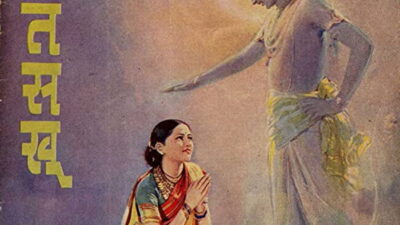
गीत विंग · गीत-पट्टिका · Song Plate
निंदिया आजा आजा री
Nindiyan Aaja Aaja Ri
प्रभात की संत-फ़िल्म 'संत सखू' (1941) का एक भक्ति-गीत, केशवराव भोले के भजन-रंगी संगीत में रचा हुआ।
भावभक्ति · पुरानी यादें · शांत
भाषाhindi गतिमध्यम स्वरूपलोरी
श्रेय
The Creditsसूत्र-वाक्य · The Hook
सूत्र-वाक्य
प्रभात की संत-फ़िल्म 'संत सखू' (1941) का एक भक्ति-गीत, केशवराव भोले के भजन-रंगी संगीत में रचा हुआ।
In EnglishA devotional number from Prabhat's saint-film 'Sant Sakhu' (1941), set to Keshavrao Bhole's bhajan-flavoured score.
पट्टिका-लेख
The Monographपरिचय Overview
"निंदिया आजा आजा री" फ़िल्म संत सखू (1941) में आता है — पूना की प्रभात फ़िल्म कंपनी द्वारा निर्मित और दामले–फ़त्तेलाल जोड़ी द्वारा निर्देशित हिंदी-मराठी संत-जीवनी। संगीत केशवराव भोले का है। फ़िल्म का संगीत महाराष्ट्रीय भक्ति परंपरा के भक्ति-भजन और अभंग मुहावरे में निहित है, जो प्रभात की प्रसिद्ध संत-फ़िल्म परंपरा के अनुरूप है। यहाँ पूरे बोल नहीं दिए गए हैं; यह केवल एक मेटाडेटा और खोज पृष्ठ है।
अंग्रेज़ी में पढ़ें · Read in English
"Nindiyan Aaja Aaja Ri" appears in Sant Sakhu (1941), the Hindi-Marathi saint biography produced by the Prabhat Film Company of Poona and directed by the Damle–Fattelal partnership. The music is by Keshavrao Bhole. The film's score is rooted in the devotional bhajan and abhang idiom of the Maharashtrian Bhakti tradition, in keeping with Prabhat's celebrated lineage of saint films. Full lyrics are not reproduced here; this is a metadata and discovery page only.
काव्य The Poetry
'निंदिया आजा आजा री' एक आह्वान-गीत है — निद्रा को सीधा संबोधन ('निंदिया', स्त्रीलिंग; 'री', स्त्रीलिंग संबोधन-कारक) जो विश्राम को बुलावा देता है। यह रूप 'लोरी' से निकटता से जुड़ा है और भक्ति परंपरा के प्राचीनतम गायन-रूपों में है: संत-कवि शांति की नींद के लिए विनती करता है, या दिव्यता को हृदय में उसी तरह विश्राम करने के लिए आमंत्रित करता है जैसे नींद शरीर में आती है। सखूबाई की कथा के सन्दर्भ में — एक श्रद्धालु महिला जो सास के अत्याचारों से पीड़ित है पर विट्ठल की भक्ति से बल पाती है — यह गीत एक अतिरिक्त आध्यात्मिक आयाम ग्रहण करता है: नींद समर्पण भी है, वह इच्छा-शक्ति का विराम जिसे भक्ति-काव्य परमात्मा के सम्मुख सर्वोत्तम मनःस्थिति मानता है। केशवराव भोले की रचना 1933 से प्रभात में शामिल होने के बाद उनके द्वारा साधे गए अभंग छंद और वारकरी भक्ति-सुर-प्रकारों पर आधारित होती — एक परंपरा जो तुकाराम और नामदेव की रचनाओं में निहित है।
अंग्रेज़ी में पढ़ें · Read in English
'Nindiyan Aaja Aaja Ri' is an invocation song — a direct address to sleep ('nindiyan', feminine; 'ri', feminine vocative) summoning rest. This form, closely related to the 'lori' or lullaby, is one of the oldest vocal genres in the Bhakti tradition: the saint-poet pleads for the peace of sleep, or calls on the divine to come and rest in the heart as sleep visits the body. In the context of Sakhubai's story — a devout woman persecuted by her in-laws but sustained by her devotion to Vitthal — the song takes on an additional spiritual dimension: sleep is also surrender, the cessation of willed effort that devotional poetry regards as the ideal posture before the divine. Keshavrao Bhole's setting for Prabhat's Sant Sakhu (1941) would have drawn on the abhanga metre and Varkari devotional melody-types he had mastered since joining Prabhat in 1933 — a tradition rooted in the compositions of Tukaram and Namdev.
कहानी The Story
संत सखू (1941) पूना की प्रभात फ़िल्म कंपनी द्वारा निर्मित और वी. दामले, एस. फ़त्तेलाल तथा राजा नेने की तिकड़ी द्वारा निर्देशित थी — वही तिकड़ी जिसने संत तुकाराम (1936) बनाई थी, जिसे वेनिस में ख्याति मिली थी। फ़िल्म में हंसा वाडकर ने भक्ति आंदोलन की महाराष्ट्रीय संत-कवयित्री सखूबाई की शीर्षक भूमिका निभाई। संगीत 1933 से प्रभात के मुख्य संगीतकार केशवराव भोले ने रचा, जिन्होंने पश्चिमी आर्केस्ट्रल वाद्यों को भजन और अभंग के साथ मिलाने में अग्रणी भूमिका निभाई थी। फ़िल्म हिंदी और मराठी दोनों संस्करणों में बनी थी। 'निंदिया आजा आजा री' फ़िल्म के भक्ति-स्वर से मेल खाता है: एक लोरी या निद्रा-आह्वान गीत घरेलू धर्मपरायणता के उन दृश्यों में फ़िट बैठता है जिनमें सखूबाई अपने घर में या ईश्वर के सम्मुख गाती है।
अंग्रेज़ी में पढ़ें · Read in English
Sant Sakhu (1941) was produced by the Prabhat Film Company of Poona and directed by the team of V. Damle, S. Fattelal, and Raja Nene — the same trio who had made Sant Tukaram (1936), which won acclaim at Venice. The film starred Hansa Wadkar in the title role of Sakhubai, a Maharashtrian saint-poet of the Bhakti movement. Music was composed by Keshavrao Bhole, Prabhat's chief music director since 1933, who had pioneered the integration of Western orchestral instruments with the bhajan and abhanga idiom. The film was produced in both Hindi and Marathi versions. 'Nindiyan Aaja Aaja Ri' fits the film's devotional register: a lullaby or sleep-invocation song would be consistent with the film's scenes of domestic piety, depicting Sakhubai singing to her household or to the divine.
विरासत The Legacy
संत सखू (1941) प्रभात फ़िल्म कंपनी की उस प्रसिद्ध संत-फ़िल्म परंपरा में स्थायी स्थान रखती है जिसमें संत तुकाराम (1936) और संत ज्ञानेश्वर (1940) भी हैं। फ़िल्म की नायिका हंसा वाडकर सखूबाई की इस भूमिका को अपने करियर की परिभाषित उपलब्धि मानती थीं। प्रभात की भक्ति-फ़िल्मों के लिए केशवराव भोले के संगीत को मराठी भक्ति-संगीत के आरंभिक सवाक् सिनेमा में रूपांतरण के बुनियादी उदाहरणों के रूप में अध्ययन किया जाता है — अभंग की ध्यानस्थ लय को आर्केस्ट्रल बनावट के साथ जोड़ने का उनका तरीक़ा ऐतिहासिक दृष्टि से महत्त्वपूर्ण रहा है। 'निंदिया आजा आजा री' के विशिष्ट पुनर्जन्म या कवर का कोई दस्तावेज़ नहीं मिलता, परंतु समग्र संत सखू संगीत-पट्टी प्रभात-युग के संग्रहों में सुरक्षित है और मराठी-हिंदी सिनेमा के इतिहास-ग्रंथों में स्टूडियो की गंभीर भक्ति-कला के प्रति प्रतिबद्धता के प्रमाण के रूप में उद्धृत होती है।
अंग्रेज़ी में पढ़ें · Read in English
Sant Sakhu (1941) holds a permanent place in Prabhat Film Company's celebrated canon of saint films, which includes Sant Tukaram (1936) and Sant Dnyaneshwar (1940). The film's lead, Hansa Wadkar, considered her performance as Sakhubai the defining role of her career. Keshavrao Bhole's scores for Prabhat's devotional films are studied as foundational examples of how Marathi Bhakti music was adapted for the early sound cinema, blending the abhanga's meditative pulse with orchestral arrangement. While no specific revival or cover of 'Nindiyan Aaja Aaja Ri' has been documented, the Sant Sakhu soundtrack as a whole is preserved in Prabhat-era collections and cited in histories of Marathi-Hindi cinema as evidence of the studio's commitment to serious devotional art.
वर्गीकरण
Classification- Tempo
- Medium
Genre
अन्य विवरण
More Details- https://en.wikipedia.org/wiki/Sant_Sakhu
- https://en.wikipedia.org/wiki/Keshavrao_Bhole
- https://en.wikipedia.org/wiki/Hansa_Wadkar
- https://indiancine.ma/DKI/info
References
रोचक तथ्य
Margin Notesसंत सखू (1941) का निर्देशन प्रभात फ़िल्म कंपनी की टीम — वी. दामले, एस. फतेहलाल और राजा नेने — ने किया, जो वेनिस में सराही गई फ़िल्म संत तुकाराम (1936) बनाने वाले वही निर्देशक थे।
अंग्रेज़ी में पढ़ें · Read in English
Sant Sakhu (1941) was directed by the Prabhat Film Company team of V. Damle, S. Fattelal, and Raja Nene — the same directors who made the Venice-acclaimed Sant Tukaram (1936).
हंसा वाडकर ने संत सखूबाई की शीर्षक भूमिका निभाई; वे इसे अपने करियर का सबसे निर्णायक अभिनय मानती थीं।
अंग्रेज़ी में पढ़ें · Read in English
Hansa Wadkar played the title role of saint Sakhubai; she considered it the defining performance of her career.
संगीत रचने वाले केशवराव भोले 1933 में प्रभात फ़िल्म कंपनी से जुड़े और वे पश्चिमी आर्केस्ट्रा वाद्ययंत्रों को भक्ति-भजन धुन-प्रकारों के साथ व्यवस्थित रूप से मिलाने वाले पहले भारतीय फ़िल्म संगीतकार थे।
अंग्रेज़ी में पढ़ें · Read in English
Keshavrao Bhole, who composed the music, joined Prabhat Film Company in 1933 and was the first Indian film composer to systematically integrate Western orchestral instruments with devotional bhajan melody-types.
संत सखू हिंदी और मराठी संस्करणों में एक साथ प्रदर्शित हुई, जो अपनी संत-फ़िल्मों के लिए द्विभाषी निर्माण की प्रभात की परंपरा को आगे बढ़ाती है।
अंग्रेज़ी में पढ़ें · Read in English
Sant Sakhu was released in simultaneous Hindi and Marathi versions, continuing Prabhat's practice of bilingual production for its saint films.
फ़िल्म महाराष्ट्र की सखूबाई की किंवदंती पर आधारित थी, जो एक भक्ति संत थीं और जिनकी कहानी वारकरी परंपरा में आंशिक रूप से लोक-कथा और आंशिक रूप से दर्ज धार्मिक इतिहास है।
अंग्रेज़ी में पढ़ें · Read in English
The film drew on the legend of Sakhubai of Maharashtra, a Bhakti saint whose story is part folk-legend and part documented religious history in the Varkari tradition.
नमूना-पट्टी
The Specimen Table| शीर्षक | निंदिया आजा आजा री · Nindiyan Aaja Aaja Ri |
|---|---|
| फ़िल्म | संत सखू · 1941 |
| वर्ष · युग | 1941 |
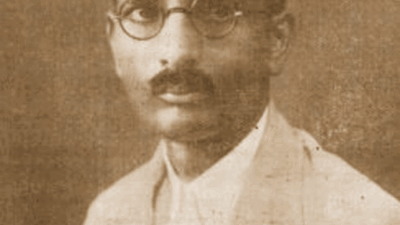
| संगीतकार | Keshavrao Bhole |
| स्वरूप | लोरी |
| गति | मध्यम |
| भाषा | hindi |
| भाव | भक्ति · पुरानी यादें · शांत |
| लोकप्रियता | Obscure |
| बोल-स्थिति | केवल झलक |
जुड़े हुए पन्ने
Connected Plates · The Graph Made Visibleअटलस में कोई पन्ना अकेला नहीं — इस गीत से जुड़े गीत, कलाकार, फ़िल्म, राग-ताल-विधा, सब यहाँ से खुलते हैं।
कलाकार · The Artists
फ़िल्म · The Film
साझा कीजिए · Share this Plate