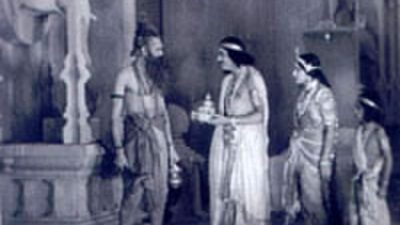
गीत विंग · गीत-पट्टिका · Song Plate
मैं प्रेम पतंग बन जाऊँगी
Mai Prem Patang Ban Jaungi
'मैं प्रेम की पतंग बन जाऊँगी' — मेरी ख़्वाहिश (1941) का उल्लासमय प्रथम-पुरुष प्रेम-संकल्प।
भावचुलबुला · रोमांटिक
भाषाhindi गतिमध्यम स्वरूपएकल महिला
श्रेय
The Creditsसूत्र-वाक्य · The Hook
सूत्र-वाक्य
'मैं प्रेम की पतंग बन जाऊँगी' — मेरी ख़्वाहिश (1941) का उल्लासमय प्रथम-पुरुष प्रेम-संकल्प।
In English'I will become love's kite' — a buoyant first-person romantic vow from Meri Khwahish (1941).
पट्टिका-लेख
The Monographपरिचय Overview
मेरी ख़्वाहिश (1941) के आठ गीतों के संगीत से एक रोमांटिक गीत, संगीत वसंत और शांति कुमार का, बोल बालम परदेसी और ए. के. सिंधु के। पतंग का बिंब — प्रेमी का किसी और के हाथों उड़ाए जाने को समर्पित होना — प्रेम के समर्पण का एक नाज़ुक रूपक है। स्त्रीलिंग क्रिया-रूप ('जाऊँगी') स्त्री-स्वर की ओर संकेत करता है, इसलिए गीत-प्रकार 'सोलो फ़ीमेल' दर्ज है; वास्तविक पार्श्व-गायिका उपलब्ध संदर्भों में दर्ज नहीं है।
अंग्रेज़ी में पढ़ें · Read in English
A romantic number from the eight-song score of Meri Khwahish (1941), with music by Vasant and Shanti Kumar and lyrics by Baalam Pardesi and A. K. Sindhu. The kite (patang) image — the lover surrendering to be flown by another's hand — is a delicate metaphor for the abandon of love. The feminine grammatical ending ('jaungi') points to a female voice, so the song-type is recorded as Solo Female; the actual playback singer is not documented in available references.
काव्य The Poetry
"मैं प्रेम पतंग बन जाऊँगी" — यह शीर्षक रोमांटिक आत्म-समर्पण को एक हल्के, उड़ते हुए बिंब में समेट लेता है। भारतीय लोककाव्य और मुहावरे में पतंग स्वेच्छा से झुकने की वस्तु है — वह उड़ती है क्योंकि कोई और उसकी डोर थामे है। पतंग बनने का प्रस्ताव यह है कि अपनी समस्त गति, दिशा और अस्तित्व प्रिय के विवेक पर छोड़ दो। बालम परदेसी और ए. के. सिंधु ने यह पंक्ति आरंभिक टॉकी परंपरा में रची, जब लोक-बिंब शहरी सिनेमाई दर्शकों के लिए ढाले जा रहे थे। स्त्रीलिंग क्रिया-रूप — "जाऊँगी" बजाय "जाऊँगा" — वक्ता को स्त्री स्थापित करता है, एकल-स्त्री वर्गीकरण के अनुरूप। "परदेसी" नाम (अर्थ: बाहरी, अजनबी) संकेत देता है कि ये गीतकार बंबई के बाहर से आए और क्षेत्रीय लोक-रंग को स्टूडियो में लाए। पतंग का यह रूपक आगे दशकों तक हिंदी फ़िल्म-कविता में प्रतिध्वनित होता रहा, लेकिन इस खोई हुई 1941 की फ़िल्म में यह उसके सबसे आरंभिक सिनेमाई रूपों में से एक है।
अंग्रेज़ी में पढ़ें · Read in English
The title "main prem patang ban jaungi" — "I will become love's kite" — distils an act of romantic self-surrender into a single, weightless image. The patang (kite) in Indian folk poetry and idiom is the quintessential object of willing submission: it soars only because another holds the string. To offer to become a kite is to place one's entire motion, direction, and existence at a lover's discretion. Lyricists Baalam Pardesi and A. K. Sindhu crafted this line in the early talkie tradition, when folk imagery was being systematically adapted for cinema's urban audiences. The feminine grammatical ending — "jaungi" rather than "jaunga" — establishes the speaker as a woman, consistent with the solo-female classification. "Pardesi" in Baalam Pardesi's name (meaning "stranger" or "one from outside") suggests a lyricist who brought regional folk textures into a Bombay studio environment. The patang metaphor would recur across decades of Hindi film poetry, but its 1941 deployment here, in a now-lost film, represents one of its earliest cinematic uses.
कहानी The Story
मेरी ख़्वाहिश (1941) आठ गीतों की एक फ़िल्म थी, जिसका संगीत वसंत और शांति कुमार की जोड़ी ने तैयार किया — यह सहयोगी मॉडल आरंभिक बंबई टॉकीज़ में सामान्य था, जहाँ संगीतकार प्रायः एक साथ कई फ़िल्मों का स्कोर साझा करते थे। फ़िल्म में शरीफ़ा अभिनीत थीं, और इसका शीर्षक "मेरी ख़्वाहिश" (मेरी इच्छा/कामना) एक स्त्री-लालसा पर केंद्रित रोमांटिक कहानी का संकेत देता है। बोल बालम परदेसी और ए. के. सिंधु ने संयुक्त रूप से लिखे — दोनों के जीवन-वृत्त अब बड़े पैमाने पर अज्ञात हैं। दोहरा-गीतकार श्रेय उस दौर में असामान्य नहीं था: स्टूडियो प्रायः अलग-अलग गानों के लिए अलग लेखकों को नियुक्त करते और यदि सहयोग एक पूरी फ़िल्म में फैला हो तो दोनों को श्रेय देते। "मैं प्रेम पतंग बन जाऊँगी" स्कोर के अधिक जीवंत, रोमांटिक गीतों में से एक था — इसकी मध्यम लय और खिलंदड़े-रोमांटिक मिज़ाज ने इसे उस युग की सामाजिक फ़िल्मों के विषादपूर्ण गीतों से अलग किया। मेरी ख़्वाहिश का कोई प्रिंट नहीं बचा है।
अंग्रेज़ी में पढ़ें · Read in English
Meri Khwahish (1941) was an eight-song production with music composed by the team of Vasant and Shanti Kumar — a collaborative model common in early Bombay talkies, where composers often shared a score across multiple films simultaneously. The film starred Sharifa, and its title, "Meri Khwahish" (My Desire / My Wish), suggests a romantic narrative centred on female longing. Lyrics were written jointly by Baalam Pardesi and A. K. Sindhu, two figures whose biographical details remain largely untraced. The dual-lyricist credit was not unusual in the period: studios often commissioned different writers for different songs and credited both when the collaboration was consistent across an entire film. "Mai Prem Patang Ban Jaungi" was one of the livelier, romantic numbers in the score — its medium tempo and playful-romantic mood set it apart from the more melancholic songs typical of the era's social films. No print of Meri Khwahish is known to survive.
वर्गीकरण
Classification- Tempo
- Medium
Genre
अन्य विवरण
More Details- hindigeetmala.net/movie/meri_khwahish.htm
- en.wikipedia.org/wiki/List_of_Hindi_films_of_1941
References
रोचक तथ्य
Margin Notesफ़िल्म के आठ गीतों का संगीत वसंत और शांति कुमार की जोड़ी ने रचा — यह प्रारंभिक सवाक् युग में बॉम्बे स्टूडियो की विशिष्ट सहयोगी संगीत-साझेदारियों में से एक थी।
अंग्रेज़ी में पढ़ें · Read in English
The film's eight songs were composed by the duo Vasant and Shanti Kumar, one of the collaborative musical partnerships typical of Bombay studios in the early sound era.
स्त्रीलिंग व्याकरणिक अंत "जाऊँगी" (न कि "जाऊँगा") इस बात की पुष्टि करता है कि गीत को स्त्री-एकल के रूप में लिखा और वर्गीकृत किया गया था — यह उन गिने-चुने आंतरिक संकेतों में से एक है जो गायक-श्रेय खो जाने पर भी बचे रहते हैं।
अंग्रेज़ी में पढ़ें · Read in English
The feminine grammatical ending "jaungi" (not "jaunga") confirms the song was scripted and classified as a female solo — one of the few internal markers that survive when singer credits are lost.
गीतकार बालम परदेसी का उपनाम "परदेसी" (जिसका अर्थ है "अजनबी" या "बाहरी व्यक्ति") संकेत देता है कि यह एक ऐसे लेखक थे जो किसी क्षेत्रीय पृष्ठभूमि से बॉम्बे आए और स्टूडियो में लोक-संवेदना लेकर आए।
अंग्रेज़ी में पढ़ें · Read in English
Lyricist Baalam Pardesi's surname "Pardesi" (meaning "stranger" or "outsider") suggests a writer who migrated to Bombay from a regional background, bringing folk sensibility to the studio.
नमूना-पट्टी
The Specimen Table| शीर्षक | मैं प्रेम पतंग बन जाऊँगी · Mai Prem Patang Ban Jaungi |
|---|---|
| फ़िल्म | मेरी ख़्वाहिश · 1941 |
| वर्ष · युग | 1941 |
| गीतकार | बालम परदेसी, A. K. Sindhu |
| संगीतकार | Vasant, Shanti Kumar |
| स्वरूप | एकल महिला |
| गति | मध्यम |
| भाषा | hindi |
| भाव | चुलबुला · रोमांटिक |
| बोल-स्थिति | केवल झलक |
जुड़े हुए पन्ने
Connected Plates · The Graph Made Visibleअटलस में कोई पन्ना अकेला नहीं — इस गीत से जुड़े गीत, कलाकार, फ़िल्म, राग-ताल-विधा, सब यहाँ से खुलते हैं।
कलाकार · The Artists
फ़िल्म · The Film
साझा कीजिए · Share this Plate