गीत विंग · गीत-पट्टिका · Song Plate
कोई मनुष्य कितना ही बुरा
Koi Manushya Kitna Hi Bura
कोई मनुष्य कितना ही बुरा क्यों न हो — सहगल मानव-मूल्य और मुक्ति का गीत गाते हैं।
भावदार्शनिक · Reflective
भाषाhindi गतिधीमी स्वरूपएकल पुरुष
श्रेय
The Creditsसूत्र-वाक्य · The Hook
सूत्र-वाक्य
कोई मनुष्य कितना ही बुरा क्यों न हो — सहगल मानव-मूल्य और मुक्ति का गीत गाते हैं।
In EnglishHowever bad a man may be — Saigal sings of human worth and redemption.
पट्टिका-लेख
The Monographपरिचय Overview
'कोई मनुष्य कितना ही बुरा' लगन (1941) का एक चिंतनशील के.एल. सहगल एकल है, जिसमें आर.सी. बोराल का संगीत और डी.एन. माधोक के बोल हैं। इसका विषय — कि कोई व्यक्ति मूल्य या मुक्ति से परे नहीं — इसे फ़िल्म के अधिक दार्शनिक गीतों में रखता है।
अंग्रेज़ी में पढ़ें · Read in English
'Koi Manushya Kitna Hi Bura' is a reflective K.L. Saigal solo from Lagan (1941), with music by R.C. Boral and lyrics by D.N. Madhok. Its theme — that no person is beyond worth or redemption — places it among the film's more philosophical numbers.
काव्य The Poetry
डी.एन. माधोक का गीत अपना विषय-वाक्य शीर्षक में ही घोषित करता है: कोई मनुष्य कितना ही बुरा क्यों न हो। यह हिंदी फ़िल्म-काव्य का उपदेशात्मक स्वर है, जो 1940 के दशक में संस्कृत और देशी दार्शनिक परंपराओं से स्वतंत्र रूप से ग्रहण करता था — मनुस्मृति की उद्धार-योग्य पापी की अवधारणा से लेकर कबीर के इस आग्रह तक कि हर आत्मा में दिव्यता है। 'मनुष्य' यहाँ दार्शनिक रूप से भारित शब्द है: बोलचाल के 'आदमी' की बजाय संस्कृत-व्युत्पन्न वह पद जो बोध-सक्षम, आध्यात्मिक रूप से सक्षम प्राणी की धारणाएँ वहन करता है। 'कितना ही बुरा' का प्रयोग एक सार्वभौमिक क्वालीफायर स्थापित करता है जो गीत की करुणा को व्यापक बनाता है। यह भक्ति परंपरा के हर आत्मा के मूल्य के आग्रह से जुड़ता है।
अंग्रेज़ी में पढ़ें · Read in English
D.N. Madhok's lyric announces its thesis in the title: however bad any person may be. This is the didactic mode of Hindi film poetry, which in the 1940s drew freely on Sanskrit and vernacular philosophical traditions — from the Manusmriti's concept of the salvageable sinner to Kabir's assertion that every soul contains divinity. 'Manushya' (human being) is the philosophically loaded word here: not 'aadmi' (colloquial man) but the Sanskrit-derived term that carries notions of rational, spiritually capable being. Madhok's use of 'kitna hi bura' (however bad, as bad as can be) sets up the universal qualifier that makes the song's compassion sweeping rather than particular. This belongs to the Bhakti tradition's insistence on the worth of every soul — a tradition Saigal served musically both here and more directly in his devotional work.
कहानी The Story
लगन (1941) के रोमांटिक त्रिकोण की कथा के भीतर, दार्शनिक गीत कथानक को आगे बढ़ाने वाले दृश्यों की बजाय भावनात्मक टिप्पणी के रूप में काम करते थे। के.एल. सहगल की छवि उनके पूरे करियर में कवि-दार्शनिक के रूप में बनाई गई थी — एक ऐसा व्यक्ति जिसकी पीड़ा के प्रति संवेदनशीलता ने उसे नैतिक अधिकार दिया। 'कोई मनुष्य कितना ही बुरा' इस छवि से सीधे मेल खाता है, जो किरदार-कवि को एक करुणामय सार्वभौमिक सिद्धांत बोलने देता है। निर्देशक नितिन बोस और संगीतकार आर.सी. बोराल समझते थे कि सहगल की आवाज़ में एक अंतर्निहित गाम्भीर्य था जो गीत-को-ध्यान के रूप में थाम सकता था। धीमी लय और संयमित संगत — बोराल के अंत के न्यू थिएटर्स काल की विशेषता — ने ध्यान बोल और गायकी पर केंद्रित रखा।
अंग्रेज़ी में पढ़ें · Read in English
Within Lagan's (1941) romantic triangle narrative, the philosophical songs functioned as emotional commentary rather than plot-advancing scenes. K.L. Saigal's persona was constructed across his career around the figure of the poet-philosopher — a man whose sensitivity to suffering gave him moral authority. 'Koi Manushya Kitna Hi Bura' fits this persona directly, allowing the character-as-poet to voice a compassionate universal principle. Director Nitin Bose and composer R.C. Boral understood that Saigal's voice carried an inherent gravitas that could sustain song-as-meditation, and this song was placed as one such meditative punctuation within the film. Its slow tempo and restrained arrangement — typical of Boral's late New Theatres period — kept the attention on the lyric and the vocal delivery.
विरासत The Legacy
लगन (1941) के इस दार्शनिक रजिस्टर के गीत — और व्यापक रूप से के.एल. सहगल की फ़िल्मोग्राफी से — 1950 और 1960 के दशकों में आकाशवाणी के कार्यक्रमों में एक सम्मानित स्थान रखते थे, जब 1947 में 43 वर्ष की आयु में उनकी असमय मृत्यु के बाद उनकी आवाज़ को भक्ति-भाव के निकट श्रद्धा के साथ माना जाता था। 'कोई मनुष्य कितना ही बुरा' सहगल के 'बोध-गीत' की परंपरा में है — एक श्रेणी जो उनके करियर पर पूर्वव्यापी लेखन में मान्यता प्राप्त है। डी.एन. माधोक के इस सूत्र ने — मुखड़े में सार्वभौमिक नैतिक प्रस्ताव, अंतरों में विस्तृत — सामाजिक नाटकों में दार्शनिक अंतरालों के लिए बाद के हिंदी फ़िल्म गीत-लेखकों को एक प्रारूप दिया।
अंग्रेज़ी में पढ़ें · Read in English
Songs of this philosophical register from Lagan (1941) — and from K.L. Saigal's filmography more broadly — occupied a respected niche in All India Radio's programming through the 1950s and 1960s, when his voice was treated with something approaching devotional reverence after his early death at 43 in 1947. 'Koi Manushya Kitna Hi Bura' specifically fits the tradition of the Saigal 'wisdom song' — a category acknowledged in retrospective writing on his career, though individual examples like this one rarely receive dedicated discussion outside comprehensive discographies. D.N. Madhok's formula here — a universal moral proposition as mukhda, expanded through antaras — was adopted by later Hindi film songwriters for philosophical interludes in social dramas.
वर्गीकरण
Classification- Tempo
- Slow
Genre
अन्य विवरण
More Details- Wikipedia: Lagan (1941 film) — https://en.wikipedia.org/wiki/Lagan_(1941_film)
- Wikipedia: K.L. Saigal — https://en.wikipedia.org/wiki/K._L._Saigal
- Wikipedia: D.N. Madhok — https://en.wikipedia.org/wiki/D._N._Madhok
References
रोचक तथ्य
Margin Notesलगन (1941) उस वर्ष की पाँचवीं सबसे अधिक कमाई करने वाली हिंदी फ़िल्म थी, और साथ ही कलकत्ता के न्यू थिएटर्स के लिए के.एल. सहगल की अंतिम प्रस्तुति भी — व्यावसायिक शिखर और व्यावसायिक समापन का यह एक दुर्लभ संयोग था।
अंग्रेज़ी में पढ़ें · Read in English
Lagan (1941) was both the fifth highest-grossing Hindi film of its year and K.L. Saigal's last production for New Theatres, Calcutta — an intersection of commercial peak and professional closure.
के.एल. सहगल (1904-1947) का निधन 43 वर्ष की आयु में हुआ, जिससे उनका संपूर्ण सवाक-फ़िल्म करियर मात्र लगभग पंद्रह वर्षों तक सीमित रहा; लगन के इस जैसे गीत उनकी अंतिम न्यू थिएटर्स रिकॉर्डिंग्स में शामिल हैं।
अंग्रेज़ी में पढ़ें · Read in English
K.L. Saigal (1904–1947) died at age 43, making his entire talking-film career span only about fifteen years; Lagan songs like this one are among his final New Theatres recordings.
डी.एन. मधोक ने लगन में सहगल के छह एकल गीतों के बोल लिखे, हरेक एक अलग भावनात्मक स्वर में — यह व्यापक जिम्मेदारी संगीतकार आर.सी. बोराल के उस भरोसे को दर्शाती है, जो फ़िल्म के विविध मनोभावों को साधने के लिए उन्हें मधोक पर था।
अंग्रेज़ी में पढ़ें · Read in English
D.N. Madhok wrote lyrics for six Saigal solos in Lagan, each in a different emotional register — a breadth of assignment that reflects the composer R.C. Boral's trust in Madhok to serve the film's varied moods.
लगन का साउंडट्रैक फ़िल्म की सिनेमाघर-रिलीज़ के बाद कई बार 78-आरपीएम रिकॉर्ड पर पुनः जारी किया गया — यह रेडियो-प्रभुत्व-पूर्व युग में इसके गीतों की निरंतर सार्वजनिक माँग को दर्शाता है।
अंग्रेज़ी में पढ़ें · Read in English
The Lagan soundtrack was re-released multiple times on 78 rpm disc after the film's theatrical run, indicating sustained public demand for its songs in the pre-radio-dominance era.
नमूना-पट्टी
The Specimen Table| शीर्षक | कोई मनुष्य कितना ही बुरा · Koi Manushya Kitna Hi Bura |
|---|---|
| फ़िल्म | लगन · 1941 |
| वर्ष · युग | 1941 |
| गायक | K.L. Saigal |
| गीतकार | D. N. Madhok |
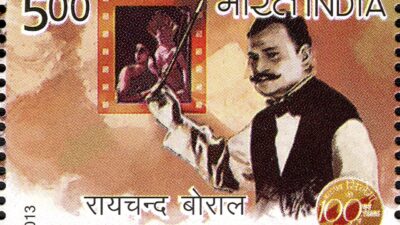
| संगीतकार | Rai Chand Boral |
| स्वरूप | एकल पुरुष |
| गति | धीमी |
| भाषा | hindi |
| भाव | दार्शनिक · Reflective |
| लोकप्रियता | Popular |
| बोल-स्थिति | केवल झलक |
जुड़े हुए पन्ने
Connected Plates · The Graph Made Visibleअटलस में कोई पन्ना अकेला नहीं — इस गीत से जुड़े गीत, कलाकार, फ़िल्म, राग-ताल-विधा, सब यहाँ से खुलते हैं।
मिलते-जुलते गीत · Related Songs
कलाकार · The Artists
फ़िल्म · The Film
साझा कीजिए · Share this Plate