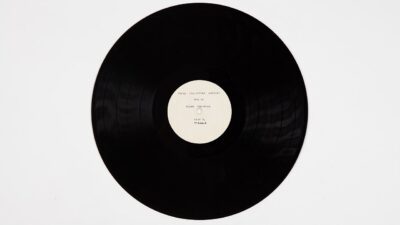
गीत विंग · गीत-पट्टिका · Song Plate
किसको ग़म का गीत सुनाएँ
Kisko Gham Ka Geet Sunaein
ग़म का गीत आख़िर सुनाएँ किसे? — 'नीलम' के नौ शीर्षकों में सबसे उदास।
भावउदास · दार्शनिक
भाषाhindi-urdu गतिधीमी स्वरूपUnknown
श्रेय
The Creditsसूत्र-वाक्य · The Hook
सूत्र-वाक्य
ग़म का गीत आख़िर सुनाएँ किसे? — 'नीलम' के नौ शीर्षकों में सबसे उदास।
In EnglishWho is there left to sing the song of sorrow to? — the bleakest title in Neelam's nine.
पट्टिका-लेख
The Monographपरिचय Overview
'नीलम' के उन छह गीतों में से एक जिनके गायक दर्ज नहीं हैं। शीर्षक वही सवाल रखता है जिस पर पूरा बोल टिका है: सवाल यह नहीं कि दुख करना है या नहीं, बल्कि यह कि दुख सुनाने वाला कोई है भी या नहीं। सी. एम. हुनर के लिखे और ख़ान मस्ताना के स्वरबद्ध किए इस गीत की जगह इस संकलन के उस धीमे, ग़ज़ल-रंगी हिस्से में है जिसके साथ हल्के गीत भी चलते हैं।
अंग्रेज़ी में पढ़ें · Read in English
One of the six Neelam songs for which no singer is recorded. The title poses the question that organises the whole lyric: not whether to grieve, but whether there is anyone to grieve to. Written by C. M. Hunar and composed by Khan Mastana, it belongs to the slow, ghazal-inflected half of a score that also carries lighter numbers.
संगीत The Music
गीत का कोई ऑडियो नहीं बचा, इसलिए इसकी असल बंदिश के बारे में यहाँ कोई दावा नहीं किया जा रहा। बनावट के लिहाज़ से इस आकार की पंक्ति — बीच में ठहराव लिए एक प्रश्नवाचक वाक्य — धीमी लय और दो हिस्सों वाले स्वर-वाक्य को न्योता देती है, जिसमें सवाल पहले हिस्से में उठता है और दूसरे में अधर में छूट जाता है; 1945 में ख़ान मस्ताना और उनके समकालीन ऐसी पंक्तियों को यही सामान्य बरताव देते थे।
अंग्रेज़ी में पढ़ें · Read in English
No audio of the song survives, so nothing is claimed here about its actual setting. Structurally, a line of this shape — a rhetorical question with a caesura in the middle — invites a slow tempo and a two-part melodic phrase, the question posed in the first half and left hanging in the second, and that is the standard treatment Khan Mastana and his contemporaries gave such lines in 1945.
काव्य The Poetry
युक्ति है — स्थानांतरण। ग़म के गीत का आम तौर पर एक संबोधित होता है — प्रिय, कोई मित्र, ख़ुदा, या ख़ुद रात — और यही संबोधन दुख को संप्रेषण में बदलकर सहने लायक़ बनाता है। हुनर संबोधित को हटा देते हैं और उसी अनुपस्थिति को विषय बना देते हैं, जिससे गीत उस विधा की ही विफलता के बारे में हो जाता है जिसमें वह लिखा गया है। शीर्षक के सीधेपन से जितना लगता है, यह उससे कहीं अधिक बारीक चाल है — और 1940 के दशक की उर्दू फ़िल्मी शायरी के दोहराए जाने वाले विचारों में से एक: वह अकेला वक्ता जिसे अपने भरोसे के लायक़ कोई सुनने वाला नहीं मिलता।
अंग्रेज़ी में पढ़ें · Read in English
The device is displacement. A song of sorrow ordinarily has an addressee — the beloved, a friend, God, the night itself — and the address is what makes grief bearable by making it communication. Hunar removes the addressee and makes the absence the subject, so the song becomes about the failure of the very form it is written in. That is a more sophisticated move than the title's plainness suggests, and it is one of the recurring ideas of 1940s Urdu film verse: the isolated speaker who cannot find a listener worthy of the confidence.
कहानी The Story
'नीलम' (1945) ए. एच. प्रोडक्शंस, बंबई की एक सामाजिक फ़िल्म थी, जिसका निर्देशन अहमद ईसा ने किया; नौ के नौ गीत सी. एम. हुनर ने लिखे और संगीत ख़ान मस्ताना का है। कास्ट का नेतृत्व हरीश और मीना ने किया, और उनके साथ जगदीश सेठी, यशोधरा काटजू, कन्हैयालाल, कल्याणी, सत्यरानी, मेहदी रज़ा, सयानी तथा अब्दुल हुसैन थे। फ़िल्म की कथा-रूपरेखा कहीं भी सुरक्षित नहीं है और न ही इसका कोई प्रिंट प्रचलन में जाना जाता है; गीत एचएमवी के बजाय स्वदेशी लेबल 'यंग इंडिया' पर जारी हुए, और वही शेलैक तवे इस फ़िल्म का संगीत आज तक ले आए हैं।
अंग्रेज़ी में पढ़ें · Read in English
Neelam (1945) was a social picture from A. H. Productions, Bombay, directed by Ahmed Essa, with all nine songs written by C. M. Hunar and composed by Khan Mastana. The cast was led by Harish and Meena, with Jagdish Sethi, Yashodhara Katju, Kanhaiyalal, Kalyani, Satyarani, Mehdi Raza, Sayani and Abdul Hussain in support. No plot summary of the film survives anywhere, and no print is known to circulate; the songs were issued on the indigenous Young India label rather than on HMV, and it is those shellac discs that carried the film's music into the present.
विरासत The Legacy
इस गीत का कुछ भी प्रचलन में नहीं है — न रिकॉर्ड, न कोई प्रति, न पुनर्प्रकाशन। यह हिंदी फ़िल्म गीत कोश की परंपरा में और उससे बनी ऑनलाइन सूचियों में एक शीर्षक और कुछ श्रेयों के रूप में सुरक्षित है, और इतना ही इसका आगे का जीवन है। इसे सही-सही दर्ज करना — गीतकार और संगीतकार के नाम के साथ, और गायक का खाना ईमानदारी से ख़ाली छोड़कर — आज इसके लिए उपलब्ध संरक्षण का एकमात्र रूप है।
अंग्रेज़ी में पढ़ें · Read in English
Nothing of this song circulates — no record, no transfer, no reissue. It is preserved as a title and a set of credits in the Hindi Film Geet Kosh tradition and in the online catalogues built from it, and that is the whole of its afterlife. Recording it accurately, with its lyricist and composer named and its singer honestly left blank, is the only form of preservation now available to it.
वर्गीकरण
Classification- Tempo
- Slow
Genre
अन्य विवरण
More Details- https://www.hindigeetmala.net/movie/neelam.htm
- https://myswar.co/album/neelam-1945
- https://en.wikipedia.org/wiki/List_of_Hindi_films_of_1945
- https://atulsongaday.me/2021/08/24/aaj-bas-mein-nahin-dil-mera/
- https://archive.org/details/a_20210503_20210503_1724
- https://en.wikipedia.org/wiki/Khan_Mastana
- https://en.wikipedia.org/wiki/Roshan_Ara_Begum
- https://www.cinemaazi.com/people/khan-mastana-
- https://www.theheritagelab.in/young-india-record-label-homegrown/
References
रोचक तथ्य
Margin Notesसी. एम. हुनर ने 'नीलम' के नौ के नौ गीत लिखे। सिनेमाज़ी विश्वकोश उनकी कुल पाँच फ़िल्मों की सूची दर्ज करता है — 'नीलम' (1945), 'कांगू' (1946), 'दिलदार' (1947), 'नाइट बर्ड' (1961) और 'काला जादू' (1963) — और इसके अलावा उनके बारे में लगभग कुछ भी दर्ज नहीं है।
अंग्रेज़ी में पढ़ें · Read in English
C. M. Hunar wrote all nine of Neelam's songs. The Cinemaazi encyclopaedia records a filmography of only five films for him — Neelam (1945), Kangoo (1946), Dildar (1947), Night Bird (1961) and Kala Jadoo alias Black Magic (1963) — and almost nothing else about him is recorded.
ख़ान मस्ताना का जन्म लगभग 1916 में आगरा में हाफ़िज़ ख़ान के रूप में हुआ; उनके पिता सितारवादक थे। 'बहादुर किसान' (1938) के समय संगीतकार मीर साहब ने उनके बेफ़िक्र मिज़ाज के कारण उन्हें 'मस्ताना' नाम दिया। 1950 के दशक के शुरू में पिता ने उन्हें हैदराबाद में संगीत सिखाने बुला लिया; लंबी अनुपस्थिति के कारण बंबई के निर्माताओं ने उन्हें काम देना बंद कर दिया और 1952 के बाद उन्हें असाइनमेंट मिलने लगभग बंद हो गए। 1972 में माहिम में ग़रीबी में उनका देहांत हुआ।
अंग्रेज़ी में पढ़ें · Read in English
Khan Mastana was born Hafiz Khan in Agra around 1916, the son of a sitar player, and was nicknamed 'Mastana' by the composer Mir Saheb on Bahadur Kisan (1938) for his carefree manner. In the early 1950s his father called him away to teach music in Hyderabad; Bombay producers refused him work over the long absence and his assignments dried up after 1952. He died in poverty in Mahim in 1972.
'नीलम' के गीत 'यंग इंडिया' पर जारी हुए — बंबई का वह लेबल जिसे नैशनल ग्रामोफ़ोन रिकॉर्ड मैन्युफ़ैक्चरिंग कं. लि. ने 1934 में विदेशी ग्रामोफ़ोन कंपनियों के स्वदेशी प्रतिद्वंद्वी के रूप में शुरू किया था। उसने सैकड़ों 78-आरपीएम शेलैक तवे दबाए और उभरते कलाकारों को प्रोत्साहित करने पर ज़ोर दिया, और 1955 में उसका वडाला कारख़ाना बंद हो गया — यही वजह है कि उस पर छपा लगभग कुछ भी दोबारा जारी नहीं हुआ।
अंग्रेज़ी में पढ़ें · Read in English
Neelam's songs were issued on Young India, the Bombay label founded in 1934 by The National Gramophone Record Manufacturing Co. Ltd. as an indigenous rival to the foreign-owned gramophone companies. It pressed hundreds of 78-rpm shellac discs and made a point of encouraging emerging talent, and its Wadala plant shut in 1955 — which is why almost nothing on it was ever reissued.
नमूना-पट्टी
The Specimen Table| शीर्षक | किसको ग़म का गीत सुनाएँ · Kisko Gham Ka Geet Sunaein |
|---|---|
| फ़िल्म | नीलम · 1945 |
| वर्ष · युग | 1945 |
| गीतकार | सी. एम. हुनर |
| संगीतकार | Khan Mastana |
| स्वरूप | Unknown |
| गति | धीमी |
| भाषा | hindi-urdu |
| भाव | उदास · दार्शनिक |
| लोकप्रियता | Obscure |
| बोल-स्थिति | केवल झलक |
जुड़े हुए पन्ने
Connected Plates · The Graph Made Visibleअटलस में कोई पन्ना अकेला नहीं — इस गीत से जुड़े गीत, कलाकार, फ़िल्म, राग-ताल-विधा, सब यहाँ से खुलते हैं।
कलाकार · The Artists
फ़िल्म · The Film
साझा कीजिए · Share this Plate