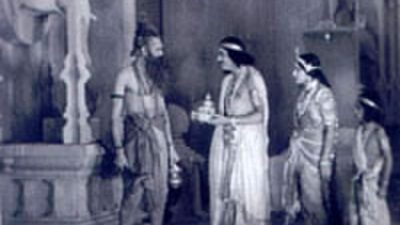
गीत विंग · गीत-पट्टिका · Song Plate
काले काले बादल छाये
Kale Kale Badal Chaye
काले-काले सावन के बादल घिर आते हैं — हिंदी गीत का सबसे चिरस्थायी बिंब — मेरी ख़्वाहिश (1941) में।
भावपुरानी यादें · रोमांटिक
भाषाhindi गतिमध्यम स्वरूपUnknown
श्रेय
The Creditsसूत्र-वाक्य · The Hook
सूत्र-वाक्य
काले-काले सावन के बादल घिर आते हैं — हिंदी गीत का सबसे चिरस्थायी बिंब — मेरी ख़्वाहिश (1941) में।
In EnglishDark monsoon clouds gather — the most enduring image in Hindi song — in Meri Khwahish (1941).
पट्टिका-लेख
The Monographपरिचय Overview
मेरी ख़्वाहिश (1941) के आठ गीतों के संगीत से एक सावन-गीत, वसंत और शांति कुमार द्वारा रचित, बोल बालम परदेसी और ए. के. सिंधु के। 'काले काले बादल छाये' सावन की उस परंपरा से जुड़ता है जो शास्त्रीय ठुमरी से लेकर फ़िल्म संगीत के हर दशक तक चलती है — बादल विरह, स्मृति और मिलन के उद्दीपक के रूप में। फ़िल्म के गीतों के गायक उपलब्ध संदर्भों में दर्ज नहीं हैं।
अंग्रेज़ी में पढ़ें · Read in English
A monsoon song from the eight-song score of Meri Khwahish (1941), composed by Vasant and Shanti Kumar to lyrics by Baalam Pardesi and A. K. Sindhu. 'Kale Kale Badal Chaye' (dark clouds have gathered) draws on the sawan tradition that runs from classical thumri through every decade of film music — clouds as the trigger of longing, memory and reunion. The film's per-song singers are not documented in available references.
काव्य The Poetry
'काले-काले बादल' का बिंब उत्तर भारतीय काव्य-परंपरा में सबसे पुराने और सबसे स्थायी बिंबों में से एक है। शास्त्रीय ठुमरी और दादरा में, विशेष रूप से काफ़ी राग और उसके मौसमी रूपांतरों में, सावन के बादलों का आगमन विरह का उद्दीपन है: जो वर्षा धरती को उर्वर बनाती है, वही उस स्त्री के लिए जिसका प्रिय अनुपस्थित है, केवल लालसा लाती है। बालम परदेसी और ए.के. सिंधु कम-से-कम 12वीं शताब्दी से प्रलेखित उस परंपरा में काम कर रहे थे — विद्यापति की मैथिली रचनाओं से लेकर मीरा के ब्रज-भजनों से लेकर बनारस और लखनऊ के ठुमरी-उस्तादों तक। इस परंपरा में 'काली घटा' केवल एक मौसम-तथ्य नहीं: वह प्रिय का आगमन या अनुपस्थिति है, विरह की तीव्रता, सामान्य समय का दैवीय आवृत्त होना। 'काले-काले' में विशेषण की द्विगुणता एक पारंपरिक काव्य-युक्ति है: दोहरा विशेषण यह दर्शाता है कि अंधकार आंशिक नहीं, पूर्ण है।
अंग्रेज़ी में पढ़ें · Read in English
The image of dark monsoon clouds — 'kale kale badal' — is among the most archaic and persistent in the North Indian lyric tradition. In classical thumri and dadra, particularly in the Kafi raag and its seasonal variants, the arrival of sawan clouds is the trigger for virah: the rain that brings fertility to the earth brings only longing to the woman whose beloved is absent. Baalam Pardesi and A.K. Sindhu, the credited lyricists, were working within a tradition documented from at least the 12th century, in Vidyapati's Maithili verses, through Meera Bai's Braj bhajans, through the thumri masters of Benares and Lucknow. In this tradition, 'kali ghata' (dark cloud) is never merely a weather phenomenon: it is the beloved's approach or absence, the intensification of longing, the divine overshadowing of ordinary time. What the film lyric does with this ancient system is compression — the elaborate metaphorical grammar of classical virah poetry is reduced to a single image audible over film orchestration, its emotional resonance dependent on the audience's cultural memory of the full tradition even when only the surface image appears. 'Kale kale' (dark, dark) — the doubling of the adjective — is itself a traditional poetic device: the repeated epithet signifies that the darkness is absolute, not partial.
कहानी The Story
मेरी ख़्वाहिश (1941) — 'मेरी इच्छा' — एक सामाजिक-नाटक थी जिसमें अभिनेत्री शरीफ़ा प्रमुख भूमिका में थीं और संगीत वसंत व शांति कुमार ने मिलकर दिया, बोल बालम परदेसी और ए.के. सिंधु के थे। दोहरा-संगीतकार श्रेय एक साधारण-बजट निर्माण का संकेत है — प्रमुख स्टूडियो बैनरों के बाहर जहाँ लागत नियंत्रित रखने के लिए दो संगीतकार ज़िम्मेदारियाँ साझा करते थे। फ़िल्म का नाम ('मेरी ख़्वाहिश') और इसके आठ गीतों में एक मानसून-गीत मिलकर एक रोमांटिक-सामाजिक नाटक का सुझाव देते हैं। 'काले काले बादल छाये' — 'काले-काले बादल छा गए' — सावन-गीत परंपरा से है जो शास्त्रीय ठुमरी से लेकर हिंदी फ़िल्म-संगीत के हर दशक तक जीवित है। 1941 में उत्तर भारत में वर्षा ऋतु का सांस्कृतिक भार मात्र मौसमी तथ्य से परे था: गर्मी से राहत देने वाले बादल वियोग की ऋतु का भी संकेत थे — अनुपस्थित पतियों और प्रियजनों के लिए घिरते बादल स्वागत के बजाय विरह का प्रतीक बन जाते थे।
अंग्रेज़ी में पढ़ें · Read in English
Meri Khwahish (1941) — 'My Desire' — was a social drama featuring actress Sharifa, with music composed jointly by Vasant and Shanti Kumar and lyrics by Baalam Pardesi and A.K. Sindhu. The dual-composer credit suggests a modestly-budgeted production outside the major studio houses, where two composers shared responsibilities to keep costs manageable. The film's title ('my wish/desire') combined with a monsoon song among its eight numbers suggests a romantic social drama where longing and aspiration drive the narrative. 'Kale Kale Badal Chaye' — 'Dark clouds have gathered' — is a sawan (monsoon) song in the long tradition of rain-songs that runs from classical thumri through every decade of Hindi film music. The monsoon in 1941 North India carried cultural weight beyond the merely meteorological: the rains that relieved the summer heat also triggered the season of virah (separation), when absent husbands and lovers made the otherwise welcome clouds an emblem of longing. In the film, the song would have provided an atmospheric interlude — a moment where the natural world mirrors the heroine's internal state of desire and waiting. The film print and specific singer attribution have not survived in accessible archives.
वर्गीकरण
Classification- Tempo
- Medium
Genre
अन्य विवरण
More Details- https://www.hindigeetmala.net/movie/meri_khwahish.htm
- https://en.wikipedia.org/wiki/Meri_Khwahish
- https://muvyz.com/moviepage/lh601117/songs/
References
रोचक तथ्य
Margin Notesउत्तर भारतीय गीत-काव्य में 'घिरती काली घटा' का बिंब कम से कम बारहवीं शताब्दी से विद्यापति के मैथिली पद्यों में दर्ज है, जहां सावन का मानसून लगातार विरह (वियोग-व्यथा) को जागृत करता है।
अंग्रेज़ी में पढ़ें · Read in English
The 'dark clouds gathering' (kali ghata) image in North Indian lyric poetry is documented from at least the 12th century in Vidyapati's Maithili verses, where the sawan monsoon consistently triggers virah (separation-longing).
मेरी ख़्वाहिश (1941) में दोहरे संगीतकार-संयोजन का प्रयोग किया गया — वसंत और शांति कुमार — यह प्रथा बॉम्बे की उन छोटी प्रस्तुतियों में आम थी जो बड़े स्टूडियो से बाहर काम करती थीं और जिनके पास समर्पित इन-हाउस संगीतकार नहीं होते थे।
अंग्रेज़ी में पढ़ें · Read in English
Meri Khwahish (1941) used a dual-composer arrangement — Vasant and Shanti Kumar — a practice common in smaller Bombay productions outside the major studios that employed dedicated in-house composers.
गीतकार बालम परदेसी ने नौशाद की प्रारंभिक फ़िल्म माला (1941) के लिए भी गीत लिखे — इस तरह वे छोटी स्वतंत्र प्रस्तुतियों और उस दशक के उभरते बड़े संगीतकारों के बीच एक कड़ी बने।
अंग्रेज़ी में पढ़ें · Read in English
Lyricist Baalam Pardesi also wrote lyrics for Naushad's early film Mala (1941), making him a connecting figure between smaller independent productions and the emerging major composers of the decade.
उत्तर भारतीय शास्त्रीय संगीत की काफ़ी राग परंपरा में वर्षा ऋतु की अपनी विशिष्ट रचनाएँ (वर्षा-संगीत) होती हैं, जिनमें वही विरह और बादल का बिंब मिलता है जो 1940 के दशक के लोकप्रिय फ़िल्मी गीतों में पाया जाता है — यह शास्त्रीय और लोकप्रिय संगीत-भंडार को जोड़ने वाली निरंतर परंपरा को दर्शाता है।
अंग्रेज़ी में पढ़ें · Read in English
In the Kafi raag tradition of North Indian classical music, the monsoon season has its own associated compositions (varsha-sangeet) that share the same virah-and-cloud imagery found in the popular film songs of the 1940s — reflecting the continuous tradition linking classical and popular repertoire.
नमूना-पट्टी
The Specimen Table| शीर्षक | काले काले बादल छाये · Kale Kale Badal Chaye |
|---|---|
| फ़िल्म | मेरी ख़्वाहिश · 1941 |
| वर्ष · युग | 1941 |
| गीतकार | बालम परदेसी, A. K. Sindhu |
| संगीतकार | Vasant, Shanti Kumar |
| स्वरूप | Unknown |
| गति | मध्यम |
| भाषा | hindi |
| भाव | पुरानी यादें · रोमांटिक |
| बोल-स्थिति | केवल झलक |
जुड़े हुए पन्ने
Connected Plates · The Graph Made Visibleअटलस में कोई पन्ना अकेला नहीं — इस गीत से जुड़े गीत, कलाकार, फ़िल्म, राग-ताल-विधा, सब यहाँ से खुलते हैं।
कलाकार · The Artists
फ़िल्म · The Film
साझा कीजिए · Share this Plate