गीत विंग · गीत-पट्टिका · Song Plate
जाऊँ अकेली हरि मिलन को
Jau Akeli Hari Milan Ko
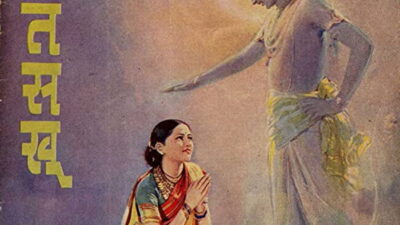
प्रभात की संत-फ़िल्म 'संत सखू' (1941) का एक भक्ति-गीत, केशवराव भोले के भजन-रंगी संगीत में रचा हुआ।
भावभक्ति · आध्यात्मिक · Yearning
भाषाhindi गतिमध्यम स्वरूपभक्ति
श्रेय
The Creditsसूत्र-वाक्य · The Hook
सूत्र-वाक्य
प्रभात की संत-फ़िल्म 'संत सखू' (1941) का एक भक्ति-गीत, केशवराव भोले के भजन-रंगी संगीत में रचा हुआ।
In EnglishA devotional number from Prabhat's saint-film 'Sant Sakhu' (1941), set to Keshavrao Bhole's bhajan-flavoured score.
पट्टिका-लेख
The Monographपरिचय Overview
"जाऊँ अकेली हरि मिलन को" फ़िल्म संत सखू (1941) में आता है — पूना की प्रभात फ़िल्म कंपनी द्वारा निर्मित और दामले–फ़त्तेलाल जोड़ी द्वारा निर्देशित हिंदी-मराठी संत-जीवनी। संगीत केशवराव भोले का है। फ़िल्म का संगीत महाराष्ट्रीय भक्ति परंपरा के भक्ति-भजन और अभंग मुहावरे में निहित है, जो प्रभात की प्रसिद्ध संत-फ़िल्म परंपरा के अनुरूप है। यहाँ पूरे बोल नहीं दिए गए हैं; यह केवल एक मेटाडेटा और खोज पृष्ठ है।
अंग्रेज़ी में पढ़ें · Read in English
"Jau Akeli Hari Milan Ko" appears in Sant Sakhu (1941), the Hindi-Marathi saint biography produced by the Prabhat Film Company of Poona and directed by the Damle–Fattelal partnership. The music is by Keshavrao Bhole. The film's score is rooted in the devotional bhajan and abhang idiom of the Maharashtrian Bhakti tradition, in keeping with Prabhat's celebrated lineage of saint films. Full lyrics are not reproduced here; this is a metadata and discovery page only.
काव्य The Poetry
भक्त का अकेले ईश्वर के पास जाना भक्ति काव्य की सबसे परिभाषित छवियों में से एक है। मीरा का 'मैं तो गिरिधर के घर जाऊँगी,' कबीर की दुनिया के शोर से एकाकी विदाई, तुकाराम की पंढरपुर की लम्बी एकाकी यात्राएँ—हर कहीं अकेलापन उदासी नहीं, आध्यात्मिक स्पष्टता है। 'अकेली' इस गीत का भावनात्मक केंद्र है: अकेले जाना अर्थ है सभी सामाजिक भूमिकाओं को उतार देना—पत्नी, बहू, गृहिणी—और ईश्वर के सामने बस एक आत्मा के रूप में खड़े होना। प्यारेलाल संतोषी की रचना वारकरी भक्ति परंपरा में थी—जहाँ पंढरपुर के विठोबा (पांडुरंग) से अभंग और ओवी शैली में बात होती है, मित्र की तरह, स्वामी की तरह, उस एकमात्र की तरह जिनकी संगत के बिना भक्त नहीं रह सकता। 'हरि मिलन को' में 'मिलन'—वह भेंट, वह संयोग—भक्ति में अस्तित्व का परम उद्देश्य बन जाती है।
अंग्रेज़ी में पढ़ें · Read in English
The bhakta going alone to meet God is one of the defining images of bhakti poetry across all traditions. Mirabai's 'Main to giridhar ke ghar jaungi' (I will go to the home of Giridhara), Kabir's solitary departure from the noise of the world, Tukaram's lonely walks to Pandharpur—in every case, aloneness is not desolation but spiritual clarity. The word 'akeli' (alone) is the poem's emotional centre: to go alone is to strip away all the social roles—wife, daughter-in-law, household member—and to appear before God simply as a soul. Pyarelal Santoshi's lyric, working in the Warkari devotional tradition, would have drawn on the abhanga and ovi forms of Maharashtrian sant poetry, where Pandurang (Vithoba of Pandharpur) is addressed in the warmest, most intimate terms: as friend, as lord, as the one being whose company the saint cannot do without. The phrase 'Hari milan ko' (to meet Hari) uses 'milan'—the meeting, the union—which in bhakti becomes the ultimate goal of existence.
कहानी The Story
संत सखू (1941) दामले-फ़त्तेलाल की जोड़ी का निर्देशन था—वही जोड़ी जिनकी संत तुकाराम (1936) पहली भारतीय फ़िल्म थी जिसे वेनिस अंतर्राष्ट्रीय फ़िल्म महोत्सव में चुना गया था। पूना की प्रभात फ़िल्म कंपनी द्वारा निर्मित इस फ़िल्म ने महाराष्ट्र की वारकरी संत परंपरा की एक महत्वपूर्ण हस्ती—संत सखूबाई—की जीवन-गाथा कही। सखूबाई का स्थान तुकाराम, ज्ञानेश्वर और नामदेव के साथ पंढरपुर वारी की कवि-भक्त परंपरा में है। केशवराव भोले—प्रभात के सर्वाधिक प्रतिभाशाली संगीतकारों में से एक—ने अठारह गीतों का संगीत रचा और प्यारेलाल संतोषी ने अधिकांश भक्ति बोल लिखे। 'जाऊँ अकेली हरि मिलन को' सखू की एकल तीर्थयात्रा की घोषणा है—वारी पर जाने का वह निर्णय जिसे घर और परिवार की आपत्तियों के बावजूद वे लेती हैं। यह उनकी संतता का केंद्रीय आध्यात्मिक साहस है: ईश्वर के साथ की तुलना में मानवीय संगति से परे।
अंग्रेज़ी में पढ़ें · Read in English
Sant Sakhu (1941) was directed by Vishnupant Govind Damle and Sheikh Fattelal—the celebrated Damle-Fattelal duo whose Sant Tukaram (1936) had become the first Indian film selected for the Venice International Film Festival. Produced by Prabhat Film Company of Poona, Sant Sakhu narrated the life of Sakhubai, a female Warkari sant of Maharashtra who is counted among the poet-devotees of the Pandharpur pilgrimage tradition, alongside Tukaram, Dnyaneshwar, and Namdev. Keshavrao Bhole, one of Prabhat's most accomplished composers, scored the eighteen-song soundtrack, with Pyarelal Santoshi writing the majority of the devotional lyrics. 'Jau Akeli Hari Milan Ko'—'I go alone to meet Hari'—is Sakhu's declaration of solitary pilgrimage. In the narrative of Sakhubai's life, this act—choosing the Pandharpur wari (pilgrimage) despite family disapproval—is the central spiritual assertion of her sainthood: the choice of divine company over domestic duty.
विरासत The Legacy
संत सखू (1941) प्रभात फ़िल्म कंपनी की भक्ति-संत फ़िल्मों की परंपरा का हिस्सा है—वह परंपरा जिसमें संत तुकाराम (1936, वेनिस महोत्सव में चयनित) और संत ज्ञानेश्वर (1940) शामिल हैं। संगीतकार केशवराव भोले प्रभात की संगीत-पहचान के अभिन्न अंग थे, और इस फ़िल्म में उनका काम प्रभात की भक्ति-शैली की ध्वन्यात्मक विरासत का हिस्सा है। गीतकार प्यारेलाल संतोषी—जो निर्देशक राजकुमार संतोषी के नाना और फ़िल्मकार रमेश सिप्पी के पिता थे—भारतीय सिनेमा के एक महत्वपूर्ण फ़िल्मकार परिवार के पूर्वज हैं। स्वयं संत सखूबाई महाराष्ट्र में आज भी पूजित हैं और उनके अभंग वारकरी परंपरा में गाए जाते हैं। यह फ़िल्म उस सांस्कृतिक क्षण की देन है जब प्रभात की भक्ति-फ़िल्मों ने मराठी-हिंदी सिनेमा को उसकी सबसे महत्वाकांक्षी कलाकृतियाँ दीं।
अंग्रेज़ी में पढ़ें · Read in English
Sant Sakhu (1941) belongs to Prabhat Film Company's celebrated tradition of bhakti saint films—a tradition that included Sant Tukaram (1936, Venice Film Festival selection) and Sant Dnyaneshwar (1940). Keshavrao Bhole, the composer, was one of Prabhat's defining musical personalities, and his work on this film is part of the sonic legacy of the Prabhat bhakti genre. Pyarelal Santoshi, the lyricist, is also remembered as the grandfather of director Rajkumar Santoshi and the father of later filmmaker Ramesh Sippy, making him the ancestor of one of Indian cinema's significant filmmaking families. The Warkari saint Sakhubai herself continues to be venerated in Maharashtra, and her abhangas are sung in the tradition today. The film was part of a cultural moment—the late 1930s and early 1940s—when Prabhat's bhakti films gave the Marathi-Hindi film industry its most artistically ambitious work.
वर्गीकरण
Classification- Tempo
- Medium
Genre
अन्य विवरण
More Details- https://www.hindigeetmala.net/movie/sant_sakhu.htm
- https://bombaymann2.blogspot.com/2020/05/film-sant-sakhu1941.html
- https://www.discogs.com/release/26019307
References
रोचक तथ्य
Margin Notesसंत सखू (1941) का निर्देशन दामले-फत्तेलाल जोड़ी ने किया था, जिनकी पूर्ववर्ती फ़िल्म संत तुकाराम (1936) वेनिस अंतरराष्ट्रीय फ़िल्म फेस्टिवल में भारत का प्रतिनिधित्व करने के लिए चुनी जाने वाली पहली भारतीय फ़िल्म थी।
अंग्रेज़ी में पढ़ें · Read in English
Sant Sakhu (1941) was directed by the Damle-Fattelal duo whose earlier Sant Tukaram (1936) was the first Indian film selected to represent India at the Venice International Film Festival.
फ़िल्म के संगीतकार केशवराव भोले, एक जाने-माने नाटककार, लेखक और समाज-सुधारक भी थे, जिन्होंने प्रभात फ़िल्म कंपनी से जुड़ने से पहले कोल्हापुर के राजदरबारी परंपरा में संगीत का प्रशिक्षण लिया था।
अंग्रेज़ी में पढ़ें · Read in English
Keshavrao Bhole, the film's composer, was also a noted playwright, author, and social reformer who had trained in music at the Kolhapur royal court tradition before joining Prabhat Film Company.
प्रमुख गीतकार प्यारेलाल संतोषी, निर्देशक राजकुमार संतोषी (दामिनी, घायल) के दादा और फ़िल्मकार रमेश सिप्पी (शोले) के पिता थे, जिससे वे भारतीय सिनेमा के एक महत्वपूर्ण रचनात्मक वंश के जनक बन जाते हैं।
अंग्रेज़ी में पढ़ें · Read in English
Pyarelal Santoshi, the principal lyricist, was the grandfather of director Rajkumar Santoshi (Damini, Ghayal) and the father of filmmaker Ramesh Sippy (Sholay), making him the progenitor of one of Indian cinema's significant creative dynasties.
वारकरी संत सखूबाई, जिनका जीवन फ़िल्म का विषय है, पंढरपुर की वारी तीर्थयात्रा परंपरा की महत्वपूर्ण महिला संत-कवयित्रियों में गिनी जाती हैं — इस परंपरा के अभंग (भक्ति-पद) आज भी महाराष्ट्र में गाए जाते हैं।
अंग्रेज़ी में पढ़ें · Read in English
The Warkari saint Sakhubai, whose life is the film's subject, is among the important female poet-saints of the Vari pilgrimage tradition to Pandharpur—a tradition whose abhangas (devotional poems) continue to be sung in Maharashtra today.
नमूना-पट्टी
The Specimen Table| शीर्षक | जाऊँ अकेली हरि मिलन को · Jau Akeli Hari Milan Ko |
|---|---|
| फ़िल्म | संत सखू · 1941 |
| वर्ष · युग | 1941 |
| संगीतकार | Keshavrao Bhole |
| स्वरूप | भक्ति |
| गति | मध्यम |
| भाषा | hindi |
| भाव | भक्ति · आध्यात्मिक · Yearning |
| लोकप्रियता | Obscure |
| बोल-स्थिति | केवल झलक |
जुड़े हुए पन्ने
Connected Plates · The Graph Made Visibleअटलस में कोई पन्ना अकेला नहीं — इस गीत से जुड़े गीत, कलाकार, फ़िल्म, राग-ताल-विधा, सब यहाँ से खुलते हैं।
कलाकार · The Artists
फ़िल्म · The Film
साझा कीजिए · Share this Plate