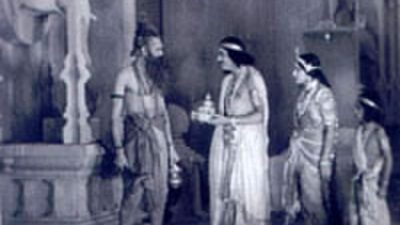
गीत विंग · गीत-पट्टिका · Song Plate
हे बन के सुगना उड़ जइयो
He Ban Ke Sugana Udd Jaiyo
हे बन के सुगना, उड़ जइयो — जादुई बंधन (1941) का एक लोक-रंगी संदेश-गीत।
भावPastoral · Yearning
भाषाhindi गतिमध्यम स्वरूपPlayback
श्रेय
The Creditsसूत्र-वाक्य · The Hook
सूत्र-वाक्य
हे बन के सुगना, उड़ जइयो — जादुई बंधन (1941) का एक लोक-रंगी संदेश-गीत।
In EnglishO forest parrot, fly away — a folk-flavoured message-song from Jadui Bandhan (1941).
पट्टिका-लेख
The Monographपरिचय Overview
'हे बन के सुगना उड़ जइयो' जादुई बंधन (1941) के लिए दर्ज दस गीतों में शामिल है — नानूभाई वकील की फ़ैंटेसी, संगीत राम गोपाल पांडे का और बोल पंडित अनुज के। संदेश ले जाते वन के 'सुगना' (तोते) को संबोधन पक्षी-दूत की लंबी लोक और भक्ति परंपरा से जुड़ता है — जो एक देहाती, लोक-रंगी रचना का संकेत देता है।
अंग्रेज़ी में पढ़ें · Read in English
'He Ban Ke Sugana Udd Jaiyo' is among the ten songs documented for Jadui Bandhan (1941), the Nanubhai Vakil fantasy scored by Ram Gopal Pandey with lyrics by Pandit Anuj. The address to a 'sugana' (parrot) of the woods, carrying a message, draws on a long folk and bhakti tradition of the bird-messenger — suggesting a rustic, folk-coloured composition.
काव्य The Poetry
पक्षी-दूत के रूप में सुगना (तोता) भारतीय साहित्यिक परंपरा के सबसे पुराने बिंबों में से एक है — संस्कृत काव्य में उपस्थित, मध्यकालीन ब्रज भक्ति-काव्य में, और अनेक भारतीय भाषाओं के लोकगीतों में। 'बन के सुगना' (वन के तोते) का संबोधन एक महत्त्वपूर्ण विशेषण जोड़ता है: यह एक प्रशिक्षित घरेलू तोता नहीं है बल्कि जंगल का प्राणी है, स्वतंत्रता और प्राकृतिक दुनिया से जुड़ा, जो उसके वहन किए जाने वाले संदेश को असीम उड़ान की गुणवत्ता देता है। आज्ञा-क्रिया 'उड़ जइयो' — उड़ जाओ, उड़ते जाओ — देहाती, बोलीगत स्वर में है: 'जइयो' बजाय 'जाओ' के लोकगीत का संकेत करता है न कि दरबारी काव्य का, और संबोधन 'हे' ('ओ') औपचारिक अभिवादन नहीं बल्कि मौखिक, स्वाभाविक पुकार है। पंडित अनुज का इस लोक-रूप को चुनना चरागाहीय बिंब और जादुई बंधन के फ़ैंटेसी-साहसिक संदर्भ दोनों के लिए उचित है, जहाँ प्राकृतिक और जादुई शक्तियाँ आपस में गुँथी हुई हैं।
अंग्रेज़ी में पढ़ें · Read in English
The sugana (parrot) as a messenger bird is one of the oldest figures in Indian literary tradition — present in Sanskrit kavya, in medieval Braj devotional poetry, and in the folk songs of many Indian languages. The lyric's address to the 'ban ke sugana' (parrot of the forest) adds a crucial qualifier: this is not a trained household parrot but a creature of the wild forest, aligned with freedom and the natural world, which gives the message it will carry a quality of unbounded flight. The imperative 'udd jaiyo' — fly away, go flying — is in a rustic, dialectal register: 'jaiyo' rather than 'jao' signals the folk song rather than court poetry, and the 'He' of address ('O') is an oral, spontaneous cry rather than a formal salutation. Pandit Anuj's lyric choice of this vernacular form suits both the pastoral imagery and the fantasy-adventure context of Jadui Bandhan, where natural and magical forces intertwine and where a bird sent into the forest is also a bird sent into enchantment.
कहानी The Story
जादुई बंधन (1941) — 'जादुई बंधन' — नानूभाई वकील द्वारा निर्देशित एक फ़ैंटेसी फ़िल्म थी, जो बंबई सिनेमा के स्टंट और फ़ैंटेसी चित्रों के सबसे विपुल निर्देशकों में से एक थे। राम गोपाल पांडे ने संगीत दिया — उन्होंने उसी वर्ष बुलबुले बग़दाद (1941) भी संगीतबद्ध किया था, जो उन्हें फ़ैंटेसी-शैली परिपथ में एक सक्रिय शक्ति बनाता है; पंडित अनुज ने गीत लिखे। कलाकारों में सरोजिनी, सिराज सैयद, बाबूराव पहलवान और मांची जी. शाह थे — रोमांटिक नायक-नायिकाओं और एक्शन-फ़ैंटेसी फ़िल्मों की विशेषता वाले शारीरिक कलाकारों का संयोजन। 'हे बन के सुगना उड़ जइयो' एक वन के तोते (सुगना) को संबोधित करता है, उसे उड़ जाने को कह रहा है — संभवतः फ़ैंटेसी कथा के जादुई अवकाशों में एक संदेश ले जाने के लिए। पक्षी-दूत भारतीय साहित्यिक और लोक परंपरा में गहरी जड़ों वाला एक बिंब है, और एक फ़ैंटेसी फ़िल्म में इसकी उपस्थिति सिनेमाई कल्पना को पहले से मौजूद सांस्कृतिक अर्थ के भंडार से जोड़ती है।
अंग्रेज़ी में पढ़ें · Read in English
Jadui Bandhan (1941) — 'The Magical Bond' — was a fantasy film directed by Nanubhai Vakil, one of Bombay cinema's most prolific directors of stunt and fantasy pictures. Ram Gopal Pandey composed the score, having also scored Bulbule Baghdad (1941) in the same year, making him an active force in the fantasy-genre circuit; Pandit Anuj wrote the lyrics. The cast included Sarojini, Siraj Syed, Baburao Pahelwan and Manchi G. Shah — a configuration mixing romantic leads with the physical performers characteristic of action-fantasy productions. 'He Ban Ke Sugana Udd Jaiyo' addresses a forest parrot (sugana), asking it to fly away — presumably carrying a message across the magical distances within the fantasy narrative. The parrot messenger is a figure with deep roots in Indian literary and folk tradition, and its appearance in a fantasy film connects the cinematic imagination to a reservoir of pre-existing cultural meaning.
वर्गीकरण
Classification- Tempo
- Medium
Genre
अन्य विवरण
More Details- https://en.wikipedia.org/wiki/Jadui_Bandhan
- https://www.imdb.com/title/tt0376679/
- https://www.cinestaan.com/movies/jadui-bandhan-840/cast-crew
References
रोचक तथ्य
Margin Notesजादुई बंधन (1941) का निर्देशन नानूभाई वकील ने किया था, जो स्टंट और फैंटेसी फ़िल्मों में विशेषज्ञ थे और 1930 तथा 1940 के दशकों में बॉम्बे सिनेमा की विधा-प्रधान फ़िल्म-परंपरा के सबसे विपुल निर्देशकों में गिने जाते थे।
अंग्रेज़ी में पढ़ें · Read in English
Jadui Bandhan (1941) was directed by Nanubhai Vakil, who specialised in stunt and fantasy films and was among the most prolific directors in Bombay cinema's genre-film tradition across the 1930s and 1940s.
राम गोपाल पांडे ने 1941 में जादुई बंधन और बुलबुले बग़दाद, दोनों के लिए संगीत रचा — यह उनका एक सक्रिय वर्ष था, जिसमें वे उस फैंटेसी-एडवेंचर विधा से गहराई से जुड़े रहे जिसे बॉम्बे के छोटे स्टूडियो ने एक व्यावसायिक आधार बना दिया था।
अंग्रेज़ी में पढ़ें · Read in English
Ram Gopal Pandey composed for both Jadui Bandhan and Bulbule Baghdad in 1941 — an active year in which he was closely associated with the fantasy-adventure genre that Bombay's smaller studios had made a commercial staple.
तोता-संदेशवाहक (सुगना, तोता) का बिंब संस्कृत काव्य, मध्यकालीन हिंदी-ब्रज कविता और उत्तर भारतीय लोक-गीत से आया है — यह सबसे प्रमुखता से शुक-सप्तति ('तोते की सत्तर कहानियां') की साहित्यिक परंपरा में, और भक्ति कवियों द्वारा इस पक्षी को भटकती हुई भक्त-आत्मा के प्रतीक के रूप में प्रयोग किए जाने में मिलता है।
अंग्रेज़ी में पढ़ें · Read in English
The parrot messenger (sugana, tota) is a figure from Sanskrit kavya, medieval Hindi-Braj poetry and North Indian folk song — appearing most prominently in the Suka-saptati ('Seventy Tales of a Parrot') literary tradition and in bhakti poets' uses of the bird as a symbol of the wandering devotional soul.
फ़िल्म की प्रमुख अभिनेत्री सरोजिनी, उन अभिनेत्रियों में से थीं जिन्होंने बॉम्बे सिनेमा के शुरुआती-टॉकी और स्वर्ण-युग-पूर्व चरणों के बीच सेतु का काम किया, और फैंटेसी, सामाजिक तथा एक्शन विधाओं में नज़र आईं।
अंग्रेज़ी में पढ़ें · Read in English
Sarojini, the film's leading actress, was among the female players who bridged the early-talkie and pre-Golden-Era phases of Bombay cinema, appearing across fantasy, social and action genres.
नमूना-पट्टी
The Specimen Table| शीर्षक | हे बन के सुगना उड़ जइयो · He Ban Ke Sugana Udd Jaiyo |
|---|---|
| फ़िल्म | जादुई बंधन · 1941 |
| वर्ष · युग | 1941 |
| गीतकार | Pandit Anuj (S. L. Shrivastav) |
| संगीतकार | Ram Gopal Pandey |
| स्वरूप | Playback |
| गति | मध्यम |
| भाषा | hindi |
| भाव | Pastoral · Yearning |
| बोल-स्थिति | केवल झलक |
जुड़े हुए पन्ने
Connected Plates · The Graph Made Visibleअटलस में कोई पन्ना अकेला नहीं — इस गीत से जुड़े गीत, कलाकार, फ़िल्म, राग-ताल-विधा, सब यहाँ से खुलते हैं।
कलाकार · The Artists
फ़िल्म · The Film
साझा कीजिए · Share this Plate