गीत विंग · गीत-पट्टिका · Song Plate
हार न जाना
Haar Na Jana
इस खेल में हार न जाना, प्यारे — के.सी. डे की निराशा के विरुद्ध सबसे उद्धृत पुकार।
भावप्रेरणादायक · तीव्र · दार्शनिक
भाषाhindi गतिमध्यम स्वरूपएकल पुरुष
श्रेय
The Creditsबोल · The Lyrics
बोल — झलक · Lyrics Preview
प्यारे बाज़ी हार न जाना।
pyaare baazi haar na jaana.
कॉपीराइट के कारण केवल झलक — पूरे बोल आधिकारिक मंचों पर।
सूत्र-वाक्य · The Hook
सूत्र-वाक्य
इस खेल में हार न जाना, प्यारे — के.सी. डे की निराशा के विरुद्ध सबसे उद्धृत पुकार।
In EnglishDon't lose the game, dear one — K.C. Dey's most quoted exhortation against despair.
पट्टिका-लेख
The Monographपरिचय Overview
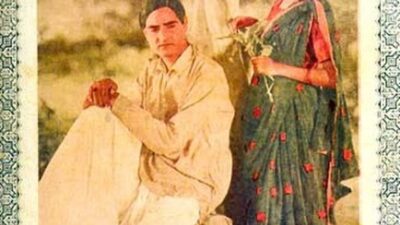
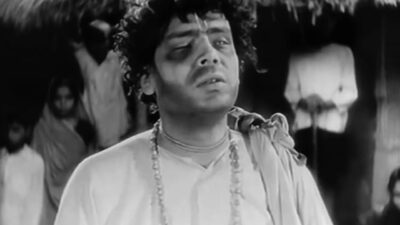
बदलती दुनिया (1943) के सबसे यादगार गीतों में से एक, जिसे के.सी. डे ने रचा और गाया तथा फ़िल्म में उन्हीं पर फ़िल्माया गया। यह के.सी. डे की एक श्रेष्ठ प्रेरणा-पुकार है — जीवन एक खेल (खेल) है, और श्रोता को इसके उतार-चढ़ावों में हिम्मत नहीं हारनी चाहिए — उसी गंभीर, उत्साहवर्धक स्वर में जिसने उन्हें सिनेमा की पहली महान दार्शनिक-भक्ति आवाज़ बनाया।
अंग्रेज़ी में पढ़ें · Read in English
One of the best-remembered songs of Badalti Duniya (1943), composed and sung by K.C. Dey and picturised on him in the film. It is a classic K.C. Dey exhortation — life is a game (khel), and the listener must not lose heart in its turns — delivered in the grave, encouraging tone that made him cinema's first great philosophical-devotional voice.
संगीत The Music
के.सी. डे ने इस गीत को स्वयं रचा और प्रस्तुत किया, इसे एक स्थिर, क़दमताल-सी मध्यम लय पर खड़ा किया जो इसके दृढ़ता के संदेश के अनुकूल है। संगीत-संयोजन कम रखा गया है — उनकी अचूक अनुभवी बैरिटोन के नीचे हारमोनियम और हल्की ताल — ताकि शब्द और उनका नैतिक भाव गीत को सँभालें।
अंग्रेज़ी में पढ़ें · Read in English
K.C. Dey scored and performed the number himself, building it on a steady, marching mid-tempo that suits its message of perseverance. The arrangement stays sparse — harmonium and light percussion under his unmistakable weathered baritone — so the words and their moral carry the song.
काव्य The Poetry
गीत की रचना सबसे सीधे किस्म की दार्शनिक प्रेरणा है: ज़िंदगी एक खेल है, और श्रोता — 'प्यारे' (प्रिय) के रूप में संबोधित — को यह खेल नहीं हारना, हार नहीं माननी है। यह सीधापन के.सी. डे के रचनात्मक-प्रस्तुति के ढंग की विशेषता है: शास्त्रीय या उर्दू साहित्यिक परंपराओं की अस्पष्ट, परतदार कविता के विपरीत, उनकी प्रेरणाएँ प्रत्यक्ष हैं, छवियों के माध्यम से काम करने की जगह नैतिक स्पष्ट रूप से कहा गया है। मोहन सिन्हा का गीत 'खेल' (खेल) रूपक का उपयोग करता है जो हिंदी दार्शनिक काव्य की एक लंबी परंपरा में चलता है — ज़िंदगी शतरंज के रूप में, पासे के खेल के रूप में, उस प्रतियोगिता के रूप में जिसमें चरित्र असली दाँव है। दोहरी पुकार 'प्यारे ... प्यारे' एक ऐसी आत्मीयता रचती है जो प्रेरणा को उपदेश की तरह कम और किसी साथी की फुसफुसाई हिम्मत की तरह अधिक महसूस कराती है। के.सी. डे, जिनका अंधापन स्वयं दृढ़ता की गवाही था, ने इन शब्दों को एक आत्मकथात्मक भार दिया जिसे उनके श्रोता समझते थे।
अंग्रेज़ी में पढ़ें · Read in English
The lyric is a philosophical exhortation of the most direct kind: life is a game (khel), and the listener — addressed as 'pyare' (dear one) — must not lose the game, must not give up. This directness is characteristic of K.C. Dey's compositional-performative mode: unlike the ambiguous, layered poetry of the classical or Urdu literary traditions, his exhortations are frontal, the moral stated explicitly rather than worked out through imagery. Mohan Sinha's lyric uses the khel (game) metaphor that runs through a long tradition of Hindi philosophical verse — life as chess, as dice-game, as contest in which character is the true stake. The doubled vocative 'pyare ... pyare' (dear one ... dear one) creates an intimacy that makes the exhortation feel less like a lecture and more like a whispered encouragement from a companion. K.C. Dey, whose blindness was itself a testimony to endurance, gave the words an autobiographical weight that his listeners understood.
कहानी The Story
बदलती दुनिया (1943) की रचना और शीर्षक-गीत का प्रदर्शन के.सी. डे (कृष्ण चंद्र डे, 24 अगस्त 1893 – 28 नवंबर 1962) ने किया, जिन्होंने 1906 में चौदह वर्ष की उम्र में अपनी दृष्टि खो दी थी। 1942 में बंबई जाने से पहले कलकत्ते के न्यू थिएटर्स में काम करने वाले एक प्रशिक्षित संगीतकार, डे एक बहुमुखी कलाकार थे जो गाते, रचना करते, अभिनय करते और सिखाते थे। उनका फ़िल्मी व्यक्तित्व दार्शनिक-भक्ति गीत पर आधारित था — वह प्रेरणा-गीत जो दर्शकों को दृढ़ता, विश्वास और नैतिक साहस के विषयों पर सीधे संबोधित करता था। बदलती दुनिया के गीत मोहन सिन्हा ने लिखे। फ़िल्म का शीर्षक — 'बदलती दुनिया' — 1943 के युद्धकालीन संदर्भ से गूँजता है, जब भारतीय जनता तेज़ और भटकाने वाले परिवर्तनों का अनुभव कर रही थी; खेल न हारने की यह पुकार उस क्षण में सिनेमाई दायरे के बाहर भी चरितार्थ थी।
अंग्रेज़ी में पढ़ें · Read in English
Badalti Duniya (The Changing World, 1943) was composed and its title song performed by K.C. Dey (Krishna Chandra Dey, 24 August 1893 – 28 November 1962), who lost his sight in 1906 at the age of fourteen. A trained musician who worked at New Theatres, Calcutta, before moving to Bombay in 1942, Dey was a multi-faceted artist who sang, composed, acted, and taught. His film persona was built on the philosophical-devotional number — the exhortation song that addressed the audience directly on themes of endurance, faith, and moral courage. The lyric for Badalti Duniya was written by Mohan Sinha. The film's title — 'The Changing World' — resonates with the wartime context of 1943, when the Indian public was experiencing rapid and disorienting change; the exhortation not to lose the game carried an extra-cinematic currency in that moment.
विरासत The Legacy
1940 के दशक में के.सी. डे के प्रेरणा-गीत एक छोटी लेकिन विशिष्ट उप-शैली थे: दार्शनिक, प्रत्यक्ष, नैतिक भार से लदे गीत जो रोमांटिक या हास्य परंपरा की कोई रियायत नहीं देते थे। 'हार न जाना' बदलती दुनिया के उनके सबसे उद्धृत गीतों में से एक है, जो भारतीय फ़िल्म-गीत संग्रह atulsongaday.me पर अपने उद्घाटन युगल के साथ दर्ज है। के.सी. डे के भतीजे मन्ना डे, जो स्वतंत्रता-पश्चात हिंदी फ़िल्म संगीत की महान आवाज़ों में से एक बने, ने अपने चाचा को अपनी प्राथमिक संगीत-प्रेरणा के रूप में उद्धृत किया — इस कृति-समूह को भारतीय संगीत की एक प्रमुख विरासत के उद्गम पर रखते हुए।
अंग्रेज़ी में पढ़ें · Read in English
K.C. Dey's exhortation songs from the 1940s were a small but distinct sub-genre: philosophical, direct, morally weighted numbers that made no concession to romantic or comedic convention. 'Haar Na Jana' is among the most cited of his Badalti Duniya songs, documented on the atulsongaday.me archive of Indian film songs with its opening couplet ('Haar na jaana duniya ke is khel mein pyaare / pyaare baazi haar na jaana'). K.C. Dey's nephew Manna Dey, who became one of the great voices of post-Independence Hindi film music, cited his uncle as his primary musical inspiration — placing this body of work at the origin of one of Indian music's major legacies.
वर्गीकरण
Classification- Tempo
- Medium
Genre
अन्य विवरण
More Details- https://en.wikipedia.org/wiki/K._C._Dey
- https://www.songsofyore.com/kc-dey-the-divine-singer-with-inner-vision/
- https://www.cinemaazi.com/people/k-c-dey
- https://raag.fm/album/badalti-duniya-songs-go1a4.html
References
रोचक तथ्य
Margin Notesके.सी. डे (1893-1962) ने 1906 में, चौदह वर्ष की आयु में अपनी दृष्टि खो दी थी; इसके बाद वे एक गायक, संगीतकार, अभिनेता और संगीत शिक्षक बने, जिनका करियर कलकत्ता के न्यू थिएटर्स से लेकर 1940 के दशक के बॉम्बे स्टूडियो तक फैला रहा।
अंग्रेज़ी में पढ़ें · Read in English
K.C. Dey (1893–1962) lost his eyesight in 1906, at the age of fourteen; he went on to become a singer, composer, actor, and music teacher whose career spanned from New Theatres, Calcutta to the Bombay studios of the 1940s.
मन्ना डे (प्रबोध चंद्र डे), के.सी. डे के भतीजे थे, जिन्होंने अपने चाचा को अपना प्रमुख संगीत गुरु बताया; के.सी. डे ने मन्ना डे के पार्श्वगायन करियर की शुरुआत करवाई, जिसमें उनका पदार्पण युगल गीत 'जागो आई उषा' (1942 की फ़िल्म तमन्ना) भी शामिल है।
अंग्रेज़ी में पढ़ें · Read in English
Manna Dey (Prabodh Chandra Dey), K.C. Dey's nephew, cited his uncle as his primary musical mentor; K.C. Dey launched Manna Dey's playback career, including his debut duet 'Jago Aayi Usha' (1942 film Tamanna).
बदलती दुनिया (1943) का संगीत स्वयं के.सी. डे ने रचा और स्वरबद्ध किया था, तथा गीत मोहन सिन्हा ने लिखे थे; यह सारेगामा के संगीत सूचीपत्र में सूचीबद्ध है, जिसने बॉम्बे टॉकीज़ युग की कई रिलीज़ों को अपने में समाहित किया।
अंग्रेज़ी में पढ़ें · Read in English
Badalti Duniya (1943) was composed and scored by K.C. Dey himself with lyrics by Mohan Sinha; it is listed in the Saregama music catalogue, which absorbed many Bombay Talkies-era releases.
फ़िल्म का शीर्षक 'बदलती दुनिया' 1943 के भारत के लिए सटीक था, जब भारत छोड़ो आंदोलन, द्वितीय विश्व युद्ध और बंगाल के अकाल ने उपमहाद्वीप को बदल कर रख दिया था — जिससे 'हार न जाना' के आह्वान को महज़ व्यक्तिगत से परे एक संदर्भ मिलता है।
अंग्रेज़ी में पढ़ें · Read in English
The film's title 'Badalti Duniya' (The Changing World) was apt for 1943 India, when the Quit India Movement, World War II, and the Bengal Famine were transforming the subcontinent — giving the exhortation 'Haar Na Jana' a context beyond the merely personal.
नमूना-पट्टी
The Specimen Table| शीर्षक | हार न जाना · Haar Na Jana |
|---|---|
| फ़िल्म | बदलती दुनिया · 1943 |
| वर्ष · युग | 1943 |
| गायक | K.C. Dey |
| गीतकार | Mohan Sinha |
| संगीतकार | K.C. Dey |
| स्वरूप | एकल पुरुष |
| गति | मध्यम |
| भाषा | hindi |
| भाव | प्रेरणादायक · तीव्र · दार्शनिक |
| लोकप्रियता | Popular |
| बोल-स्थिति | केवल झलक |
जुड़े हुए पन्ने
Connected Plates · The Graph Made Visibleअटलस में कोई पन्ना अकेला नहीं — इस गीत से जुड़े गीत, कलाकार, फ़िल्म, राग-ताल-विधा, सब यहाँ से खुलते हैं।
मिलते-जुलते गीत · Related Songs
कलाकार · The Artists
फ़िल्म · The Film
साझा कीजिए · Share this Plate