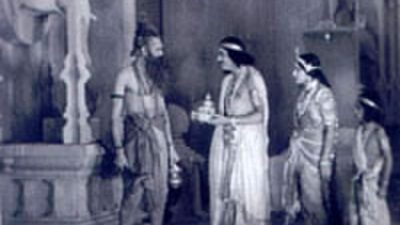
गीत विंग · गीत-पट्टिका · Song Plate
चलो सजन कहीं चलकर नई बस्ती बसाएँ हम
Chalo Sajan Kahin Chalkar Nayi Basti Basaye Hum
कहीं दूर जाकर नई बस्ती बसाने का न्योता — जादुई बंधन (1941) का पलायन-युगल।
भावHopeful · रोमांटिक
भाषाhindi गतिमध्यम स्वरूपयुगल
श्रेय
The Creditsसूत्र-वाक्य · The Hook
सूत्र-वाक्य
कहीं दूर जाकर नई बस्ती बसाने का न्योता — जादुई बंधन (1941) का पलायन-युगल।
In EnglishAn invitation to elope and build a new home — a duet of escape from Jadui Bandhan (1941).
पट्टिका-लेख
The Monographपरिचय Overview
'चलो सजन कहीं चलकर नई बस्ती बसाएँ हम' जादुई बंधन (1941) के लिए दर्ज दस गीतों में से एक है — नानूभाई वकील निर्देशित, संगीत राम गोपाल पांडे का और बोल पंडित अनुज के। संसार को पीछे छोड़कर साथ मिलकर एक नया बसेरा बसाने का आह्वान करता यह बोल एक रोमांटिक युगल के रूप में पढ़ा जाता है, जो उस युग की फ़ैंटेसी-रोमांस फ़िल्मों में आम युक्ति थी।
अंग्रेज़ी में पढ़ें · Read in English
'Chalo Sajan Kahin Chalkar Nayi Basti Basaye Hum' is one of the ten songs documented for Jadui Bandhan (1941), directed by Nanubhai Vakil with music by Ram Gopal Pandey and lyrics by Pandit Anuj. The lyric's call to leave the world behind and found a new dwelling together reads as a romantic duet, a common device in the fantasy-romance films of the era.
काव्य The Poetry
पंडित अनुज 1940 के दशक की हिंदी सिनेमा के एक कार्यशील गीतकार थे जिन्होंने फ़ैंटेसी, सामाजिक और भक्ति-फ़िल्मों के लिए बोल लिखे। गीत का केंद्रीय बिंब — प्रेमी अपनी वर्तमान दुनिया को छोड़कर साथ एक नई बस्ती बसाने का प्रस्ताव करते हैं — हिंदुस्तानी काव्य-परंपरा की उस 'नई बस्ती' की धारणा से जुड़ा है, जिसे कवि किसी भौगोलिक स्थान की बजाय शोक-रहित एक आंतरिक संसार के प्रतीक के रूप में प्रयोग करते थे। 'सजन' संबोधन पहले ही शब्द से एक अंतरंग स्वर स्थापित करता है, और 'चलकर-बसाएँ' की क्रिया-जोड़ी में साहचर्य की सहजता और एक साझे संकल्प की गहराई दोनों हैं। पूरे बोल के अभाव में भी यह पंक्ति घरेलू तड़प की एक संक्षिप्त कौल जैसी पढ़ी जाती है — सुगम, प्रत्यक्ष और उष्ण। शीर्षक में 'हम' का प्रयोग इस भाव को पारस्परिक बना देता है — न कोई आज्ञा दे रहा है, न कोई अनुसरण कर रहा है; दोनों प्रस्ताव करते हैं, दोनों स्वीकार करते हैं।
अंग्रेज़ी में पढ़ें · Read in English
Pandit Anuj was a working lyricist of 1940s Hindi cinema who contributed verses across fantasy, social and devotional pictures. The song's central image — lovers proposing to abandon their present world and build a new settlement together — belongs to the Hindustani poetic tradition of 'nayi basti' (new dwelling), a phrase poets used to signify an inner space purged of sorrow rather than a literal geographic relocation. The word 'sajan' (beloved) establishes an intimate register from the first syllable, and the verb pair 'chalkar-basaye' (going and settling) holds both the ease of shared companionship and the gravity of a joint covenant. Without access to the full lyric, the opening line reads as a miniature qaul of domestic longing: accessible, direct and warm. The use of 'hum' (we) in the song's title already frames the gesture as mutual — neither lover commands the other; both propose, and both agree.
कहानी The Story
जादुई बंधन (1941) नानूभाई वकील द्वारा निर्देशित था और 2 जनवरी 1941 को सेंट्रल पिक्चर्स के बैनर तले प्रदर्शित हुई — आरंभिक सवाक युग में वकील की कई फ़ैंटेसी फ़िल्मों में से एक। कलाकारों में सरोजिनी, शिराज़ और पहलवान-अभिनेता बाबूराव पहलवान शामिल थे। शीर्षक — 'जादुई बंधन' — ही शैली का संकेत देता है: एक फ़ैंटेसी-रोमांस जिसमें अलौकिक बाधाएँ या जादू प्रेमियों की परीक्षा लेते हैं। वकील की फ़ैंटेसी फ़िल्में पारसी रंगमंच की दृश्य-चमत्कार परंपराओं से सीधे जुड़ती थीं, जो उन्नीसवीं सदी के अंत से बंबई के दर्शकों के लिए असंभव प्रेम और जादुई बाधाएँ मंच पर उतारती आई थी, और वकील की आरंभिक सवाक फ़िल्मों ने उन रंगमंचीय परंपराओं को नए माध्यम में ढाला। राम गोपाल पांडे का स्कोर दस गीतों का था। 'चलो सजन कहीं चलकर नई बस्ती बसाएँ हम' एक रोमांटिक युगल के रूप में पढ़ा जाता है — सब कुछ पीछे छोड़कर साथ एक नई बस्ती बसाने की विनती — जो उस दौर की फ़ैंटेसी-रोमांस फ़िल्मों में एक परिचित कथात्मक युक्ति थी।
अंग्रेज़ी में पढ़ें · Read in English
Jadui Bandhan (1941) was directed by Nanubhai Vakil and released on 2 January 1941 under the Central Pictures banner — one of several fantasy productions Vakil helmed during his prolific run through the early sound era. The cast included Sarojini, Shiraz and the wrestler-actor Baburao Pahelwan. The title itself — 'Magical Bond' — signals the genre: a fantasy-romance in which supernatural obstacles or enchantments test lovers. Vakil's fantasy films drew directly on the spectacle traditions of the Parsi theatre, which had staged impossible loves and magical hindrances for Bombay audiences since the late nineteenth century, and his early-sound pictures translated those theatrical conventions into the new medium. Ram Gopal Pandey's score for the film comprised ten songs. 'Chalo Sajan Kahin Chalkar Nayi Basti Basaye Hum' reads as a romantic duet at its core — a plea to leave everything behind and found a new settlement together — a narrative device common in the era's fantasy-romance films when lovers seek escape from an unspecified social or supernatural constraint.
वर्गीकरण
Classification- Tempo
- Medium
Genre
अन्य विवरण
More Details- https://en.wikipedia.org/wiki/Jadui_Bandhan
- https://www.moviebuff.com/jadui-bandhan
- https://www.imdb.com/title/tt0376679/
References
रोचक तथ्य
Margin Notesजादुई बंधन (1941) 2 जनवरी 1941 को प्रदर्शित हुई, जिससे यह उस वर्ष सिनेमाघरों तक पहुँचने वाली सबसे पहली हिंदी फ़िल्मों में से एक बनी; इसका निर्माण सेंट्रल पिक्चर्स ने नानूभाई वकील के निर्देशन में किया था।
अंग्रेज़ी में पढ़ें · Read in English
Jadui Bandhan (1941) was released on 2 January 1941, making it one of the very first Hindi films to reach cinemas that year; it was produced by Central Pictures under Nanubhai Vakil's direction.
फ़िल्म के कलाकारों में बाबूराव पहलवान शामिल थे, एक पहलवान से अभिनेता बने व्यक्ति, जिनकी शारीरिक उपस्थिति शुरुआती बॉम्बे एक्शन और फ़ैंटेसी दर्शकों के लिए एक आकर्षण थी।
अंग्रेज़ी में पढ़ें · Read in English
The film's cast included Baburao Pahelwan, a wrestler-turned-actor whose physical presence was a draw for early Bombay action and fantasy audiences.
राम गोपाल पांडे ने जादुई बंधन के दस गीतों का संगीत रचा और उसी वर्ष बुलबुले बग़दाद (1941) का भी संगीत दिया, जिससे 1941 उनके संगीतकार-करियर का सबसे व्यस्त दर्ज वर्षों में से एक बन गया।
अंग्रेज़ी में पढ़ें · Read in English
Ram Gopal Pandey composed the ten-song score for Jadui Bandhan and also scored Bulbule Baghdad (1941) the same year, making 1941 one of his busiest documented years as a composer.
नमूना-पट्टी
The Specimen Table| शीर्षक | चलो सजन कहीं चलकर नई बस्ती बसाएँ हम · Chalo Sajan Kahin Chalkar Nayi Basti Basaye Hum |
|---|---|
| फ़िल्म | जादुई बंधन · 1941 |
| वर्ष · युग | 1941 |
| गीतकार | Pandit Anuj (S. L. Shrivastav) |
| संगीतकार | Ram Gopal Pandey |
| स्वरूप | युगल |
| गति | मध्यम |
| भाषा | hindi |
| भाव | Hopeful · रोमांटिक |
| बोल-स्थिति | केवल झलक |
जुड़े हुए पन्ने
Connected Plates · The Graph Made Visibleअटलस में कोई पन्ना अकेला नहीं — इस गीत से जुड़े गीत, कलाकार, फ़िल्म, राग-ताल-विधा, सब यहाँ से खुलते हैं।
कलाकार · The Artists
फ़िल्म · The Film
साझा कीजिए · Share this Plate