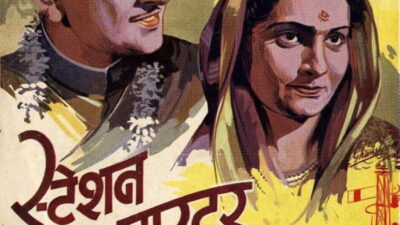
गीत विंग · गीत-पट्टिका · Song Plate
चलो चलो री सखी मधुबन में
Chalo Chalo Ri Sakhi Madhuban Me
चलो सखी, मधुबन की ओर — नौशाद की आरंभिक स्टेशन मास्टर संगीत-पट्टी का सबसे अधिक सराहा गया युगल।
भावउत्सव · आनंदित · चुलबुला
भाषाhindi गतिमध्यम स्वरूपयुगल
श्रेय
The Creditsसूत्र-वाक्य · The Hook
सूत्र-वाक्य
चलो सखी, मधुबन की ओर — नौशाद की आरंभिक स्टेशन मास्टर संगीत-पट्टी का सबसे अधिक सराहा गया युगल।
In EnglishCome away, friends, to the garden of bliss — the duet most often praised from Naushad's early Station Master score.
पट्टिका-लेख
The Monographपरिचय Overview
'चलो चलो री सखी मधुबन में' नौशाद की स्टेशन मास्टर (1942) संगीत-पट्टी का राजकुमारी और युवा सुरैया द्वारा गाया एक युगल गीत है, जो प्यारेलाल संतोषी के बोलों पर आधारित है। फ़िल्म-संगीत लेखक इसे बार-बार संगीत-पट्टी के सर्वोत्तम गीतों में से एक के रूप में चुनते हैं — चमकीले लोक-रंग में प्रस्तुत 'मधुबन' का एक निमंत्रण।
अंग्रेज़ी में पढ़ें · Read in English
'Chalo Chalo Ri Sakhi Madhuban Me' is a duet by Rajkumari and the young Suraiya from Naushad's 1942 Station Master soundtrack, set to lyrics by Pyarelal Santoshi. Film-music writers repeatedly single it out as one of the finest numbers of the score, an invitation to a 'madhuban' (garden of bliss) rendered with bright folk colour.
संगीत The Music
युवा नौशाद अली द्वारा रचित यह युगल एक उल्लासमय, नृत्य-सी लय पर सवार है जिसमें ढोलक आगे है, और प्रशिक्षित राजकुमारी तथा युवा सुरैया को एक साथ बुनता है। चमकीला लोक-रंग और झूमती धुन इसे इस आरंभिक नौशाद संगीत-पट्टी का सबसे प्रशंसित और बार-बार उद्धृत गीत बनाते हैं।
अंग्रेज़ी में पढ़ें · Read in English
Composed by the young Naushad Ali, the duet rides a buoyant, dance-like rhythm with dholak to the fore, weaving the trained Rajkumari and the youthful Suraiya together. The bright folk colouring and lilting tune make it the most celebrated and frequently cited song of this early Naushad soundtrack.
काव्य The Poetry
गीत का संबोधन — 'चलो री सखी मधुबन में' — उस सखी-संबोधन परंपरा से है जो ब्रज भक्ति-कविता, वृंदावन के लोकगीतों और उत्तर भारत के सुहाग और कजरी विधाओं में व्याप्त है। 'मधुबन' (मधु का वन) एक वृंदावन स्थान है जो कृष्ण से जुड़ा है — दिव्य क्रीड़ा का स्थान, बाँसुरी-संगीत का, उन गोपियों का जो अपने दैनिक काम भूलकर प्रभु के आह्वान पर चल पड़ती हैं। प्यारेलाल संतोषी की यह पंक्ति 1942 की व्यावसायिक फ़िल्म के लिए इस भक्ति-भूगोल को शुद्ध उत्सव-आमंत्रण के रूप में तैनात करती है — पवित्र परिदृश्य रहस्यवादी लालसा की जगह आनंद और उत्सव का स्थान बन जाता है।
अंग्रेज़ी में पढ़ें · Read in English
The lyric's address — 'chalo ri sakhi madhuban mein' (come, friend, let us go to the garden of bliss) — belongs to the sakhi-sambodhan (female-friend address) tradition that runs through Braj bhakti poetry, the folk songs of Vrindavan, and the suhaag and kajri genres of north India. 'Madhuban' (forest or grove of Madhu) is a Vrindavan location associated with Krishna — the place of divine play, of flute music, of gopis forgetting their daily duties to follow the Lord's call. Pyarelal Santoshi's lyric for a 1942 commercial film invokes this devotional geography while deploying it as pure festive invitation — the sacred landscape becomes a site of joy and celebration rather than of mystical longing. The folk-celebration mode of the lyric is an early instance of how Hindi film songs repackaged devotional imagery for secular festive contexts, a practice that defined the 'spring song' (basant geet) and 'rain song' genres for decades.
कहानी The Story
स्टेशन मास्टर (1942) नौशाद अली के आरंभिक बंबई कार्यों में से एक था, जब वे लगभग 22-23 वर्ष के थे। फ़िल्म ने एक असामान्य रूप से बड़ी गायन-मंडली इकट्ठा की — अमीरबाई कर्नाटकी, जी.एम. दुर्रानी, राजकुमारी, युवा सुरैया, प्रेम अदीब, और कौशल्या — जो एक ही संगीत-पट्टी में कई सितारों और शैलियों को प्रस्तुत करने की स्टूडियो की इच्छा को दर्शाता है। 'चलो चलो री सखी मधुबन में' ने अनुभवी राजकुमारी (राजकुमारी दुबे) को युवा सुरैया के साथ जोड़ा, जो लगभग 12-13 वर्ष की थीं। नौशाद ने इस युगल के लिए जो लोक-रंगी, नृत्य-लय रचना बनाई, वह तत्कालीन समीक्षाओं में सबसे अधिक उद्धृत गीत रहा।
अंग्रेज़ी में पढ़ें · Read in English
Station Master (1942) was one of the early Bombay assignments for Naushad Ali, who was approximately 22-23 years old at the time. The film assembled an unusually large vocal roster — Amirbai Karnataki, G.M. Durrani, Rajkumari, the young Suraiya, Prem Adeeb, and Kaushalya — reflecting the studio's desire to present multiple stars and styles within a single soundtrack. 'Chalo Chalo Ri Sakhi Madhuban Me' paired the experienced Rajkumari (Rajkumari Dubey) with the young Suraiya, who was approximately 12-13 years old. The folk-inflected, dance-rhythm composition that Naushad crafted for this duet was the most frequently cited song from the score in contemporary reviews, establishing a pattern that would repeat with Rattan (1944): Naushad's gift for the UP folk-melody idiom making an immediate popular impression.
विरासत The Legacy
'चलो चलो री सखी मधुबन में' को नौशाद की विशेष शैली — यूपी लोक-धुन और फ़िल्मी वाद्यवृंद के मिश्रण — के एक आरंभिक चिह्न के रूप में याद किया जाता है, जो रत्तन (1944) के साथ अपने व्यावसायिक शिखर और अनमोल घड़ी (1946) के साथ अपनी आलोचनात्मक ऊँचाई पर पहुँचा। यह गीत सुरैया की एक वरिष्ठ गायिका के साथ युगल में सबसे आरंभिक उपस्थितियों में से एक को भी दस्तावेज़ करता है। प्यारेलाल संतोषी की पंक्ति, अपने 'मधुबन' संबोधन के साथ, एक ऐसा लोक-उत्सवी मुहावरा व्यावसायिक गीत के केंद्र में लाती है जिसने भक्ति-परिदृश्य को धर्मनिरपेक्ष श्रोताओं के लिए सुलभ बनाया।
अंग्रेज़ी में पढ़ें · Read in English
'Chalo Chalo Ri Sakhi Madhuban Me' is most often remembered as an early marker of Naushad's signature style — the fusion of UP folk melody with film orchestration — which would reach its commercial peak with Rattan (1944) and its critical apex with Anmol Ghadi (1946). The song also documents one of Suraiya's earliest appearances as a playback voice in a duet with a senior singer, a pairing that anticipates the mentor-star dynamic she would later develop with other collaborators. Pyarelal Santoshi's lyric, with its 'madhuban' address, placed a folk-festive idiom at the heart of a commercial film song in a way that made the bhakti landscape accessible to secular listeners — a translation that Hindi film lyricists have continued to make across every decade since.
वर्गीकरण
Classification- Tempo
- Medium
Genre
अन्य विवरण
More Details- https://www.hindigeetmala.net/movie/station_master.htm
- https://en.wikipedia.org/wiki/Suraiya
- https://www.songsofyore.com/best-songs-of-1942/
References
रोचक तथ्य
Margin Notesस्टेशन मास्टर (1942) का संगीत नौशाद अली ने लगभग 22-23 वर्ष की आयु में दिया — यह उनकी शुरुआती बड़ी बॉम्बे फ़िल्म परियोजनाओं में से एक थी, जो रतन (1944) से मिली उनकी व्यावसायिक सफलता से दो वर्ष पहले की बात है।
अंग्रेज़ी में पढ़ें · Read in English
Station Master (1942) was composed by Naushad Ali when he was approximately 22-23 years old — one of his earliest major Bombay film assignments, predating his commercial breakthrough with Rattan (1944) by two years.
फ़िल्म की गायक-सूची असामान्य रूप से बड़ी थी, जिसमें अमीरबाई कर्नाटकी, जी.एम. दुर्रानी, राजकुमारी, सुरैया, प्रेम अदीब और कौशल्या शामिल थे — यह 1940 के दशक की शुरुआत की एक 'ऑल-स्टार कास्ट' पद्धति थी, जो साउंडट्रैक को एक विविधता-प्रदर्शन के रूप में देखती थी।
अंग्रेज़ी में पढ़ें · Read in English
The film's vocal roster was unusually large, including Amirbai Karnataki, G.M. Durrani, Rajkumari, Suraiya, Prem Adeeb, and Kaushalya — an early 1940s 'all-star cast' approach to film-song production that treated the soundtrack as a variety showcase.
सुरैया, जो राजकुमारी के साथ युगल गीत गाती हैं, स्टेशन मास्टर की रिकॉर्डिंग के समय लगभग 12-13 वर्ष की थीं — उनका जन्म 15 जून 1929 को हुआ था, जिससे यह किसी बॉम्बे प्रस्तुति में उनके सबसे शुरुआती दर्ज़ पार्श्व-गायन योगदानों में से एक बन जाता है।
अंग्रेज़ी में पढ़ें · Read in English
Suraiya, who sings the duet with Rajkumari, was approximately 12-13 years old at the time of recording Station Master — she was born on 15 June 1929, making this one of her earliest documented playback contributions to a Bombay production.
गीत के शीर्षक में 'मधुबन' की कल्पना इसे उस ब्रज-वृंदावन काव्य-परिदृश्य में स्थापित करती है, जिसे सूरदास और मीराबाई की भक्ति-कविता ने लोकप्रिय बनाया, जहाँ कृष्ण की वन-क्रीड़ाभूमि आनंद, स्वतंत्रता और रोज़मर्रा के कर्तव्य के स्थगन का रूपक बन जाती है।
अंग्रेज़ी में पढ़ें · Read in English
The 'madhuban' imagery in the song's title places it in the Braj-Vrindavan poetic landscape popularised by Surdas and Mirabai bhakti poetry, where Krishna's forest playground becomes a metaphor for joy, freedom, and the suspension of everyday duty.
नमूना-पट्टी
The Specimen Table| शीर्षक | चलो चलो री सखी मधुबन में · Chalo Chalo Ri Sakhi Madhuban Me |
|---|---|
| फ़िल्म | स्टेशन मास्टर · 1942 |
| वर्ष · युग | 1942 |
| गायक | Rajkumari, Suraiya |
| गीतकार | Pyarelal Santoshi |
| संगीतकार | Naushad |
| स्वरूप | युगल |
| गति | मध्यम |
| भाषा | hindi |
| भाव | उत्सव · आनंदित · चुलबुला |
| लोकप्रियता | Very_popular |
| बोल-स्थिति | केवल झलक |
जुड़े हुए पन्ने
Connected Plates · The Graph Made Visibleअटलस में कोई पन्ना अकेला नहीं — इस गीत से जुड़े गीत, कलाकार, फ़िल्म, राग-ताल-विधा, सब यहाँ से खुलते हैं।
मिलते-जुलते गीत · Related Songs
कलाकार · The Artists
फ़िल्म · The Film
साझा कीजिए · Share this Plate