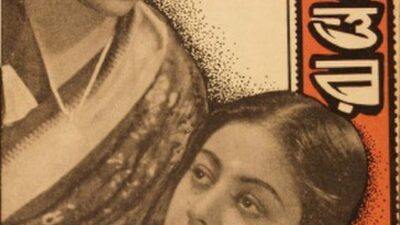
गीत विंग · गीत-पट्टिका · Song Plate
आये चाँद छुप न जाना
Aye Chand Chup Na Jana
वह लोरी जिसे कानन देवी ने अमर कर दिया — चाँद से न छुपने की विनती — और 1942 के सबसे प्रिय गीतों में से एक।
भावउदास · शांत · रोमांटिक
भाषाhindi गतिधीमी स्वरूपएकल महिला
श्रेय
The Creditsसूत्र-वाक्य · The Hook
सूत्र-वाक्य
वह लोरी जिसे कानन देवी ने अमर कर दिया — चाँद से न छुपने की विनती — और 1942 के सबसे प्रिय गीतों में से एक।
In EnglishThe lullaby that Kanan Devi made immortal — a plea to the moon not to slip away — and one of 1942's most beloved songs.
पट्टिका-लेख
The Monographपरिचय Overview
'आये चाँद छुप न जाना' जवाब (1942) का हस्ताक्षर-गीत है — एक कोमल लोरी जिसमें कानन देवी बेचैन, बालक-समान मनोज को सुलाती हैं। यह अपने समय की सबसे लोकप्रिय रिकॉर्डिंगों में से एक बन गई और फ़िल्म के अंत में एक छोटे रूप में लौटती है, जिसे कथित तौर पर स्वयं संगीतकार कमल दासगुप्ता और कानन देवी ने तब गाया जब प्रेम की विजय होती है।
अंग्रेज़ी में पढ़ें · Read in English
'Aye Chand Chup Na Jana' is the signature song of Jawab (1942) — a tender lullaby in which Kanan Devi soothes the restless, childlike Manoj to sleep. It became one of the most popular recordings of its time and returns in a shorter reprise late in the film, reportedly sung by composer Kamal Dasgupta himself alongside Kanan Devi when love finally triumphs.
संगीत The Music
कमल दासगुप्ता इस रचना को एक धीमी, झुलाने वाली धुन के रूप में संयमित हारमोनियम और तबले पर गढ़ते हैं — नसों को ढीला करने के लिए बनी, उनके सुकूनदायक स्वर-कौशल का प्रदर्शन, जो फ़िल्म के तेज़ रेल-गीत से तीखा विरोधाभास रचता है। कानन देवी की संयमित, आत्मीय गायकी इसके स्थायी आकर्षण का केंद्र है।
अंग्रेज़ी में पढ़ें · Read in English
Kamal Dasgupta builds the piece as a slow, cradling melody over restrained harmonium and tabla, designed for nerves to unwind — a showcase of his gift for the soothing register that contrasted sharply with the film's brisk train song. Kanan Devi's controlled, intimate delivery is central to its enduring appeal.
काव्य The Poetry
चाँद को संबोधित लोरी गेय-कविता के सबसे पुराने संकेतों में से एक है: चाँद रात का साथी है, उसकी कोमल रोशनी नींद से, सोते हुए की रखवाली से, रात के पहरेदार की कोमलता से जुड़ी है। उर्दू-हिंदी परंपरा में चाँद (chand) प्रिय के चेहरे का पारंपरिक रूपक भी है — और 'ऐ चाँद छुप न जाना' दोनों अर्थों को एक साथ पकड़ता है। माधुर की पंक्ति चाँद से विनती करती है कि वह रात को तब तक कोमल रखे जब तक प्रिय सोता है — और साथ ही एक दीप्तिमान उपस्थिति से, जो प्रिय स्वयं हैं या प्रेम का वातावरण है, न छुपने की। लोरी-शैली जो अन्यथा एक रोमांटिक याचना होती उसे और भी कोमल बनाती है: एक जागरण, एक रोकी हुई साँस, एक पल जिसे थाम लिया गया।
अंग्रेज़ी में पढ़ें · Read in English
A lullaby addressed to the moon is among the oldest gestures of lyric poetry: the moon is the night's companion, its soft light associated with sleep, with the watch kept over the sleeping, with the tenderness of the night-watcher. In the Urdu-Hindi tradition, the moon (chand) is also the conventional metaphor for the beloved's face — and 'aye chand chup na jana' (O moon, do not go into hiding) conflates the two meanings perfectly. Buddhi Chandra Agrawal Madhur's lyric asks the moon to keep the night gentle while the beloved sleeps, and simultaneously asks a radiant presence — the beloved themselves, or the mood of love — not to fade. The lullaby mode softens what would otherwise be a romantic plea into something more tender: a vigil, a breath held, a moment made to last. Without the full text (copyright withheld), the genre is clear — it belongs to the 'sojha' or lullaby tradition, where the speaker's own wakefulness is a form of devotion to the sleeping beloved.
कहानी The Story
जवाब (1942) न्यू थिएटर्स, कलकत्ता का निर्माण था जिसमें कानन देवी ने पी.सी. बरुआ के साथ अभिनय किया। फ़िल्म के प्रसिद्ध लोरी-दृश्य में, कानन देवी का किरदार बेचैन पी.सी. बरुआ को 'ऐ चाँद छुप न जाना' से सुलाता है — एक क्षण जो समकालीन हिंदी फ़िल्म समीक्षाओं में सबसे अधिक चर्चित दृश्यों में से एक बना। संगीतकार कमल दासगुप्ता के बारे में माना जाता है कि उन्होंने फ़िल्म के भावनात्मक चरमोत्कर्ष पर कानन देवी के साथ गीत का एक संक्षिप्त रूप गाया — अपने ही निर्माण में प्लेबैक आवाज़ के रूप में एक स्टूडियो संगीतकार का दुर्लभ उदाहरण। लोरी फ़िल्म के दूसरे हस्ताक्षर-गीत, तेज़-गति 'तूफ़ान मेल' के साथ तीखा विरोधाभास भी रचती है।
अंग्रेज़ी में पढ़ें · Read in English
Jawab (1942) was a New Theatres, Calcutta production in which Kanan Devi starred opposite P.C. Barua. In the film's celebrated lullaby scene, Kanan Devi's character soothes a restless P.C. Barua to sleep with 'Aye Chand Chup Na Jana', a moment that became one of the most discussed set pieces in contemporary Hindi film reviews. Music director Kamal Dasgupta is believed to have sung a reprise of the song with Kanan Devi at the film's emotional climax — a rare instance of a studio composer doubling as a playback voice in his own production. The lullaby also stands in sharp contrast to the film's other signature song, the fast-paced 'Toofan Mail', demonstrating Dasgupta's intentional dramatic range across the two numbers.
विरासत The Legacy
कानन देवी की 'ऐ चाँद छुप न जाना' सबसे अधिक उद्धृत स्वतंत्रता-पूर्व हिंदी फ़िल्म लोरियों में से एक है और न्यू थिएटर्स के स्वर्णिम युग की पूर्वव्यापी प्रस्तुतियों में नियमित रूप से शामिल की जाती है। लता मंगेशकर ने इस गीत का एक श्रद्धांजलि संस्करण गाया है, कानन देवी के मूल को उस फ़िल्म-लोरी परंपरा की कसौटी मानते हुए जिसे वे 1950 और 1960 के दशक में विकसित करेंगी। रेडियो कार्यक्रमों और 1940 के दशक के हिंदी फ़िल्म संगीत के संकलनों में गीत की स्थायी उपस्थिति इसे अपने युग की परिभाषक लोरी के रूप में पुष्ट करती है।
अंग्रेज़ी में पढ़ें · Read in English
Kanan Devi's 'Aye Chand Chup Na Jana' is among the most cited pre-independence Hindi film lullabies and is regularly included in retrospectives of the New Theatres golden era. Lata Mangeshkar has been documented as performing a tribute version of the song, acknowledging Kanan Devi's original as a touchstone of the film-lullaby tradition she herself would develop in the 1950s and 1960s. The song's enduring presence in radio programming and anthologies of 1940s Hindi film music confirms its status as the defining lullaby of its era — one of a small set of songs where the intimate scale of the composition exceeded the dramatic context of its origin film.
वर्गीकरण
Classification- Tempo
- Slow
Genre
अन्य विवरण
More Details- https://www.hindigeetmala.net/movie/jawab.htm
- https://www.youtube.com/watch?v=p1FBhyqWYnE
- http://cinemacorridor.blogspot.com/2009/10/music-of-kamal-dasgupta.html
References
रोचक तथ्य
Margin Notesजवाब (1942) न्यू थिएटर्स, कलकत्ता की प्रस्तुति थी, जिसमें कानन देवी के साथ पी.सी. बरुआ मुख्य भूमिका में थे — जो स्टूडियो के एक प्रमुख स्टार-निर्देशक और इस फ़िल्म के लोरी-दृश्य में नायक दोनों थे, जो 1942 के सबसे अधिक चर्चित पर्दे-पर के भावनात्मक क्षणों में से एक था।
अंग्रेज़ी में पढ़ें · Read in English
Jawab (1942) was a New Theatres, Calcutta production starring Kanan Devi opposite P.C. Barua — who was both a major star-director at the studio and the male lead in this film's lullaby sequence, one of 1942's most discussed on-screen emotional moments.
माना जाता है कि संगीत निर्देशक कमल दासगुप्ता ने फ़िल्म के क्लाइमैक्स में कानन देवी के साथ 'ऐ चाँद छुप न जाना' की पुनरावृत्ति गाई थी — यह स्टूडियो के अपने संगीतकार के उसी प्रस्तुति में पार्श्व-गायक के रूप में सामने आने का एक दुर्लभ दर्ज़ उदाहरण है।
अंग्रेज़ी में पढ़ें · Read in English
Music director Kamal Dasgupta is believed to have sung a reprise of 'Aye Chand Chup Na Jana' with Kanan Devi at the film's climax — a rare documented instance of the studio's own composer appearing as a playback singer within the same production.
इस गीत के गीतकार बुद्धि चंद्र अग्रवाल 'मधुर' को कुछ स्रोतों में 'बेक़ल' या 'पं. मधुर' के नाम से उद्धृत किया गया है — विभिन्न सूचियों में यह श्रेय-भिन्नता 1940 के दशक के कलकत्ता स्टूडियो की उन तरल श्रेय-प्रथाओं को दर्शाती है, जहाँ एक ही लेखक से कई नाम जुड़े हो सकते थे।
अंग्रेज़ी में पढ़ें · Read in English
The song's lyricist Buddhi Chandra Agrawal 'Madhur' is cited in some sources as 'Bekal' or 'Pt. Madhur' — the attributional variance across catalogues reflects the fluid credit practices at Calcutta studios of the 1940s, where multiple names could be attached to the same writer.
एक धीमी लोरी और एक तेज़ 'रेल-गीत' (तूफ़ान मेल) की जोड़ी का किसी फ़िल्म के दो पहचान-गीतों के रूप में प्रयोग साउंडट्रैक-रचना में जानबूझकर किए गए स्वर-विरोधाभास का एक प्रारंभिक उदाहरण था — यह एक रचनात्मक रणनीति थी जिसका इस्तेमाल कमल दासगुप्ता ने एक ही संगीत-संग्रह के भीतर अपनी क्षमता दिखाने के लिए किया।
अंग्रेज़ी में पढ़ें · Read in English
The pairing of a slow lullaby and a fast 'train song' (Toofan Mail) as a film's two signature numbers was an early example of deliberate tonal contrast in soundtrack design — a compositional strategy Kamal Dasgupta used to demonstrate his range within a single score.
नमूना-पट्टी
The Specimen Table| शीर्षक | आये चाँद छुप न जाना · Aye Chand Chup Na Jana |
|---|---|
| फ़िल्म | जवाब · 1942 |
| वर्ष · युग | 1942 |
| गायक | Kanan Devi |
| गीतकार | Pandit Madhur |
| संगीतकार | Kamal Dasgupta |
| स्वरूप | एकल महिला |
| गति | धीमी |
| भाषा | hindi |
| भाव | उदास · शांत · रोमांटिक |
| लोकप्रियता | Very_popular |
| बोल-स्थिति | केवल झलक |
जुड़े हुए पन्ने
Connected Plates · The Graph Made Visibleअटलस में कोई पन्ना अकेला नहीं — इस गीत से जुड़े गीत, कलाकार, फ़िल्म, राग-ताल-विधा, सब यहाँ से खुलते हैं।
मिलते-जुलते गीत · Related Songs
कलाकार · The Artists
फ़िल्म · The Film
साझा कीजिए · Share this Plate